Europe's four largest carriers want to build a Starlink rival, but they don't have satellites

midian182

Posts: 12,003   +183
Staff member
In brief: In another sign of Europe's continuing push away from reliance on US tech, four of the continent's biggest mobile operators are considering joining forces to create a Starlink competitor. The proposed service would connect phones directly to satellites, helping fill coverage gaps while giving European carriers an alternative to Elon Musk's network.

Deutsche Telekom, Orange, Telefónica, and Vodafone have signed a letter of intent to explore a joint bid for Mobile Satellite Services spectrum in Europe. The agreement, announced on Monday, is an early step toward offering direct-to-device connectivity through their existing mobile networks.

The aim is to reach areas where conventional mobile infrastructure falls short. Starlink already offers similar coverage through partnerships with carriers including T-Mobile in the US and O2 in the UK.

There is, however, a fairly significant piece of the plan missing: the satellites. The four operators don't intend to invest directly in a constellation themselves. Instead, they would build ground infrastructure and establish coordination and monitoring operations in Europe, with a satellite partner providing the orbiting hardware. That partner has yet to be selected.

The companies say other mobile operators would also be able to access the service on equal terms. They want the project to improve coverage in underserved areas, protect critical communications, and make public networks more resilient. Existing satellite partnerships would remain in place.

The European Commission has proposed reserving some of the 2 GHz satellite spectrum for European operators.

Earlier this month, SpaceX secured FCC approval for 15,000 Starlink Mobile satellites. A separate waiver allows it to offer satellite wireless services without leasing spectrum from a terrestrial carrier, opening a way to competing directly with established operators. The planned mobile upgrade also goes beyond emergency messages and basic data, with support for native calls, streaming, browsing, and more demanding apps. It means Starlink could become both a useful partner and a serious rival for traditional carriers.
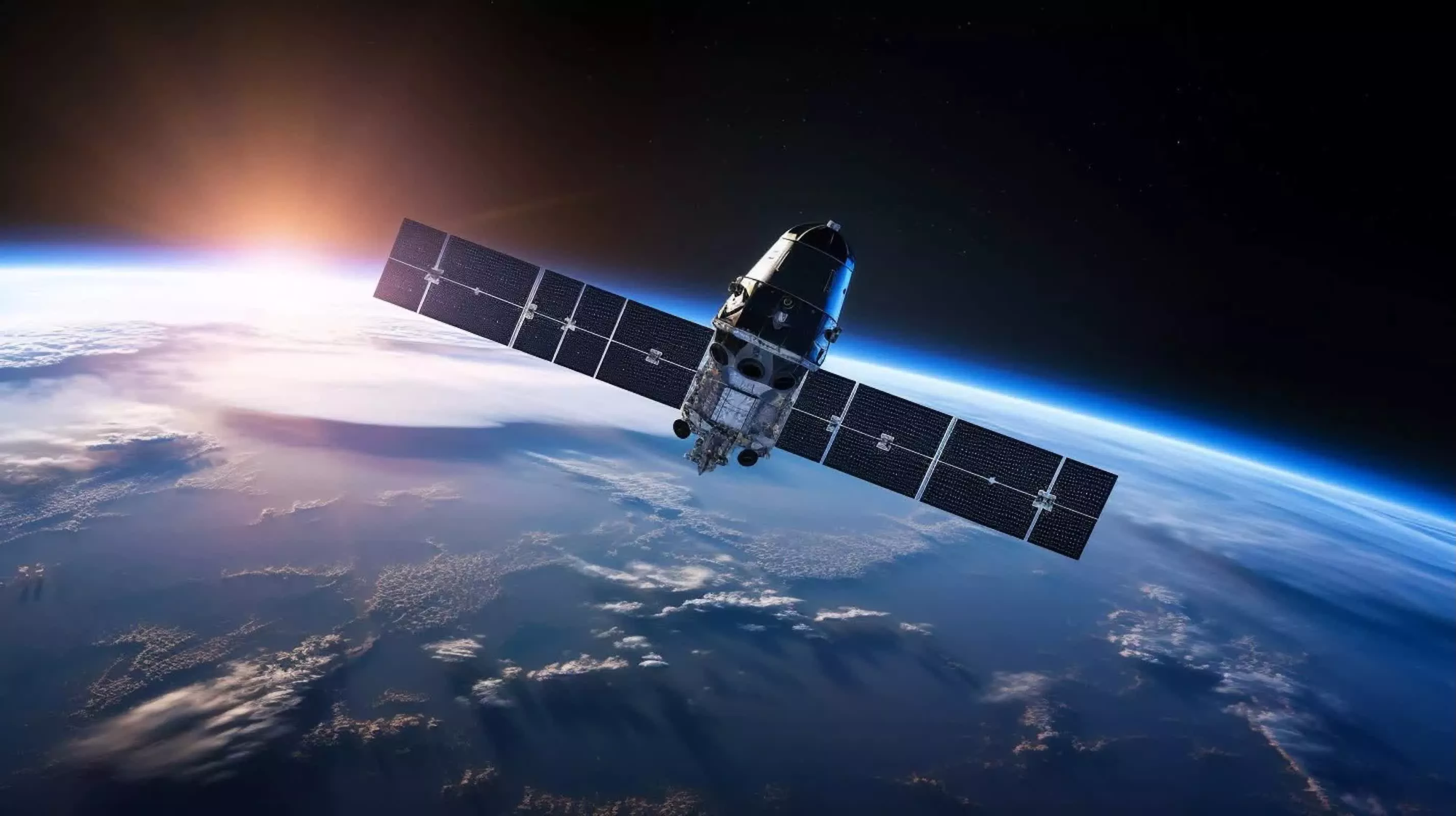
Europe's effort to reduce its dependence on American technology have been gaining pace in recent times. France plans to move government systems from Windows to Linux, alongside a broader shift toward European software and services. Control over essential infrastructure is becoming a recurring theme.

There was also a German state's plans to replace Windows and Microsoft Office with Linux and LibreOffice for 30,000 government employees. More recently, Switzerland launched an $11 million pilot to move 3,000 federal workstations to openDesk, an open-source alternative to Microsoft's productivity tools.

The Netherlands is trying to break from Microsoft with its DAWO project, an independent IT environment built around NixOS that would offer public institutions alternatives to US desktop software, office applications, and cloud services.

Permalink to story:

 
but they don't have satellites

I know this might be a shock to some people, but there was a time when noone had satellites. It's not like the only satellite mines exist in the US or something. Further, I would like to see Europe create their own space program. China has their own space program, after all.
 
I know this might be a shock to some people, but there was a time when noone had satellites. It's not like the only satellite mines exist in the US or something. Further, I would like to see Europe create their own space program. China has their own space program, after all.
We do already have the means at least:

Also not sure what this joint effort from these four aims to give what IRIS²/Eutelsat won't be offering, which should start becoming available for commercial use in 2030.
That we need an alternative to Starlink isn't just a theoretical 'we should' anymore either. After Trump/Putins diesel deal Starlink got limited (which still seems to be in effect despite Washington claiming it was by mistake) - it's a 'we need to' now.
 
I know this might be a shock to some people, but there was a time when noone had satellites. It's not like the only satellite mines exist in the US or something. Further, I would like to see Europe create their own space program. China has their own space program, after all.
This may shock you, but we're not in 1900 anymore. Europe has had the technology to make and launch their own satellites since the 1950s.

Yet they haven't bothered to do so. Itll take them 20 years just to settle where to build the new launch site and the satellite will have to pass 50 bureaucratic checks for acknowledgement and inclusion, launching with 0 functionality.

It's just like tech. The tools to make things like software have always existed. Europe has not been held back by tech. The hold back is entirely cultural and beuracratical.
This may shock you, but we were allies before and they were able to trust us in a sort of contract relationship to launch their satellites for them. We gutted NASA, but Elon was going to help make space launches cheaper. For a moment, he did on paper. Then, SpaceX showed the world that they cannot be trusted. That at any moment they can reject a launch or shut off an entire countries internet. SpaceX's entire business model was based entirely on the idea that they can do it cheaper as a business than any government can. Then they showed that they can just tell any government in the world "no". So I don't know how many satellites you or your neighbor throw into orbit every year, but I'm pretty confident that SpaceX showing they're willing to betray governments has essentially killed their entire customer base
 
Last I was in the EU (not long ago), they struggled to have 5G, let alone UWB.

They have a very long way to catch up before they think they can skip basic cell service straight to high speed satellite.
 
Europe has a number of rocket companies, the most notable being ArianeGroup and Avio. However no European rocket is reusable that I'm aware of, and so any economical Internet satellite company will need to rely on SpaceX to scale until that changes. It's not like it's the worst thing in the world; SpaceX is a money saver in terms of launches and these are one-time costs. The total amount of revenue SpaceX launches bring is also limited to a few billion dollars a year too.

That said, SpaceX is already moving on from the partially-reusable medium lift Falcon 9 to the fully reusable heavy lift Starship. This is a significantly more difficult problem to solve and will compound the supply-side cost savings yet again. Still, obviously with a Falcon 9-like vehicle you can develop a Starlink-like satellite network and I believe that's what that's most alternatives are aiming for. It will just be a more expensive (or worse) service than what Starlink can provide. I would guess that it will probably struggle to compete with Starlink because the best choice for consumers will be Starlink.

In my opinion, the best option to develop any Starlink competitor is to rely on SpaceX for launches, while also investing in European rocket companies that can later compete with SpaceX. Otherwise a European offering will be delayed by development of more affordable launch vehicles.
 
This may shock you, but we were allies before and they were able to trust us in a sort of contract relationship to launch their satellites for them. We gutted NASA, but Elon was going to help make space launches cheaper. For a moment, he did on paper. Then, SpaceX showed the world that they cannot be trusted. That at any moment they can reject a launch or shut off an entire countries internet. SpaceX's entire business model was based entirely on the idea that they can do it cheaper as a business than any government can. Then they showed that they can just tell any government in the world "no". So I don't know how many satellites you or your neighbor throw into orbit every year, but I'm pretty confident that SpaceX showing they're willing to betray governments has essentially killed their entire customer base
Citation needed. SpaceX is only not taking orders of Falcon 9 launches because they plan to replace it with a much better and cheaper vehicle. And SpaceX has only "shut off Internet" when that service was never intended to be provided (ie. for use in places it's not licensed to do business, for breaking the law, or for killing people).

You will need to cite specific evidence to make these outlandish claims. Now if there was a war between the US and Europe, of course a lot of business relations would be disrupted. That seems highly far-fetched though. The more likely situation would be that European regulators tell SpaceX to disable its service for being noncompliant. SpaceX wouldn't want to lose Starlink revenue in Europe though; it would be stupid for them to shut off in Europe.


Back