What just happened? West Japan Railway Company (JR West) has unveiled what it claims to be the world's first 3D-printed train station building. Located at Hatsushima Station on the JR Kisei Main Line in Arida, Wakayama Prefecture, the project merges cutting-edge technology with cultural sensitivity, marking a potential milestone in railway infrastructure.
The new station building, set to open in July, replaces an aging wooden structure that had served the rural community for years. Standing 2.6 meters tall, 6.3 meters wide, and 2.1 meters deep, the single-story reinforced concrete building was constructed using advanced 3D printing technology.
Japanese 3D-printing construction specialist Serendix prefabricated four key components, including the roof and walls, off-site. These were then transported and assembled in just two and a half hours, during the window between the last train at night and the first train the following morning.
The process involved shaping mortar with a 3D printer and creating formwork to mold the exterior. Reinforcing steel was inserted into the hollow sections before being filled with concrete, ensuring durability and earthquake resistance comparable to traditional reinforced concrete structures, without the need for conventional wooden or metal formwork.
JR West estimates this approach cuts costs by around 50 percent compared to conventional reinforced concrete buildings.
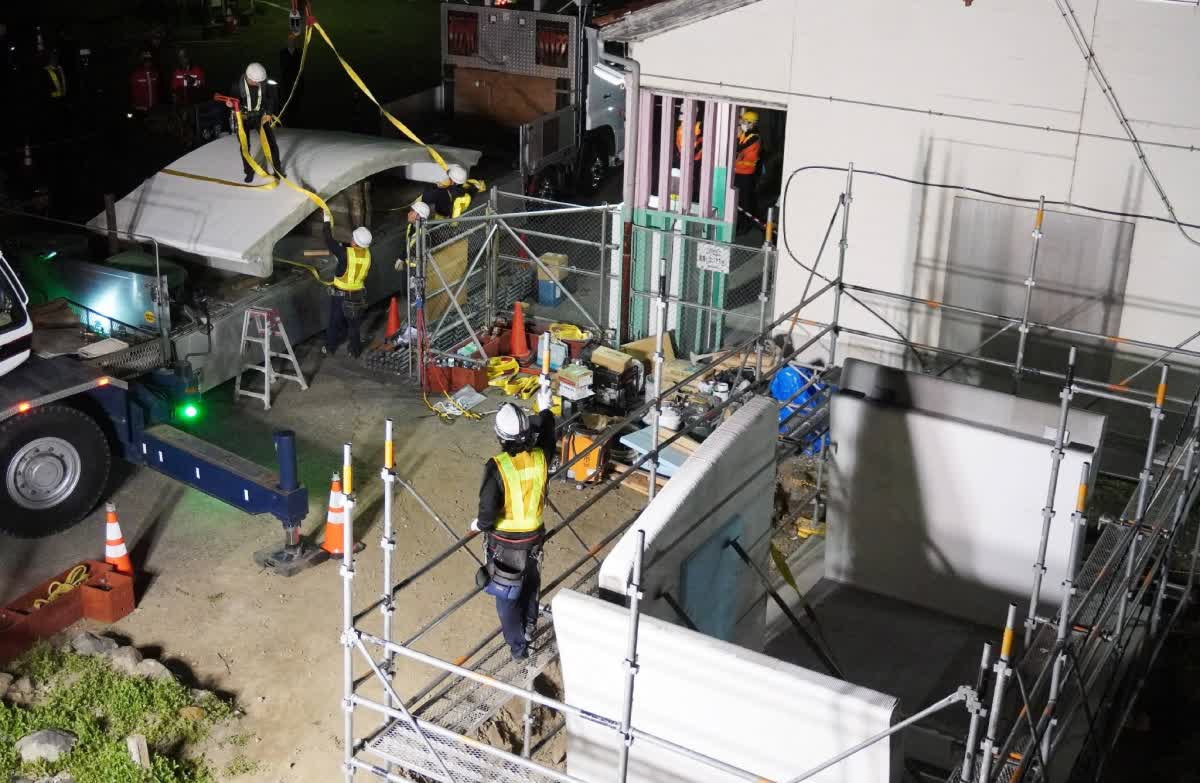
Beyond cost savings, this rapid construction method reduces disruptions to railway operations, making it an ideal solution for replacing aging infrastructure on active rail lines.
The station's design reflects its local surroundings, featuring artistic depictions of Arida City's iconic mikan oranges and tachiuo (beltfish) on the exterior. JR West emphasized that the goal is to create a station cherished by residents while aligning with regional culture, an approach they describe as "regional coexistence."
Hatsushima Station was chosen for the pilot due to its coastal location, allowing experts to evaluate the structure's resilience against environmental challenges such as salty air exposure. Additionally, JR West will assess long-term maintenance costs and feasibility as part of its broader plan to modernize Japan's railway infrastructure.
If successful, JR West plans to expand 3D printing technology across its network. The company sees this innovation as key to its long-term vision of providing "safe, secure, and human-friendly transportation" while enhancing sustainability.
Image credit: JIJI
First 3D-printed train station in Japan was assembled in record time


