Former Google CEO Eric Schmidt wants to put data centers in space

Alfonso Maruccia

Posts: 2,511   +934
Staff
In brief: Eric Schmidt, best known as Google's CEO and public face during the early 2000s, has taken on a surprising new role. Several years after stepping away from Alphabet, Schmidt has acquired a controlling stake in aerospace manufacturer Relativity Space and is now serving as the company's CEO.

In his new role as CEO of Relativity Space, Eric Schmidt appears to be exploring the idea of launching data centers into Earth's orbit. During a recent congressional hearing, Schmidt discussed the future of AI and US competitiveness, emphasizing that the energy demands of massive data centers are already spiraling out of control.

At the hearing, Schmidt noted that an average US nuclear power plant generates around 1 gigawatt of power, yet some companies are now designing data centers that may require as much as 10 gigawatts. He warned that data centers could need an additional 29 gigawatts within just a few years, and up to 67 more gigawatts by 2030. "These things are industrial at a scale that I have never seen in my life," he said.

Space journalist Eric Berger speculated that Schmidt's acquisition of Relativity Space was likely driven by the ballooning energy needs of AI data centers. Schmidt later confirmed the assumption with a characteristically concise, one-word reply.

Indeed, the former Google chief is seriously considering using Relativity's rockets to deploy data centers in orbit – a move driven by the realization that Earth may not have enough power to sustain the exponential growth of generative AI.
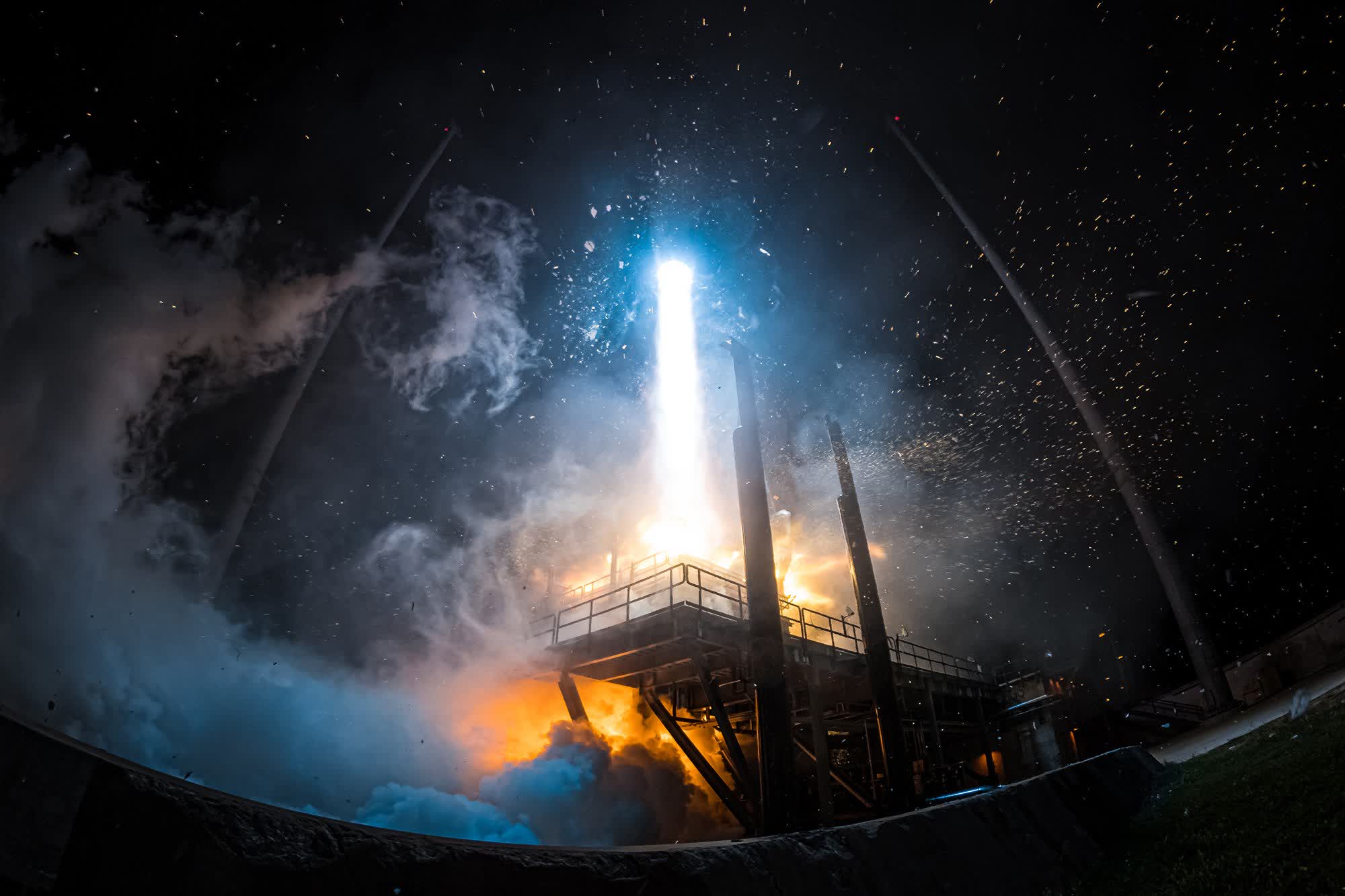
Relativity Space was founded in 2015 as a private spaceflight company focused on additive manufacturing technology. The company is currently developing Terran R, a partially reusable, two-stage heavy-lift launch vehicle that is being built in part using 3D printing. Once completed, Terran R is expected to carry up to 33,500 kg of cargo into low-Earth orbit and return safely to the ground.

According to Schmidt, the only viable way to meet the exploding power demands of AI data centers is by harvesting solar energy directly in space. Acquiring control of Relativity Space gives him privileged access to one of the few independent aerospace companies still working on new rocket technology, at a time when SpaceX and Blue Origin are largely entwined with their billionaire founders' political fortunes and personal ambitions.

However, Schmidt's now-confirmed ambition to orbit data centers faces challenges that no company has yet solved. While theoretically possible, the concept may prove economically unfeasible – or even technically impossible – with current rocket capabilities. And if the AI bubble bursts, the energy crisis it's creating could vanish just as quickly.

Permalink to story:

 
Maybe we don't need so many data centers. Code has become less efficient and AI just uses way too much energy.

On top of the issues above, there are other things that we have to consider when we have these data centers in space. There is a lot more radiation and other cosmic stuff that Earth's magnetosphere protects us against that has to be accounted for. There is also the huge cost of sending stuff into LEO which will likely not be offset by the extra energy that can be harvested. You also have the huge downtime whenever the data center is behind Earth and is getting no energy from the sun.
 
What's the purpose of developing 33 tons rocket when SpaceX already has Falcon Heavy (63 tons) and Starship (100+ tons) will be fully operational before this Terran R?

Putting data centers in space requires solving plenty of complex challenges, why not skip the already solved ones?
 
Cooling could be rather difficult. Go look at the size of the EATCS panels when fully deployed on the ISS. They're massive and it still only has a maximum rejection capacity of about 70kw. That's basically a few server racks worth.
 
What's the purpose of developing 33 tons rocket when SpaceX already has Falcon Heavy (63 tons) and Starship (100+ tons) will be fully operational before this Terran R?

Putting data centers in space requires solving plenty of complex challenges, why not skip the already solved ones?


Real men have their own fabs rocket ships!

A bit more seriously, I am guessing that building the rockets themselves is Schmidt's first interest. Rockets are just cool. Developing a use for more launch capacity give you a reason to build more rocket ships, and the more you build the more economies of scale and ability to make incremental improvements kicks in. That has been a big part of SpaceX's success, developing its Starlink market which has given it a good & profitable reason to regularly launch more rockets.
 
Last edited:
What's the purpose of developing 33 tons rocket when SpaceX already has Falcon Heavy (63 tons) and Starship (100+ tons) will be fully operational before this Terran R?

Putting data centers in space requires solving plenty of complex challenges, why not skip the already solved ones?

Seems starship has some issues with it's thrusters. It can actually carry only 40000Kg LEO

One more space ship to serve the mankind
 
Seems absolutely stupid to me, getting rid of heat is a massive problem in space. Radiation wrecking equipment is a problem.

Lets say that somehow those problems are solved. Considering the massive amount of fuel needed to get things to space is there any chance this would somehow end up saving energy?

Seems like an idea by someone with more money than sense. But hey I'm no rocket scientist
 
Seems absolutely stupid to me, getting rid of heat is a massive problem in space. Radiation wrecking equipment is a problem.

Lets say that somehow those problems are solved. Considering the massive amount of fuel needed to get things to space is there any chance this would somehow end up saving energy?

Seems like an idea by someone with more money than sense. But hey I'm no rocket scientist

-100% this guy sounds like another memelord billionare. Maybe the idea here is to throw stupid but "cool sounding" **** at the walls to attract the low info venture capital class to bankroll a SpaceX competitor.

Anything that is difficult on earth is thousands of times more difficult in space. Heating/cooling/power generation/data transmission/upkeep/maintenance (anything in Earth orbit wants to fall out of orbit) and on and on and on.
 
It is depressing that the business leaders are so easily duped by what 'sounds' sophisticated, but is in fact a terrible idea. Wasting resources while other nations focus on solid advancement instead of what might make headlines.
 
What's the purpose of developing 33 tons rocket when SpaceX already has Falcon Heavy (63 tons) and Starship (100+ tons) will be fully operational before this Terran R?

Putting data centers in space requires solving plenty of complex challenges, why not skip the already solved ones?
Because if your payload can be managed with a 33 ton rocket, why pay a magnitude more for a 63 ton rocket launch?

Kinda like how we have F-150s, rangers, and mavericks.
-100% this guy sounds like another memelord billionare. Maybe the idea here is to throw stupid but "cool sounding" **** at the walls to attract the low info venture capital class to bankroll a SpaceX competitor.

Anything that is difficult on earth is thousands of times more difficult in space. Heating/cooling/power generation/data transmission/upkeep/maintenance (anything in Earth orbit wants to fall out of orbit) and on and on and on.
Devil's advocate, people thought you could never contain the atom, everyone swore Christopher Columbus was insane, and you could never make it to the moon either!
 
If this works, Schmidt might end up not just moving data to the cloud, but moving the cloud itself into space. Imagine explaining that to someone from 2005.
 
Anyone ever wonder how we’ve gotten here, where the supposed advancement of science and technology has taken precedent over solving basic humanitarian and societal problems like food, water, and poverty around the world, like we’ve been promised for all these decades?

Anyone from the 80s and 90s remembers the commercials for ending world poverty and world hunger - those were the lies we were sold if only we donated here and voted there. The con continues, this time with technology no one asked, and robots no one invited. Someone, somewhere, with a 3D Printer, better be developing EMP weapons for civilian use because The Terminator appears to become a reality with each passing day.
 
You wonder whether they should just make AI more efficient. Apart from the issues putting all this mass into orbit, impossible cooling issues, plus intermittent power supply and connection issues you wonder whether most questions asked of AI really need answering.
 
Real men have their own fabs rocket ships!

A bit more seriously, I am guessing that building the rockets themselves is Schmidt's first interest. Rockets are just cool. Developing a use for more launch capacity give you a reason to build more rocket ships, and the more you build the more economies of scale and ability to make incremental improvements kicks in. That has been a big part of SpaceX's success, developing its Starlink market which has given it a good & profitable reason to regularly launch more rockets.

If building the rockets is Schmidt's first interest, you're right. Although SpaceX is perfecting this for many years now and is very far ahead of everyone, the market will likely grow exponentially for decades so it's not at all late to enter. Especially now that they can spare themselves a lot of mistakes (or maybe iterations is a better term) made by SpaceX.

If they're actually after datacenters in space as a main goal, rocketry seems a distraction.

I'm not sure to what extent datacenters may play the role of Starlink. I mean Starlinks are thousands and also have to be gradually replaced, so it's kinda never-ending cycle that guarantees you a future demand. We'll probably need far fewer datacenters in space.
 
Anyone ever wonder how we’ve gotten here, where the supposed advancement of science and technology has taken precedent over solving basic humanitarian and societal problems like food, water, and poverty around the world, like we’ve been promised for all these decades?

Anyone from the 80s and 90s remembers the commercials for ending world poverty and world hunger - those were the lies we were sold if only we donated here and voted there. The con continues, this time with technology no one asked, and robots no one invited. Someone, somewhere, with a 3D Printer, better be developing EMP weapons for civilian use because The Terminator appears to become a reality with each passing day.
Who promised you what exactly?
There are no such things like "world poverty" or "world hunger". There are still pockets of misery, but this problem can't be solved with technology. Nor it can be solved by throwing money at the 'victims', this even makes things worse quite often. E.g. the so called 'palestinians' literally use every penny from gullible donors to cause themselves new troubles. In other places most of the money and aid goes to organized crime and empowers it, or fuels tribal wars.

The notion that we should stop progress until the primitive societies fix themselves is preposterous.
 
Seems extremely pointless considering you will need some form of ground station data centre to capture the data from the orbiting data centre and move it on to whoever is requesting, meaning additional resources energy etc. being used anyway, never mind the guaranteed extra latency because of the orbit to earth distance, very much seems like someone in the company's PR got bored, asked Eric what reason he wants to give for investing, and decided that data centres in space was a good enough spin to stand out and drive news stories like this one, because the technical challenges are numerous vs not much reward (you save a bit of power on earth but also have a datacentre in space, so if anything breaks its a problem, so you will have to build in extra redundancy which will make costs balloon even more vs normal datacentre and have to consider aspects like having the space be one where an astronaut can fit in without gear and be able to breathe etc., or have racks and equipment spaced in such a way that an astronaut with all their EVA gear can fit in, along with some form of docking etc.)
 
Seems extremely pointless considering you will need some form of ground station data centre to capture the data from the orbiting data centre and move it on to whoever is requesting, meaning additional resources energy etc. being used anyway, never mind the guaranteed extra latency because of the orbit to earth distance ...
You seem to imagine some kind of cloud storage, a cosmic Google drive or similar. I guess what they have in mind is LLM / neural nets training, probably based on synthetic data generated right there. Or complex simulations, or other stuff that needs little data transfer.
But even if you have to move around huge amounts of data, there's Starlink. And these guys are a rocket company themselves, so they can launch their own satellites.
 
You seem to imagine some kind of cloud storage, a cosmic Google drive or similar. I guess what they have in mind is LLM / neural nets training, probably based on synthetic data generated right there. Or complex simulations, or other stuff that needs little data transfer.
But even if you have to move around huge amounts of data, there's Starlink. And these guys are a rocket company themselves, so they can launch their own satellites.
The problem is that you need a lot of local storage for the model though and there is no way you can remotely retrieve it with the latencies involved and the communication links available, starlink or not (I'd imagine it would be a dedicated base station on a GEO orbit to keep it pinned in the same place vs trying to communicate from satelite to satelite to base station), and you have to deal with launch NVH and radiation damage for hard drives (even if you get them radiation tested, no one will want to be making routine trips to space to swap hard drives), and the same radiation damage issues for ssd's, both of which will be much more expensive for the storage needed after being radiation rated too.

The other problem is as well that you do have higher solar irradiance in space of course (solar constant is about 1360w per sqm), but its not like the space solar panels are magic, and in a GEO orbit, you have to deal with periods of shade from the sun too where you will have no solar power generation, so if we assume a really good space solar panel with ~35% efficiency, you get about 380W out of a 1sqm panel on average - the ISS for example has 2500sqm, and that would give you 950kw (based on modern panels, the iss has about 240kw available at peak in actuality) when an average ai datacenter these days runs about 170kw per sqft (according to goldman sachs, without overheads like cooling) so even if you built up something that could hold a solar panel area as big as the iss, the datacentre you could have inside would not be that big or that powerful, its not like you have a massive abundance of power available (you can't use RTG's since those don't deliver enough power, and nuclear reactors in space is a whole other story in itself)
 
Anyone ever wonder how we’ve gotten here, where the supposed advancement of science and technology has taken precedent over solving basic humanitarian and societal problems like food, water, and poverty around the world, like we’ve been promised for all these decades?

Anyone from the 80s and 90s remembers the commercials for ending world poverty and world hunger - those were the lies we were sold if only we donated here and voted there. The con continues, this time with technology no one asked, and robots no one invited. Someone, somewhere, with a 3D Printer, better be developing EMP weapons for civilian use because The Terminator appears to become a reality with each passing day.

- Yeah but feeding the poors is communism. Tax money to the already ultra-wealthy is Capitalism.

Or. Something.

Here are some flashy new toys, pay no mind to the man behind the curtain!
 
Radiation wrecking equipment is a problem.
Most computers in space use 486 / Pentium1 or equivalent chips, because smaller nodes are very suspectible to radiation causing errors in operations or damaging the logic circuits.
 
Seems like solving a problem that itself cannot be justified. Or making something that is not needed/redundant, and spending tons to work out problems with it.
 
Back