
A hot potato: One of the biggest fears over the rapid development of AI and the race toward AGI is that the technology could turn on humans, potentially wiping us out. Geoffrey Hinton and Meta's Yann LeCun, two of the "Godfathers of AI," have suggested some of the important guardrails that will protect us from this risk.
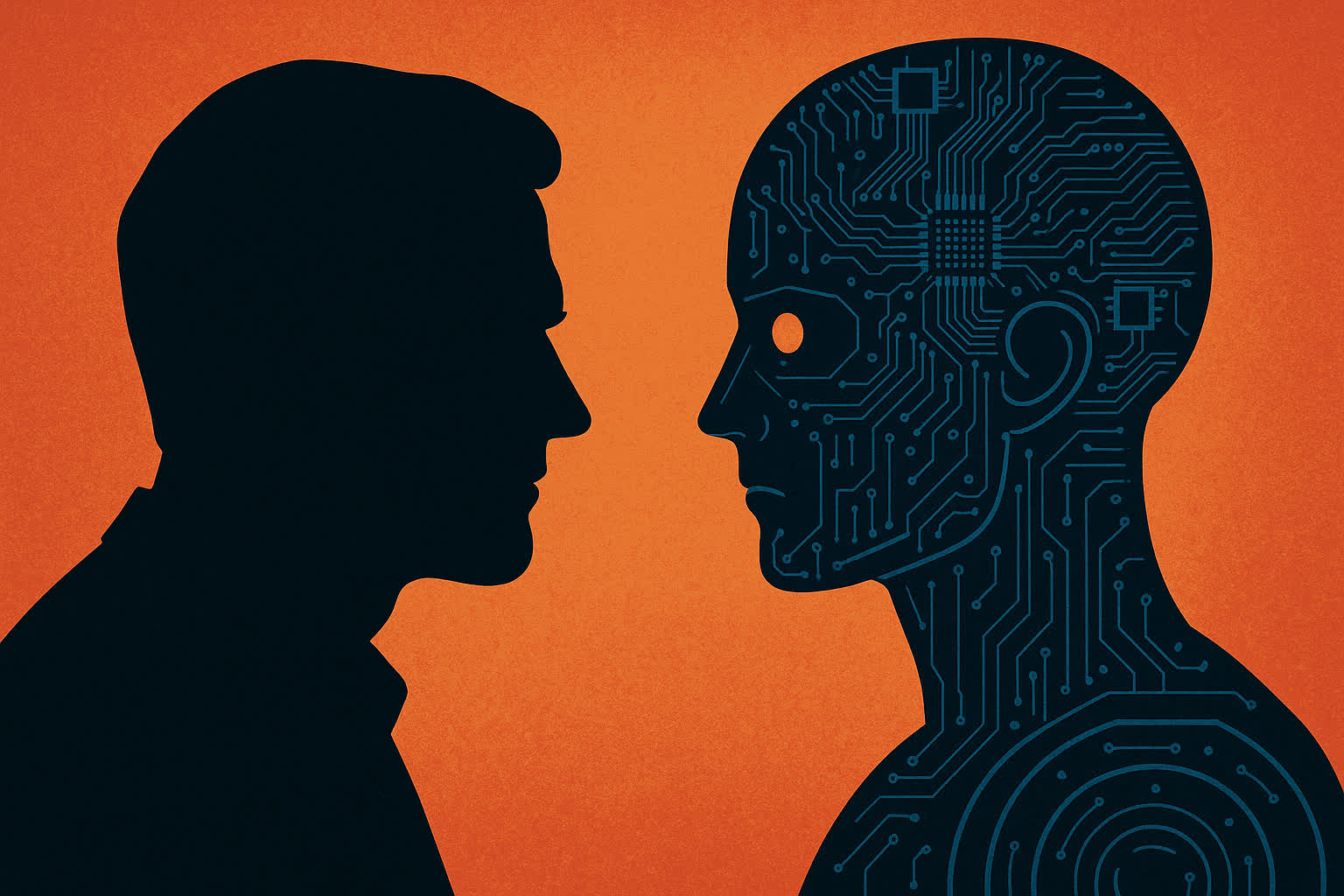
Earlier this week, Hinton said he was skeptical that the safeguards AI companies were building to ensure humans remained "dominant" over AI systems were suffient.
"That's not going to work. They're going to be much smarter than us. They're going to have all sorts of ways to get around that," Hinton said at the Ai4 industry conference in Las Vegas.
Hinton's solution is to build what he calls "maternal instincts" into models to ensure that "they really care about people." This is especially important for when the technology reaches Artificial General Intelligence (AGI) levels that are smarter than humans.
Hinton noted on CNN that there are few examples of smart things being controlled by less intelligent beings. The only one is a mother being controlled by her baby, thanks to evolution building maternal instincts into the mother. If we don't implement these same instincts into AI, "we're going to be history."
Hinton also warns that companies are focusing on making AIs more intelligent rather than giving them empathy toward humans.
Meta's chief AI scientist and another one of the three so-called godfathers of AI, Yann Le Cun, agrees with Hinton.
"Geoff is basically proposing a simplified version of what I've been saying for several years: hardwire the architecture of AI systems so that the only actions they can take are towards completing objectives we give them, subject to guardrails," LeCun wrote in a LinkedIn post. "I have called this 'objective-driven AI.'"
The two guardrails that LeCun thinks are imperative are submission to humans and empathy, though he says many simple, low-level guardrail objectives would also be needed to ensure safety, such as not running people over.
"Those hardwired objectives/guardrails would be the AI equivalent of instinct or drives in animals and humans," LeCun said. He also echoed Hinton's words about how evolution hardwired parenting instincts into humans to protect their young.
There have already been instances of AIs causing harm (albeit often indirectly) to humans, including a man developing a rare 19th-century psychiatric disorder after following ChatGPT's diet advice, the teen who killed himself after becoming obsessed with a Character.ai chatbot, and the man who was deluded into thinking he'd uncovered a mathematical breakthrough after hundreds of hours of conversation with ChatGPT.


