Google is building a Minnesota data center powered by wind, solar, and rust

Skye Jacobs

Posts: 1,988   +58
Staff
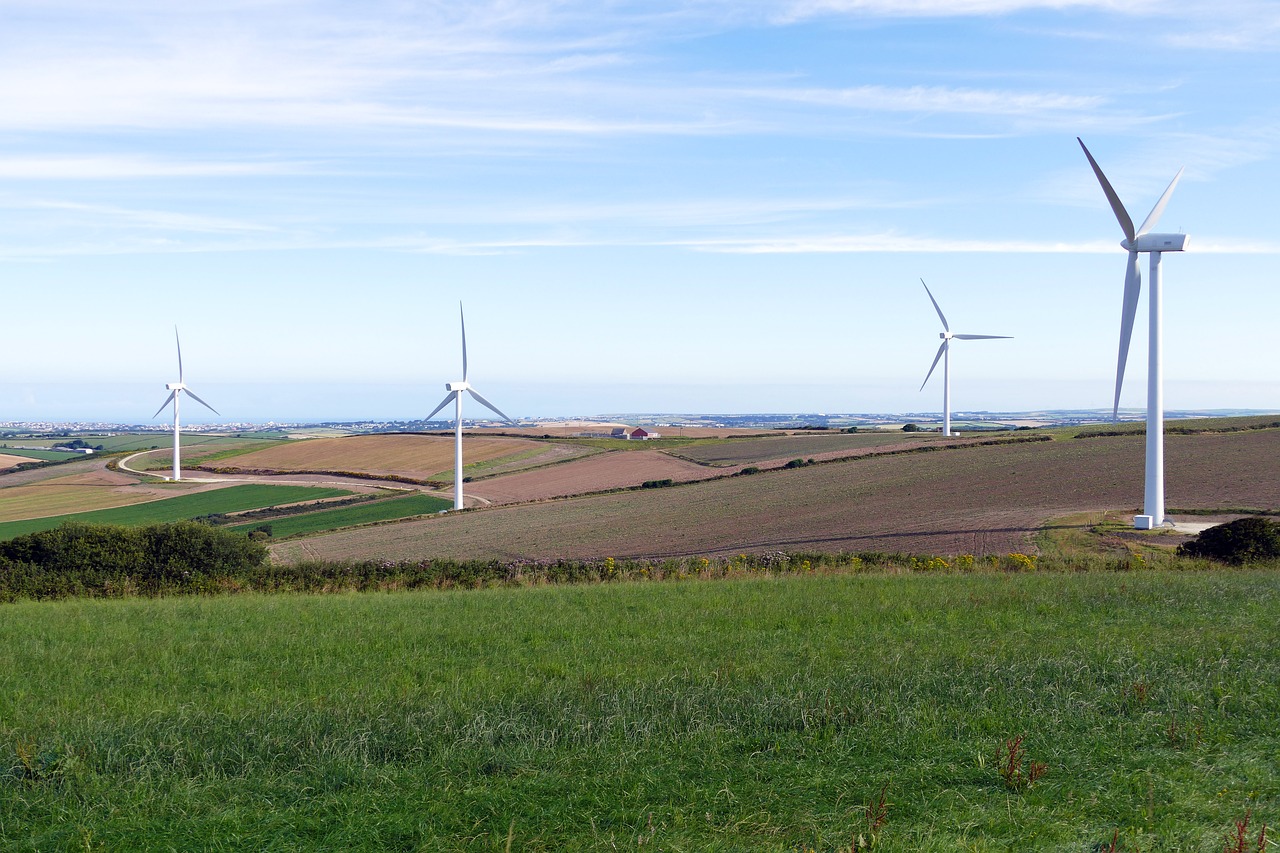
First look: In a flat stretch of southeastern Minnesota, Google is building what may become one of its most technologically ambitious data centers yet – one designed to run almost entirely on renewable power. The Pine Island facility pairs nearly two gigawatts of clean energy generation with an innovative form of long-duration battery storage that literally runs on rust.

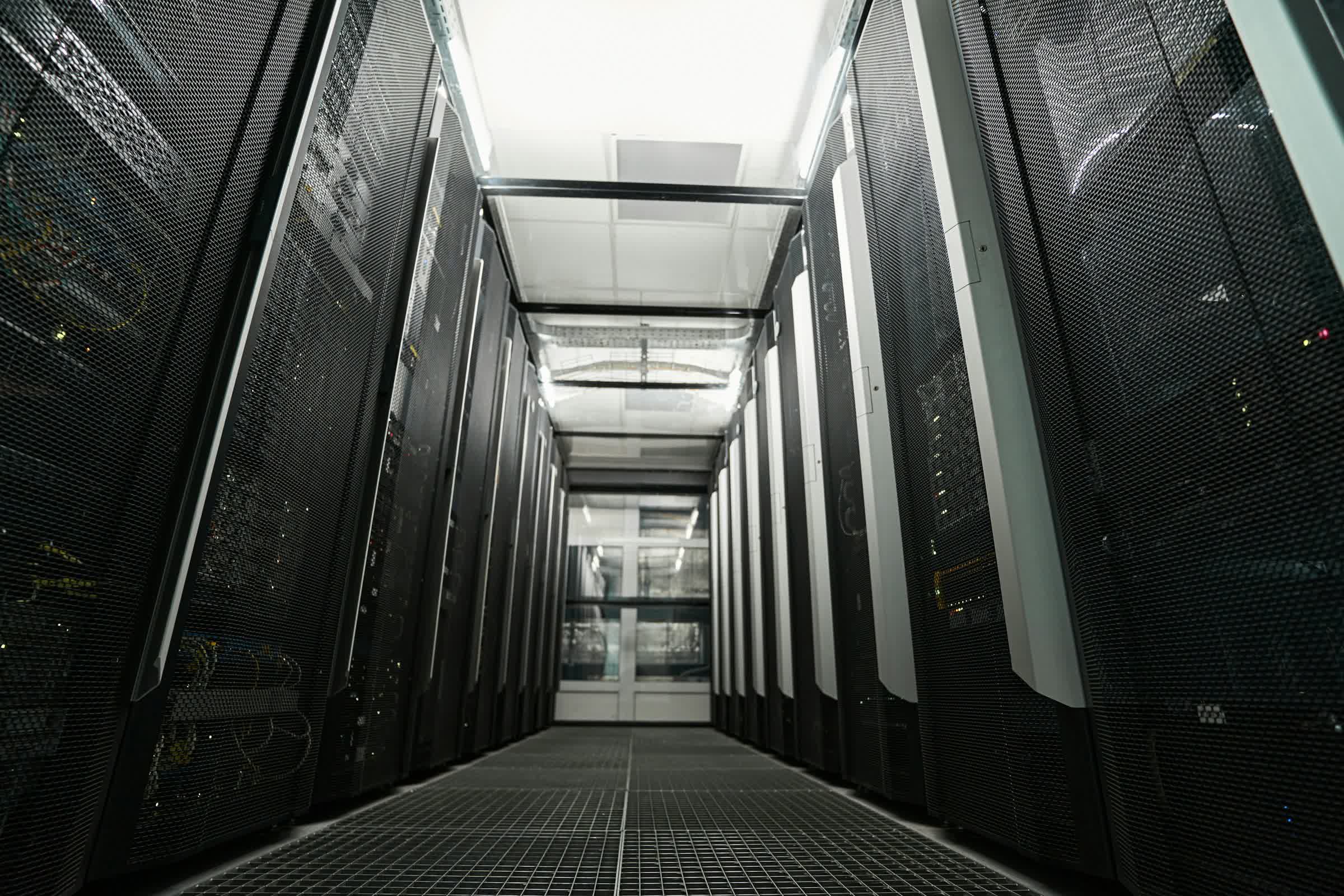
The data center – Google's first in Minnesota – will draw on 1.9 gigawatts of carbon-free electricity from wind and solar infrastructure co-developed with utility giant Xcel Energy. Powering a data center around the clock with renewable energy remains a persistent industry challenge, and Google's solution relies on Form Energy's experimental iron-air battery system, capable of storing up to 30 gigawatt-hours of electricity for as long as 100 hours.

Form Energy's technology departs significantly from the lithium-ion standard found in everything from smartphones to grid-scale batteries. Instead of moving lithium ions through electrolytes, the iron-air process stores energy through a reversible rusting reaction.
When electricity demand arises, oxygen from the air oxidizes tiny iron pellets, creating iron oxide and releasing electrons, effectively discharging the battery. Recharging reverses the reaction, stripping oxygen away and converting rusted iron back to its metallic form.

Though less energy-efficient than lithium-ion batteries – round-trip efficiencies are between 50% and 70%, compared to over 90% for lithium-ion – iron-air cells offer two major advantages: cost and duration. Estimates suggest a storage cost of around $20 per kilowatt-hour, roughly one-third the price of equivalent lithium systems. That trade-off makes the technology particularly well-suited for stabilizing renewable-heavy grids, where maintaining supply over multi-day intervals can matter more than efficiency.
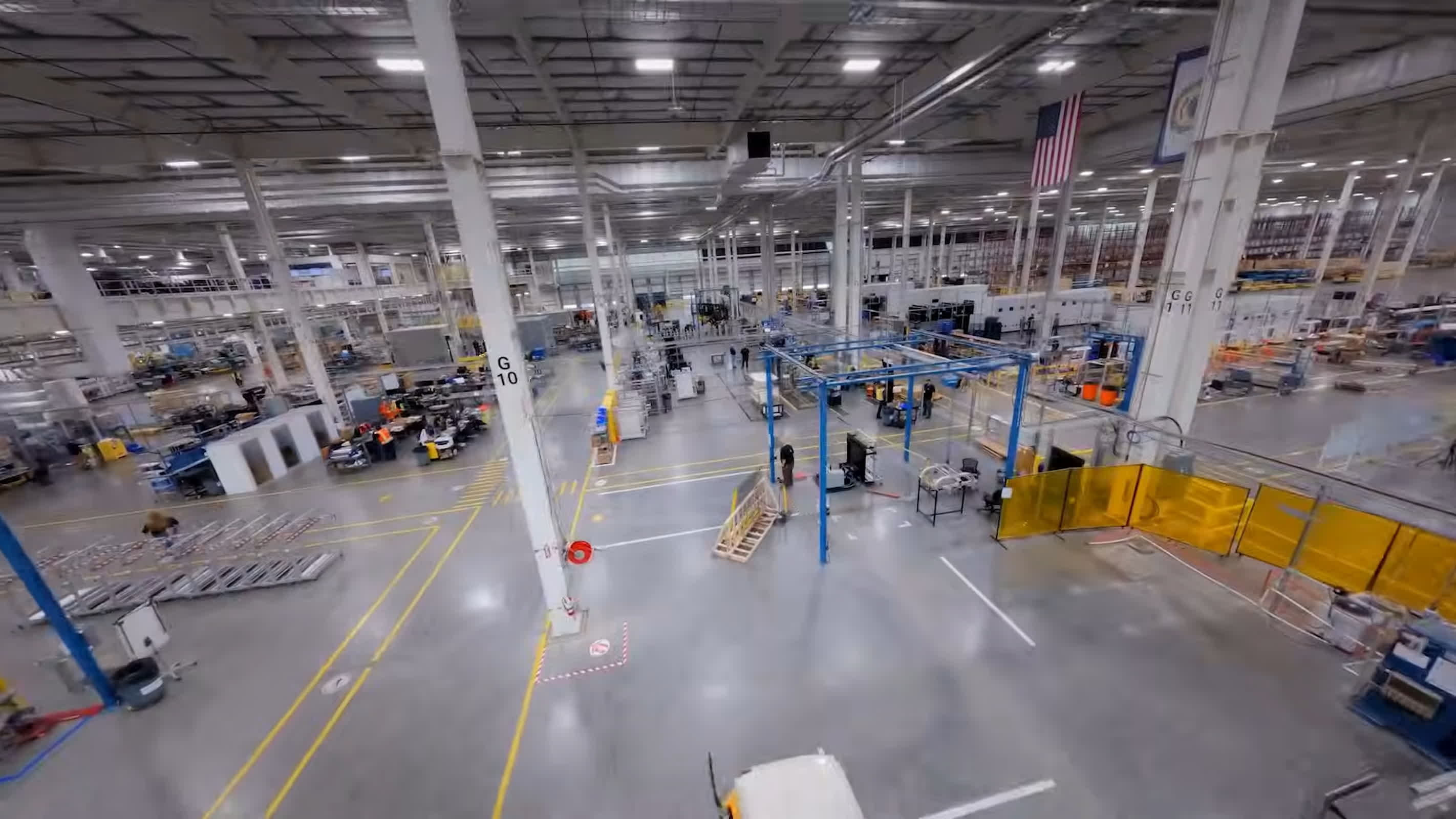
Minnesota is already serving as a testbed for the approach. A smaller Form Energy installation with Great River Energy, currently being assembled in the state, will store 150 MWh and can deliver up to 1.5 MW for as long as 100 hours. Google's Pine Island deployment scales that concept by several orders of magnitude.

Beyond the technology, Google's project also introduces a policy innovation: a new utility rate structure meant to accelerate clean energy investment. Called the Clean Energy Accelerator Charge (CEAC), the mechanism builds on the company's earlier Clean Transition Tariff model used in Nevada with NV Energy.

Under CEAC, Google commits $50 million to Xcel Energy's Capacity Connect program, aimed at distributed storage – deploying smaller batteries across the grid to improve reliability and balance intermittent supply. The structure is designed to enable utilities to fast-track clean power development without violating regulatory price constraints or passing additional costs on to residential customers.

Google says the collaboration demonstrates how large-scale consumers can work with utilities to deepen renewable penetration while advancing storage innovation. For Minnesota, it marks a new model of industrial power sourcing – one in which rust, rather than fossil fuel, could keep the cloud running through still and sunless days.

Permalink to story:

 
The data center ... will draw on 1.9 gigawatts of carbon-free electricity from wind and solar
Except wind and solar aren't carbon-free, of course, given the gargantuan quantities of materials which must be mined and processed to build those huge windmill arrays and solar farms.

20 years ago, wind farms generated more carbon per MW-hr generated than did fossil fuels. Newer, large windmills are more efficient, though once you add in the contribution from the battery array required (plus the 30-50% storage losses from that array), it might shift back in favor of fossil fuels. Even if not, it's still generating orders of magnitude more carbon than the true "green" energy source -- nuclear power.
 
I'll be interested when they tell me that this solar/wind/battery combination supplies 100% of the data center's needs. All too often, we get these huge announcements of how Google, et al. are totally onboard with green power...then we find that the green part is a virtue signal, they get power credits and discounts for using green energy, and when the dust settles, they're still getting 70-80% off of the grid because it's too expensive and unreliable to use it for anything over 20-30%. And, I'll lay you money that unlike the grey market private nuclear and natural gas plants that are being built off the grid. Google will be able to use the grid for 100% of it's needs if the green virtue signaling gets too expensive or unreliable to use. While they still get the credits/discounts and we pick up the bill.
 
Except wind and solar aren't carbon-free, of course, given the gargantuan quantities of materials which must be mined and processed to build those huge windmill arrays and solar farms.

20 years ago, wind farms generated more carbon per MW-hr generated than did fossil fuels. Newer, large windmills are more efficient, though once you add in the contribution from the battery array required (plus the 30-50% storage losses from that array), it might shift back in favor of fossil fuels. Even if not, it's still generating orders of magnitude more carbon than the true "green" energy source -- nuclear power.

Wait, nothing is carbon-free? Shocker!

Got any data to back up your FUD? 20 years ago loads of things were very different, like the phone in your pocket. What matters is now.
 
Wait, nothing is carbon-free? Shocker!
It appears to be a shocker to the article's author, who claims otherwise.

Got any data to back up your FUD?
Plenty, though I suspect someone who needs proof of such an obvious fact won't be swayed by data.

"...A typical 2 MW wind turbine weighs over 1,600 tons...Major materials include roughly 1,300 tons of concrete, 295 tons of steel, 48 tons of iron, 24 tons of fiberglass, 4 tons of copper, and small amounts of rare earth elements like neodymium..."

Assuming a 30% CF and 50% energy storage losses from these batteries, a single 50MW data center will require 141 of these turbines, plus a battery array capable of storing at least 850,000 KW-hrs of energy.
 
Last edited:
Plenty, though I suspect someone who needs proof of such an obvious fact won't be swayed by data.

"...A typical 2 MW wind turbine weighs over 1,600 tons...Major materials include roughly 1,300 tons of concrete, 295 tons of steel, 48 tons of iron, 24 tons of fiberglass, 4 tons of copper, and small amounts of rare earth elements like neodymium..."

Assuming a 30% CF and 50% energy storage losses from these batteries, a single 50MW data center will require 141 of these turbines, plus a battery array capable of storing at least 850,000 KW-hrs of energy.

Those are great numbers but the metric that matters is how do all the energy-generation methods compare over their entire working lifetime? Building nuclear power plants and mining the fissile materials is not carbon-free either. I'm all for nuclear as it's obviously better than anything fossil-fuel based but soft-tossing other non-fossil fuel options under the bus with FUD is deceptive. Yeah a lifetime-use analysis is out of scope for a comment section but IMO spreading FUD about viable options shouldn't be here either, even if the article is lazy with it's coverage.
 
Building nuclear power plants and mining the fissile materials is not carbon-free either./// Yeah a lifetime-use analysis is out of scope for a comment section but IMO spreading FUD about viable options shouldn't be here either
Stating facts isn't FUD. The last time I ran the numbers, for the same amount of materials needed to build a wind farm capable of sustained 50MW output, one could instead construct a 1GW -- that's 1,000 MW -- nuclear reactor. The wind turbines have (optimistically) a 30-year lifespan, whereas nuke plants are being rated today for 60+ years, doubling that 20:1 advantage to 40:1.

As for fuel, the rod assemblies in current commercial reactors are now lasting 5-6 years; the military is building "lifetime" reactors that never need refueling over their entire 50-year lifespan, and -- if we should choose to build them -- we have designs on the books for DU-powered reactors that would give us hundreds of years of power using just the uranium we've already mined.
 
The 50-70% round-trip efficiency sounds bad until you remember the fuel cost is literally zero. Losing 40% of free wind energy is a very different problem than losing 40% of natural gas you paid for. The whole mental model changes when the input is abundant and essentially free.
 
Stating facts isn't FUD. The last time I ran the numbers, for the same amount of materials needed to build a wind farm capable of sustained 50MW output, one could instead construct a 1GW -- that's 1,000 MW -- nuclear reactor. The wind turbines have (optimistically) a 30-year lifespan, whereas nuke plants are being rated today for 60+ years, doubling that 20:1 advantage to 40:1.

As for fuel, the rod assemblies in current commercial reactors are now lasting 5-6 years; the military is building "lifetime" reactors that never need refueling over their entire 50-year lifespan, and -- if we should choose to build them -- we have designs on the books for DU-powered reactors that would give us hundreds of years of power using just the uranium we've already mined.
The carbon debt for a wind turbine is 100% paid in a year or less. I believe the average is 9 months.

Here let me google that for you:
energy payback: https://www.vestas.com/en/sustainability/environment/energy-payback
Carbon Debt: https://bkvenergy.com/learning-cent...anufacture, installation, and decommissioning.

oh geewiz... look who was right?!
 
The carbon debt for a wind turbine is 100% paid in a year or less

Here let me google that for you:
energy payback: https://www.vestas.com/en/sustainability/environment/energy-payback
You're quoting windmill manufacturers? Seriously?

These estimates depend on hundreds of assumptions and variable factors. Those profiting from wind power use wildly unrealistic assumptions and have gotten results down to 0.4 g CO2/kw-hr of use for wind power. Those making similar assumptions against wind power have gotten estimates as high as 360+ g CO2/kr-hr -- nearly 1,000 times higher:


Turbines produced in Europe, with European-mined and European-processed metals and concrete fare much better than those from the US and Asia, due to Europe's differing energy mix and heavier process controls.

The size of the turbine matters also -- a 20 MW turbine generates less per kw-hr than does a 2MW turbine .. but turbines this large are rare. Location also matters heavily as it affects the turbine's CF. And wind farms sited specifically to be besides datacenters are rarely in ideal locations. Oops again.

Nor do ANY of these studies account for coupling the wind farm with the carbon debt of building an enormous battery storage array, nor the additional 40% extra overhead from storage losses.

oh geewiz... look who was right?!
Not you.

The 50-70% round-trip efficiency sounds bad until you remember the fuel cost is literally zero. Losing 40% of free wind energy is a very different problem than losing 40% of natural gas you paid for. The whole mental model changes when the input is abundant and essentially free.
It's not that different. When you lose 40% of wind energy, it means a loss of 40% of the construction and maintenance costs of the wind farm. Or alternately, it means you pay 40% higher construction and maintenance costs to reach the same output. When you add to the base cost of the wind power this additional overhead, plus the cost of the battery array itself, the power becomes substantially more expensive.
 
Last edited:
Back