
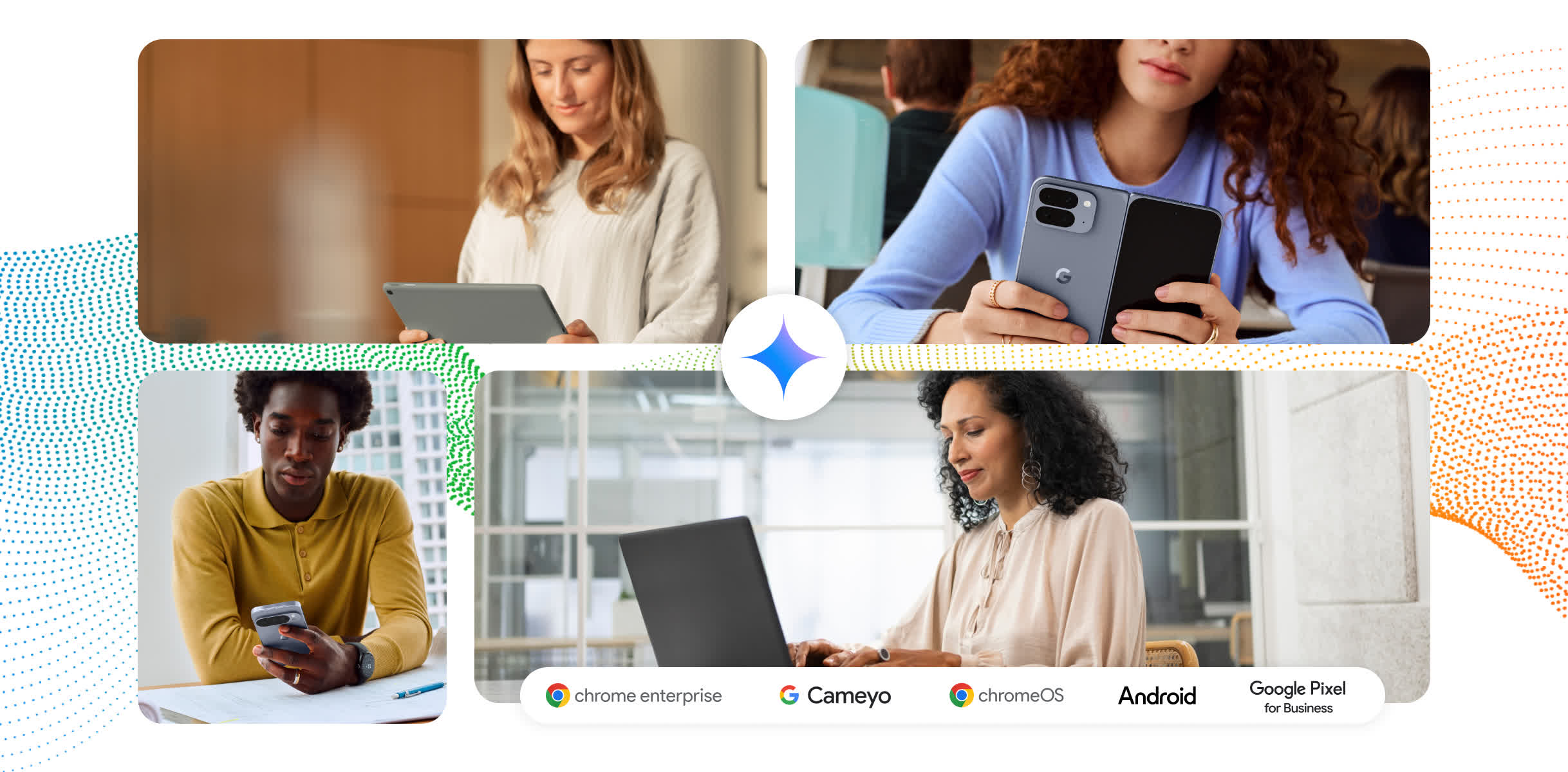
An interesting thing struck me as I listened to a range of Google execs unveil a slew of new business and enterprise focused announcements at their Chrome Summit in NYC: I started to feel like I was at a Microsoft event.
As strange as that may sound, I mean it in the best possible way. I'm used to hearing Microsoft tell a comprehensive, business-focused story that highlights not only new functionality, but also the inherent security and operational integration that enterprise IT departments depend on to bring new products and services into their environments.
In Google's case, while the company has been talking about enterprise-focused products for years, it hasn't always had the kind of cohesive, business-centric perspective that IT professionals look for. Instead, it often felt like a collection of interesting technologies coming from several distinct groups.
At the Chrome Summit (an event that frankly could have been more accurately titled "Google for Enterprise"), Google presented a broad, unified story that showed they truly understand what modern enterprise IT departments need. The company highlighted how it can deliver consistent experiences across multiple platforms and devices, using its Gemini AI capabilities as the connective tissue tying them all together.
The company also highlighted an impressive range of new partnerships with enterprise security and device authentication players, including Cisco, CrowdStrike, Okta, Omnissa, Zscaler, and more. This matters because it reflects Google's increased willingness to integrate its products and services into existing enterprise architectures, rather than assuming it can – or should – do everything itself.
While new partnerships might not sound like a big deal, they added to the sense that Google now has a more realistic and mature view of how to work its way into the enterprise.
What's fascinating is how quickly all of this seems to have come together. First, the company has been on an absolute tear releasing new products. From the Gemini Enterprise launch just a few weeks ago to this week's announcements, it's clear Google is working hard to keep up with the frenetic pace the AI revolution has triggered. In addition, after many years of launching supposedly major initiatives – only to discontinue them or rename them – the company may be finally demonstrating consistency with Gemini. Finally, the success of Google Cloud in the enterprise has brought new respect and trust that effectively acts as a halo for all of Google's enterprise initiatives.
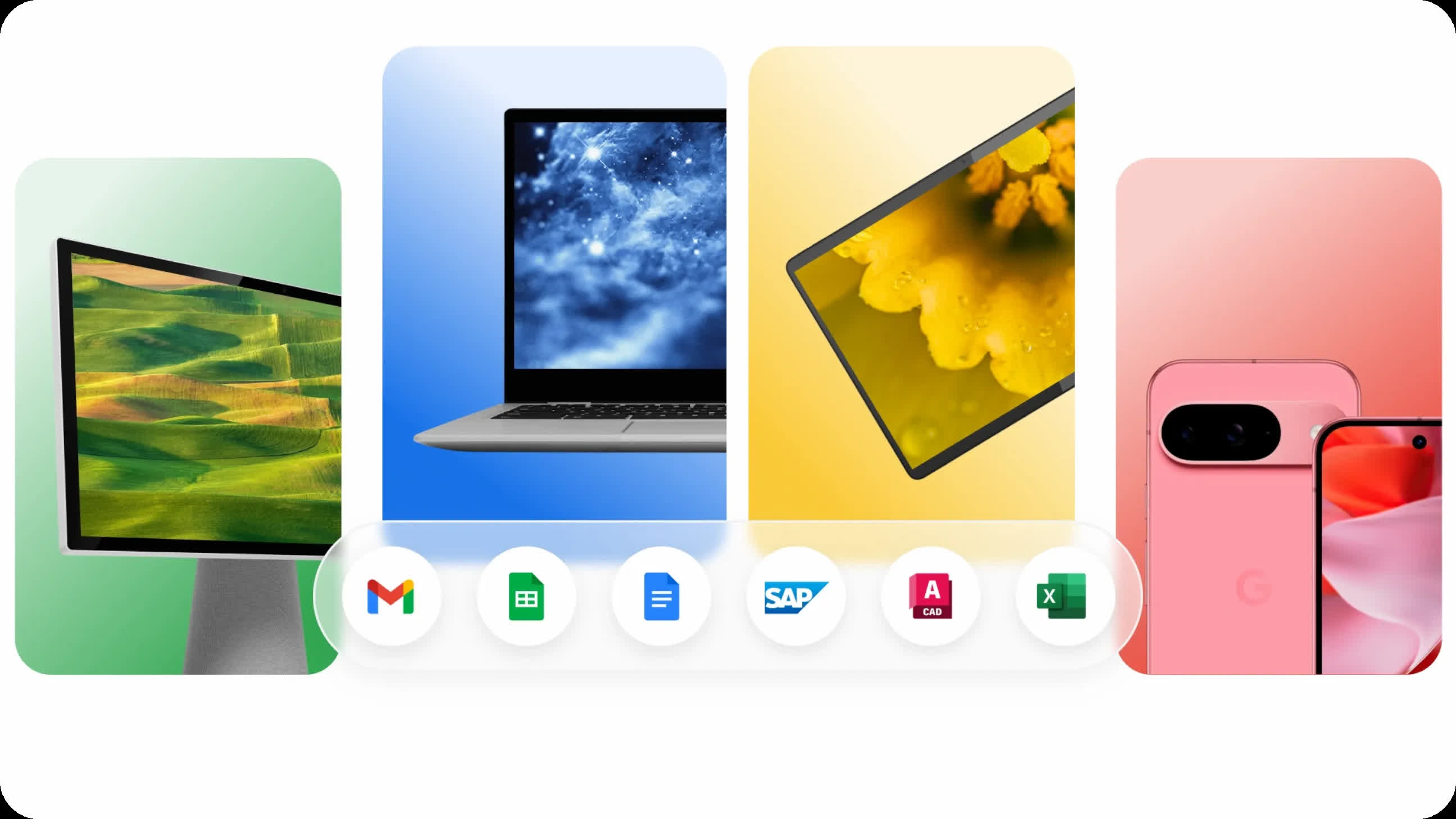
Google also spent considerable time highlighting tactical benefits for enterprise users. In the Chrome browser, for example, the company discussed new security and threat detection capabilities, data loss prevention (DLP) tools, easier integration with SecOps systems, and more. New Android Enterprise features will make it easier for IT to create device trust solutions and manage phones, tablets, and even emerging hardware like the Samsung Galaxy XR headset, developed in partnership with Google.
Arguably the biggest news of the event was the announced "relaunch" of Cameyo, coming November 17. Google purchased Cameyo last year, providing the ability to run legacy Windows applications within a Chrome browser completely independent of the underlying operating system. It uses a form of Virtual Application Delivery (VAD) to essentially convert these legacy applications into Progressive Web Apps (PWAs) that run within the browser. Importantly, it can do this without needing to maintain a costly and confusing VDI infrastructure.
Google is taking advantage of the security capabilities now built into Chrome for things like security protections and controls, as well as a Gemini AI overlay to bring more intelligence to these apps. The net result is a solution that would let companies more easily deal with the huge load of legacy applications they still run, while doing so in a more robust way.
And of course, it wouldn't be a Google event without new devices. The company showcased its new Pixel 10 phones and the agentic features arriving via Magic Cue, its predictive personal assistant. With your permission, Magic Cue can access your emails, calendars, and other information on your Pixel 10, allowing it to insert itself into text threads, surface relevant information, and more. Google also previewed the upcoming Google Beam 3D video communication system, which HP is expected to bring to market in March. Finally, the company teased impressive new work from DeepMind on emerging model types and AI applications.
In the end, Google made a strong case that it can control every layer of an AI solution stack – from semiconductors and cloud infrastructure to devices, operating systems, productivity apps, and AI models. More than simply listing all these aspects, they showed how they're starting to integrate them together in ways that can offer meaningful benefits to IT professionals.
Bob O'Donnell is the founder and chief analyst of TECHnalysis Research, LLC a technology consulting firm that provides strategic consulting and market research services to the technology industry and professional financial community. You can follow him on X @bobodtech
Google is stitching its fragmented enterprise world into something real


