Something to look forward to: For nearly twenty years, Google Translate has served primarily as a quick reference tool for translating words and phrases. That role may soon expand, as evidence points to Google preparing the app to function as a full-fledged language learning platform.
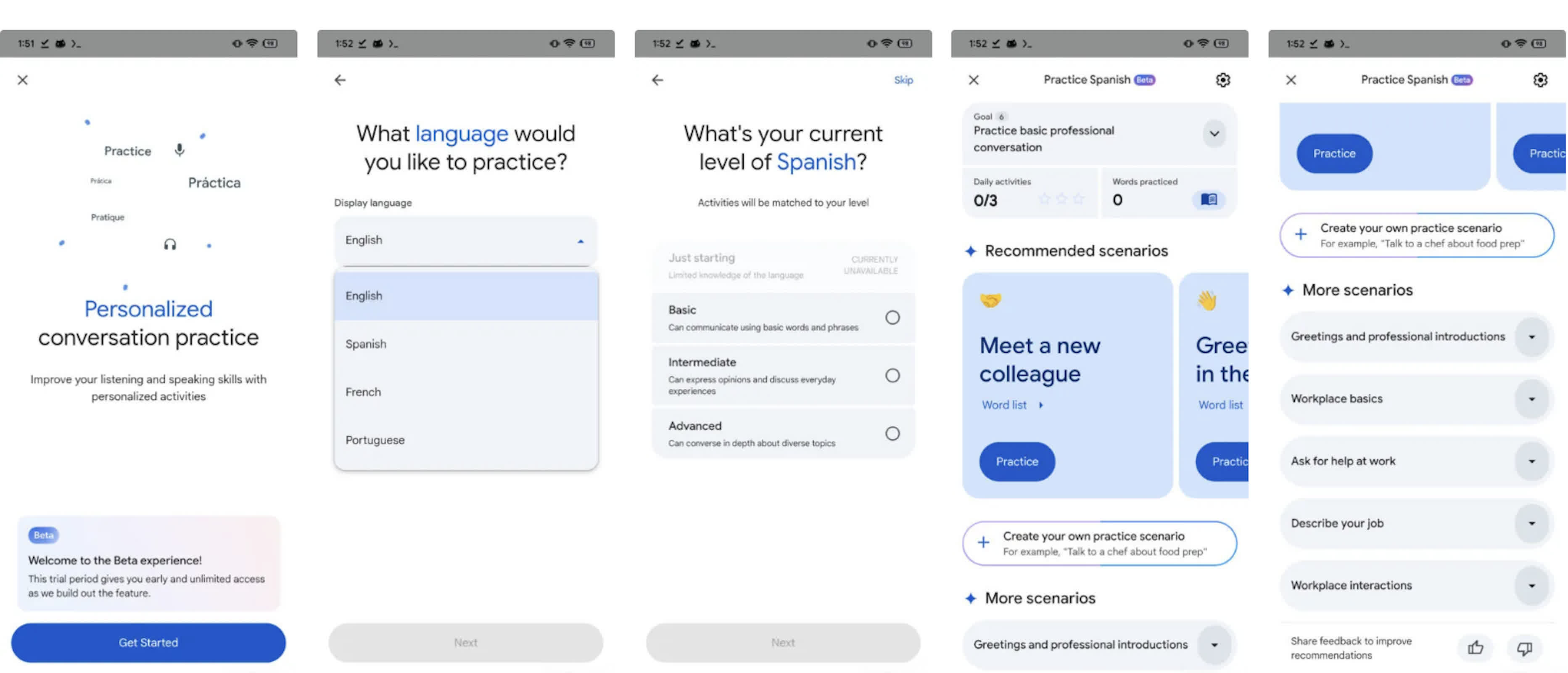
Android Authority has uncovered a feature called Practice within the latest release of the Google Translate app. Currently hidden and marked as being in beta, it was enabled through an internal teardown of the app by the publication. A Telegram user first spotted the option, and subsequent testing confirmed that it creates interactive, AI-assisted lessons intended to help users practice new languages.
This development follows Android Authority's earlier reporting in April, when the site first uncovered code hinting at the tool's existence. The most recent discovery marks the first time the feature has been activated and tested.
According to tests, users are asked to select one of four supported languages: English, Spanish, French, and Portuguese. At present, only Spanish and French are functional. Learners can then set their proficiency level, ranging from Basic through Advanced, though the introductory Just Starting option is currently unavailable.
From there, the app presents practice scenarios. These range from everyday interactions such as ordering food and drink or asking for directions, to professional tasks like describing job responsibilities. Each scenario is divided into subtopics: for example, "asking for directions" breaks down into smaller lessons about finding a restaurant, navigating near a hotel, or locating a train station.
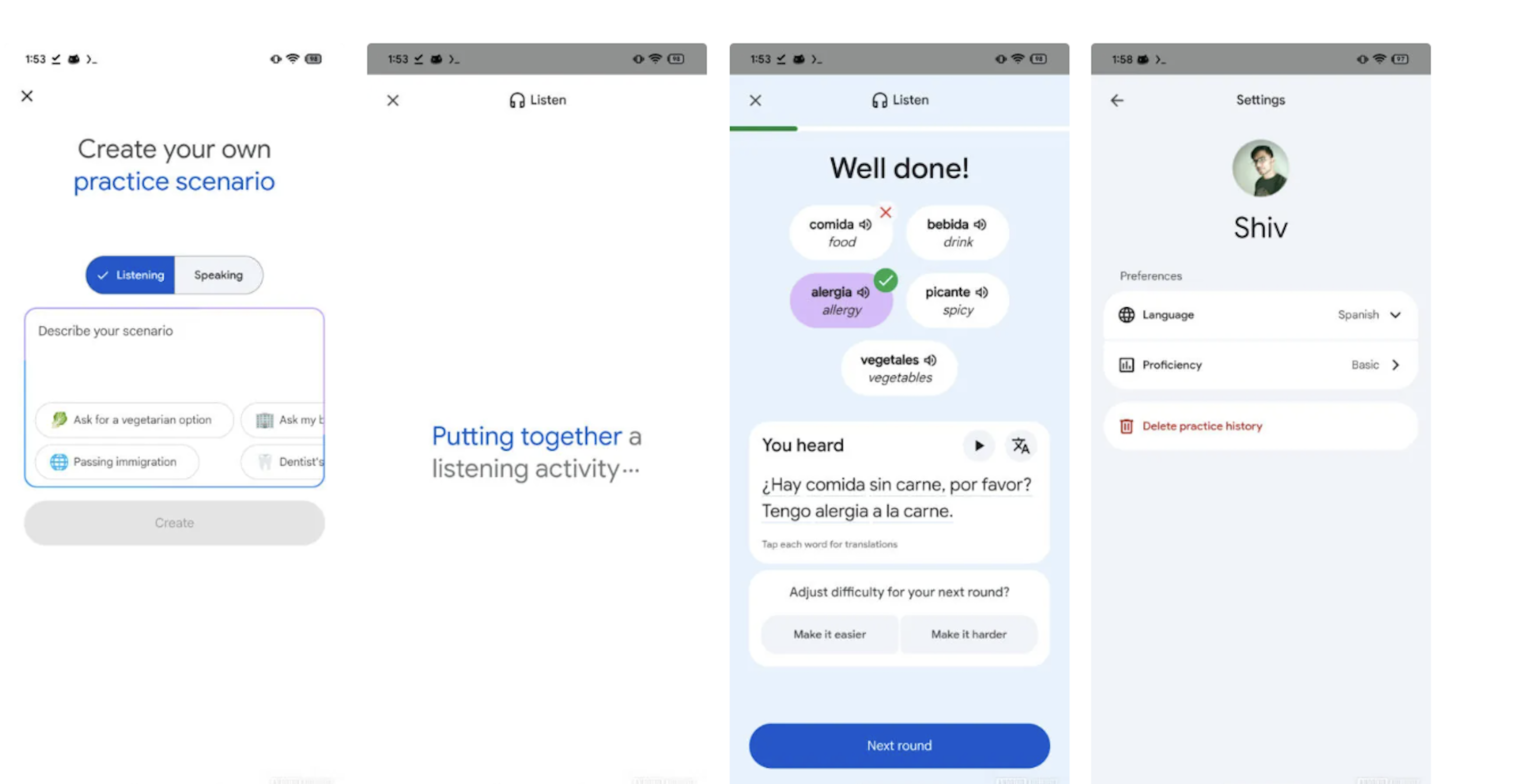
The feature also allows personalization through custom prompts. Users may specify their situations – such as preparing for a ski trip – and request targeted lessons to acquire relevant vocabulary. Scenarios can be adapted for listening or speaking practice. Lessons are delivered in rounds, and after each exercise, users can adjust the difficulty for future sessions.
Google Translate's Practice mode keeps track of progress by recording completed goals and learned words. It also offers reminders in the form of daily activities, a strategy similar to gamified learning models used by established platforms like Duolingo. A dedicated settings page lets learners change their language, adjust proficiency level, or erase practice history.
Screenshots captured during testing indicate that current access is described as a "trial period," which could mean that a paid model will follow. Although Google has not made any announcements, speculation suggests the feature could become part of the company's broader suite of premium AI tools, including subscription-based services tied to Google Gemini.
At this stage, it is unclear how widely Google is testing the tool. The fact that some users have encountered it in live apps suggests the company may have begun limited rollouts, even before an official launch.
The unveiling of Google's experimental teaching tool comes as AI increasingly reshapes the language-learning industry. Google itself has tested smaller AI-driven learning features within its Labs projects, though until now these were separate from its Translate app.
Meanwhile, competitors are also rethinking their approaches to education. Earlier this year, Duolingo announced plans to become an "AI-first" company, signaling a move to automate work previously done by contractors. Following backlash from users, the company scaled back those plans but has continued to emphasize AI integration into its courses.
While the Practice feature remains unreleased, its functionality appears almost production-ready. If formally launched, it would mark a shift in Google Translate from being a reference utility toward a direct competitor in the crowded online language learning market. With Duolingo, Babbel, and other platforms already relying heavily on AI, Google's entry could significantly affect how millions of people approach learning new languages.
Image credit: Android Authority
Google Translate could soon challenge Duolingo with gamified language lessons


