The big picture: Google's ambitions in the smart TV market have reached a critical juncture as the company quietly shifts its revenue strategy for Google TV, amid persistent struggles to monetize the platform effectively. Despite notable user growth and annual investments in the hundreds of millions of dollars, Google is confronting harsh economic realities in a space dominated by fierce competitors like Amazon and Roku.
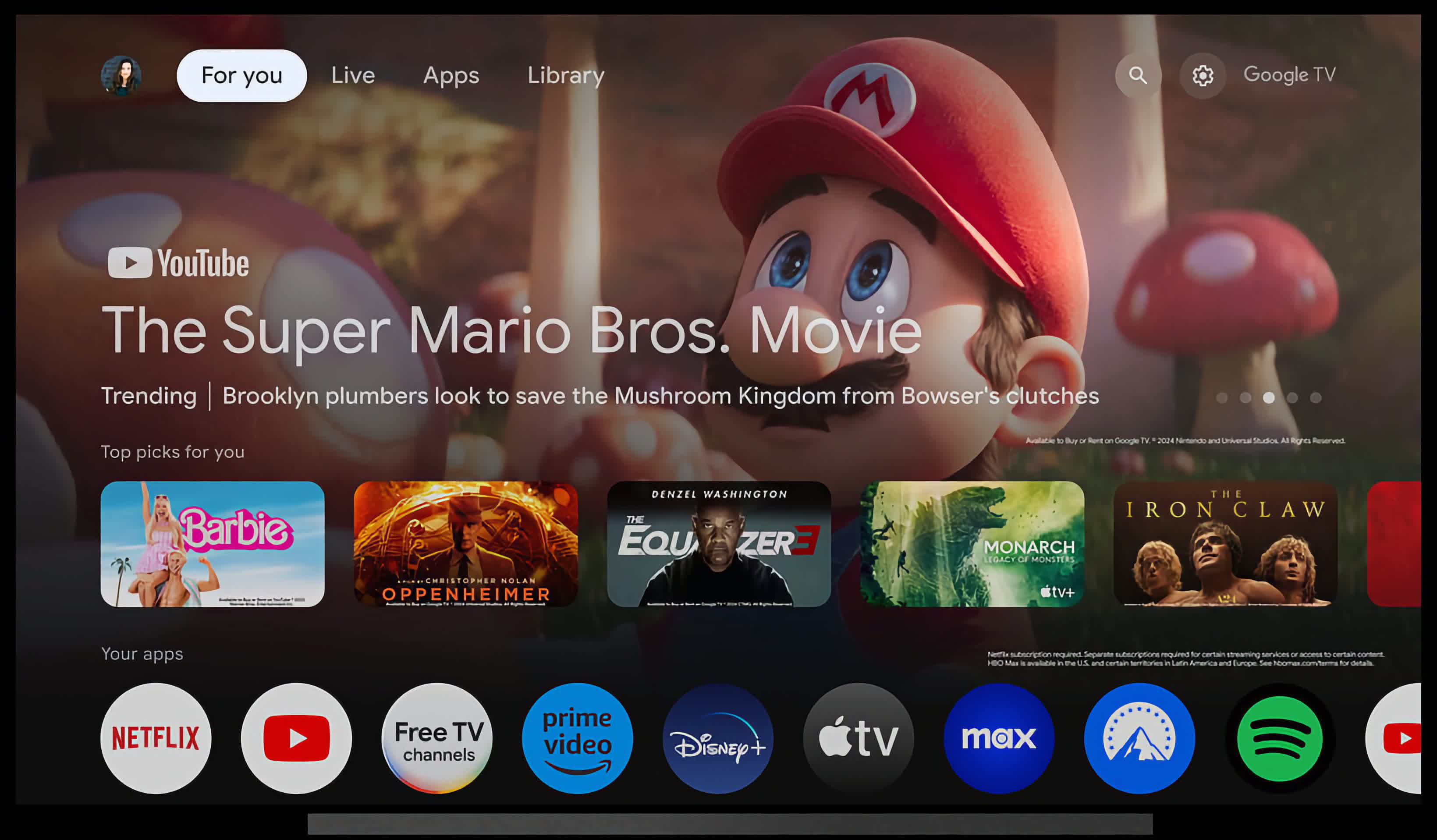
Google TV's core issues revolve around advertising, the financial engine for most smart TV platforms. Historically, Google followed the standard industry model: publishers seeking inclusion on Google TV had to give up a portion of their advertising inventory, allowing Google to sell those ad slots directly. This model, similar to those used by Roku and Vizio, enabled platform operators to generate revenue in exchange for maintaining the software ecosystem.
However, multiple sources familiar with the matter told The Verge's Janko Roettgers that, last year, Google abruptly changed course. The company handed control of those coveted ad slots back to publishers and now only takes a share of the resulting revenue, no longer dictating or directly supplying ads.
This move is widely seen as a tacit acknowledgment that content providers are more effective at selling their own inventory, something Google had long resisted admitting.
This shift marks a significant, if implicit, concession: Google – one of the world's most powerful advertising companies – has not yet cracked the code for monetizing advertising on its own television platform. While Google TV has grown rapidly in market share since the 2020 consolidation of Android TV and Chromecast under a single brand, reaching 270 million monthly active devices by late 2024 according to the company, much of that growth has come from overseas markets, where monetization is far more limited.
YouTube executives have questioned whether it's better to spend money on YouTube instead of Google TV.
Additionally, a significant portion of Google TV's global presence consists of operator-customized versions that provide limited opportunities for Google to profit, according to sources cited by Roettgers.
Rival strategies have further complicated Google's efforts. Amazon, for instance, has secured valuable retail shelf space at major chains like Costco by paying so-called "bounties" of up to $50 per Fire TV device sold, according to sources. Put in perspective that highly capable Fire TV 4K sticks currently sell for as little as $30.
While Amazon declined to comment on specific terms, these aggressive subsidies have made it harder for Google to match such incentives. Google has paid similar bounties to hardware makers and retailers, but not at Amazon's scale.
As a result, debate is intensifying within Google over how much more money should be funneled into Google TV to maintain relevance. Some employees and executives reportedly view the cost of competing with Amazon's incentives as unsustainable, particularly as profitability remains elusive.
When asked for comment, Shalini Govil-Pai, Google's VP and general manager of TV platforms, issued a statement emphasizing the company's focus on innovation, user experience, and continued investment in Google TV. She highlighted high user ratings and global reach but did not address the platform's profitability.
Complicating matters, YouTube has continued to surge in popularity and is undoubtedly Google's crown jewel in TV-based streaming. In February 2025, it accounted for a record 11.6% of all US TV viewing, according to Nielsen, and generated $9.8 billion in ad revenue in the previous quarter.
This explosive growth has reportedly shifted internal priorities. Google's sales teams are increasingly focused on YouTube, which has become so popular that it no longer relies on Google's own TV hardware to strike valuable deals with partners. Some YouTube executives have openly questioned whether continued investment in Google TV is worthwhile, especially when those resources could be more profitably redirected to YouTube.
Signs of retrenchment are already visible. Reporting from The Information and sources interviewed by Roettgers indicate that Google has implemented budget cuts for Google TV, affecting both staff and the retail bounties required to remain competitive. The company is also said to be seeking shorter terms on these costly commercial agreements.
Despite these challenges, a full retreat from the smart TV space appears unlikely.
Google TV may remain part of the company's broader consumer strategy, but as economic pressures mount and competition intensifies, insiders suggest the platform could evolve into a smaller, less ambitious endeavor. It may come to resemble Apple's historically limited approach to televisions: strategically important, but ultimately a costly side project rather than a core business.


