
Something to look forward to: GPD's next handheld gaming PC tests the limits of portability, featuring hardware that directly competes against gaming laptops. Compared to last year's model, the GPD Win 5 promises a generational leap in performance, but it's so power-hungry that it no longer includes an internal battery.
Key details about GPD's upcoming flagship handheld are now available on the company's online store, confirming that the Win series is moving into an entirely new performance class. While pricing hasn't been finalized, at least one influencer who tested the device estimates it will cost under $1,500.
A major shift for the lineup is GPD's decision to use the Ryzen AI Max+ 395 APU, a processor designed for high-end laptops. This chip also powers devices like the Asus ROG Flow Z13 2-in-1, the OneXPlayer Super X 2-in-1, and the Framework Desktop – all of which typically belong to a very different performance category compared to the compact 20cm x 26cm x 5.5cm GPD Win 5.
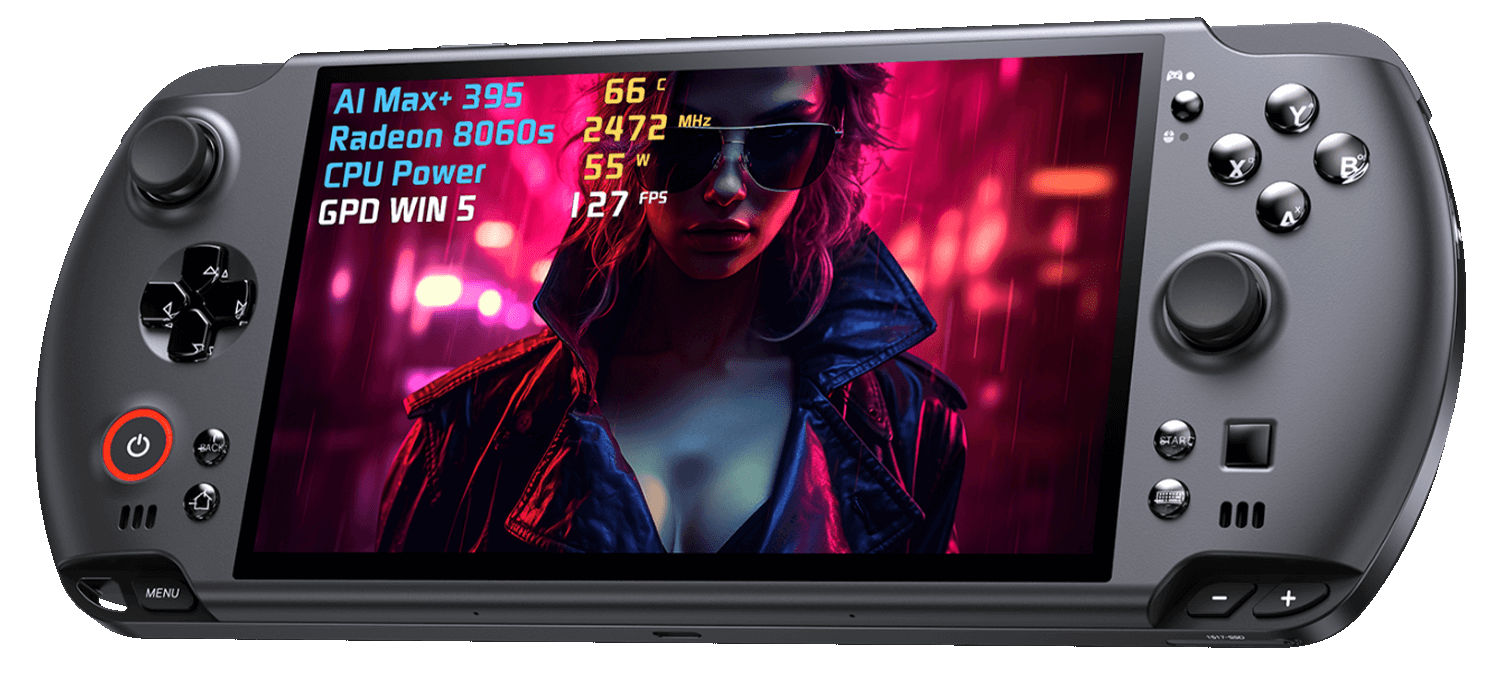
Compared to the GPD Win 4, which used a Strix Point Ryzen AI 9 HX 370, the Win 5 delivers significant upgrades in CPU core count, GPU horsepower, TDP, and memory capacity.
The new model jumps from 12 to 16 Zen 5 cores, while the Radeon 8060S GPU scales up from 16 to 40 RDNA 3.5 compute units. Power draw also rises sharply, from 15 – 30W on the Win 4 to a range of 45 – 120W on the Win 5. Memory options now include 32GB, 64GB, or 128GB of LPDDR5X RAM – configurations that exceed most desktops.
These improvements translate to impressive real-world performance. The GPD Win 5 can run many recent high-end PC games above 60fps at 1080p without lowering graphics settings.
In ITHome's benchmarks, the 8060S GPU outperformed the laptop RTX 4060 in Fire Strike and matched it in Time Spy. Test results include 192 fps in Apex Legends, 93 fps in Assassin's Creed: Shadows, 70 fps in both Cyberpunk 2077 and Indiana Jones and the Great Circle, and 61 fps in Alan Wake 2. Forza Horizon 5 reached 98 fps in ITHome's test and maintained over 140 fps in influencer MuBuS' teardown video.
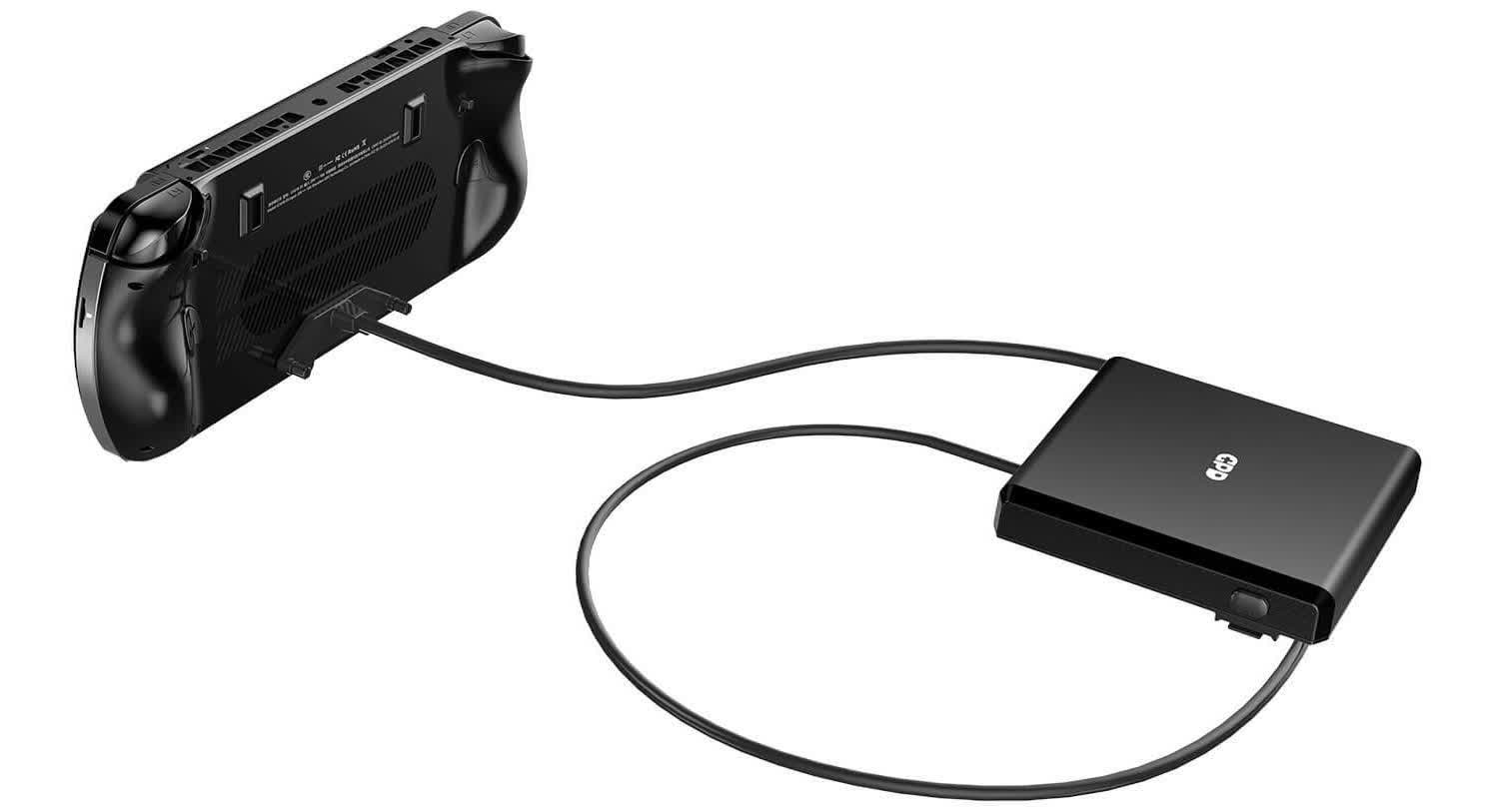
The biggest caveat is power: the GPD Win 5 requires a large external 80Wh battery pack that attaches to the rear or connects via cable. However, this design allows hot-swapping between multiple packs. With a single button press, the device enters hibernation to preserve progress while switching batteries.
Another standout feature is support for Biwin's new mini SSDs that are only slightly larger than microSD cards but capable of transfer speeds up to 3.7GB/s.
The GPD Win 5 is scheduled to launch on October 17.
GPD Win 5 launches October 17 with RTX 4060 laptop-level power, external battery required


