Hisense TVs caught showing non-skippable ads when changing inputs or channels

Skye Jacobs

Posts: 1,982   +58
Staff
WTF?! What began as a handful of online complaints about startup ads has grown into a broader dispute over how far television makers can go to monetize their hardware. Hisense, the Chinese electronics maker known for its budget-friendly TVs, is facing criticism after users across Europe discovered non-skippable commercials playing during basic actions such as turning the set on, changing channels, or switching HDMI inputs.

The same behavior has been documented on models running Hisense's own VIDAA operating system – now rebranded Home OS – which also powers TVs sold under brands including Akai, Schneider, and Loewe. Initially dismissed as isolated reports, the issue appears to have persisted for at least a few years. One of the first public mentions came in 2022, when a Reddit user noticed sponsored content in the input selection menu. Since then, complaints have intensified, with recent videos showing full-screen ads appearing mid-navigation.

Spanish media outlets El Español and La Razón independently verified that users in Spain were forced to watch ads simply for changing channels. The same phenomenon has surfaced in the UK and Germany, according to screenshots and local forum discussions.
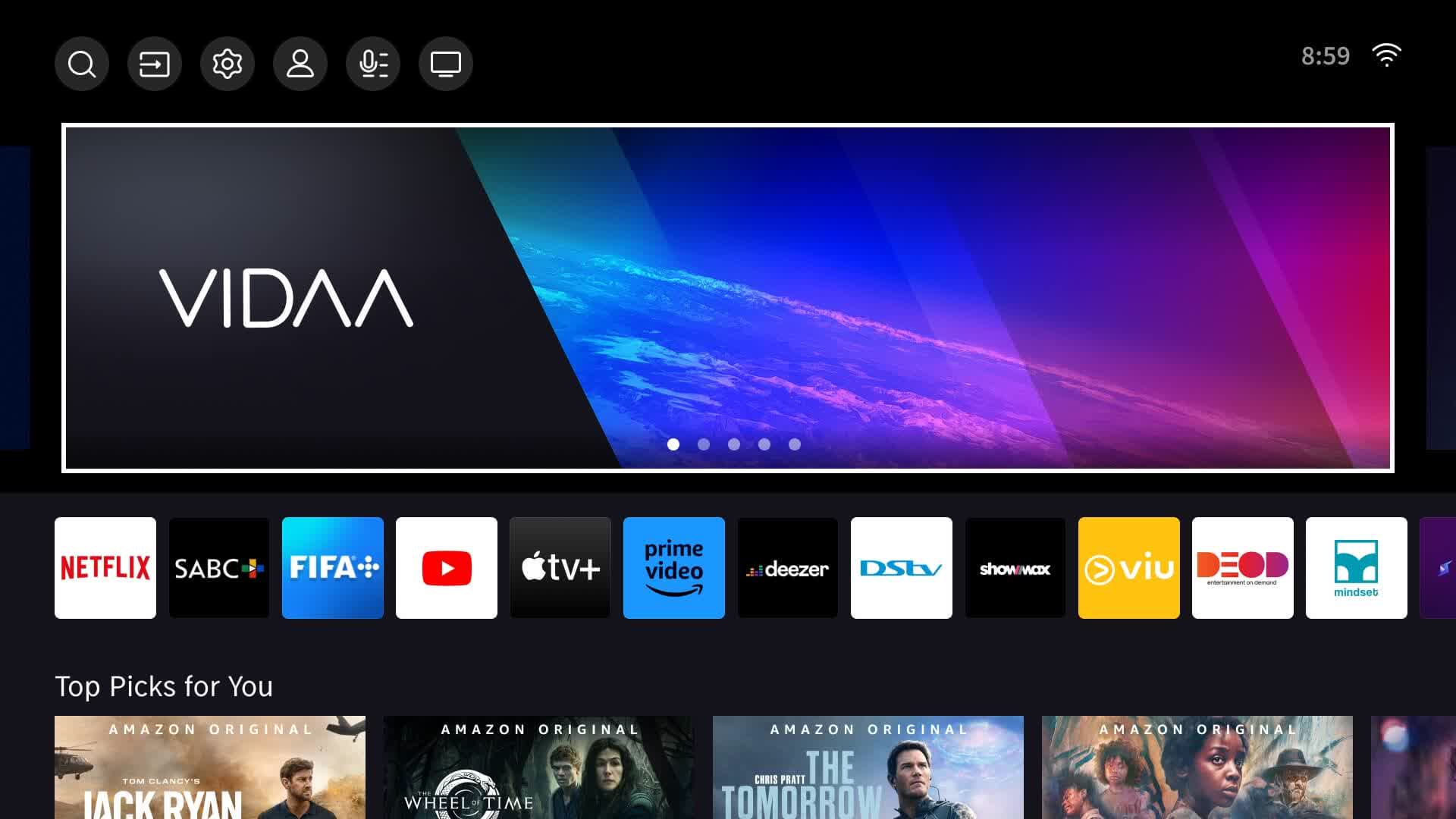
Hisense acknowledges the behavior but attributes it to a temporary "spot test" conducted only in Spain to evaluate "advertising formats linked to free content within the platform." The company insists the test did not limit functionality and claims it has "now been removed."

That explanation has done little to settle the matter. Users in other countries continue to report identical behavior, suggesting the practice extends far beyond a single market.

Technical details reinforce that suspicion. The VIDAA platform is tied to an international ad-placement partnership with Teads, a digital advertising firm with a connected-TV network spanning multiple regions.

Hisense's own support process also raises eyebrows: several users say they were able to disable the ads only after emailing the company with their TV's unique identifier to an Australian service address – evidence, some argue, that ad delivery is centrally controlled on the server side rather than within the local software.

These findings have spurred debate about user consent and post-purchase control in connected devices. Because the new ads appeared after system updates, owners had not agreed to them at the time of purchase, and many say every ad-related setting on their televisions was already switched off. Advice circulating in user forums ranges from altering DNS settings to cutting the TV off from Wi-Fi entirely.

Hisense's public statement emphasizes that customers can "normally" use all HDMI ports and apps without interruption and calls the experiment temporary and completed. Yet the timing and geographic spread of the complaints suggest a longer-running rollout.

The VIDAA operating system's own web pages list its distribution partners in Europe, including those whose devices now show similar ad behavior, hinting that the feature may be embedded deep in the shared software stack rather than implemented per market.

For a brand that built its reputation on low prices and solid picture quality, the backlash could undermine its appeal among cost-conscious buyers who prefer simplicity over monetization experiments. Smart TVs have long blended convenience with data collection, but the Hisense case crystallizes a growing frustration in the connected-device world: ownership increasingly comes with a business model attached.

Permalink to story:

 
If you connect your TV to the internet you get what you deserve. Weird that this is the 2nd time today I've typed that. ...
True, its never been easier to get some sort of other device that you have more control over, to use to play stuff on the TV. Personally, I just use a computer with a wireless KB&M, but there no shortage of other devices that will do the trick.
 
Today's companies are greedy scoundrels. It is not the user's fault.
Companies have been greedy scoundrels for decades. There are many of us that have warned against this for years now. We've seen multiple instances of this type of thing occurring.

It's the users fault. If they cant do a modicum of research or learn from others, they deserve what happens to them.
True, its never been easier to get some sort of other device that you have more control over, to use to play stuff on the TV. Personally, I just use a computer with a wireless KB&M, but there no shortage of other devices that will do the trick.
I get so many weird looks when I tell people I steam with a computer. Like, it just never occurs to anyone that PCs can stream from any service, use adblockers, and play local media, and used business PCs are as cheap as set top boxes too.
 
Companies have been greedy scoundrels for decades. There are many of us that have warned against this for years now. We've seen multiple instances of this type of thing occurring.

It's the users fault. If they cant do a modicum of research or learn from others, they deserve what happens to them.

I disagree that it's user fault; this is victim blaming. Rather, the tails of corporations "should" be cut short, their abusive or anti-consumer tactics not allowed.
 
Last edited:
Companies have been greedy scoundrels for decades. There are many of us that have warned against this for years now. We've seen multiple instances of this type of thing occurring.

It's the users fault. If they cant do a modicum of research or learn from others, they deserve what happens to them.
I get so many weird looks when I tell people I steam with a computer. Like, it just never occurs to anyone that PCs can stream from any service, use adblockers, and play local media, and used business PCs are as cheap as set top boxes too.
An unreasonably harsh take, IMHO.

I agree that people should be encouraged to do better research into the products they use, but not everyone is technically inclined or capable of it. And calling them stupid and saying they “deserve it” is just a victim blame full stop.

My 82-year-old father, doesn’t “deserve it,” nor can he be expected to understand the technical details. He just wants his TV to work out of the box without being spied on or harassed. And not everyone has someone technical watching out or able to support them.
 
I disagree that it's user fault; this is victim blaming. Rather, the tails of corporations "should" be cut short, their abusive or anti-consumer tactics not allowed.
I have to agree. IMO, the low prices for these sets are ending up being "Loss Leaders" at best, and, IMO, false advertising at worst.

I have to wonder what at Hisense precipitated this. Was it profit, or what. If it was profit, IMO, they should raise prices rather than continue to deceive their customers by selling their sets at low prices and then forcing them to view commercials to access normal functions of the TV.

I could see someone arguing in court that they are being forced to continue to pay for the set even though they paid full-price at the time of the sale.

I'm glad I was able to afford something better than a Hisense TV.
 
I disagree that it's user fault; this is victim blaming. Rather, the tails of corporations "should" be cut short, their abusive or anti-consumer tactics not allowed.
"victim blaming" holds no merit when the victims keep going back. At some point you throw up your hands and go "ok enjoy the consequences". Endlessly blaming these actions on other parties and making excuses has a name too: Enabling.

You know what would cut the tails of corpos? Hordes of consumers not continuing to buy their products. All they have to do is put an ounce of thought into their lives and this problem goes away. Instead we get warnings about not drinking battery acid because most people have nothing going on in the noggin and have to be guided through life by das blinkenlight.
An unreasonably harsh take, IMHO.

I agree that people should be encouraged to do better research into the products they use, but not everyone is technically inclined or capable of it. And calling them stupid and saying they “deserve it” is just a victim blame full stop.

My 82-year-old father, doesn’t “deserve it,” nor can he be expected to understand the technical details. He just wants his TV to work out of the box without being spied on or harassed. And not everyone has someone technical watching out or able to support them.
If you're technically inclined enough to connect your TV to your WiFi, you are technically inclined enough to google "how to block youtube ads". It's not hard.

Your 82 year old father can use his TV out of the box without being spied on or harassed. You dont now have to put in your wifi for the TV to work. So that's a non argument. If he IS knowledgeable enough to know what streaming is and how wifi works, then he is smart enough to know how to plug a box into the TV instead of using the TV. If he is not willing to learn that far....then that is stupidity, or if you want to be charitably, willful ignorance.

Technology is ultimately a tool. No different then a table saw or a car. If you are not willing to learn how to use the tool properly....dont buy the tool.
 
Last edited:
Companies have been greedy scoundrels for decades. There are many of us that have warned against this for years now. We've seen multiple instances of this type of thing occurring.

It's the users fault. If they cant do a modicum of research or learn from others, they deserve what happens to them.
I get so many weird looks when I tell people I steam with a computer. Like, it just never occurs to anyone that PCs can stream from any service, use adblockers, and play local media, and used business PCs are as cheap as set top boxes too.
This is a firmware update AFTER the fact. You can't expect them to magically forecast what they're going to do.
 
This is a firmware update AFTER the fact. You can't expect them to magically forecast what they're going to do.
This is always why I set my TV for manual updates only, and I always keep the last firmware as a backup in case I need to rollback
 
It TCL is going to do that, people need to not connect their TVs to the internet. Their customers should just use a Roku, Amazon Firestick or a Xumo Streambox as their streaming source.
 
I have to agree. IMO, the low prices for these sets are ending up being "Loss Leaders" at best, and, IMO, false advertising at worst.

I have to wonder what at Hisense precipitated this. Was it profit, or what. If it was profit, IMO, they should raise prices rather than continue to deceive their customers by selling their sets at low prices and then forcing them to view commercials to access normal functions of the TV.

I could see someone arguing in court that they are being forced to continue to pay for the set even though they paid full-price at the time of the sale.

I'm glad I was able to afford something better than a Hisense TV.
I don't have experience with Hisense TVs, but here, they've got a reputation for good quality and reasonable pricing, displacing the Sonys, LGs, and Samsungs that were formerly popular. People trust them, but tactics like this erode that trust.

"victim blaming" holds no merit when the victims keep going back. At some point you throw up your hands and go "ok enjoy the consequences". Endlessly blaming these actions on other parties and making excuses has a name too: Enabling.

You know what would cut the tails of corpos? Hordes of consumers not continuing to buy their products. All they have to do is put an ounce of thought into their lives and this problem goes away. Instead we get warnings about not drinking battery acid because most people have nothing going on in the noggin and have to be guided through life by das blinkenlight.
Certainly, if a person doesn't learn from his mistakes, that's a different story. But this is about a standard practice today, connecting to the internet, to achieve a basic function. That doesn't give a corporation the licence to do what they want.

Yes, consumers should "vote with their wallet." Much change can be effected that way. Sadly, boycotting rarely happens.
 
The average user expects to be able to plug their TV in and have it work, victim blaming is absurd.
People shouldn't have to research to find a TV that won't shove ads in your face, especially when the firmware can later include things like this.
 
Simple solution: do not use TV apps. Buy something like Amazon fire stick and forget about headache.
 
No sympathy whatsoever. If you are such a muppet that you can't do basic research before buying, then you deserve everything you get.
 
They will get sued into oblivion if they actually do this without people being able to opt-in, because it wasn't sold with this "feature", and so they either need to leave it off for current owners that want it off (aka everyone) or they have to give 100% full refunds to anyone that asks and also pay to ship it back to them.

But also, I never use anything built-in to any TV anyways, but rather hook up an Apple TV 4K and have the best experience possible, as it is easily the best streaming device on the market, nothing is even remotely close.
 
I have to agree. IMO, the low prices for these sets are ending up being "Loss Leaders" at best, and, IMO, false advertising at worst.

Times have changed, TVs are extremely cheap compared to 40+ years ago. A days wages are in some cases enough for a TV vs. my dad telling me that his 1st TV cost nearly a months wages in the early 70s. Definitely branding and a loss leader of sorts, or just keeping brand recognition in the public consciousness.

I have to wonder what at Hisense precipitated this. Was it profit, or what. If it was profit, IMO, they should raise prices rather than continue to deceive their customers by selling their sets at low prices and then forcing them to view commercials to access normal functions of the TV.
If Hisense were to raise prices, they wouldn't sell anything.

Hisense entered the UK market 10 years ago with a sub-standard product in terms of software but the screens were decent and the features were better than some bigger names on the market - whilst also being significantly cheaper at the 65"+ sizes. At the time the software was buggy, HDCP handshakes didn't always work, software was painfully slow. But the picture for the price was to some worth the effort. 10 years later they're basically like any other brand, decent performance and bug-free out of the box and the price is on the low end. It's impossible to compete with but hardly a major money maker. But if they raise prices, people won't have any brand loyalty to not shop around for a cheaper deal, tbh that will be extremely easy to do.

Take a look at the number of brands that TVs are sold with and compare to the actual number of companies that make them - TV displays are basically all LG or Samsung and have been for the last 10 years, with the circuit boards generally being the parts manufactured by the brands.

The last 8 weeks of TV news is telling, because the profit margin isn't there anymore. Sony have sub-licensed the Bravia brand to TCL, Panasonic to Skyworth, both Chinese companies that will basically build a TV to a spec then put the name on it. And hope that the name recognition is enough to add a price premium to the product. Both did so because it's cheaper to outsource than to manufacture in-house and probably want to keep the brand name in the public consciousness.

You can still buy a Toshiba branded TV but it's definitely not made by them - their big profit maker is nuclear power. Hitachi the same, but they also make Shinkansen trains. Both are hardly relevant in consumer electronics but keep the name around for those news days when a contract is awarded for a new power plant and people are likely to know who they are and assume a decent job will be done (which is in some cases debatable).

We're at the point that TVs are basically a commodity product and in-software advertising is the only way to make any money selling them. The only way to actually get a better product is for prices to rise but every manufacturer would have to do the same - which obviously won't happen for as long as people want to stream content to a TV.

What this article is describing is a step to far. But it's obvious to me why basically every TV is smart, there's basically no money in making them any more otherwise. It's the reason my last UK employer closed the TV repair shop that was my job for nearly 10 years, because demand for the service was basically non-existent by even 2013.
 
One of the uncomfortable trends with smart TVs is that manufacturers increasingly treat them like subsidized hardware, similar to how game consoles used to be sold at a loss.
 
True, its never been easier to get some sort of other device that you have more control over, to use to play stuff on the TV. Personally, I just use a computer with a wireless KB&M, but there no shortage of other devices that will do the trick.
The problem is that that a lot of popular streaming services only provide PC users with poor quality streams compared to what you can get on most other devices.

Netflix, PC: 4k*, Smart TV: 4K
Disney, PC: 1080p, Smart TV: 4k
Amazon Prime Video, PC: 1080p, Smart TV: 4k
HBO Max, PC: 1080p, Smart TV: 4k
Apple TV+, PC: 1080p**, Smart TV: 4k

* That is if your screen/graphics output support HDCP2.2 and you use windows + Edge or the MS store app. Mac only if you use Safari. Linux - you're out luck.
** Mac+Safari = 4k Apple TV+

Alternatively a Smart TV Box/Stick can often (super cheap Chinese one might not) get you the high quality streams and still allow some degree of freedom. However, if HiSense has ads inserted when starting the TV and Switching inputs you're still stuck watching those no matter what you do.

Apparently the way the streaming services want us to consume our content is on dumb screens and by pirating it for an ad-free high quality experience.
 
Back