HP's ink-blocking firmware may violate new global sustainability rules

Skye Jacobs

Posts: 1,983   +58
Staff
The big picture: HP's long-running use of firmware updates that block third-party ink and toner cartridges is drawing scrutiny again – this time under a new global sustainability standard that explicitly forbids the practice.
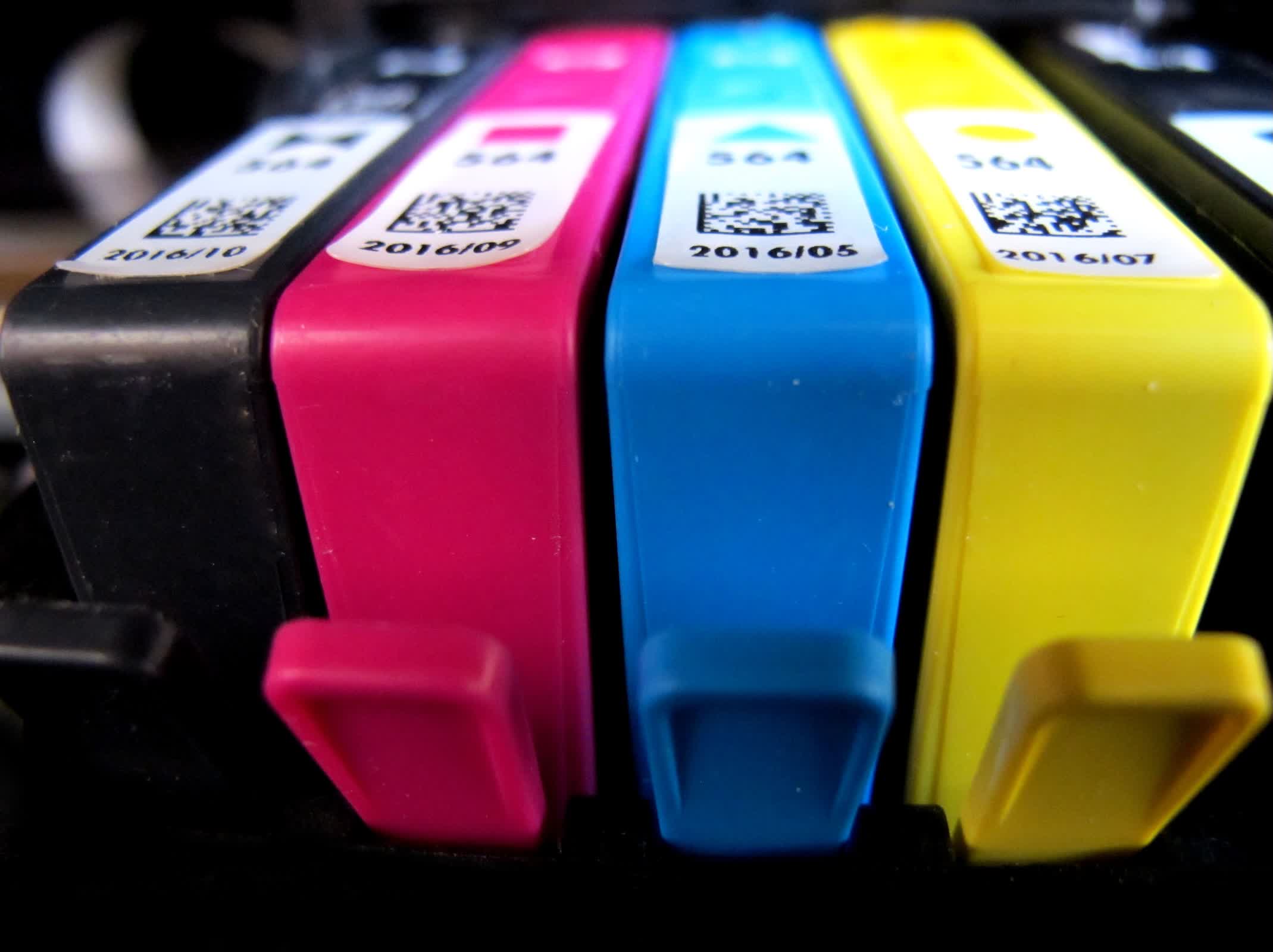
The International Imaging Technology Council (Int'l ITC), a trade group for cartridge remanufacturers, says HP's latest printer firmware rollout conflicts with the requirements of the General Electronics Council's (GEC) updated Electronic Product Environmental Assessment Tool, or EPEAT 2.0.

EPEAT 2.0, launched in December 2025, expands the criteria for certifying environmentally responsible electronics. It covers five product types – imaging equipment, computers and displays, phones, servers, and TVs – and introduces stricter rules on recyclability, responsible supply chains, and sustainable design. A key provision applies directly to printer makers: certified devices must not block remanufactured cartridges, whether made by the original manufacturer or a third party.

According to the GEC's published criteria, printer vendors have three compliance paths. They can avoid firmware changes that disable remanufactured cartridges, offer approved cartridge solutions that maintain device functionality, or make remanufactured options available for purchase through their own channels. Each route is meant to encourage a model in which printing components are reused rather than discarded.

So far, more than 38,000 products remain listed under the older EPEAT 1.0 registry, while only 163 have transitioned to the new 2.0 standard – none of them printers. The Int'l ITC argues that this absence underscores a reluctance by major manufacturers, particularly HP, to align their hardware with the new sustainability framework.

HP's firmware version 2602A/B, released on January 29, 2026, appears to extend the company's long-standing Dynamic Security feature, which disables third-party cartridges that use non-HP chips.
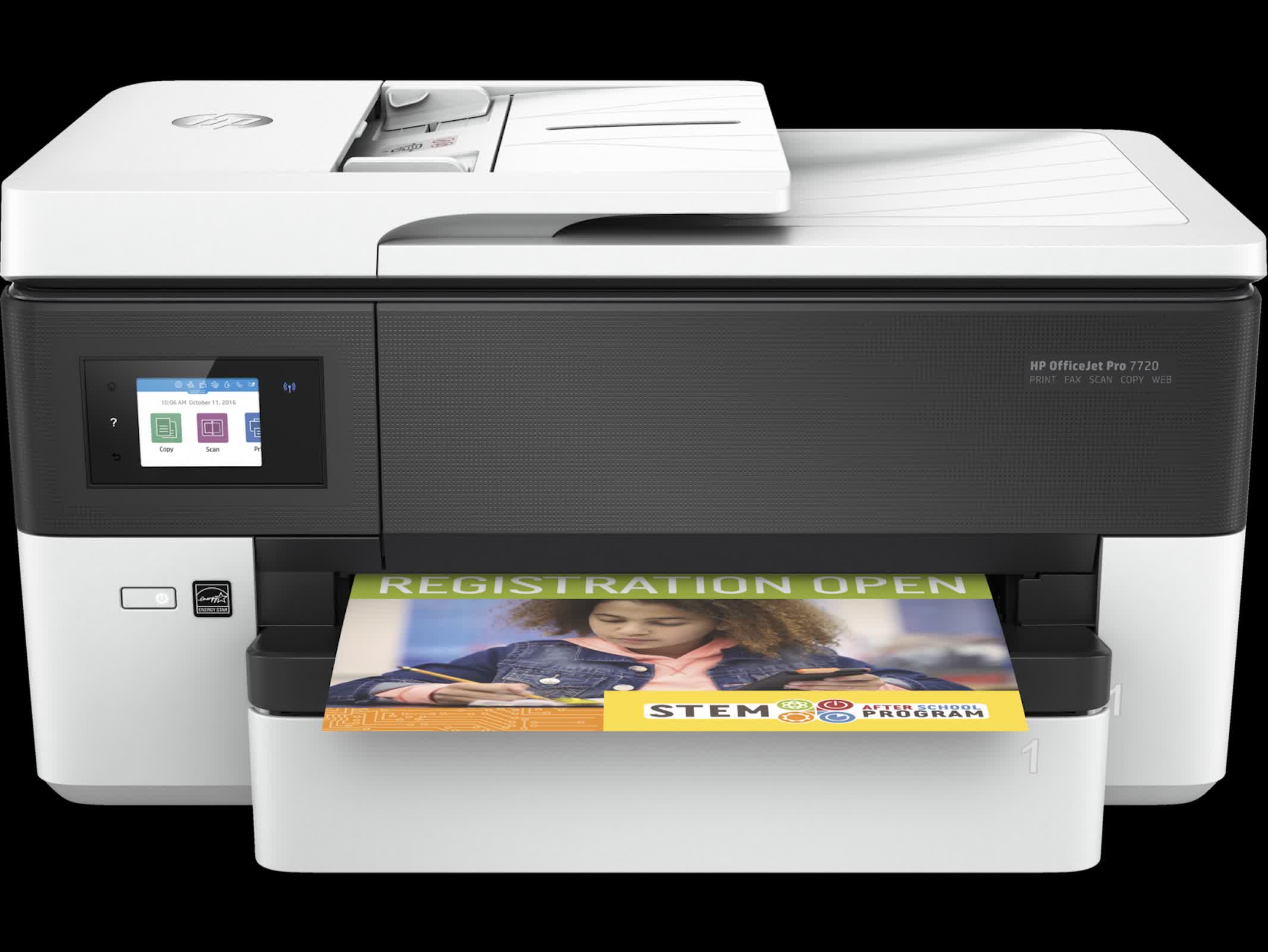
The update affected at least 11 printer models, including older devices such as the OfficeJet Pro 7720, a wide-format printer introduced nearly nine years ago. HP says Dynamic Security protects users from counterfeit products and potential cyber threats, but critics have described it as a form of digital rights management that restricts consumer choice and waste reduction efforts.

In a statement, the Int'l ITC accused HP of failing to meet the spirit of EPEAT 2.0 despite promoting itself as a leader in sustainable product design. "HP positions itself as a leader in circular business models, but instead of proactively aligning with the highest environmental standards, HP puts profits first," the group's release said.

The trade organization previously asked the GEC to revoke more than 100 of HP's EPEAT-registered printers in 2023, claiming they violated the registry's no-lockout rule. The request was denied under the earlier, less prescriptive EPEAT 1.0 criteria.

Tricia Judge, the Int'l ITC's executive director and general counsel, told Ars Technica that HP stands alone in using firmware updates as a recurring mechanism to enforce cartridge lockouts.

"HP is the only one with lockout chips that are triggered using firmware 'upgrades' that claim 'security' as a justification for their existence," Judge said. "The others have made some interesting attempts in the past to create a competitive advantage," she added, "but HP's approach is unique in its persistence and its impact on customers."

Judge also pointed out that HP's contested firmware revision was issued after EPEAT 2.0 went into effect, framing it as a direct test of the new environmental framework's reach. She acknowledged that the expanded EPEAT standard may not fully close all loopholes around cartridge interoperability, but called it a meaningful improvement. "We didn't get it as airtight as we hoped, but it is better," she said.

Whether the GEC will interpret HP's Dynamic Security updates as incompatible with EPEAT 2.0 remains to be seen. For now, the question sits at the intersection of sustainability policy and corporate firmware control – a conflict that continues to define the decades-old battle between printer manufacturers and the aftermarket cartridge industry.

Permalink to story:

 
Wait... So we're not supposed to buy a new model each time and chunk the old one in the trash after the ink runs dry? /s
 
I am spending less per month on HP Laserjet toner than I was on their inkjet cartridges! Bought a Cannon inkjet but the print quality isn't what I get from HP. Got a Brother laser printer from a family member, the print quality was okay but the cartridge leaking toner when you tilt it was a deal breaker.

As long as I don't have to deal with HP's technical support again, I'll stick with HP for now. Several years ago bought a laser printer and could not get it to setup, so I called support and after remoting into my PC the tech spent time looking through the generic drivers bundled with Windows 10. Then claimed could not find the "advanced drivers" (WT.. are those?!) and tried to pawn me off onto Microsoft and the OEM (which is me). Claiming Windows was broken, returned printer for a refund.
 
HP calling third-party cartridges a “security risk” is still one of the most impressive marketing pivots ever. Somehow the only malware printers seem capable of detecting is cheaper ink.
 
HP isn't the only one either. In the "business" side a LOT of the photocopier companies do the same thing with their toner cartridges. Been in this business on the service side for over 40 years. They come out with a new firmware and I'll install it on some "test mules" we keep in the shop to see if the non OEM (mostly Katun) toner will continue to work. If not, I call a tech at Katun, he sends me an updated chip software for the cartridges.
It's all a big scam. The razor/razor blade scam. Sell the razor cheap, charge them a TON for the razor blades. And, you get screwed over on the ink/toner. One price for black, and the black a lot of times comes in a higher volume, but they over charge for cyan, magenta, yellow.
When we do troubleshooting, sometimes we'll swap color components from one color to another to see if the problem follows or stays. If the toner/ink were not the same, things wouldn't work. In the case of toner based machines, EACH color would have to have a different drum. Also, if you are in the field and don't have a certain color of developer/carrier (magnetic tiny iron filings that mix with the toner), sometimes you can swap the wrong color, run enough copies to run out the wrong color, then mix in the correct color.
But, you are OVERCHARGED for the cyan, magenta, yellow versus the black!
 
There's Capitalism and then there's just screwing customers. I vote with my wallet and HP gets none of my printer business.
This is part of the "shittification" which is driven by corporate greed, trying to generate growth on a saturated market by worsening the products when attempting to squeeze out more money from existing customers. Such will inevitably backfire.
 
I didnt like HPs requirement to register the printer I got in order to print past the 10th page. As soon as I went to print the 11th page, I was unable too until I filled out a registration form and created an account for my printer on their cloud. Then found out it was keeping track of my printing habits and how much ink I was using and didnt care if I didnt want that service.

Went with a Brother printer for our office and problem was solved. I want a printer to print, not spy!

Also....

I wonder why this new global sustainability rules dont apply to Microslop and the fact that billions of laptops, computers, and servers are going to e-waste because of Windows 11 not supporting them.

That should be looked into as well!
 
I've have always considered HP a shitstain of a company and their printers have always been trash anyway.
My company had unending nightmares with HP laptops and printers, never on a cold day in hell would I touch their crap.
 
Between a cheapie Canon which lasted exactly a year and 10 days, and my earlier decent Canons that finally gave up the ghost, I retreated to an Epson with large capacity, refillable, ink wells. Now my only problem is using it enough to prevent the inks from drying out in the print heads.

On a broader scale there's a lot of this type nonsense going on in the camera industry.
Canon is outright refusing to license 3rd party lenses for their mirrorless mount. In the other corner, Nikon is suing Viltrox for ostensibly reverse engineering their auto-focusing electronics in their mirrorless Z mount It remains to be seen if Nikon will prevail, and grant a license for their tech, as the lawsuit in still in progress.

I believe also that motorcycle manufacturers have started producing non standard tire sizes, and then patenting them, so 3rd party makers can't reproduce them. (This is a rumor I heard, but didn't investigate.)

As for HP, never again.I still have a few blank CDs laying around. IIRC, they work pretty well, bu the glaring metallic blue in the label obscures the black marker enough to make the titles hard to read.

As to the HP ink cartridge issue, are any other protections in place that would prevent one from simply drilling a hole in the damned thing and pumping in fresh ink?
 
Last edited:
Gosh, HP isn't the only maker of good printers. Just, get another brand. Although, I've had my HP printer, for about 5 yrs now, and it takes the cheaper ink cartridges no problem.
 
HP has really jumped the shark and now I avoid their products. Life is too short for that BS. I use a Brother monochrome laser and a Brother color laser and couldn’t be happier. Easy to use and good quality output. They have a nice scanner and do both sides easily.
HP should re-think their customer war. I understand the motivators. Sell a printer cheap and make money on the cartridges over and over. I recommend they look into slightly more expensive printers - raw price isn’t the sole determinant anyway, and charge even a bit more for higher function or office grade units. Make the replacement cartridges cheaper and license the cartridge remanufacturers to make reused units with a small licensing fee. As it is I’m not interested in their crazy games.
 
Back