What we know so far: Stars, like all living organisms, age according to predictable physical laws – or so astronomers once thought. Yet scattered throughout the Milky Way's oldest star clusters are anomalies that appear to have sidestepped the cosmic aging process. These objects, known as blue straggler stars, shine brighter and bluer than their ancient surroundings, suggesting youth in defiance of time. For decades, scientists debated whether such stars were born from violent collisions or more subtle stellar interactions. Now, a new Hubble Space Telescope study has provided the clearest answer yet: blue stragglers owe their second youth to enduring companionship.

In the most extensive ultraviolet study of blue stragglers ever performed, an international research team used NASA's and ESA's Hubble observatory to survey 48 globular clusters scattered across the Milky Way.
Their dataset included over 3,000 blue stragglers, offering an unparalleled statistical view of how these stellar outliers form and survive. The clusters studied range from loosely organized associations of stars to densely packed systems where gravitational interactions are frequent and disruptive.
By comparing populations across this wide environmental spectrum, astronomers discovered a striking trend that contradicts previous expectations.
The findings, published in Nature Communications, show that blue stragglers flourish not in crowded, collision-prone clusters but in low-density environments. In these calmer regions, stars can exist as stable binary pairs – systems where one star orbits another and may eventually draw in its partner's material.
That slow transfer of matter effectively rejuvenates the receiving star, making it shine hotter and appear younger. The result is what astronomers call a "stellar reset": a bright, blue star born from an ancient pair.
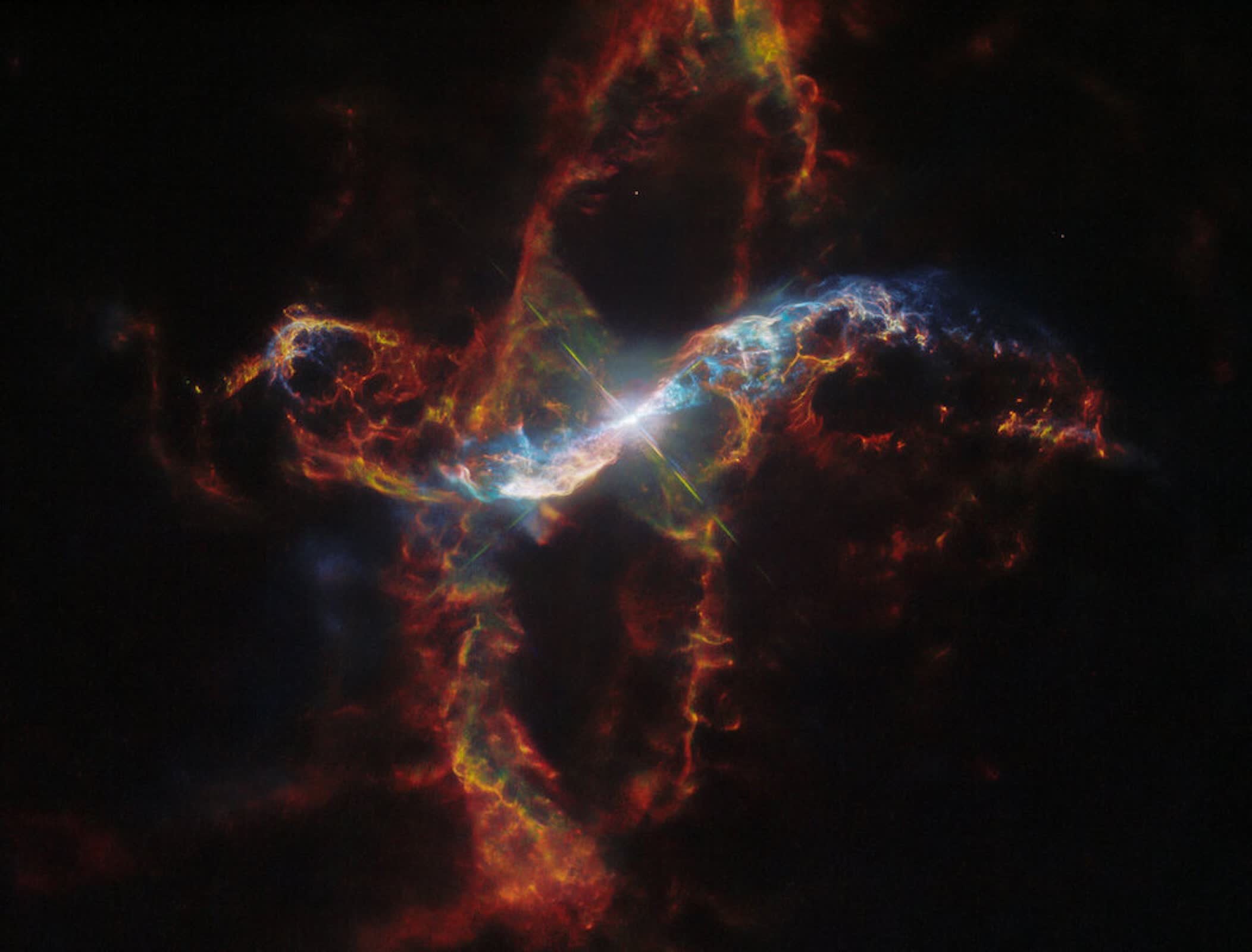
A binary star system
In contrast, denser clusters tell a very different story. Frequent close encounters between stars in such regions disrupt binaries before they can exchange mass or merge. Without that interaction, the rejuvenation process halts, leaving fewer blue stragglers behind.
This environmental dependence – where stellar youth is preserved only in calmer gravitational settings – is a key result of the study.
"The environment plays a crucial role in the life of stars," said Francesco R. Ferraro, lead author and professor at the University of Bologna. "Blue stragglers are products of binary systems, but their survival depends on the conditions in which they live."
His team's results suggest that the presence and persistence of binary systems shape a stellar ecosystem, as much by spatial dynamics as by internal physics.
Additional analysis revealed that binaries dominate in the same low-density clusters where blue stragglers are most abundant. In dense cores, by contrast, the constant jostling of neighboring stars effectively unbinds binary pairs.
"Crowded star clusters are not a friendly place for stellar partnerships," explained Enrico Vesperini of Indiana University, a co-author on the study. Such gravitational interference, Vesperini noted, undermines the delicate balance required for binaries to exchange mass and evolve into blue stragglers.
Using Hubble's ultraviolet sensitivity, astronomers could isolate the telltale glow of blue stragglers and discern their population patterns even in visually chaotic clusters. Ultraviolet light is particularly effective for identifying hot, young-seeming stars within ancient stellar environments, making it an ideal diagnostic tool for this type of research.
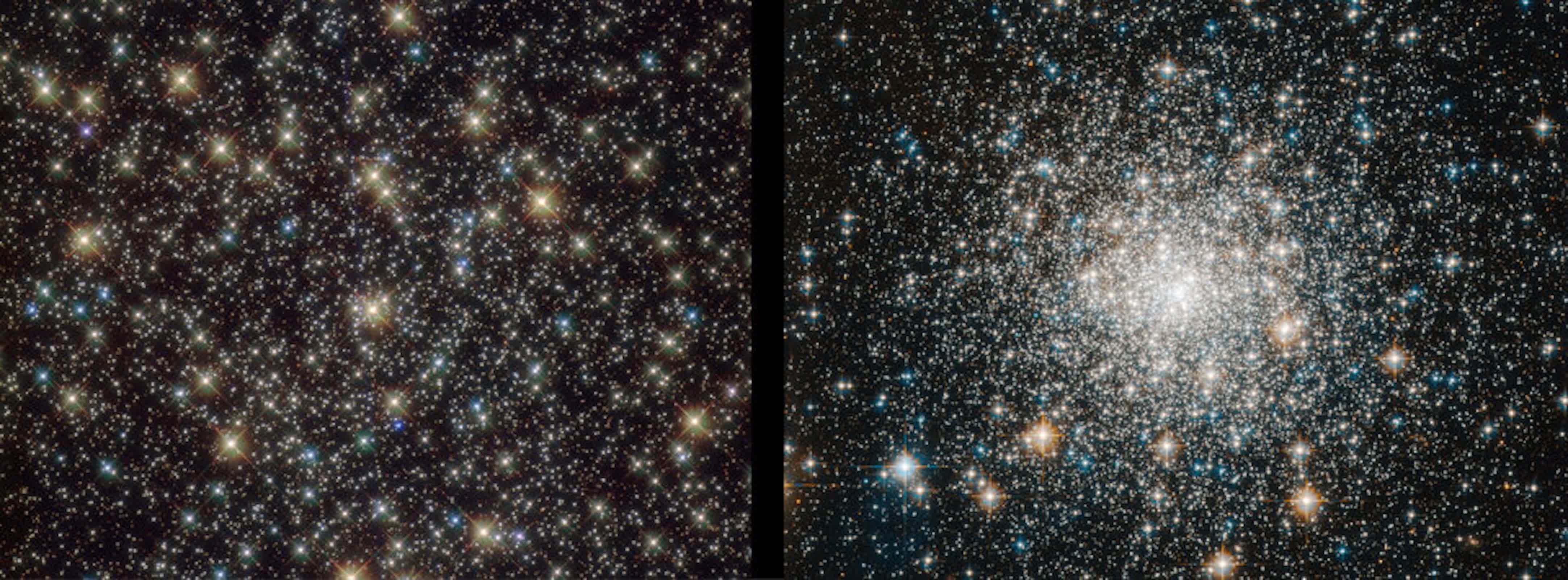
Globular cluster targets that revealed "forever young" stars
The implications reach far beyond solving a single astronomical puzzle. By directly linking stellar environment to evolutionary path, this work reframes how scientists understand the long-term dynamics of star clusters. Binary systems, once considered secondary actors in cluster evolution, are now recognized as key to shaping the life histories of stars over billions of years.
"This work gives us a new way to understand how stars evolve," said Barbara Lanzoni, a co-author from the University of Bologna. "It shows that even stars' lives are governed by their surroundings, much like ecosystems on Earth."
Hubble Space Telescope reveals why some stars refuse to grow old


