Humanoid robots are being prepared for combat as China moves them from labs to military training grounds

midian182

Posts: 11,887   +181
Staff member
Forward-looking: Back when humanoid robots could barely stumble forward without falling over, there were plenty of jokes about their use on the battlefield, Terminator-style, not being much of a concern. Now, though, these machines are running faster than the fastest human and doing parkour – and China wants to turn them into robotic miltary "combatants."
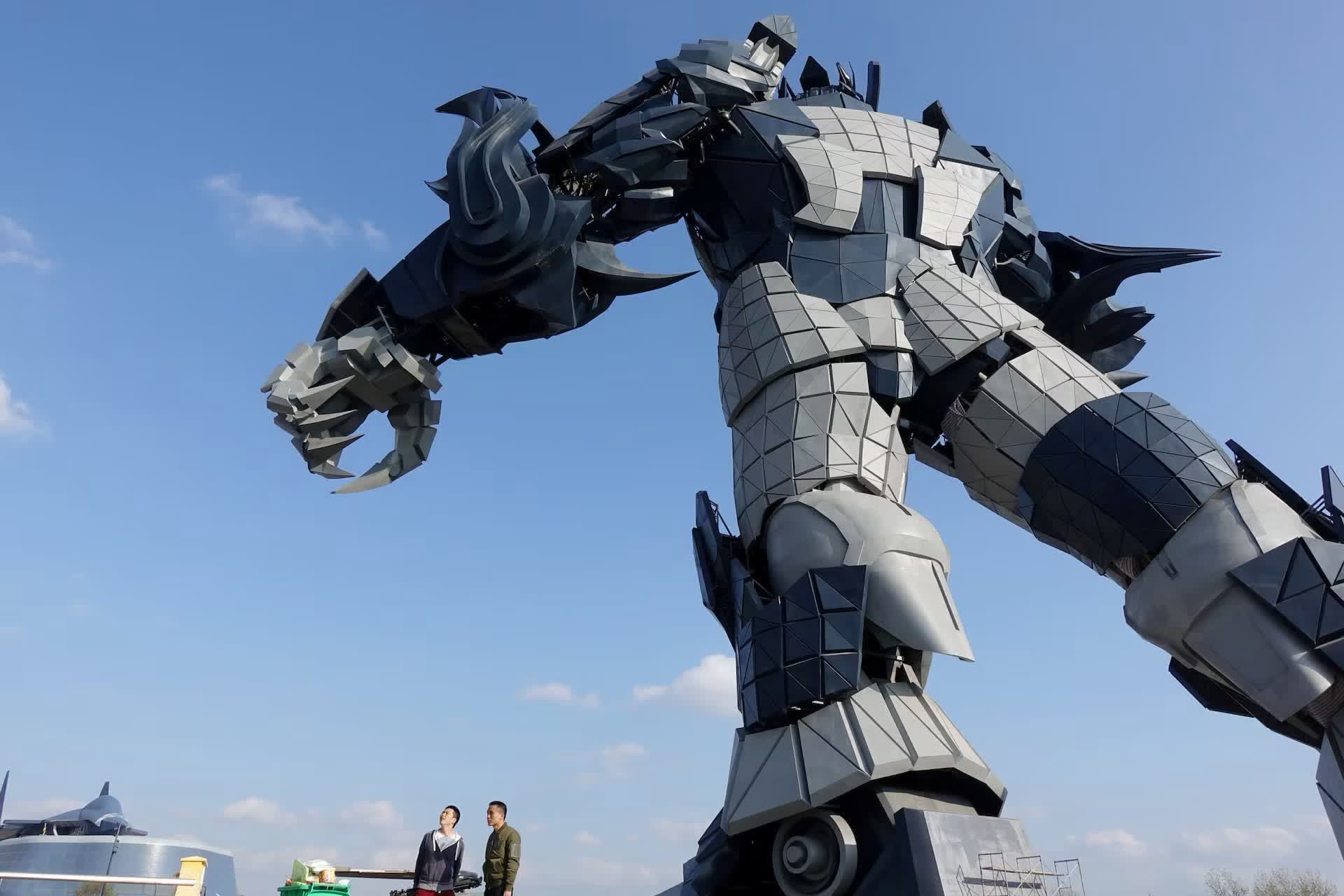
August saw the World Humanoid Robot Games take place in China, where robots took parts in several events. The same month, Unitree claimed its Superman robot can run faster than Usain Bolt, although the figure has not been independently verified.

Reuters reports that two days after the Games ended, the People's Liberation Army's official newspaper, the PLA Daily, called for researchers to accelerate the transfer of these technologies from laboratories to military training grounds.

Reuters reviewed more than 100 Chinese military procurement notices, academic studies, patents, official publications, government records, and defense-company materials. It found that the country is accelerating research into the robots' military uses and planning for their eventual wartime deployment.

China has long led the world when it comes to humanoid robots. Its manufacturers accounted for about 95% of shipments of these bots in 2025, giving the PLA plenty of access to the machines.

The good news is that while humanoid robots have come a long way since those slow, lumbering, ungainly early efforts that required a tethered connection to operators, we really are still a long way from seeing squads of marauding T-800 killbots marching across fields. They require a lot of energy, so can't operate for great lengths of time, and even the most advanced designs occasionally fall over, especially on rough terrain.

Robot powered by Qualcomm's new AI chip dies mid-presentation
by u/SuggestionMission516 in singularity

However, China still has plans for how to use humanoid robots. It envisions them being used alongside robot dogs – something that ICE could soon use – and unmanned vehicles, an area that is becoming increasingly popular among global militaries.

In a scenario described by a research paper last year, six combat robots – a mixture of humanoids, robot dogs, and unmanned vehicles – would be split up between two assault teams. Working with ground troops, the robots would clear an enemy-occupied building, floor by floor and room by room. The authors believe the equipment to make this a reality will be ready in 5 to 10 years.

Other proposed uses include reconnaissance, logistics, patrols, and operations inside tunnels and ships. State-owned defense company Norinco says its Fuxi humanoid can carry out sentry duties and all-weather reconnaissance, though it can also be remotely controlled instead of operating autonomously.

There's also the important question of whether a machine can reliably distinguish combatants from civilians or recognize when someone is surrendering. China's defense ministry said in March that AI-powered weapons should remain under human control, though that might bring little assurance to skeptics.

Reuters found no evidence that an armed humanoid has been deployed with an operational PLA unit, but one Chinese military researcher warned that, once the remaining technical and cost barriers are overcome, humanoid robots will "stream onto the battlefield."

Permalink to story:

 
So I guess the key is to be able to use drones to air drop Terminators into America's most heavily armed states and let them run amok. Or - drop them in America's most poorly armed states so that they can move about unhindered.
 
It's inevitable, robotics will be implemented on the battlefield eventually killing everything on its path.

The definition of a "War defeat" was centered in the amount of human forces being depleted in the battlefield, when we get to the point where we just keep making machines and deploying them it will no longer be a defeat but an extinction since the only way to defeat the opposite side will be by total annihilation of those making the robotics and the people paying the taxes to make them.

This is no sci-fi, that's going to be a reality.
 
Who could have foreseen this?

Oh right, EVERYONE.

With the current rate of progress, the biggest bottleneck is battery power. Sure, autonomous T1000s are still an AI pipe dream, but smart enough to kill things near me is not that far off.
 
It's inevitable, robotics will be implemented on the battlefield eventually killing everything on its path.

The definition of a "War defeat" was centered in the amount of human forces being depleted in the battlefield, when we get to the point where we just keep making machines and deploying them it will no longer be a defeat but an extinction since the only way to defeat the opposite side will be by total annihilation of those making the robotics and the people paying the taxes to make them.

This is no sci-fi, that's going to be a reality.

Not really. If the limitations and ease of elimination of the robots exceed that of a person you just win the firefight and advance. If you can remotely hack or disable an enemies front line you can just take the ground.
 
So China is advancing with the military use of AI, but plenty of id1ots here want to pause AI, ban datacenters etc.
 
So China is advancing with the military use of AI, but plenty of id1ots here want to pause AI, ban datacenters etc.
Becaure people with common sense know this is a show pony. Robots can’t work reliably when doing a set task with a perfectly flat floor. AI will be, for the most part, an economic disaster with some small benefits. It’s alright at condensing information and operating tedious tasks but it’s never going to be good enough to do something without oversight or anything complicated
 
Becaure people with common sense know this is a show pony. Robots can’t work reliably when doing a set task with a perfectly flat floor. AI will be, for the most part, an economic disaster with some small benefits. It’s alright at condensing information and operating tedious tasks but it’s never going to be good enough to do something without oversight or anything complicated

People with common sense understand that technology does not freeze at the point of the last video they watched.

A robot failing in a public demo proves nothing about the limits of robotics, and assuming a public clip represents the current military state of the art is naive. The tech will not be the same in five years, so judging its future threat by one robot falling over today is meaningless, and embarrassing when you've just pretended you have common sense.
 
People with common sense understand that technology does not freeze at the point of the last video they watched.

A robot failing in a public demo proves nothing about the limits of robotics, and assuming a public clip represents the current military state of the art is naive. The tech will not be the same in five years, so judging its future threat by one robot falling over today is meaningless, and embarrassing when you've just pretended you have common sense.
It depends if you know the limits of the technology. It’s also not a niche item like a fighter jet locked in skunkworks it’s robotics. Unless you’re making them quadrupedal the robots will struggle to do anything dynamic quickly over rough terrain and that’s not factoring in things like weather, temperature, wear and tear and battery life. Give them 30 minutes in a Ukrainian winter and they’re all be dead in a ditch
 
Back