Intel can't spin up 18A fast enough, so Intel 7 is now the new CPU bottleneck

Skye Jacobs

Posts: 1,988   +58
Staff
TL;DR: Intel's next-generation 18A process, its most advanced manufacturing technology, is ramping up more slowly than expected. Until it reaches high-volume production, the company's heavily utilized Intel 7 lines will continue to constrain output for both client and data center chips. In the meantime, Intel is prioritizing higher-margin server processors to offset supply limitations and preserve profitability.
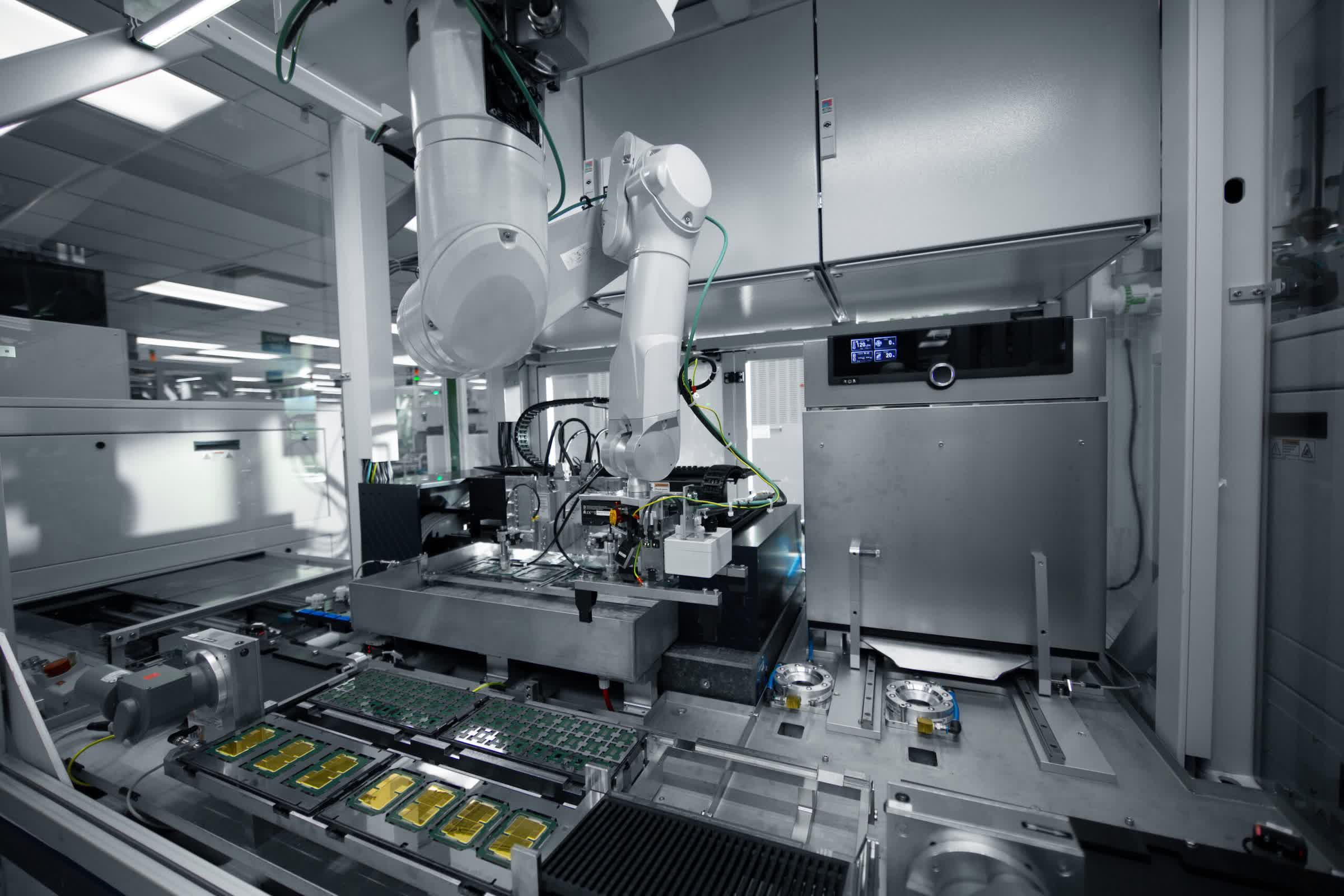
Intel's rebound in chip demand during the third quarter has been tempered by ongoing supply constraints that continue to limit the company's ability to deliver both client and data center processors. Although CPU orders have strengthened across multiple product lines, Intel's production remains bottlenecked by limited manufacturing capacity and a persistent industry-wide shortage of packaging substrates.

During Intel's recent earnings call with analysts, Chief Financial Officer David Zinsner said the company continues to face "capacity constraints, especially on Intel 10 and Intel 7," noting that these issues restricted output for both client and data center products during the latest quarter.

Much of Intel's current production challenge stems from its reliance on the Intel 7 process node – formerly known as 10nm Enhanced SuperFin – introduced several product generations ago. Despite its age, the node remains central to Intel's CPU lineup, powering both 13th and 14th Generation Core processors, known as Raptor Lake, as well as the I/O dies for Xeon 6 "Granite Rapids" and 5th Generation Xeon Scalable "Emerald Rapids" chips.
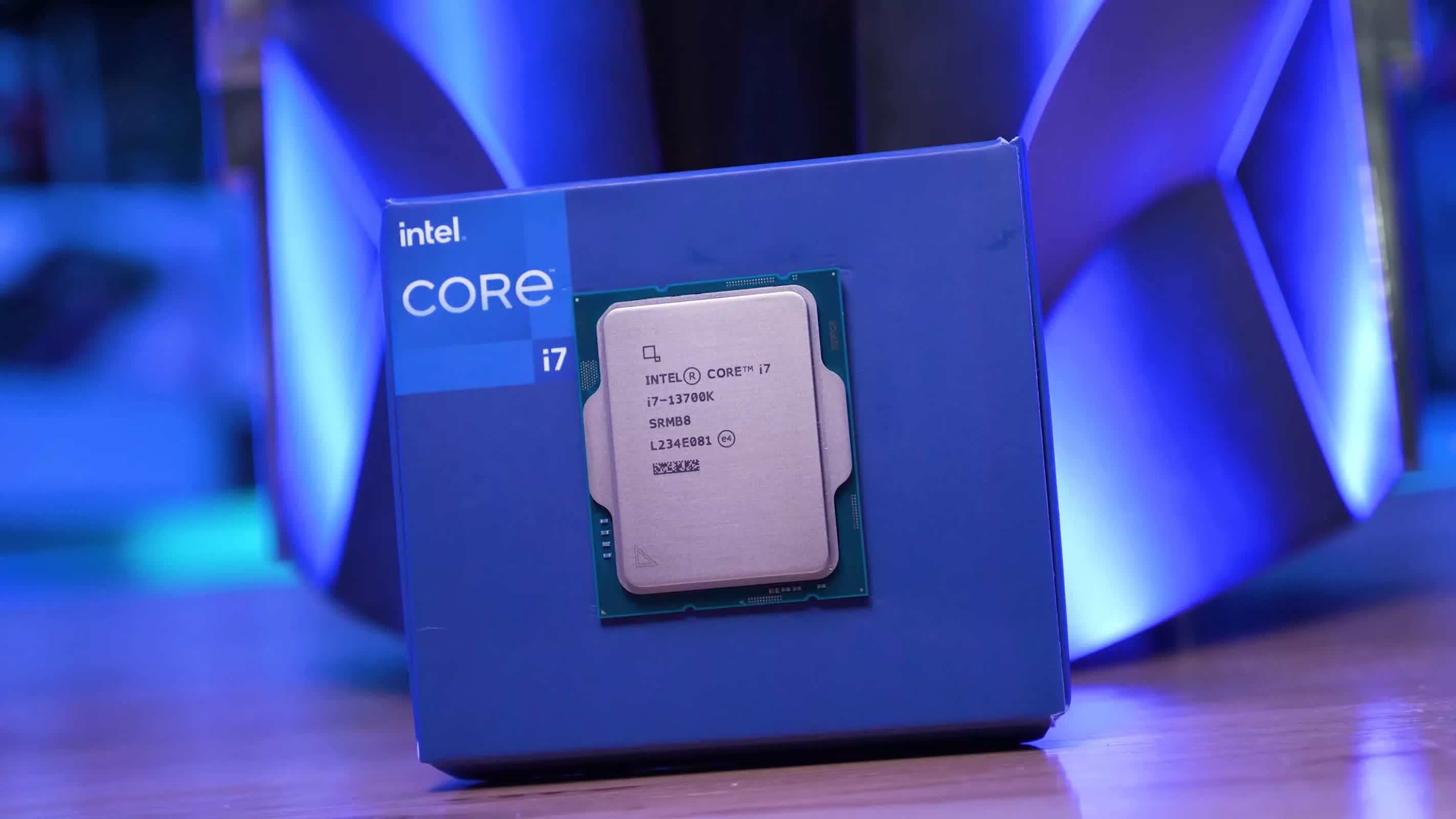
Raptor Lake, originally launched in 2022, remains a strong seller in the client computing market thanks to its sustained performance and broad compatibility. However, Intel's decision not to expand manufacturing capacity on older process nodes has kept supply tight for these chips. As demand persists, prices for Raptor Lake processors have risen accordingly.

Zinsner acknowledged the challenge, saying Intel is "working closely with customers to maximize available output, including adjusting pricing and mix," as supply constraints persist. In practice, that likely means continued prioritization of premium products and higher-end SKUs at the expense of higher-volume, lower-cost CPUs.

Intel's constrained Intel 7 (7-nanometer-class) production lines are being heavily allocated to high-margin data center products, particularly the Xeon 6 series. These processors use I/O dies manufactured on Intel 7, tying their output directly to the same fabrication lines that support Raptor Lake.

Management has opted to divert wafer capacity toward data center CPUs, where each unit can sell for several thousand dollars – far outpacing even the most expensive client chips, which typically retail for under $600. Zinsner said Intel expects sequential gains in its Data Center and AI Group results during the current quarter, while Client Computing Group revenue will decline modestly due to this product mix shift.

Beyond wafer capacity, Intel's production outlook is further strained by limited availability of organic substrates, the thin materials that house and connect CPUs within their packages. The shortage is industry-wide, adding another layer of complexity to Intel's supply chain management. Because these materials are essential for assembling both desktop and server processors, the constraint affects all segments of Intel's CPU portfolio.

Intel expects supply challenges to continue through next year, driven by both node capacity limits and component shortages. The company warned that Q1 2026 may mark the peak of these constraints, with gradual improvement expected thereafter.

Zinsner noted that the company has been relying on accumulated inventory through late 2025 and is "cranking the output as much as we can with the factory."

Permalink to story:

 
Intel saying one thing and then failing to deliver. Almost as predictable as AMDs graphics division never missing an opportunity to miss an opportunity.
Problem is that Intel is in a position where they need to start delivering on what they're saying or even these last chance lifelines they've recently been thrown won't be enough.

Do think they're heavily undervalued though. Homegrown all American processes that are only a little bit behind on TSMC. CPU designs that could catch up to AMD at any time, a promising fledgling GPU branch and all the other stuff and patents...
And somehow they're valued at less than one third of the value NVIDIA can lose in a single day (it was a bad day for Nvidia when DeepSeek got released).
 
I can’t help but feel that the CFO’s comments are meant to give people the impression that the foundry business is doing really well. But in truth, when you look at the revenue generators, I don’t think that is the case. In fact, the foundry business is losing money. The constraints here are likely due to low yields, less of great demand. Moreover, not all of Intel’s products are using their own foundry, so where is the demand coming from when I don’t think they have any orders from external companies using Intel 7? I may be wrong, but that’s my current understanding.
 
Intel saying one thing and then failing to deliver. Almost as predictable as AMDs graphics division never missing an opportunity to miss an opportunity.
...
Do think they're heavily undervalued though. Homegrown all American processes that are only a little bit behind on TSMC. CPU designs that could catch up to AMD at any time, a promising fledgling GPU branch

AMD has released a very good RDNA 4 performer at a better price than Nvidia's. The software has improved massively too. They are selling both CPUs and GPUs at a good pace.

Intel is another breed: selling you lies and snake oil is their thing; they have no issues manipulating OEM to be Intel only, nor giving you the same architecture over and over again, just with a few frequency curve updates. They are also the kind of team that invests on GPUs but then team up with Nvidia and halts everything.

So, for now, I'll just stick by AMD.
 
All the capacity goes to Xeon chips and that is way to profitable to waste space on consumer chips.
AMD, Intel and NVIDIA only sell consumer cards to keep their names relevant, their main market is that deliciously sexy AAAAAAAAAAAAAAAAAAAAAAAIIIIIIIIIIIIIIIIIIIIIIIIIIIIIIII. But unlike Intel and NVIDIA, AMD have a diversivied portfolio with consoles, handhelds and the best CPU's.
 
AMD has released a very good RDNA 4 performer at a better price than Nvidia's. The software has improved massively too. They are selling both CPUs and GPUs at a good pace.
Oh hardware/software wise I have no complaints, they have top tier hardware/software engineers imo. Same with CPUs - no complaints (other than that the pricing could be a quite a bit lower, but that that's what a lack of competition does).

It's the GPU branch sales/marketing team I have a problem with, they're insistent on shooting themselves in the foot.
Sales keeps picking an initial MSRP so high that every initial review basically reads as "just get NVIDIA, same price - more features". Or more recently they pick an MSRP so low that their board partners can't hit it (borrowing a page out of NVIDIAs book). Both are bad for the actual sales and their brand name.

I'd say their GPU sales department is incompetent but at least they try. However their marketing team seems intent on doing everything wrong on purpose.
Remember the "poor Volta" campaign, just to follow it up with a far worse performing product? Just the best example of it, but they keep over-promising and under-delivering (in stark contrast to the CPU department that does the opposite).
Remember making fun of NVIDIAs paltry VRAM amount, just to do the same thing?
Remember when they said they were going after market share this time around? (Which is actually what they should be doing as NVIDIAs focus is clearly elsewhere atm and AMDs is still in the single digit percentage when it comes to sales). Seems like they aren't as prices aren't much different from NVIDIAs and they're not exactly flooding the market with tons of cards either.

If I was in charge I had fired the entire marketing team, all they do is negatively affect the brand name and every single dollar spend on them harms the company. Either replace basically all of them or downsize it to keep the parts that work functioning (keep reviewers supplied etc).

Intel is another breed: selling you lies and snake oil is their thing; they have no issues manipulating OEM to be Intel only, nor giving you the same architecture over and over again, just with a few frequency curve updates. They are also the kind of team that invests on GPUs but then team up with Nvidia and halts everything.

So, for now, I'll just stick by AMD.
Intel is definitely the scummier of the two, but companies can never be trusted for anything other than maximizing profits so I'm pretty sure AMD will do whatever they think they can get away with as well.
Intels partnership with NVIDIA is imo just one of the more recent steps they're more or less forced to do to keep their head above the water. I do get nervous whenever I see NVIDIA branching out. As bad as Intel is NVIDIA is no better, most likely they're even worse to what we should want as end users.
Luckily(?) the very restrictive clauses Intel demanded on the x86 license to try and keep AMD small works both ways preventing NVIDIA from swooping up Intel entirely.

NVIDIA becoming (one of) Intels saviours is not what I wanted to see. But Intel is very important for
1) The x86 market because AMD won't be shy about pricing without competition.
and
2) Keeping TSMC somewhat in check when it comes to pricing, they already increase the prices with every generation by silly amounts. If Intel wasn't at least somewhat comparable to them it'd be even worse.

Instead of Intel partnering with NVIDIA I would have rather seen a partnership with Samsung. Both Samsung and Intel are struggling to keep up with TSMC and it's a market where massive investments are needed. If they share patents, expertise and R&D costs they'd stand stronger against TSMC and can take customers off them instead of each other.
 
Remaining a mainstay brand for so long while also floundering and fumbling, consistently, for so long, is quite a marvel honestly.
 
Considering how long they wrung out , and strung us along with 14 mn processes, (How many generations? :rolleyes: ), this should come as no surprise, let alone a big surprise, to absolutely no one.

The most logical and well deserved response should be, "oh please, spare us any more of your bullsh!t".

Ding, ding, ding, AI says:
"During the early 2000s, Intel followed a process width roadmap that was a continuation of Moore's Law, shrinking its fabrication process technology roughly every two to three years. A key component of this was the company's "Tick-Tock" model, which alternated between new manufacturing processes and new microarchitectures.

Intel's process technology in the early 2000s
  • 180 nm (0.18 µm): In the year 2000, Intel was in the midst of its 180 nm process, which had been introduced in late 1999.
    • This was the process used for the first Pentium III and the first generation of Pentium 4 processors.
    • It was also the first Intel process to incorporate copper interconnects, which allowed for lower resistance and higher clock speeds.
  • 130 nm (0.13 µm): The next generation, 130 nm, was introduced in 2001 and was a significant step forward.
    • It allowed for faster, more power-efficient versions of the Pentium 4, like the "Northwood" core.
    • This process shrink enabled a new wave of performance improvements, characteristic of the Tick-Tock model.
  • 90 nm: The 90 nm process followed, with its first products shipping around 2003–2004. This was the "Prescott" core, a new microarchitecture built on the 90 nm process.

The Tick-Tock model
Intel's famous Tick-Tock strategy, although formally introduced in 2007, was the underlying rhythm of its roadmap in the early 2000s. It consisted of two stages:
  • Tick: A "tick" was a new, smaller manufacturing process. This would involve a significant reduction in process width, as seen when moving from 180 nm to 130 nm.
  • Tock: A "tock" was a new microarchitecture built on the existing process, such as the new architecture of the Prescott core".

Where the chicanery begins (Note that chicanery is my euphemism for "bullsh!t".)

"This consistent and predictable cadence defined Intel's process roadmap for years and drove steady improvements in processor speed and power efficiency through the >>>early 2000s<<<.

So boyz und gurlz, it was pretty much "tock, tock, tock", from then on forward
 
Why would it crash? That makes no sense. AMD is not part of the AI bubble unlike some other companies such as nVidia. That's the one I would be worried about crashing and not AMD.
Tech world is like that. Dependable, but more volatile. It's more volatile than other commodities. Waiting for the crash to grab their stocks. Even any of their next disappointing GPU release can pull down their stocks. Though their CPUs are leading, their GPUs have been playing the catch-up game for the past 3 to 4 generations. Just a matter of time. I just bought and sold their stocks. All part of the observation.
 
AMD, Intel and NVIDIA only sell consumer cards to keep their names relevant, their main market is that deliciously sexy AAAAAAAAAAAAAAAAAAAAAAAIIIIIIIIIIIIIIIIIIIIIIIIIIIIIIII. But unlike Intel and NVIDIA, AMD have a diversivied portfolio with consoles, handhelds and the best CPU's.
nvidia outsells AMD int he console space and handheld space combined........so about that....
 
Back