Intel's 18A process works, now it has to convince the industry

Skye Jacobs

Posts: 2,195   +62
Staff
Winners & losers: Intel's most advanced manufacturing process, the 18A node, has become a symbol of both engineering ambition and commercial uncertainty. The technology – first realized in Intel's Panther Lake processors – has validated several breakthroughs that could redefine semiconductor design. Yet as of early 2026, industry partners remain slow to commit, reflecting just how disruptive Intel's new architecture really is.
Intel's 18A process is built around the Backside Power Delivery Network, or BSPDN, a structural overhaul known inside Intel as PowerVia. Instead of routing power through the chip's top layers, BSPDN moves that circuitry to the back.

This clears the front of the wafer for faster signal routing, improving both performance density and power efficiency. It's a decisive shift away from decades of frontside power management, marking Intel's first full node that combines PowerVia with its gate-all-around transistor design, RibbonFET.
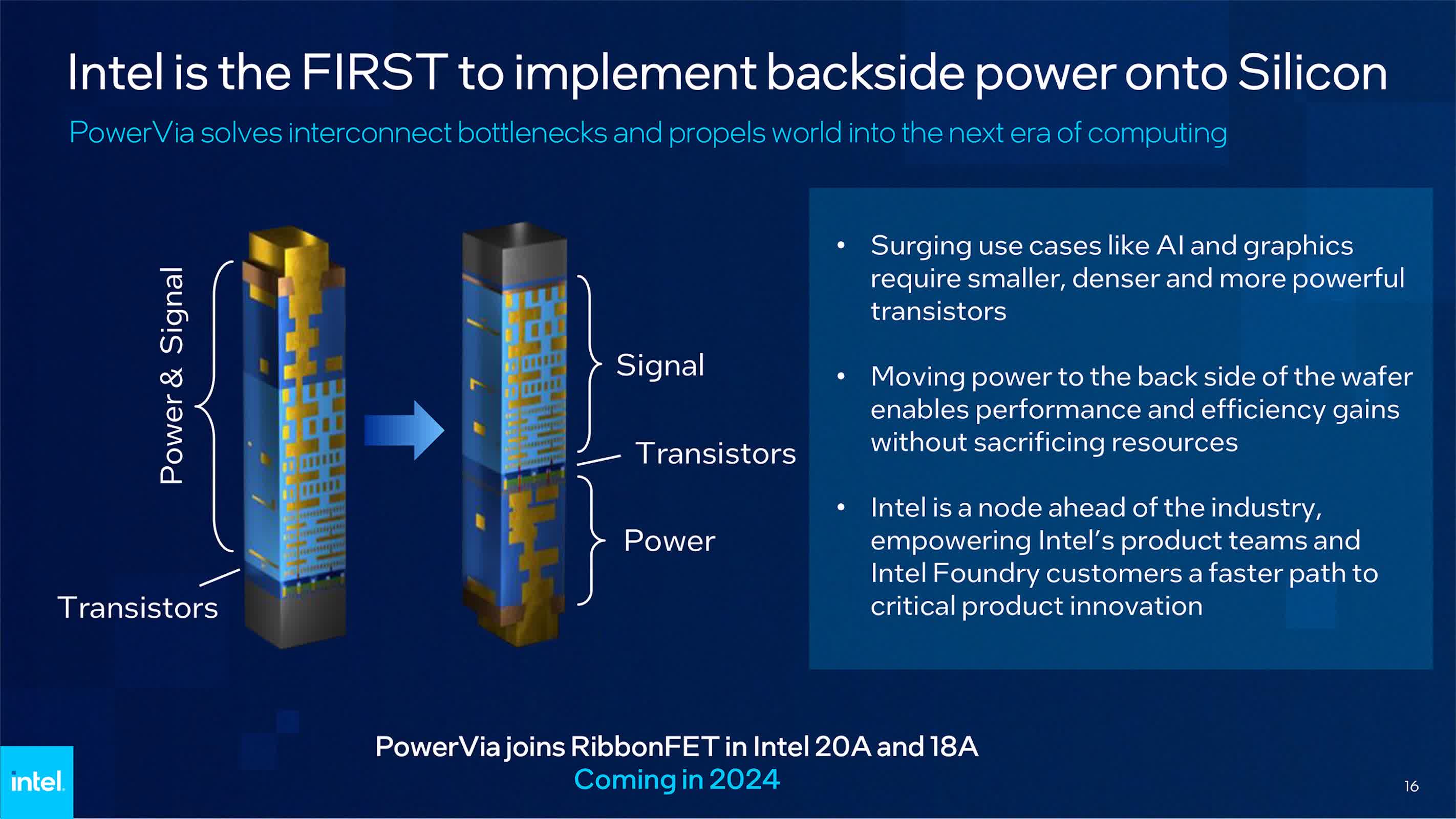
The technology's advantages are clear on paper. By separating power and signal paths, 18A reduces electrical interference and allows current to reach transistors more directly. That means higher clock speeds, lower voltage drops, and reduced heat – critical benefits as transistor scaling hits physical limits.

In theory, this gives Intel a lead of two process generations over competitors like TSMC, which doesn't plan to deploy a comparable system until the A16 process later in the decade.

But the same engineering leap that advances Intel's silicon also makes it hard to sell. According to an analysis by TechInsights, BSPDN represents a complete redesign of the chip's physical layout, forcing customers to rework established design methodologies from the ground up.
Existing toolchains, libraries, and workflows built for frontside networks can't simply be ported over. This divergence from conventional logic design is what limits external traction, even as Intel demonstrates Panther Lake's internal success.

The company's decision to push PowerVia ahead of the rest of the industry reflects a deliberate attempt to rebuild its technological credibility. Under former CEO Pat Gelsinger, Intel positioned 18A as the cornerstone of its foundry revival – a process node meant not only to compete with, but surpass, external foundry technology. Yet in doing so, Intel launched a manufacturing ecosystem that the rest of the design world hasn't yet caught up to.
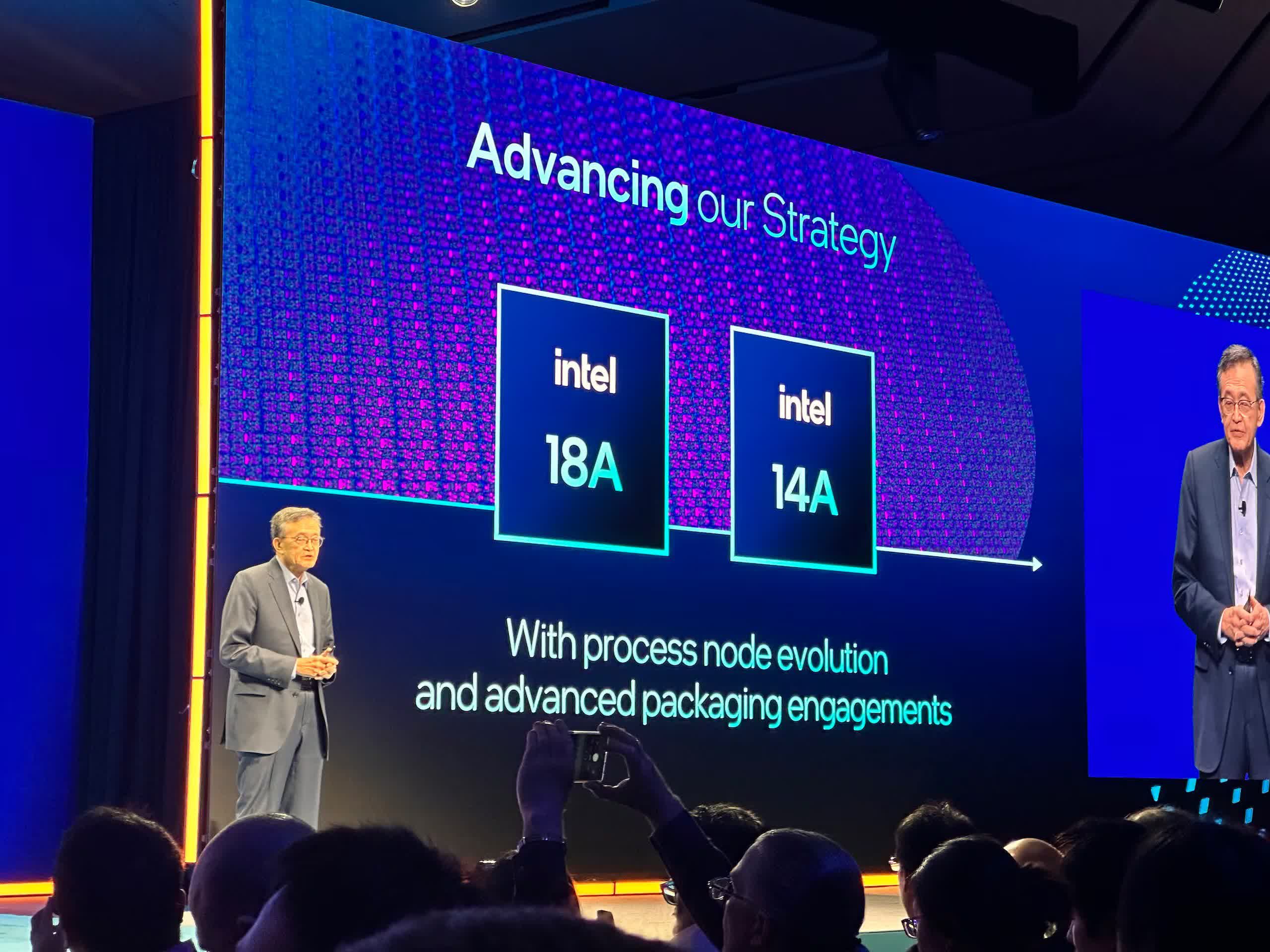
Analysts expect broader adoption of BSPDN later this decade, once tool vendors and design teams adapt to the new paradigm. Industry consensus points to around 2027 for wider uptake, which may coincide with Intel's next nodes – 14A and beyond – becoming more viable for external contracts.

By that time, PowerVia will have matured, and the costs of redesign may appear more justified against the gains in energy and compute efficiency.

For now, Intel has demonstrated that its 18A process works – and works well – but translating that success into foundry volume will take more than technical leadership. It will require convincing an entire ecosystem to rebuild its design habits from the backside up.

Permalink to story:

 
Adoption of a node is not just about reading the specs. I think there are other considerations like yield and cost. While Panther Lake looks like a good chip from Intel using 18A, I do question if the yield is good enough to attract chip makers.
 
I don't know if it is the yields or some other issue but none of the Panther Lake notebooks are available in EU. First they were set for January availability, then February and now it seems they arrive in March, the earliest.
 
Just make Intel chips that exceed expectations, without negative surprises, and others will come knocking at their door.
 
14A will have external customers if 18A internal chips can prove themselves against the competition in mobile H & desktop S series.
 
More power to Intel.

IMO, while this arguably works, it seems like a band-aid trying to close a gaping wound.

That said, Intel has spouted so much BS in the recent past that I bet it is more about the BS they have spouted than whatever technical capabilities they currently have. I think Intel destroyed the trust of many if not most of their customers, and they are now seeing the blow back from that.
 
Adoption of a node is not just about reading the specs. I think there are other considerations like yield and cost. While Panther Lake looks like a good chip from Intel using 18A, I do question if the yield is good enough to attract chip makers.
Specs are what gets interest. Cost and yield go hand in hand and depend on the contract specifics. From what I understood from others TSMC typically gives the yield estimate and then charges per wafer although Apple supposedly got a special deal where they only pay for functional chips.
I'm curious to see if Intel can get yields high enough to be competitive, or ideally undercut TSMC as we need competition in that market badly. Every generation of GPU and CPU becoming more expensive at the same performance level compared to the previous one is definitely killing my interest in PC hardware.
 
Intel finally did the hard part first: make the physics work. Now comes the even harder part... convincing a thousand chip designers to throw away years of muscle memory and redo their flows because power now enters from the wrong side of the chip. Engineers love breakthroughs until they come with homework.
 
BSPD is coming whether they like it or not. Why delay the inevitable? Intel's approach is the middle level of complexity IIRC, while TSMC will employ a more complex BSPD option in A16. However, they might offer a BSPD free A16 node too, unlike Intel with 14A.
 
BSPD is coming whether they like it or not. Why delay the inevitable? Intel's approach is the middle level of complexity IIRC, while TSMC will employ a more complex BSPD option in A16. However, they might offer a BSPD free A16 node too, unlike Intel with 14A.

From what I understand, BSPD is a nice improvement for high power chips, but the flipping of the layers makes it run hot in low power devices like cell phone SOC's. It will be interesting if they can get a share of the AI market or not.

Meanwhile, there is the small problem of Intel's business practices. Who's going to be the first to let Intel see their latest chip designs?
 
Intel doesn't just have to convince the industry that 18A works; Panther Lake has shown that. What remains to be seen is whether Intel can manufacture it in quantity and get acceptable yields. Their recent track record does not inspire confidence.
 
Back