Intel Comet Lake processors may have up to 10 cores

Greg S

Posts: 1,607   +442
Staff
In brief: As Intel continues to pump out even more 14nm processors, at least the core counts are starting to rise a little. Desktop platforms could scale up to 10 cores while mobile options rise to 8 cores, or 4 cores with extremely low power consumption.
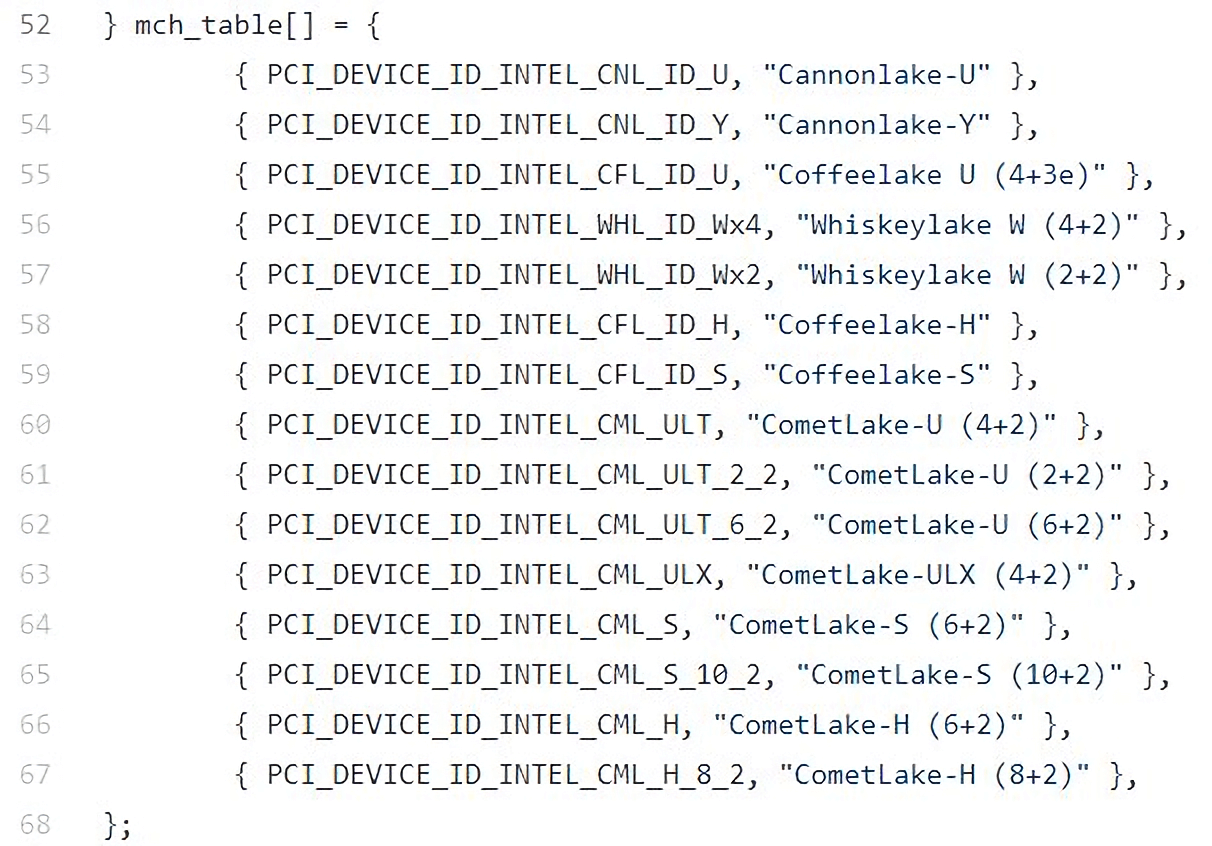
Updates submitted to Coreboot and Linux by Intel have revealed that the Comet Lake series of processors may have as many as 10 cores. In addition to upping the core count for desktop, likely in response to Ryzen 3000 processors with up to sixteen cores, ultrabooks will be receiving CPUs with up to six cores.

Comet Lake is still based on a refined 14nm process. It is expected that six core Comet Lake U-series CPUs will have a 28W TDP while four core variants will be rated at 15W. In addition, there may be an extra low power 5W CPU, making it Intel's first quadcore with such a low TDP.
For desktop systems, Intel is expected to keep the same LGA 1151 v2 socket for 10 core Comet Lake processors. Power draw is not currently known for the upcoming CPUs, but extra pins to deliver power seem like they will be put to use.

Now is yet another time to note that Intel really needs to get its manufacturing processes under control and in a hurry. As AMD is enjoying the benefits of TSMC's advanced 7nm processes, Intel is still struggling to mass produce 10nm parts. Even if Intel's 10nm process is allegedly more similar to competing 7nm processes, the clock is ticking before more consumers jump ship to cheaper and higher core count CPUs.

Intel's roadmap for mobile processors shows Ice Lake releasing this year, but still on a 10nm+ process. Tiger Lake will follow up in 2020, but on a refined 10nm++ process. At least on the mobile front, a place where power consumption matters far more than on desktop, Intel is still looking at late 2020 or early 2021 before it churns out 7nm options.

Permalink to story.

 
But at what cost and will the benefit really be there?

Indeed. The advantages are mostly power related.

At the low end mobile scale, adding more cores is not as beneficial as just having better, faster IPC but less cores. Not for performance anyway. Simply because of course multi threading of most software is by no means a given.
 
My next cpu will be my 1st AMD purchase after running Intel systems for years.

Unfortunatley, AMD still remaining as second class. Maybe they have been catching up with Intel, but it's just been that - catching up. Never overtaken.

Now, I am not a fanboy of Intel nor AMD, and I will be one of the first persons to buy the next best CPU, but for now, AMD still remains as the second class in terms of gaming. Despite what benchmarks has been saying, the benchmarks in gaming has been less than enthusiastic for games when it comes to AMD processors. Maybe my gaming bias has to do with this influence, but my concern remains.

Cinebench and other "work" benchmarks - do they actually relate to you how well the CPUs perform for you in your daily activities?
 
What benefits is AMD getting from 7nm?

I'm huge PC Gamer and top gaming performance is what I require. Intel/Nvidia as no competition for a decade from AMD.

Just look at 7nm Radeon 7 perfect example of 300 Watts Monster that gets destroyed by 12nm 2080 225 Watts.

Just saying if this is the indication of the future of Zen2

Icelake is coming on 10nm+ and will put Zen2 to shame as did Coffeelake/Coffeelake Refresh both did to Zen/Zen+.... There's benchmarks everywhere.
 
.. the benchmarks in gaming has been less than enthusiastic for games when it comes to AMD processors...

Although I am running an Intel machine at the moment, I have to ask, what year are you living in? Even if you're speaking only about the ryzen second Gen, it was only about 5 to 10% frames more for Intel, and about 20 to 30% more in price for Intel. If you like to pay more for diminishing returns, then that's you're provocative. For me personally, I'd choose the "second best" and invest more in a fancier gpu which makes the Intel choice even more moot. Also Ryzen third Gen is around the corner and nearly slayed the top end i9 with an engineering sample at WAY lower Power usage. Don't even get me started on Intel security breaches, that led to hyper threading being stripped and them still charging more for chips that lack it. I truly look forward to seeing what justifications you have keep to purchasing from them. To me it's an obvious choice for me to bail Intel in my future builds.
 
Last edited:
Back