Rumor mill: Apple and Intel are moving closer to a foundry deal that could put Intel back inside Macs and iPads by 2027 – but this time as a contract manufacturer for Apple's own M-series SoCs rather than a CPU supplier. The prospective arrangement, outlined in new guidance from analyst Ming-Chi Kuo, would make Intel an additional advanced-node partner alongside TSMC, and would hinge on the maturity of Intel's 18AP process over the next 18 to 24 months.
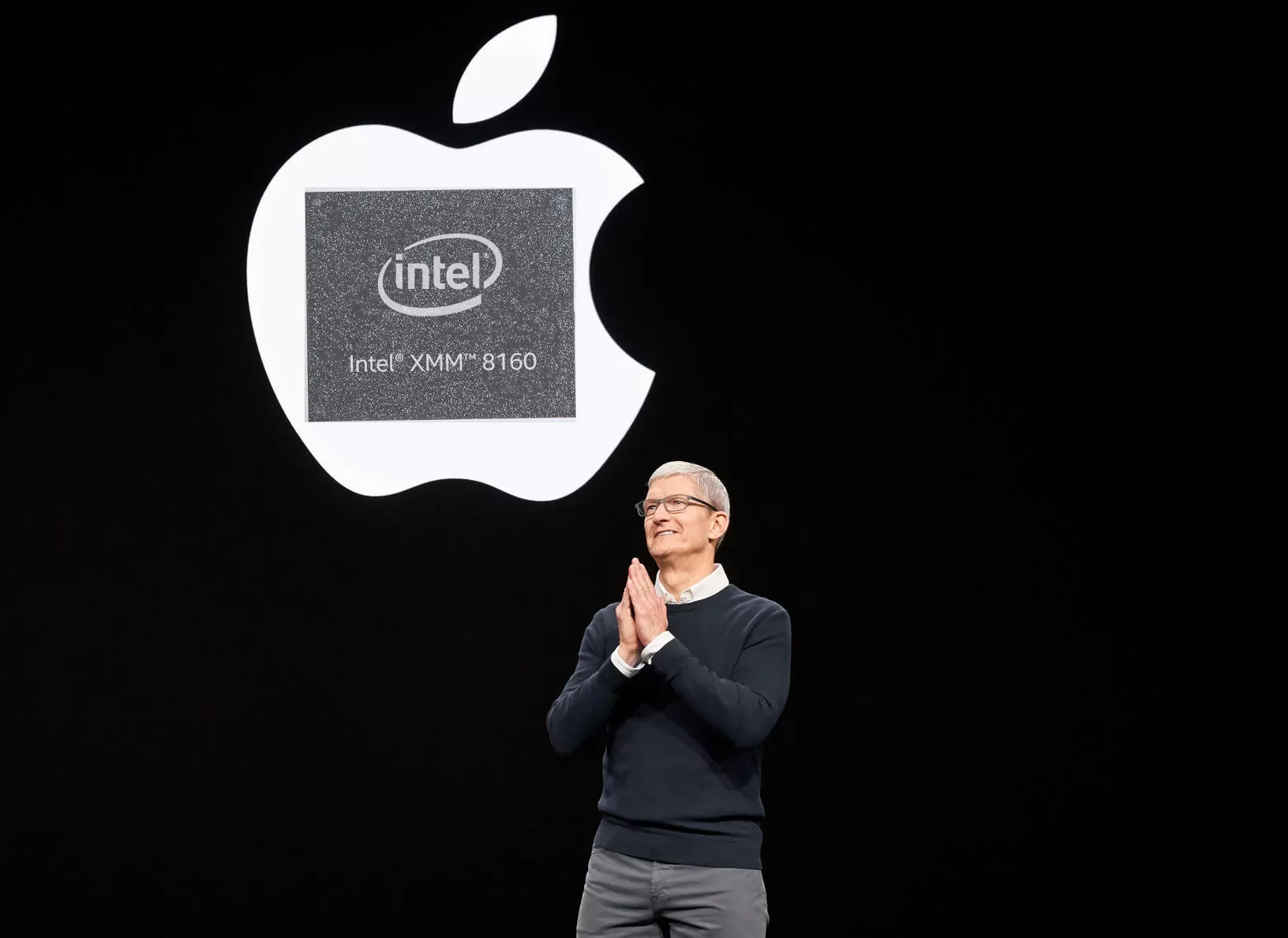
According to Kuo, Apple has already signed a non-disclosure agreement with Intel to access an early 18AP process design kit, specifically a 0.9.1 GA revision that lets Apple's silicon team model and prototype designs against Intel's upcoming node.
That kit is an incomplete view of the final manufacturing stack, but it is sufficient for architectural exploration and initial physical design work on an entry-level M-series SoC.
The next significant milestone is delivery of Intel's 18AP PDK 1.0/1.1, which Kuo says Apple expects in the first quarter of 2026. If that schedule holds and the PDK is ready for production, Apple plans to design and ramp its next entry-level M chip, used in the MacBook Air and iPad Pro, on Intel's 18AP process, with Intel starting high-volume shipments in the second or third quarter of 2027.
Intel's 18A family is the company's first 2nm process, built around second-generation RibbonFET gate-all-around transistors and PowerVia backside power delivery, and 18AP is a performance- and packaging-oriented variant of that baseline.
Intel expected to begin shipping Apple's lowest-end M processor as early as 2027
– 郭明錤 (Ming-Chi Kuo) (@mingchikuo) November 28, 2025
There have long been market rumors that Intel could become an advanced-node foundry supplier to Apple, but visibility around this had remained low. My latest industry surveys, however, indicate that...
Kuo and other industry reports note that Apple's internal M-series roadmaps align well with Intel's push toward tightly integrated compute and memory in a single package, a philosophy similar to Intel's own Lunar Lake client platform.
Any foundry deal between Apple and Intel depends on the maturity and economics of Intel's processes, and the company has been signaling steady progress on both yield and roadmap. Intel executives recently said 18A yields are improving at roughly 7 percent per month as Panther Lake client CPUs move toward mass production, with yields comparable to or better than earlier high-volume nodes once die size is factored in.
Kuo frames the foundry relationship as serving Apple's desire to diversify away from a single advanced-node supplier (TSMC) and, in the current political climate, to demonstrate a deeper commitment to US-based semiconductor manufacturing.
For Intel, landing Apple as a flagship 18AP customer would be strong proof that its foundry turnaround is gaining traction after years of process delays and strategic missteps.
The company has told investors it aims for its foundry business to break even around 2027, and external orders for high-volume, leading-edge SoCs from top-tier designers are central to that plan.
Kuo argues that a successful Apple engagement could make it easier for Intel to attract or expand business from other large clients evaluating Intel's offerings against TSMC's N2-class portfolio.
Despite the growing alignment, the timeline is far from guaranteed. Apple will only commit its production M-series designs to 18AP if the final 1.0/1.1 PDK, arriving in early 2026, meets its targets for performance, power, density, and design rules. The decision also depends on Intel maintaining its current pace of yield improvements as it scales up 18A for its Panther Lake chips.
Intel could return to Macs and iPads by 2027, but this time as Apple's contract chipmaker


