Intel credit rating drops to two steps above junk status amid worsening struggles

midian182

Posts: 11,714   +177
Staff member
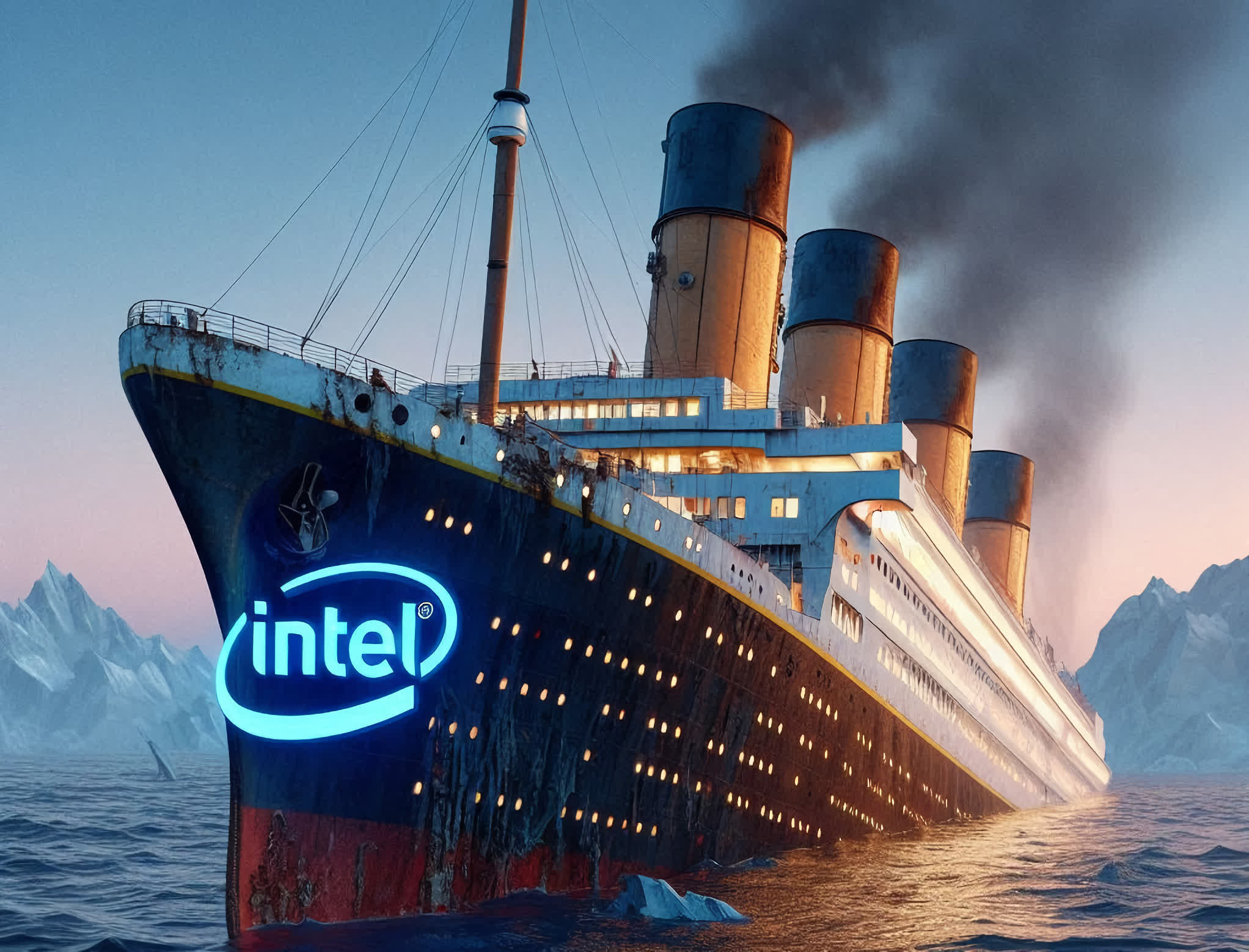
What just happened? Intel is learning that no matter how bad things are, they can always get worse. The beleaguered company has just had its credit rating downgraded by Fitch, placing Team Blue just two places above the dreaded junk credit status.
Fitch carried out an assessment on Intel that found the company was facing increasing challenges in maintaining demand for its products. It also noted the growing competition from the likes of NXP Semiconductors, Broadcom, Qualcomm, and AMD, many of which have stronger financial structures, though with weaker market positions.

Following the assessment, Fitch has downgraded Intel's credit status to BBB from the previous BBB+. That puts it just two spots above junk status, and is Fitch's lowest "investment grade" rating.

Credit: Finance Stu

For Intel to recover its previous credit rating, the company will require both stronger end markets and successful product ramps, along with net debt reduction over the next 12-14 months, Fitch wrote.

Intel falling behind in the AI race was also highlighted by Fitch. The credit agency said its AI strategy remains unclear and depends on a systems and software approach, an area where the company has traditionally been weak or absent.

Fitch did highlight some positives for Intel. It wrote that because of aggressive cost-cutting measures, including successive waves of headcount reduction, Intel now expects to lower its operating expenses to $17 billion in 2025 and $16 billion in 2026, copmared to $19.4 billion in 2024.

Intel is struggling like never before right now. In a public regulatory filing that appeared a few weeks ago, the company warned that it could slow down or even halt development of the advanced 1.4nm-class technology unless it secures a significant external customer and meets critical project milestones.

Intel expects to lay off approximately 24,000 workers throughout all of 2025 as part of CEO Lip-Bu Tan's cost-cutting strategy, while plans for large new chipmaking "mega-fabs" in Germany and Poland have been put on hold. Intel also cut 15,000 jobs in 2023, and another 15,000 in 2024. Tan himself admitted last month that his firm is no longer a top 10 chipmaker.

Intel is also rapidly falling behind in the consumer CPU space. The recent Steam survey shows that AMD's user share has reached a record 40% in the processor category following months of continuous growth at Intel's expense.

Intel has been struggling for a long time now. In August 2024, Moody's downgraded its credit rating to reflect expectations for significantly weaker profitability over the following 12 to 18 months.

Permalink to story:

 
Intel, lower your CPU prices! You can't charge premium prices when your company isn't making premium products and you aren't the industry leader anymore. You are going to have to price your products like AMD did before Ryzen and produce better lower tier CPUs and charge less than AMD is.

As soon as you come out with a great line up of CPUs that actually perform and you don't force people to change platforms every time they upgrade, you'll be back, until then stop thinking you're old Intel.
 
Ten years of selling You the same 4 cores as a premium product, with small increments in clocks and price. This is how sitting on Your hands, counting money ends.
Jensen, take notice.
Don’t forget driving away talent by treating them like dirt or sleeping on systemic issues with your new nodes always assuming you’ll be the sales giant.
Intel is still selling glorified 12th gen as new...

Just like they did with Skylake.
This is incorrect. Arrow lake is not alder lake. Alderlake ended with the 14th gen. Arrow lake is as much alder lake as sky lake was Conroe.
 
After decades of abusing their market position and milking everyone for as much profit as possible Intel is finally getting what they deserve. I wouldn't worry too much about Intel disappearing anytime soon though. Some investors will come along and save it just like they did with AMD, or if all else fails the Orange Administration will step in and bail them out, just like they did with banks and the auto industry.
 
Is that picture meant to be the Titanic? It shipped water at the front so the stern was the last part to go under.
 
Intel, lower your CPU prices! You can't charge premium prices when your company isn't making premium products and you aren't the industry leader anymore. You are going to have to price your products like AMD did before Ryzen and produce better lower tier CPUs and charge less than AMD is.

As soon as you come out with a great line up of CPUs that actually perform and you don't force people to change platforms every time they upgrade, you'll be back, until then stop thinking you're old Intel.
They did.. 265k for 250$ is a good deal. Great cpu for that price.
 
Happens to a lot of "top tier" companies.
Sears was on top, didn't innovate, they are gone. IBM use to be top of the roost, not so much any more.
The "big three" auto companies use to be on top, but when the oil crisis of the 70's came along, they got caught with their pants down and the vehicles they produced after that were junk until the 80's. By then, Japan had a pretty good foothold.
Companies get on top, and get lazy.
 
I never had AMD CPUs until the 3900X came out, and now I'm still with a 5900X that works perfectly.
I'm not about to change soon, I think I'm going to milk this setup to the last drop, which might take a while even though the 5900X is an "old" CPU now. But with a 7900XTX, it works wonders on my 34" ultra wide 160 Mhz monitor from LG. And those 24GB of VRAM help when running LLMs locally...
Intel has been complacent for a long time I think, and that led to the present situation. They had a lot of warnings though, but they chose not to take them into account. The most recent blow came with the 14900 CPUs voltage problems. I am still shocked this could happen to such a big company! This is not a small problem but one that jeopardizes the most important part of a setup (with the GPU). I was still in the "Intel is a no problem build" mindset, not any more... When you invest so much of your hard earned cash in a system, it's quite frustrating when you encounter such an issue!
Come on Intel, get your act together!
 
Ten years of selling You the same 4 cores as a premium product, with small increments in clocks and price. This is how sitting on Your hands, counting money ends.
Jensen, take notice.
No that just isn't accurate. They had premium priced chips with over 4 cores going back to 2011, Their i7 980 just under $600 had 6 cores and 12 threads along with triple channel memory. Their problems today had nothing to do with 4 core chips. Their problems are much worse than that.

If chip manufacturing was easy many more companies would be doing it.

How many chip manufacturers are able to produce sub 10nm chips at scale? It's two. Samsung and TSMC are the only companies in the entire world that can mass produce cutting edge chips. Modern CPU manufacturing is very difficult and it's unfair to make it seem as though Intel was happy to design 4 cores forever when that just wasn't the case. Intel kept designing chips they couldn't manufacturer and kept having to put out what they could manufacturer while they waited for the foundry to catch up with their designs.

AMD sold off their foundry and paid someone else to make their designs. Selling off their foundry and trusting someone else was a gamble and Intel gambled their foundry would catch up. AMD's gamble paid off and Intel's did not.
 
Last edited:
Remember how long they stayed on the 14nm process. In the end it was called 14nm+++ or something ridiculous.

Short sighted. Throughout those years they didn't have much competition and raked in profits.
The lack of inovation and forsite is totally their fault.

Who would have imagined that by 2024/2025 AMD produced the best gaming processors, and by quite a wide margin too.
 
This is what happens due to complacency and hubris. The failure of x86/Atom in the Android space and Apple dropping them were very bad omens.
 
No that just isn't accurate. They had premium priced chips with over 4 cores going back to 2011, Their i7 980 just under $600 had 6 cores and 12 threads along with triple channel memory. Their problems today had nothing to do with 4 core chips. Their problems are much worse than that.

If chip manufacturing was easy many more companies would be doing it.

How many chip manufacturers are able to produce sub 10nm chips at scale? It's two. Samsung and TSMC are the only companies in the entire world that can mass produce cutting edge chips. Modern CPU manufacturing is very difficult and it's unfair to make it seem as though Intel was happy to design 4 cores forever when that just wasn't the case. Intel kept designing chips they couldn't manufacturer and kept having to put out what they could manufacturer while they waited for the foundry to catch up with their designs.

AMD sold off their foundry and paid someone else to make their designs. Selling off their foundry and trusting someone else was a gamble and Intel gambled their foundry would catch up. AMD's gamble paid off and Intel's did not.
Thank You for Your honest attempt at gaslighting Me, but no - workstation CPUs doesn't count here. $600 in 2011 would be like what? $2000 today? I'm talking consumer grade LGA 775-115X CPUs for normal people. They introduced 6-core consumer one just after AMD introduced 6 & 8core Ryzen in 2017.
The bit about own manufacturing probably has merit, though. But is a double edged sword, as AMD could loose competitiveness overnight, being de facto dependent on TSMC monopoly. Waaay too many corporations offloads work to outside these days. Consumer will pay extra, until the day consumer will decides He cannot afford It. I'm European, should not cheer for China, but I'm genuinely waiting for chinese to show Those WallStreet moguls the middle finger.
 
The most recent blow came with the 14900 CPUs voltage problems. I am still shocked this could happen to such a big company! This is not a small problem but one that jeopardizes the most important part of a setup (with the GPU). I was still in the "Intel is a no problem build" mindset, not any more... When you invest so much of your hard earned cash in a system, it's quite frustrating when you encounter such an issue!
Come on Intel, get your act together!

For the last 20 years I've used and owned both Intel and AMD systems, usually having at least one Intel and one AMD CPU for personal use at the same time, and also working with both Intel and AMD CPU systems at my job.

Aside from the 13th gen and 14th gen voltage and oxidation problems, for me Intel is still king in the go-to "no-problem build" category. AMD CPUs are better, and they deserved much better platforms. Intel platforms are simply better. AMD platforms used to be pretty good during the late 2000s and early 2010s however especially for the last 10 years, Intel platforms are often better, more stable and more reliable. Even back in the Pentium 4 / Athlon XP days, when AMD was slaughtering Intel in CPU performance, I thought that at the time Intel platforms were a lot more solid and Intel was my recommendation if your priority was reliability and stability. Again, not bashing AMD, AMD CPUs are better however they deserve much better platforms.

Almost every AMD system I've owned had one or another minor issues and annoyances, and was janky or wonky in some ways that Intel systems rarely present.
 
Almost every AMD system I've owned had one or another minor issues and annoyances, and was janky or wonky in some ways that Intel systems rarely present.

Did you miss Intel's 13th & 14th gen problems lately?
They even have to extend the warranty length from 3 years --> 5 years just to ensure the owner of those processors not to move to AMD.

Meanwhile at your AMD system:
What kind of minor issues that you encountered that made you annoyed?
 
Did you miss Intel's 13th & 14th gen problems lately?
They even have to extend the warranty length from 3 years --> 5 years just to ensure the owner of those processors not to move to AMD.

Meanwhile at your AMD system:
What kind of minor issues that you encountered that made you annoyed?

Doesn't look like you actually read my post properly, since I explicitly mentioned Intel 13th and 14th gen problems in the post you replied to. Looks like I hit a nerve and made you a bit emotional. But yes, I wouldn't recommend Intel 13th and 14th gen to anyone.

Most AMD systems that I've owned and used at work had/have a myriad of issues, often minor issues but annoying. Such as audio problems, USB problems, memory compatibility problems, occasional BSODs out of the blue despite everything being fine in tests, etc. Exception being during the Phenom/AMD FX days, when AMD had very solid platforms despite their CPUs in that era being weaker than Intel's, go figure.
 
Doesn't look like you actually read my post properly, since I explicitly mentioned Intel 13th and 14th gen problems in the post you replied to. Looks like I hit a nerve and made you a bit emotional. But yes, I wouldn't recommend Intel 13th and 14th gen to anyone.

Most AMD systems that I've owned and used at work had/have a myriad of issues, often minor issues but annoying. Such as audio problems, USB problems, memory compatibility problems, occasional BSODs out of the blue despite everything being fine in tests, etc. Exception being during the Phenom/AMD FX days, when AMD had very solid platforms despite their CPUs in that era being weaker than Intel's, go figure.
If AMD and Intel systems use exactly same audio chip, how is AMD platform more problematic with audio? Barely makes any sense. As for memory, unless problem is within IMC, there is not That much AMD can do about it. Etc.

This "Intel is more stable" has been mostly BS. Usually everything is cheapest possible and then reason is AMD CPU of course. About only real AMD platform problem I recall having since K6 days was Nvidia SATA issue.

As for platforms, generally AMD has always had objectively better platform (CPU socket longevity, better expansion capabilities...). With Nova Lake Intel will, if rumours are true, will have better IO side. Finally.
 
If AMD and Intel systems use exactly same audio chip, how is AMD platform more problematic with audio? Barely makes any sense. As for memory, unless problem is within IMC, there is not That much AMD can do about it. Etc.

This "Intel is more stable" has been mostly BS. Usually everything is cheapest possible and then reason is AMD CPU of course. About only real AMD platform problem I recall having since K6 days was Nvidia SATA issue.

As for platforms, generally AMD has always had objectively better platform (CPU socket longevity, better expansion capabilities...). With Nova Lake Intel will, if rumours are true, will have better IO side. Finally.

In terms of longevity and expansion I agree with you, AMD is definitely better and respects the consumer more. However in my experience "Intel is more stable" has not been a meme for most of the last 25 years. I doubt CPUs themselves are at fault, that's why I say "platforms".

Maybe AMD should better design and test their chipsets, and/or demand better testing and quality control from motherboard manufacturers, BIOS manufacturers and third-party chipset manufacturers (during the time AMD platforms used chipsets designed by third parties, we're long past that nowadays ofc). I don't know how much AMD could do about it.
 
Doesn't look like you actually read my post properly, since I explicitly mentioned Intel 13th and 14th gen problems in the post you replied to. Looks like I hit a nerve and made you a bit emotional. But yes, I wouldn't recommend Intel 13th and 14th gen to anyone.

No, didn't miss your point regarding intel's 13th and 14th gen.

And no, you didn't hit my nerve and didn't get emotional LMAO (I also owned Intel 14600KF and it's a very good product for the price I purchased it, good IMC can do 8400c36 daily).

I intentionally writing about you missing the big issue on those Intel processors because you highlighted it in your initial comment yet you proceed to continue highlighted more minor issue for AMD.

The issue on Intel affecting many users including some prosumers reporting many of their CPUs are failing / dead. It's in the order of magnitude more problematic (dead CPUs) compared to the issues of AMD you tried to highlight.

Most AMD systems that I've owned and used at work had/have a myriad of issues, often minor issues but annoying. Such as audio problems, USB problems, memory compatibility problems, occasional BSODs out of the blue despite everything being fine in tests, etc.
The problems you highlighted, unfortunately also happened to Intel platforms. But due to AMD has been selling a bit more than Intel in the DIY space since 2020 onwards along with options for cheaper chipsets with unlocked overclocking options (A320, B450, A520, B550, A620, B650), it's understandable there would be more users experienced the issues you listed.

More sold products = possibility of many users experienced the issues.

Regarding memory compatibility, I have to bin myself for the right CPU to reach >8000mhz DDR5 for daily stable on the 12,13,14th gen of Intel. Same with AMD.
It's always like that since I started PC building on 2010 using Intel i7 860 / i3 530.

For BSOD's out of nowhere, users of intel 13th & 14th experienced these during idle and default settings:
- https://www.techspot.com/news/102555-intel-finally-investigating-reports-high-end-13th-14th.html
- https://www.techspot.com/news/101978-newer-high-end-intel-cpus-crashing-unreal-engine.html
 
In terms of longevity and expansion I agree with you, AMD is definitely better and respects the consumer more. However in my experience "Intel is more stable" has not been a meme for most of the last 25 years. I doubt CPUs themselves are at fault, that's why I say "platforms".

Maybe AMD should better design and test their chipsets, and/or demand better testing and quality control from motherboard manufacturers, BIOS manufacturers and third-party chipset manufacturers (during the time AMD platforms used chipsets designed by third parties, we're long past that nowadays ofc). I don't know how much AMD could do about it.
Problem still is that your experience is just ultra small fraction of all systems used worldwide. Mass produced stuff always have some bad units. And when someone receives one, it's immediately assumed whole model is trash, manufacturer is trash, I will never buy that manufacturer product again etc. You know. Problem is that there are still probably millions or even more same models in use that work just fine.

On other hand, there are cases where certain product have well known design flaw that make most units simply unreliable or other way faulty .But there are always those who happen to have "lucky" unit that works just fine.

That's problem with all personal experiences. Sample size is usually way too small to reflect situation well enough.

Of course AMD has had many problems but usually those problems are claimed to be much worse than they actually are. Memory "compatibility" is another issue. Many consumers tend to only buy memory that is on QVL list. And that is failure. When Kingston memory and Nvidia chipsets had well known problems, motherboard makers flooded QVL list with Kingston memory. Basically buying something that is NOT on QVL list was better choice. And because QVL list said Kingston memory should work, AMD platform sucks. That is good example of user error. Personally I have never had any memory problems and Never have bought any memory based on QVL lists.

Some "truths" tend to live for long time. Like that famous "Windows 10 is last Windows version" -quot that was completely false. Microsoft never said that but it became some sort of truth. Sae with Intel is more stable "truth", that is backed with very little evidence.
 
Some "truths" tend to live for long time. Like that famous "Windows 10 is last Windows version" -quot that was completely false. Microsoft never said that but it became some sort of truth. Sae with Intel is more stable "truth", that is backed with very little evidence.
Can't agree more with your last statement.

Same with Nvidia = gaming, AMD driver = sucks till today.

Anyway the discussion about Intel's platform = more stable has derailed the initial information of the thread.

Better get back to the main topic of this thread.
 
No, didn't miss your point regarding intel's 13th and 14th gen.

I intentionally writing about you missing the big issue on those Intel processors because you highlighted it in your initial comment yet you proceed to continue highlighted more minor issue for AMD.

The issue on Intel affecting many users including some prosumers reporting many of their CPUs are failing / dead. It's in the order of magnitude more problematic (dead CPUs) compared to the issues of AMD you tried to highlight.

Sorry if it appears that I was downplaying the Intel 13th gen and 14th gen issues, it wasn't my intent. I totally agree it's a trainwreck, and I've always recommended to skip these Intel CPUs unless you can basically get one for free.

The problems you highlighted, unfortunately also happened to Intel platforms. But due to AMD has been selling a bit more than Intel in the DIY space since 2020 onwards along with options for cheaper chipsets with unlocked overclocking options (A320, B450, A520, B550, A620, B650), it's understandable there would be more users experienced the issues you listed.

More sold products = possibility of many users experienced the issues.

About these highlighted problems, I wasn't talking specifically about only the last 5 years though, but the general state of AMD x Intel platforms in the last 25 years. In my experience, both in personal and corporate use managing IT infrastructure, Intel often has been more stable.

However, I even mentioned there was a period between the Phenom (K10) to Bulldozer when AMD platforms were very stable and reliable, especially Phenom II platforms in my experience tended to be rock solid and built like tanks. I really miss my Phenom II X4 PCs for personal use and at work, and some FX-based servers I've built. However in this field I'd say they dropped the ball since Ryzen.

Again, I don't care how much the platforms were sold, I haven't based any of my claims in anedoctal accounts or perceptible number of Reddit threads, but my own experience.

Problem still is that your experience is just ultra small fraction of all systems used worldwide. Mass produced stuff always have some bad units. And when someone receives one, it's immediately assumed whole model is trash, manufacturer is trash, I will never buy that manufacturer product again etc. You know. Problem is that there are still probably millions or even more same models in use that work just fine.

On other hand, there are cases where certain product have well known design flaw that make most units simply unreliable or other way faulty .But there are always those who happen to have "lucky" unit that works just fine.

That's problem with all personal experiences. Sample size is usually way too small to reflect situation well enough.

This is true. Even though I'm not basing my claims only in my personal home/hobbyist use experience, but also on my jobs over the previous 20 years managing corporate IT infrastructure in several companies and for several clients. Of course, even taking this into account, it would still represent a statistically insignificant fraction of worldwide use. However I can't just ignore and dismiss my personal experience.
 
Back