In a nutshell: Intel has been struggling to establish a competitive chip foundry business for years. Now, industry sources indicate the US corporation is set to manufacture the next few generations of AI accelerators to support Microsoft's massive data center expansion, highlighting Intel's renewed push to capture a larger share of the growing AI hardware market.
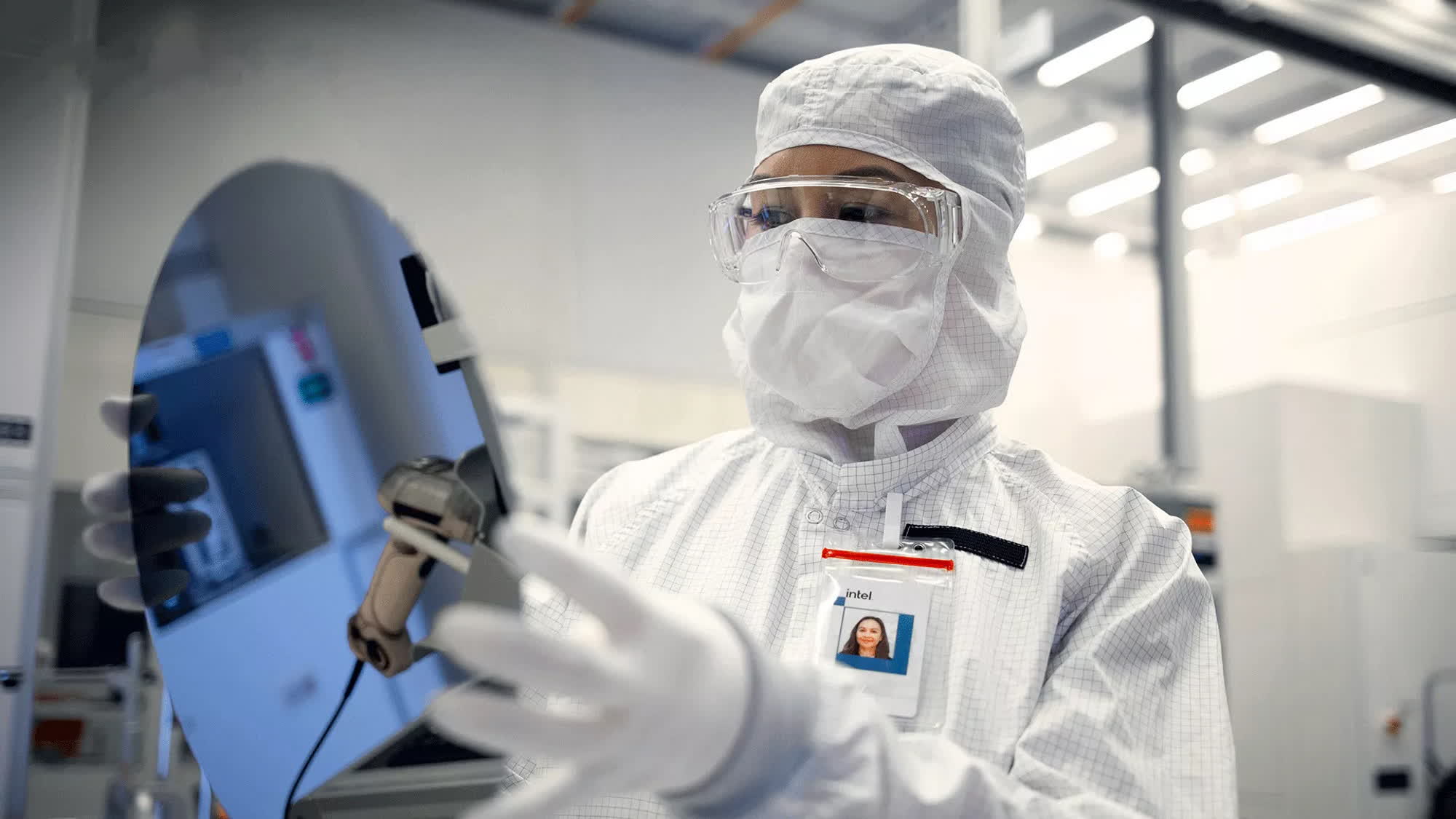
According to a recent report from SemiAccurate, Microsoft has chosen Intel Foundry to manufacture its Maia 3 AI chip. The machine learning accelerator, code-named Griffin, is expected to play a major role in Redmond's plans to develop new generations of self-sustaining data centers.
Maia 3 is an upgrade to Microsoft's earlier Maia projects, which the company continues to present as a potential alternative to third-party AI chips. In a recent interview, Chief Technology Officer Kevin Scott confirmed that Redmond is developing its next AI chips even as most of its current AI cloud workloads still rely on Nvidia's GPU technology.
If the Maia 3 project goes as planned, rumors suggest that Microsoft could continue using Intel's foundry to manufacture the next few generations of the AI chip. Maia 3 production would rely on Intel's 18A process, which provides some interesting food for thought if previous reports are accurate.
Chipzilla was reportedly facing significant setbacks with its process node only a few months ago. Manufacturing issues such as low yields and poor quality threatened to derail Intel's earlier expectations. Now, the company is introducing 18A as a process ready for customer projects and the first advanced sub-2-nanometer manufacturing node available in North America.
The Maia 3 chip could use Intel's 18A or even its 18A-P node. The second-generation 18A process is designed to improve both performance and power efficiency, with specific optimizations for threshold voltage and leakage. Microsoft's next-generation Maia chips could employ even more advanced nodes such as 18A-PT or 14A.
Intel specifically designed the 18A-PT node for customers in the artificial intelligence and high-performance computing sectors. Building on the performance and power efficiency gains achieved with 18A, the new process offers greater package scalability and integration capabilities to further enhance generative AI workloads and chatbot performance.
The number of rumors and manufacturing deals related to Intel Foundry is starting to resemble a financial roller coaster, but Microsoft's alleged Maia 3 plans should be taken with a grain of salt. Earlier this month, industry insiders claimed that Intel could begin manufacturing x86 chips for AMD. Meanwhile, the company's plans for its upcoming PC client CPUs appear to be proceeding as expected.
Intel has secured Microsoft as a major foundry client for its 18A process, sources say


