Intel laptop CPUs are crashing, too, as the company remains silent

Daniel Sims

Posts: 2,469   +74
Staff
Facepalm: The instability issues plaguing the 13th and 14th-generation Intel Core CPUs were initially only reported in high-end consumer desktops. However, recent information suggests that processors from these series are also crashing at alarming rates in other devices, such as laptops. Chipzilla is investigating the issue but hasn't released an official statement in over a month.
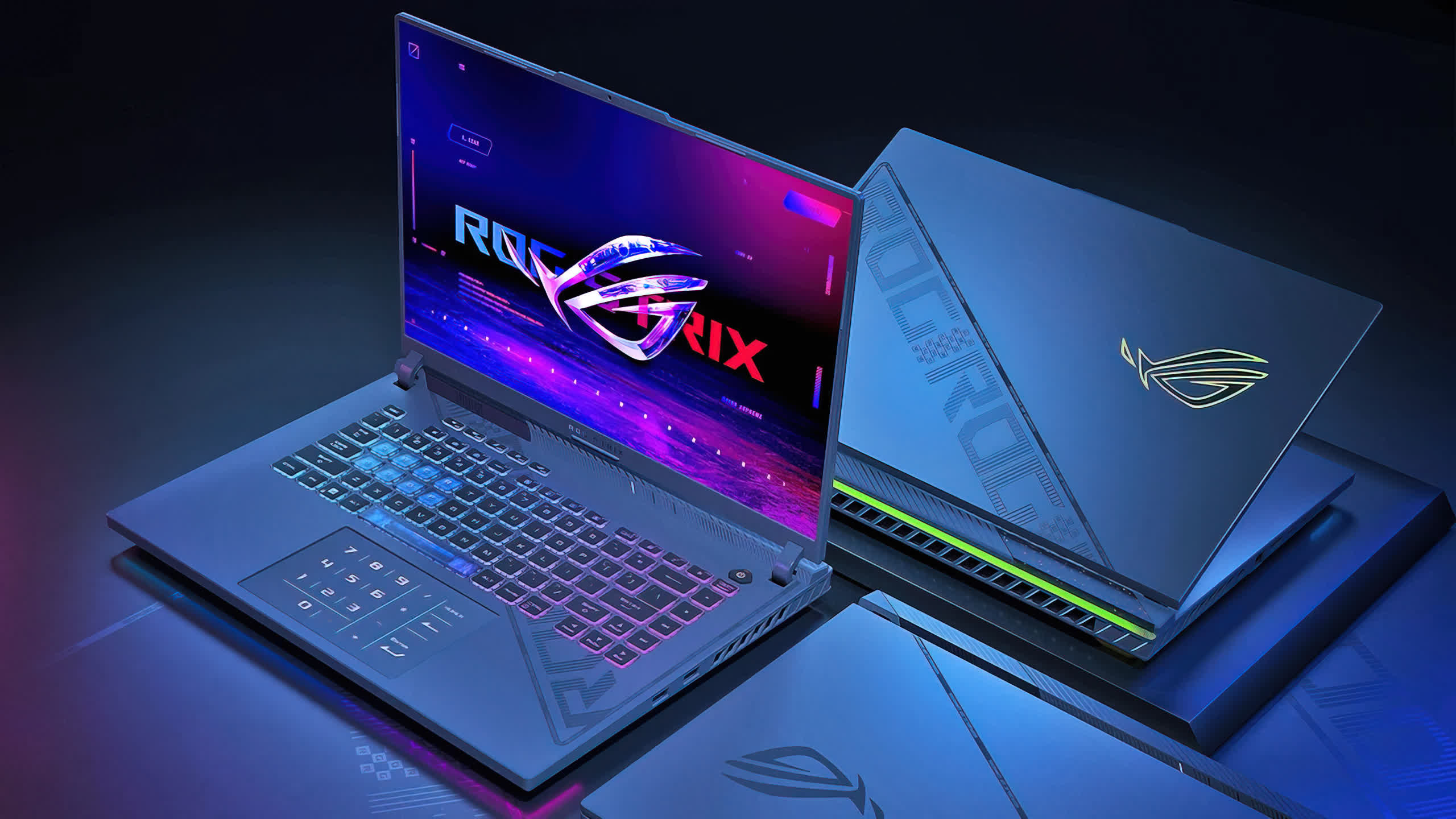
Shortly after blasting Intel for the high failure rate of the company's recent CPUs, Alderon Games claims laptops running on Raptor Lake chips are no exception. The revelation suggests that the problem is far more widespread than previously known.

Company founder Matthew Cassells didn't specify which Intel laptop CPUs were crashing but admitted they failed slightly less often than other form factors. The earliest reports centered on Core i9 and i7 desktop processors, but it now seems no 13th or 14th-gen product is safe.

Most of the reported crashes occurred while running games – many using Unreal Engine 5 – but other CPU-intensive tasks like Handbrake or Cinebench are also affected. Cassells recently suggested that Intel should recall the affected CPUs, reporting instability in players' crash reports, servers, workstations, and benchmarking tools that wreaked havoc on Alderon's operations.

Furthermore, YouTuber Level1Techs recently shared data indicating similar problems in almost half of game servers that pair W680 chipsets with Raptor Lake Core i9 CPUs. The broad spread of affected product tiers suggests that the issue might lie with the LGA 1700 socket.

Intel's last statement came in late June when it provided recommended BIOS settings to limit voltages, which alleviated the problem for consumers but didn't address it entirely. Excessive default overclocking from some motherboard manufacturers might be partially to blame, but reports of crashes continue to emerge weeks after users began underclocking.

A recent update from Intel also fixed an eTVB microcode algorithm glitch, briefly leading observers to believe this was the source of the issue. Unfortunately, the company later confirmed that it merely discovered and resolved the issue amid its ongoing investigation into the instability problems.

Comments like those from Cassells are likely increasing the pressure on Intel as it prepares to launch new generations of CPUs later this year. Lunar Lake laptop processors are expected to arrive in September, with Arrow Lake coming the following month. If the problem lies with LGA 1700 or its platform, Arrow Lake might be safe, as it will rely on an all-new LGA 1851 socket.

Permalink to story:

 
This is surprising, but if this is true, I think it further isolates the issue to the node that these chips were fabricated on, and not so much of high power + heat that caused the chip to degrade over time. If this is the case, I think I get it why Intel is keeping so quiet because if they announce it as a problem, they will be flooded with RMA/ return requests given the number of chips they have shipped out. And they won't have another chip using an alternative node to directly replace. But as the noise grows louder, Intel will eventually have to do something. Keeping quiet will undermine their brand credibility, which is more devastating to them now.
 
I have bought HP victus 16 which has 13700h and facing issues especially while gaming big mistake buying intel.
That right there!
I mentioned here a while back I was having very rare problems with crashing on my i7-13700HX laptop when running games or my productivity software (AutoCAD, Fusion 360, 3DS Max). At that time, I think it was thought to be only i9 CPUs. Now we know better.
It is much worse now. It has crashed every 5–6 days since May.
I still have my previous desktop replacement (Ryzen 9 5900HX RTX 3080) and I'm thinking about getting back on it so I can do what I have to do with this one when Intel makes up its mind. Or is forced to.
 
This is surprising, but if this is true, I think it further isolates the issue to the node that these chips were fabricated on, and not so much of high power + heat that caused the chip to degrade over time. If this is the case, I think I get it why Intel is keeping so quiet because if they announce it as a problem, they will be flooded with RMA/ return requests given the number of chips they have shipped out. And they won't have another chip using an alternative node to directly replace. But as the noise grows louder, Intel will eventually have to do something. Keeping quiet will undermine their brand credibility, which is more devastating to them now.
There's no loss of credibility when it comes to the fanboy hordes. Marketing and branding are some of Intel's true strengths.
 
Damn, I thought my Alienware M18 was going to avoid this, I have a core i9 (13900HX IIRC).

If this turns out to be a problem and it needs replacing will this be done even outside warranty ? How would that work if the part is found to be bad ? would Alienware/Dell just replace all our motherboards ?
 
Is this common for chips to degrade/rot/corrode over time. You would think once it becomes flakey like a heated bad solder it would really ramp up or a capacitor starts to blow.
Reminds of Louis Rossmann ranting about iPhones havingt a high powered line , right next to a data line, I wonder if it is something simple as this. Intel needed to push their CPUs harder to compete with AMD
Like Boeing needed a competitor to an Airbus plane, so just cobbled an engine onto an existing frame, fudge some software , so just like flying an existing plane, no need for much certification and pilot training
 
All points to a fundamental manufacturing defect. Laptops shouldn't be suffering from this, given how carefully power constrained and throttled they are compared to Desktop parts.

Rough, expensive times ahead for Intel.
 
All points to a fundamental manufacturing defect. Laptops shouldn't be suffering from this, given how carefully power constrained and throttled they are compared to Desktop parts.

Rough, expensive times ahead for Intel.

Relatively power constrained. The high end models still draw considerable power for the form factor and not as easy to cool as in a desktop form factor.

This really sounds like an issue of CPU degrading due to high power / thermal load over time.


Probably result in some class action lawsuit and when finally settled 10 years down the road everyone impacted by it (normal, every day consumers) will get $10 back and Intel will just go laughing to the bank as they keep oodles and oodles of all the money they made off these faulty chips.
 
Probably result in some class action lawsuit and when finally settled 10 years down the road everyone impacted by it (normal, every day consumers) will get $10 back and Intel will just go laughing to the bank as they keep oodles and oodles of all the money they made off these faulty chips.

It's not the cash loss that will bother them at Intel, its the reputationial damage and the subsequent loss of market share, especially amongst their lucrative server side cash cow, that will cause sleepless nights.
 
If power draw and thermals are indeed the issue, undervolting the CPU in the BIOS may be a good preventative option in addition to setting PL1 and PL2 to something reasonable.

On a 12700K I set Vcore to adaptive plus offset and used a -100mV offset. I ran Linpack in OCCT with no issues. Using HWMonitor with Helldivers 2, I went from 144 W / 77C reported max power draw and package temp to 86 W / 60 C (I have an Arctic liquid freezer 360 radiator). My MB is an MSI Z790 tomahawk (DDR4 variant). This wasn’t a controlled benchmark, so YMMV; however, my system is generally running much cooler than before. I also configured my father’s PC (also a 12700k) with the same settings and his system is also running with no issues (he predominantly runs MSFS).

This doesn’t exonerate Intel in any way, but it is a lever to pull if power draw and thermals are a risk. Obviously, this won’t help anyone with a locked part or locked Vcore settings.
 
This is not an overclocking or an overvolting issue. The Level1Techs YouTube video channel indicated it would eventually happen with all 13,900 and 14,900 chips on the w680 platform which has no overclocking and no overvolting! This is literally a circuit early wearout / burnout issue!

Data center service contracts are so extremely high ($1100+) that they include enough money to buy a new chip every single year to cover the wear out issue plus a few hundred dollars extra! The service contract for 7950x is $139 per year!!!

The issue has NOTHING to do with the node and NOTHING to do with the socket - its likely some transistors or wires are just sized too small in the INTEL DESIGN and they experience electromigration over time which eventually leads to bit transmission errors ...
 
Last edited:
Laptops tend to do that. I have 2 laptops with 6900hs, both are just restarting in the middle of games.
That is NOT normal operation.
I have used desktop replacement laptops since before that's what whey were called.
I have had more hardware related crashes\reboots\freezes in the last few months with this i7 than probably any other laptop the entire time I owned them.
 
I'm sure Intel can work out a deal with Microsoft to make new CPU requirements for "security" to bypass RMAs.
 
The story continues Gamer's Nexus has a working theory that it might be impurities during the manufacturing process. On top of the Wendel's and Buildzoid's claims.


They are running a survey for those with Intel CPUs.

 
Back