The big picture: Intel is looking to repair its desktop reputation not with another halo chip, but with two aggressively priced Arrow Lake Refresh parts that lean on extra efficiency cores, faster memory, and a new optimization layer that means to squeeze more gaming and productivity performance out of essentially familiar silicon.
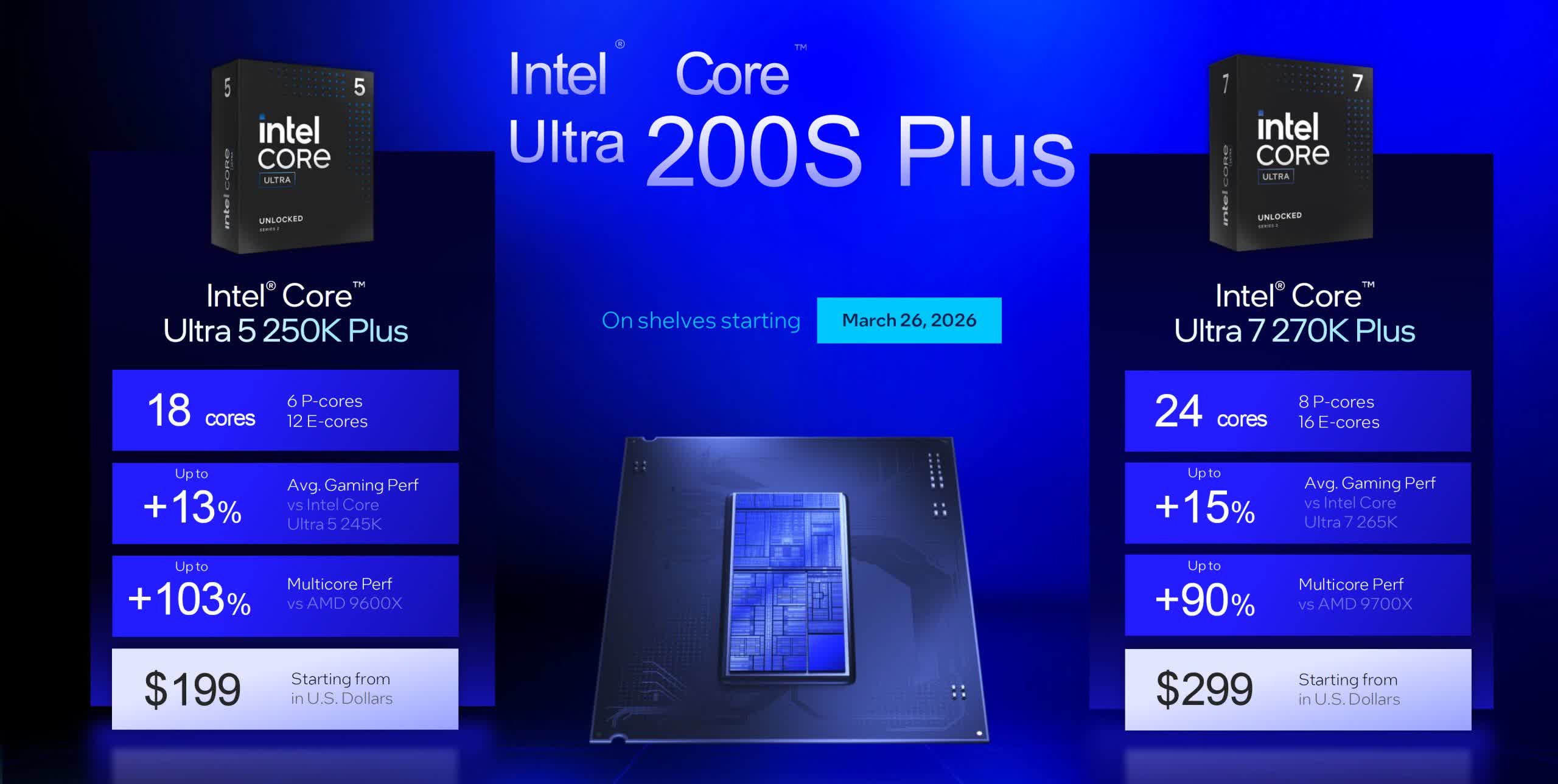
These chips arrive as Intel navigates a rocky recent history in the high-end desktop space. Past generations faced thermal woes and instability, the latest Arrow Lake entry stumbled on frame rates. With the Core Ultra 7 270K Plus and Core Ultra 5 250K Plus, Intel is now claiming the title of the "fastest gaming desktop processors ever," with retail availability set for March 26.
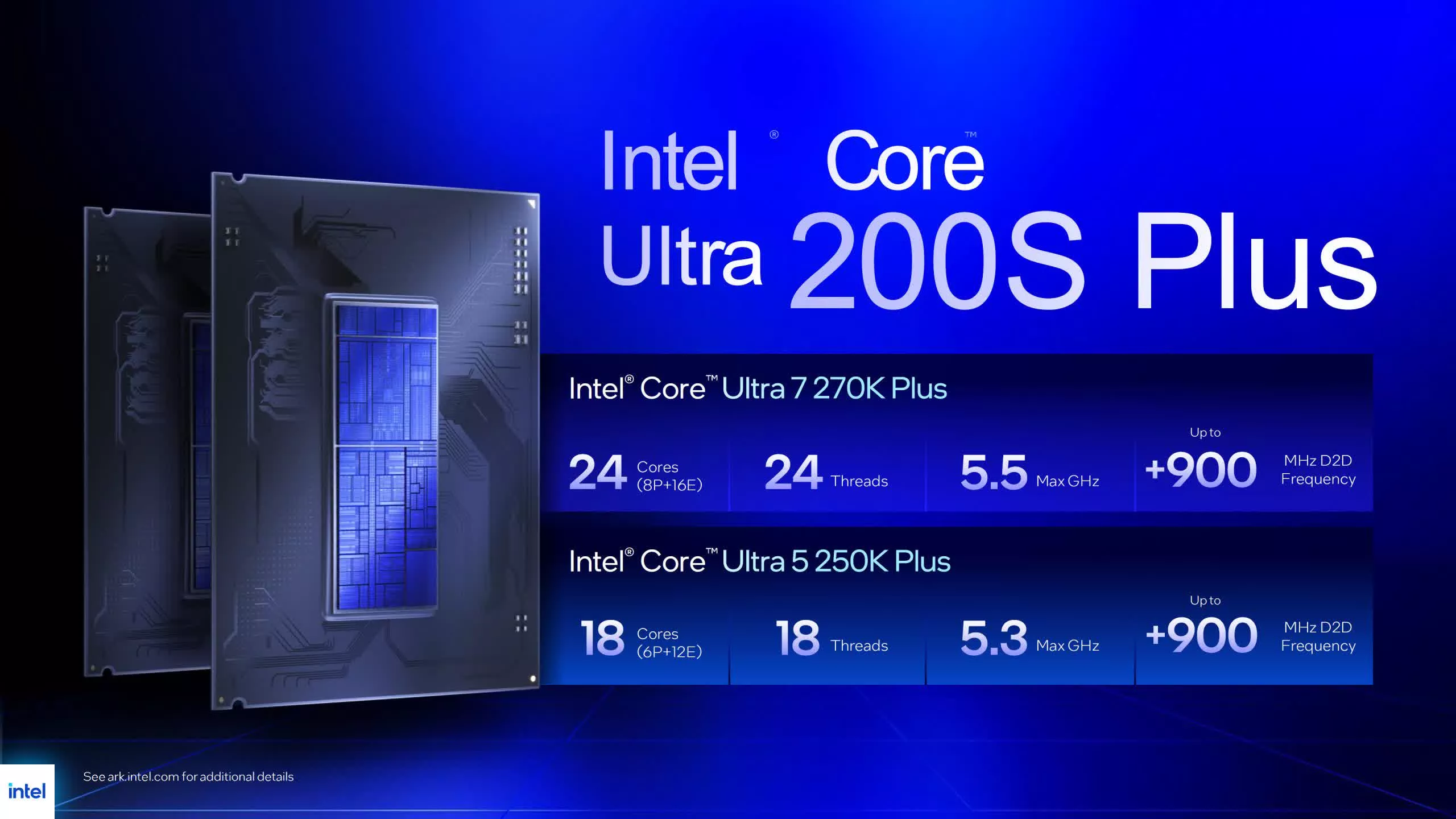
The Core Ultra 7 270K Plus packs 24 cores and 24 threads into a 125W TDP envelope, mirroring the Core Ultra 9 285K's hybrid configuration of eight performance cores and 16 efficiency cores. P-cores boost to 5.5GHz, with base clocks rising to 4.1GHz compared to earlier models. Efficiency cores begin at a 3.4GHz base, a 100MHz increase over their predecessors, while a CPU-to-memory controller link running 900MHz faster improves data flow between the processor and system memory.
That setup positions the chip ahead of the 20-core Core Ultra 7 265K in multithreaded workloads, while Intel is also targeting parity or better against the far more power-hungry Raptor Lake Core i9-14900K.
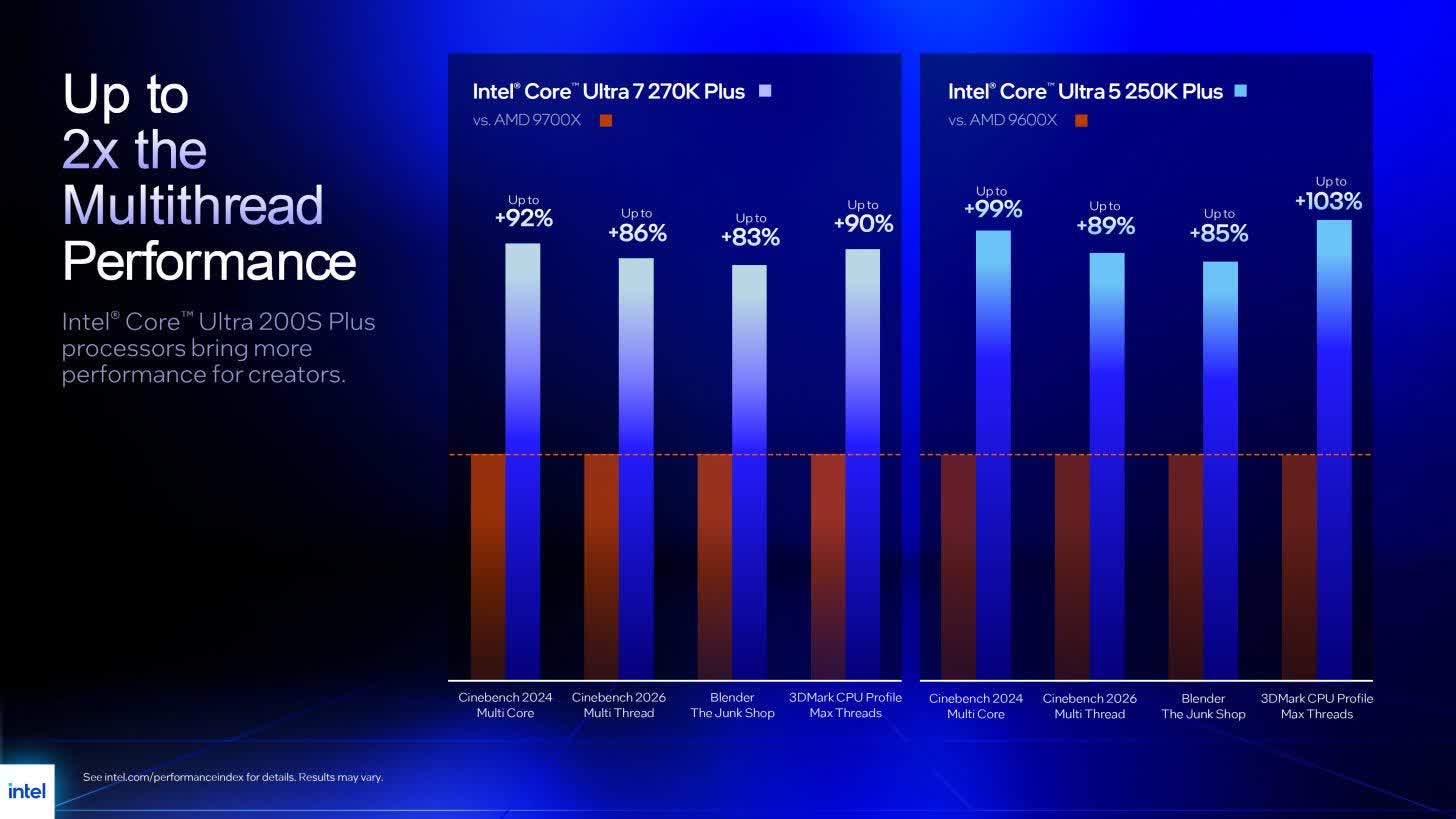
At $300, the processor is aimed squarely at workloads where AMD's 8-core Ryzen 7 9700X falls behind, potentially offering close to double the multithreaded throughput on paper.
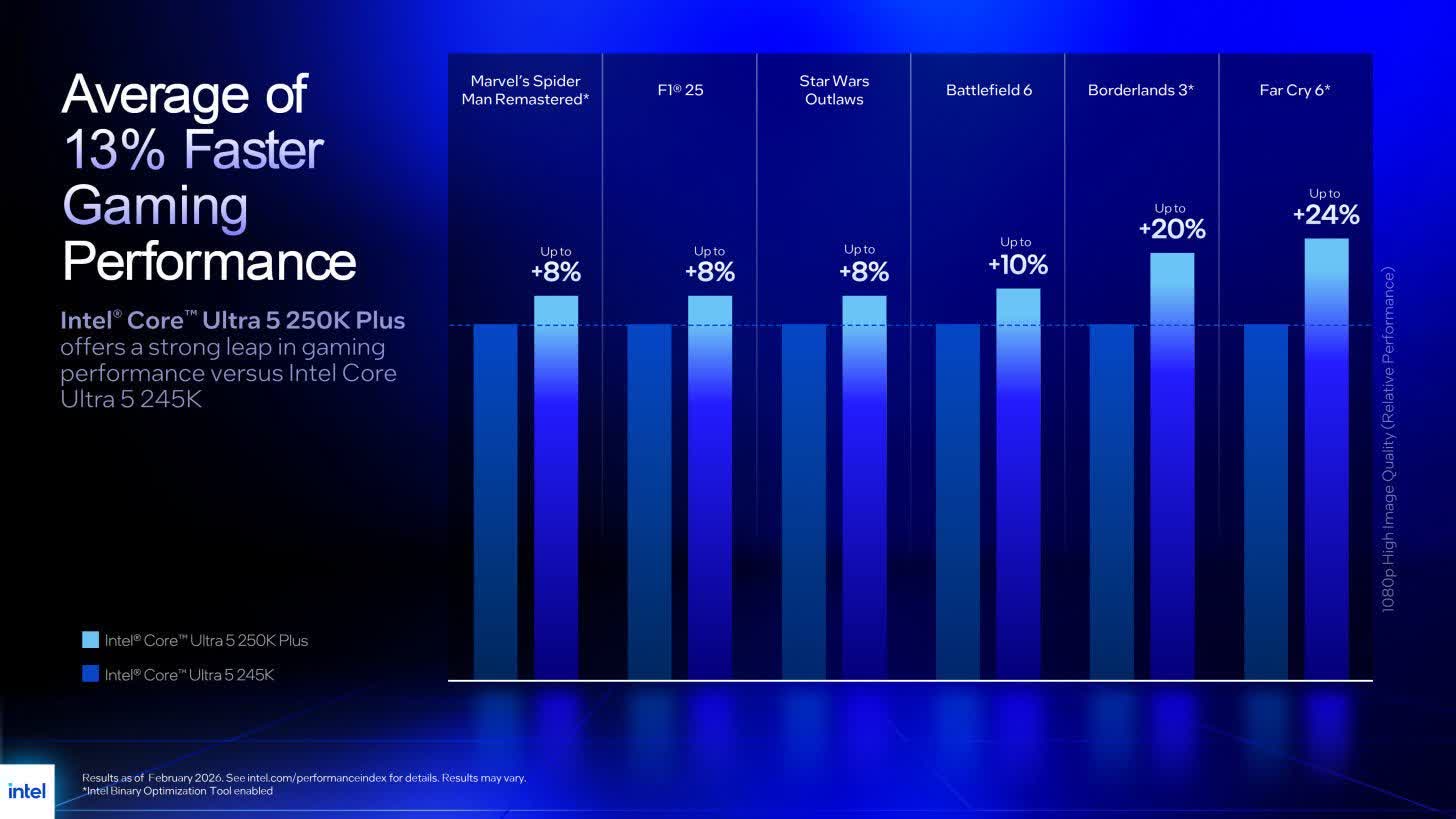
Further down the stack, the Core Ultra 5 250K Plus arrives at $200 with 18 cores, including six P-cores clocked at 4.4GHz base and 12 E-cores running at 3.7GHz. The chip carries 30MB of Smart Cache, an increase of 6MB over the 245K. Intel claims an average 103% multicore advantage over the similarly priced Ryzen 5 9600X, relying heavily on its larger pool of efficiency cores to handle parallel workloads.
Both processors retain a 125W base power rating, avoiding the escalating power demands that defined recent flagship generations. A KF variant of the 250K will also be available, removing integrated graphics for builders planning to rely on a discrete GPU.
Rather than introducing a full architectural overhaul, Intel is focusing on targeted improvements in this Arrow Lake Refresh generation. Support for DDR5-7200 memory is now standard, and the platform is preparing for higher-density 4-rank CUDIMM modules on compatible 800-series motherboards. Intel says new board variants arriving through 2026 will more fully unlock those memory configurations.

A key part of Intel's gaming performance claims centers on the new Intel Binary Optimization Tool, a binary translation layer designed to improve performance in select titles without requiring code changes from developers.
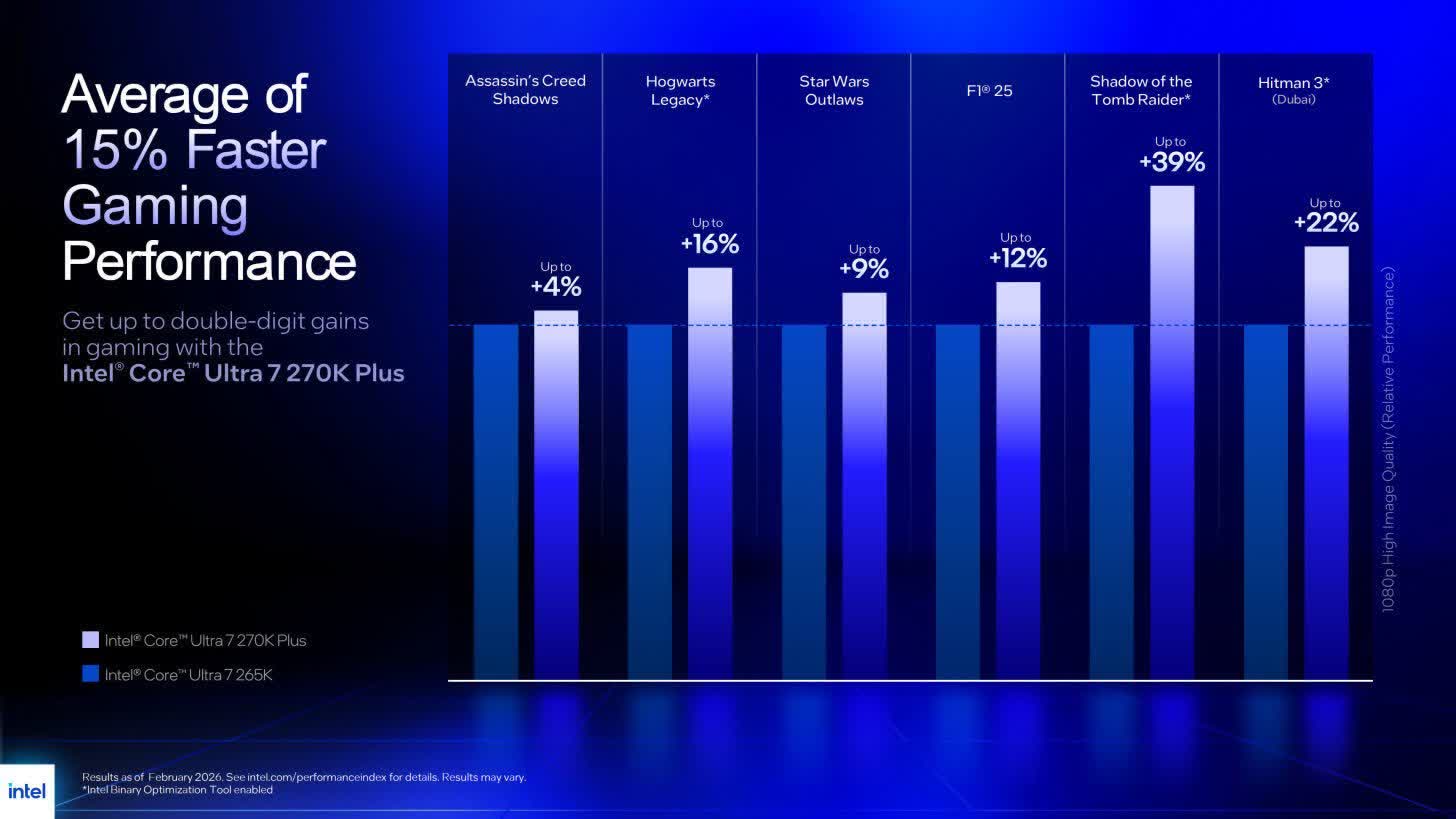
Based on first-party testing, Intel claims up to a 39% performance uplift in Shadow of the Tomb Raider compared with the Core Ultra 7 265K, while Assassin's Creed Shadows shows a more modest 4% gain. Intel's comparisons focus primarily on immediate predecessors rather than rival processors from AMD or earlier Raptor Lake chips.
The new CPUs remain fully compatible with existing 800-series motherboards. The 270K Plus also retains its 36MB Smart Cache configuration, maintaining the shared L3 pool that feeds both core types.
Independent reviews (coming soon from yours truly) will determine how these chips stack up in real workloads. But the refresh signals Intel's continued bet on hybrid architectures and software optimization as it works to close the gaming gap with AMD.
Intel launches Core Ultra 270K Plus and 250K Plus to revive its desktop gaming push


