Intelligence agencies warn Russia may be developing a new way to take out Starlink

Skye Jacobs

Posts: 1,922   +58
Staff
What we know so far: Intelligence services from two NATO countries say Russia is developing a new type of anti-satellite weapon designed to disrupt Elon Musk's Starlink constellation by generating destructive clouds of shrapnel in low Earth orbit. The material, shown to Associated Press journalists on the condition that the agencies remain unnamed, describes a so-called "zone-effect" system intended to degrade Western space capabilities that have supported Ukraine during Russia's full-scale invasion.
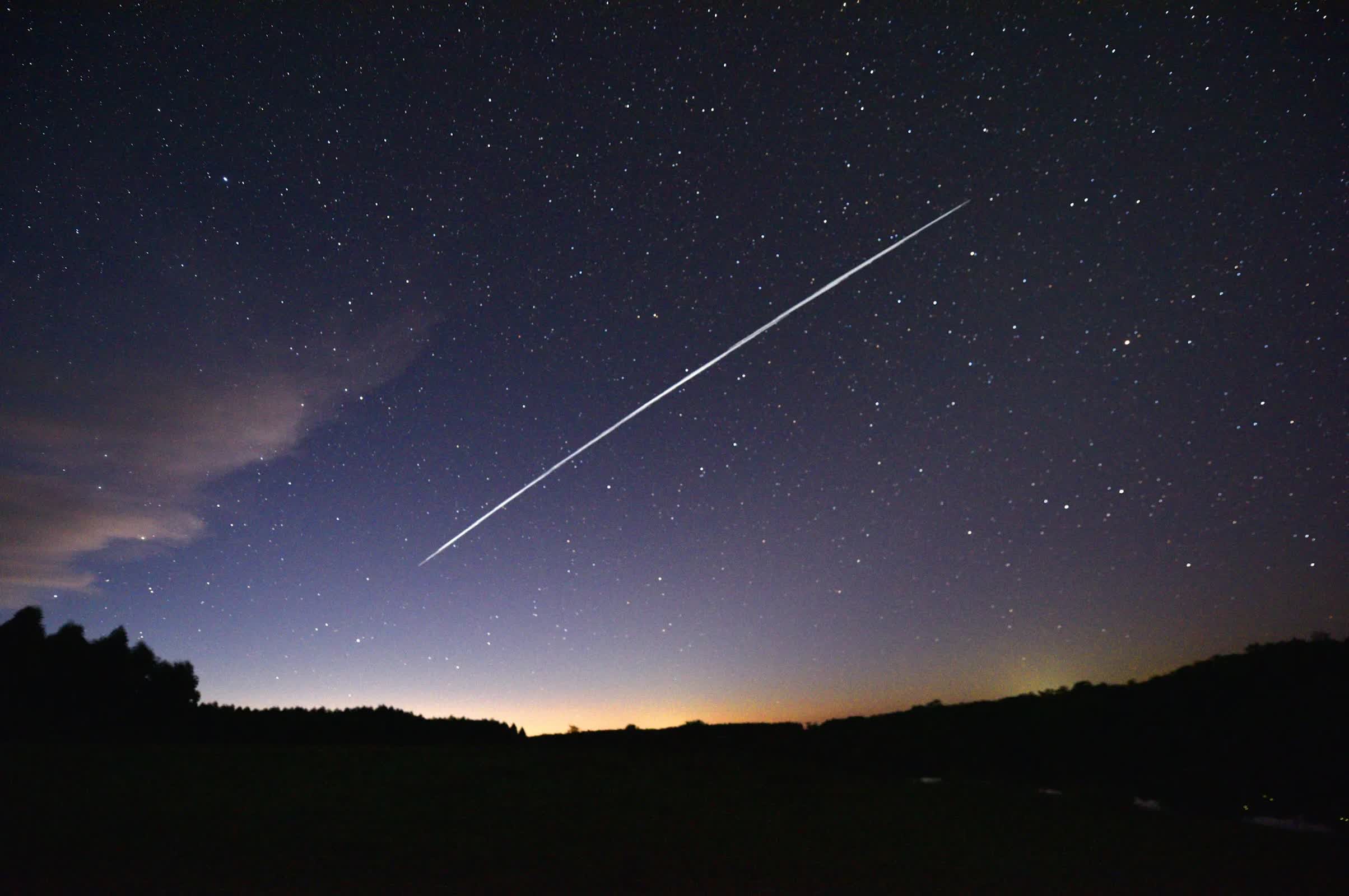
The concept would not rely on traditional single-target interceptors but instead would attempt to flood Starlink's operating altitudes with hundreds of thousands of high-density pellets. By turning a defined orbital band into a hazardous zone, such a weapon could disable multiple satellites at once and endanger other spacecraft that share similar trajectories.

The envisioned system would seed Starlink orbits with tiny projectiles only millimeters across, creating a dense field of fast-moving particles that function as a distributed kinetic threat. The pellets could be released by formations of small satellites that have yet to be launched.

These high-density pellets would be difficult, if not impossible, to detect with existing ground- and space-based surveillance systems designed to track larger objects in orbit. Because the particles would fall below normal tracking thresholds, any resulting damage could be difficult to attribute conclusively.

Starlink has become a critical communications layer for Ukraine's military and government during the war. Intelligence assessments indicate that Russian officials view Starlink as a serious threat because it underpins Ukraine's resilience and links Western capabilities directly to the battlefield.

Moscow has repeatedly warned that commercial satellites supporting Ukrainian military operations could be considered legitimate military targets. It has also recently announced the deployment of a new S-500 ground-based missile system, which it claims is capable of striking targets in low Earth orbit.

Yet even within allied governments and the expert community, there is sharp debate over whether a pellet-based, zone-effect weapon is technically and strategically viable. Analysts who have not seen the underlying intelligence question whether Russia could deploy such a system without triggering uncontrolled debris cascades that would threaten satellites operated by other states, including Russia and China.

Some specialists are unconvinced that Russia would accept the level of self-inflicted risk implied by the concept. "I don't buy it. Like, I really don't," said Victoria Samson, a space-security specialist at the Secure World Foundation who leads the organization's annual study of anti-satellite systems, speaking to the Associated Press.

Samson suggested that any work on such a system may be confined to the laboratory or conceptual stage, rather than representing an imminent operational capability. "I wouldn't put it past some scientists … to build out something like this because it's an interesting thought experiment, and they think, you know, 'Maybe at some point we can get our government to pay for it,'" she said.

She also noted that alarm over new counterspace concepts has, at times, been used to justify higher defense spending and more hawkish policy positions.

The material reviewed does not specify when Russia might be able to field such a system, nor does it outline test events or specific research milestones. An official familiar with the intelligence said the system is in active development, but that details about potential deployment timelines are too sensitive to disclose.

The US Space Force did not respond to emailed questions from the Associated Press. SpaceX, which operates Starlink, also declined to comment, as did Kremlin spokesman Dmitry Peskov.

Recent events underscore how even small fragments can have outsized effects in orbit. In November, a suspected piece of micro-debris damaged a Chinese spacecraft intended to return three astronauts to Earth, highlighting the vulnerability of both crewed and uncrewed systems to high-speed particle strikes.

Analysts cited in the intelligence and in public commentary said that following a pellet- or shrapnel-based attack, debris and surviving projectiles would gradually decay and fall back toward Earth, potentially colliding with other satellites along the way. Because Starlink operates at altitudes of roughly 550 kilometers, while the International Space Station and China's Tiangong space station orbit at lower elevations, both crewed platforms could face elevated risk as debris migrates through different orbital shells.

The scenario evokes fears of a broader space-traffic crisis, in which collisions generate additional fragments in a cascading feedback loop that steadily reduces the number of usable orbital bands.

Samson emphasized that Russia has invested heavily in its status as a major space power, and that any system which indiscriminately pollutes low Earth orbit would ultimately constrain Russian operators as well. For now, the pellet-based zone-effect concept sits at the intersection of intelligence warning and technical skepticism.

Permalink to story:

 
I don’t think Russia would tempt war with the US by taking such a stupid action lol. Also, in Starlink’s orbit there’s still drag from the atmosphere so this kind of attack would have limited usefulness. Unpowered pellets would soon descend from their altitude to below Starlink’s constellation. In the end, it might even cost Russia more to perform this kind of attack than it does cost SpaceX to replace affected any satellites (which would also descend upon impact).
 
I don’t think Russia would tempt war with the US by taking such a stupid action lol. Also, in Starlink’s orbit there’s still drag from the atmosphere so this kind of attack would have limited usefulness. Unpowered pellets would soon descend from their altitude to below Starlink’s constellation. In the end, it might even cost Russia more to perform this kind of attack than it does cost SpaceX to replace affected any satellites (which would also descend upon impact).
IMO, The more salient threat to all satellites, no matter what nation owns them, is the potential debris field that a weapon of this kind would create, not only from any satellites destroyed, but from the pellets left by the weapon itself. It pretty clearly states this in the article.

SpaceX would have a harder time keeping in orbit anything sent to replace a destroyed satellite due to that debris field. :laughing: I wouldn't get the ideal that SpaceX would merely write off and replace any destroyed satellite as "Just a Flesh Wound."

Unless, of course, you think fElon is going to fly Starship on a mission to vacuum up all that debris. 🤣
 
IMO, The more salient threat to all satellites, no matter what nation owns them, is the potential debris field that a weapon of this kind would create, not only from any satellites destroyed, but from the pellets left by the weapon itself. It pretty clearly states this in the article.

SpaceX would have a harder time keeping in orbit anything sent to replace a destroyed satellite due to that debris field. :laughing: I wouldn't get the ideal that SpaceX would merely write off and replace any destroyed satellite as "Just a Flesh Wound."

Unless, of course, you think fElon is going to fly Starship on a mission to vacuum up all that debris. 🤣
Since starlink satellites are low orbit, any debris would come down within a few years.
 
IMO, The more salient threat to all satellites, no matter what nation owns them, is the potential debris field that a weapon of this kind would create, not only from any satellites destroyed, but from the pellets left by the weapon itself. It pretty clearly states this in the article.

SpaceX would have a harder time keeping in orbit anything sent to replace a destroyed satellite due to that debris field. :laughing: I wouldn't get the ideal that SpaceX would merely write off and replace any destroyed satellite as "Just a Flesh Wound."

Unless, of course, you think fElon is going to fly Starship on a mission to vacuum up all that debris. 🤣
Like I said there’s drag in Starlink’s orbit. The debris field would lower automatically as it slows down in speed and soon burn up in thicker atmosphere. Starlink requires thrusters to stay in orbit because it operates in the thermosphere. When the thrusters stop working, the satellite removes itself from orbit by design (this applies to debris too).
Since starlink satellites are low orbit, any debris would come down within a few years.
Judging from this article, it takes weeks to be completely wiped out, and much less time to no longer be a risk to other Starlink satellites: https://www.techspot.com/news/11067...tions-begins-uncontrolled-descent-toward.html
 
Like I said there’s drag in Starlink’s orbit. The debris field would lower automatically as it slows down in speed and soon burn up in thicker atmosphere. Starlink requires thrusters to stay in orbit because it operates in the thermosphere. When the thrusters stop working, the satellite removes itself from orbit by design (this applies to debris too).

Judging from this article, it takes weeks to be completely wiped out, and much less time to no longer be a risk to other Starlink satellites: https://www.techspot.com/news/11067...tions-begins-uncontrolled-descent-toward.html
Good luck with that. So you think Starlink satellites are the only thing to which this is a threat? A few weeks at orbital speeds is a long time that its a threat to other satellites.

Perhaps you should read that article you quoted again, especially the part about a Starlink satellite having to take action to avoid colliding with a Chinese satellite. Just in case that's not clear, there are satellites from other entities in similar orbits to Starlink satellites. Forgot that, did you?

But all's well as long as SpaceX keeps making a profit. Got it! :rolleyes:

Then again, I'd expect nothing less from someone with fElon Disciple Syndrome.
 
1. In Russia, Elon Musk is a kind of deity. Therefore it is unlikely.
2. But after such messages, R&D will definitely begin.
 
Good luck with that. So you think Starlink satellites are the only thing to which this is a threat? A few weeks at orbital speeds is a long time that its a threat to other satellites.

Perhaps you should read that article you quoted again, especially the part about a Starlink satellite having to take action to avoid colliding with a Chinese satellite. Just in case that's not clear, there are satellites from other entities in similar orbits to Starlink satellites. Forgot that, did you?

But all's well as long as SpaceX keeps making a profit. Got it! :rolleyes:

Then again, I'd expect nothing less from someone with fElon Disciple Syndrome.
Bro you have no idea what you are talking about. Debris in low earth orbit always comes down quickly. No chance of it interfering with traditional satellites like GPS which are much further out.

Satellites take action to stay far far away from each other to the point that a maneuver to stay out of another satellites path means you miss by a mile instead of by a quarter mile.

Space debris can potentially be a real problem, but not in low earth orbit because atmospheric drag will bring it down no matter what. That's why starlink satellites have to be replaced at a continuous rate.

I'm not a fan of Musk at all, I just know a good amount about astronomy and physics.
 
I tend to wonder, with the tens of thousands of satellites and pieces of satellites etc. that are out there waiting to fall back to earth, how many won't burn up during reentry. Should I be wearing some protective gear for the ones that don't?
 
I tend to wonder, with the tens of thousands of satellites and pieces of satellites etc. that are out there waiting to fall back to earth, how many won't burn up during reentry. Should I be wearing some protective gear for the ones that don't?
There's not tens of thousands of satellites.

The only thing to not burn up fully in any recent years is Chinese booster rockets.
 
Bro you have no idea what you are talking about. Debris in low earth orbit always comes down quickly. No chance of it interfering with traditional satellites like GPS which are much further out.

Satellites take action to stay far far away from each other to the point that a maneuver to stay out of another satellites path means you miss by a mile instead of by a quarter mile.

Space debris can potentially be a real problem, but not in low earth orbit because atmospheric drag will bring it down no matter what. That's why starlink satellites have to be replaced at a continuous rate.

I'm not a fan of Musk at all, I just know a good amount about astronomy and physics.
Ever heard of atmospheric drag - https://www1.grc.nasa.gov/beginners-guide-to-aeronautics/drag-equation/
As a particle gets smaller, there's less of an effect of drag on it, and no amount of micro-gravity will keep any debris from acting as if it were all one large piece once a satellite is fractured into many pieces. Just to clue you in, the debris from the satellite, let alone the destructive balls that tore it apart will not all de-orbit at the same time.

Not to mention, this article is not all about Starlink Satellites. In fact, as I read the article, Starlink satellites are only a "side story." If the weapon is dispersing high velocity balls that are too small to be detected, they will stay in orbit much longer than any large satellite.

But, since I never said anything about the debris affecting anything in another orbit, I guess you lack reading comprehension as well as not having any comprehension of atmospheric drag on objects much like another comment to this thread.

For people posting on a tech site, it seems at least a few lack any in-depth technical comprehension - like the poster in the other Starlink thread that seems to think that orbital crowding in orbit is directly related to the area of the orbit.
 
Ever heard of atmospheric drag - https://www1.grc.nasa.gov/beginners-guide-to-aeronautics/drag-equation/
As a particle gets smaller, there's less of an effect of drag on it, and no amount of micro-gravity will keep any debris from acting as if it were all one large piece once a satellite is fractured into many pieces. Just to clue you in, the debris from the satellite, let alone the destructive balls that tore it apart will not all de-orbit at the same time.

Not to mention, this article is not all about Starlink Satellites. In fact, as I read the article, Starlink satellites are only a "side story." If the weapon is dispersing high velocity balls that are too small to be detected, they will stay in orbit much longer than any large satellite.

But, since I never said anything about the debris affecting anything in another orbit, I guess you lack reading comprehension as well as not having any comprehension of atmospheric drag on objects much like another comment to this thread.

For people posting on a tech site, it seems at least a few lack any in-depth technical comprehension - like the poster in the other Starlink thread that seems to think that orbital crowding in orbit is directly related to the area of the orbit.
🙄

If Russia did this is would be a big problem for sure, but the effect would not last forever. Maybe a decade at most.

That said, there is no way Russia would do this. Russia is about precieved threats, they would never directly attack the US and I think putting debris in Leo would be interpreted at an attack on everyone.
 
Imagine if the politicians and the military manufacturers would let us take a break from perpetual war and just let citizens live their lives.

It would allow economies across the globe to recover, but it'd be less money for them, of course.
They will, eventually. Most probably during nuclear winter when they all die out in their bunkers.
 
Using those without open conflict with USA would have consequences. A better all around way would be something that just suppresses starlink signals over large areas. But I am guessing they simple do not know how
 
Back