A Starlink satellite appears to have exploded and is now spiraling toward Earth

Skye Jacobs

Posts: 2,030   +59
Staff
What just happened? SpaceX confirmed that one of its Starlink satellites has malfunctioned and is now descending toward Earth following what the company described as an anomaly. Elon Musk's firm reported a sudden loss of communications, a drop in altitude, "venting of the propulsion tank," and the "release of a small number of trackable low relative velocity objects" – signs that suggest a possible internal explosion aboard the spacecraft.
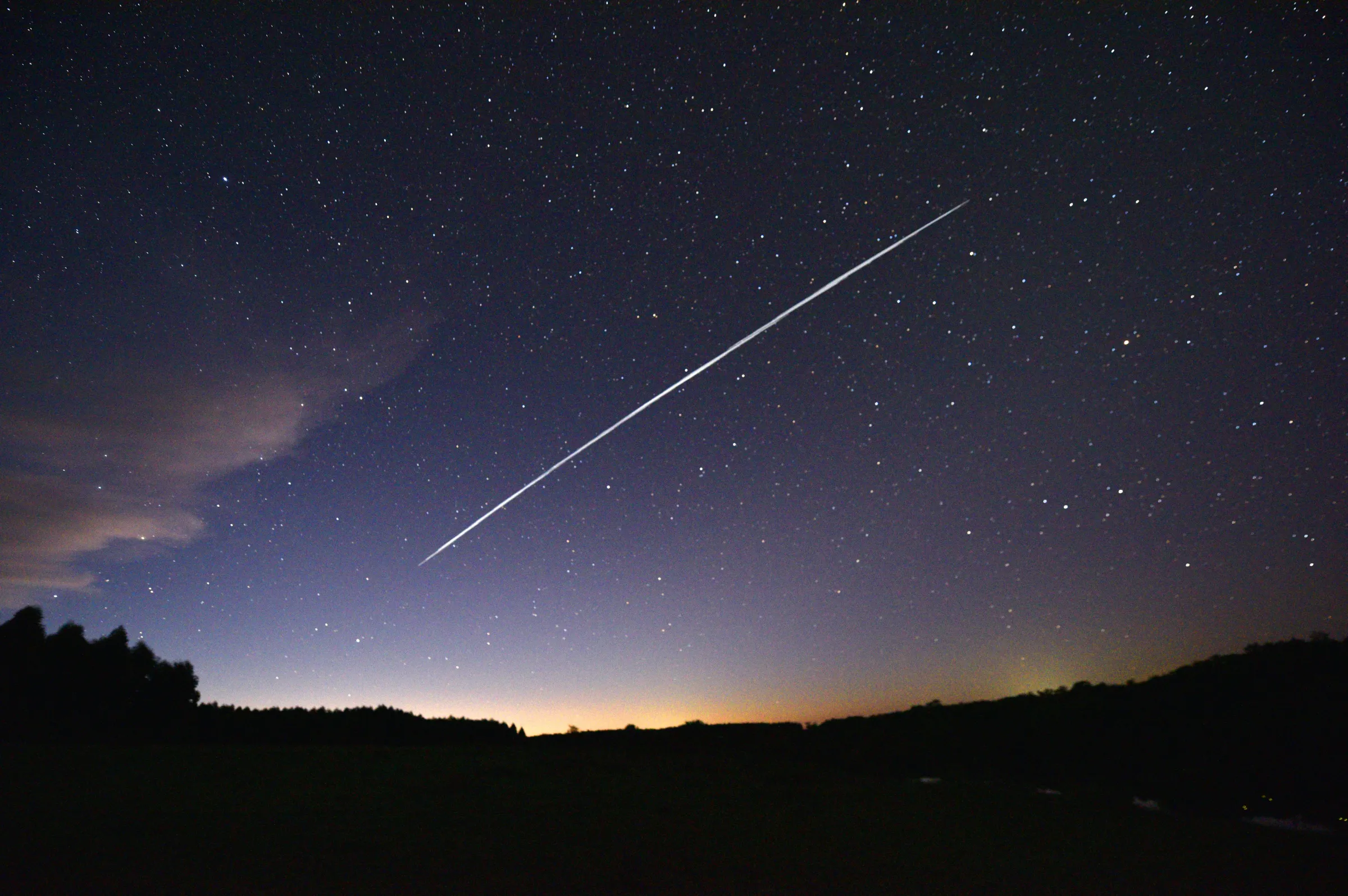
According to SpaceX, the satellite will reenter Earth's atmosphere within weeks, and the event poses no danger to the crew of the International Space Station.

The private space-monitoring firm Leo Labs said that its radar network detected "tens of objects" in the vicinity of the affected spacecraft, known as Starlink 35956. The company described the likely cause as an internal energy source, indicating that a collision with another object did not trigger the anomaly.

SpaceX has not published further details about whether the satellite's systems had shown any prior irregularities before the loss of control.

The failure comes roughly a week after SpaceX disclosed that one of its Starlink units narrowly avoided a collision with a Chinese satellite. The incident has renewed attention on the growing congestion in low Earth orbit, where a dense population of spacecraft increases the complexity of orbital management and raises long-term risks.

The disabled Starlink satellite was orbiting at an altitude of 418 kilometers, roughly 260 miles above Earth. That region, classified as low Earth orbit, or LEO, has become one of the busiest environments in space. More than 24,000 objects, including active satellites, defunct spacecraft, and debris, are currently being tracked in this zone.
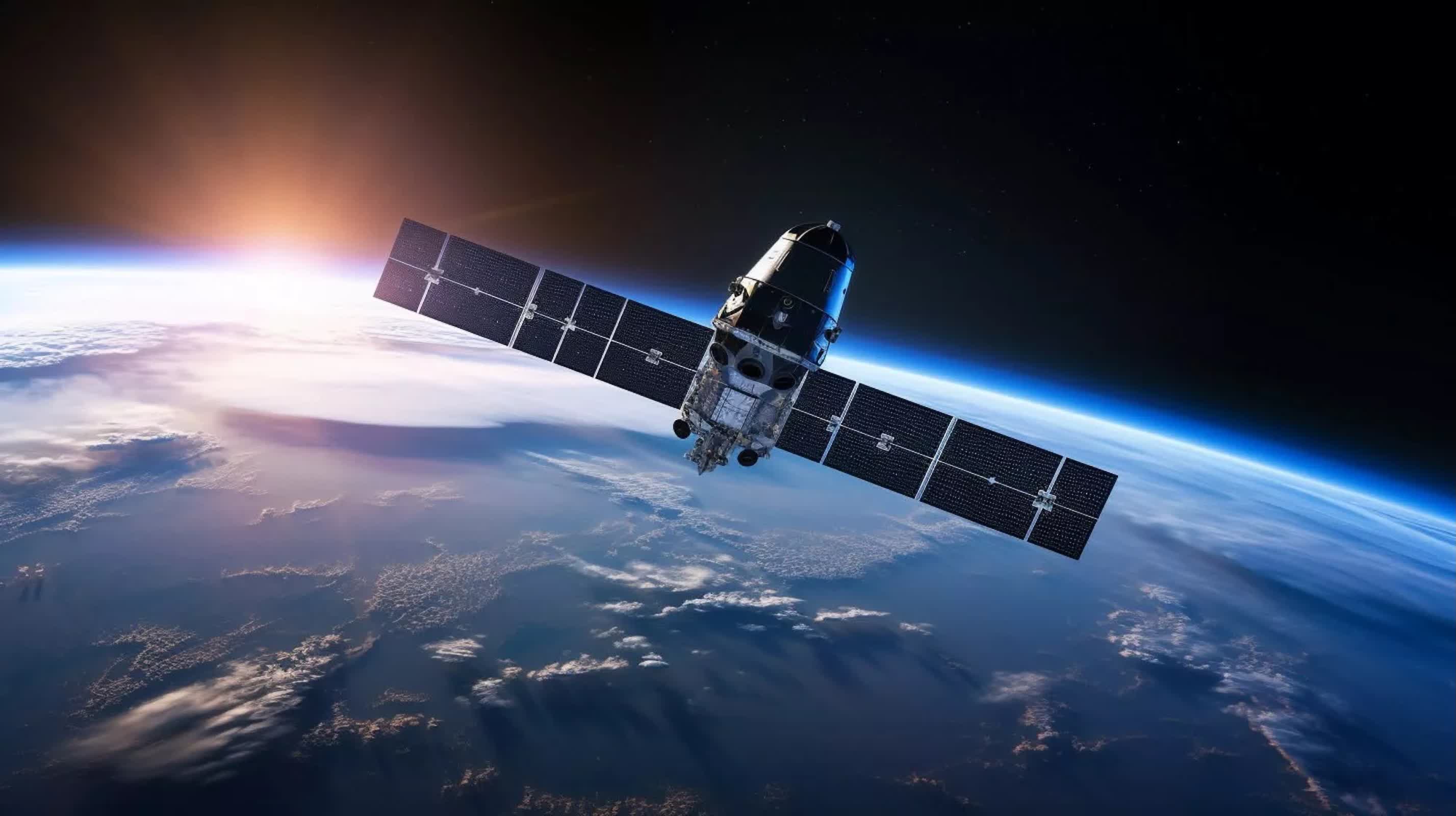
Industry projections suggest the number could climb to as many as 70,000 satellites by the end of the decade, mainly fueled by large-scale internet constellations like SpaceX's Starlink and other broadband networks under development by companies and government programs in the United States, China, and Europe.

As commercial operators continue to expand broadband services from orbit, astronomers and safety analysts have warned that such dense traffic increases the likelihood of collisions. A single uncontrolled impact could generate a chain reaction of debris events, potentially rendering key orbital bands unusable for years.

For now, SpaceX says the remains of Starlink 35956 will safely disintegrate during atmospheric reentry. But the episode has sharpened the discussion about how fragile the balance of low Earth orbit has become.

Permalink to story:

 
I agree. By the number of 70,000 satellites there is a high probability of such loss.

I'm not really sure it is that large of a problem yet. Can it happen, sure. Imagine if the earth was entirely land and you had 70,000 people total on the earth and asked them to move around at random. How likely would they ever see each other yet run into each other. Now imagine going 230 more miles or 460 miles in diameter larger and that becomes even less likely. Can it happen, yep. Highly unlikely.
 
As an amateur astronomer I'm not a fan of more satellites cluttering up the view, but considering this is the first in-orbit failure I've heard from Starlink which has launched over 10K satellites to date, that's some pretty good reliability.
 
As an amateur astronomer I'm not a fan of more satellites cluttering up the view, but considering this is the first in-orbit failure I've heard from Starlink which has launched over 10K satellites to date, that's some pretty good reliability.
Do you do any astrophotography?
 
He can't build cars that stay out the garage for more than ten minutes, did we really expect his satellites to be any better?
 
Do you do any astrophotography?

No, I did in the past but found I prefer the immediacy of the naked eye view even as the camera can see so much more. LOL if I did, I'm sure I'd hate the perfusion of satellites so much more but as it is right now, the occasional transit of M81 and M82 by random polar orbiting satellite is temporarily annoying but doesn't destroy the view. Light pollution is a far worse problem.
 
I agree. By the number of 70,000 satellites there is a high probability of such loss.

'high probability'? Source? No, there is no 'high probability', even at 70,000. The probability inherently increases with each new object; but the baseline for such collisions is fantastically low - because even low earth orbit is incredibly vast.

At any given time, there's very roughly about 20,000 oceangoing vessels traversing the Pacific ocean. That's 1 vessel per 3,190 square miles. The actual probability of any two random vessels colliding is 1 in 75,000 to 1 in 100,000 per day. And that's with almost all traversing in designated shipping lanes, so in practical terms, they're all concentrated near each other.

Low earth orbit currently has 1 satellite for ever 119,000 square miles of the region. And unlike the ocean, it's a 3D space, not just confined to a single surface. There's enormous space between satellites now, and there will be even at projected increases. Yes - there will be risk as with all things, and that risk increases with each new object. It's akin to me throwing a softball at a target a mile away - then taking a second attempt a few years later.

Exaggerating risk seems to be a very common avocation.
 
He can't build cars that stay out the garage for more than ten minutes, did we really expect his satellites to be any better?
Just tell me how many pedestrians, police cars, firefighters, work on roads, runaway dogs, daydreaming children, inattentive parents, missing lines, mismatched traffic signs, drunk drivers, machos running red, ... you may met on orbit?
You, the car driver or driving SW have to dealt with all of those and some more.
 
I'm not really sure it is that large of a problem yet. Can it happen, sure. Imagine if the earth was entirely land and you had 70,000 people total on the earth and asked them to move around at random. How likely would they ever see each other yet run into each other. Now imagine going 230 more miles or 460 miles in diameter larger and that becomes even less likely. Can it happen, yep. Highly unlikely.
You missed the part in your analogy where a person spontaneously exploded.

That is what the article is about: a satellite exploding, not one crashing into another. Also, there is far more debris than the satellites for collisions
 
There have been hundreds of Starlink satellites deorbited already. The fact that this one is deorbiting because of an unexpected failure really isn’t newsworthy lol. They only have around a five year lifespan anyways.

This was not an intentional de-orbit. LOL

And if it has broken into pieces, that's an even bigger problem since KE=1/2 m*v^2. Even grains of sand moving at orbital speeds can cause extreme damage if they collide with an object.
 
Last edited:
'high probability'? Source? No, there is no 'high probability', even at 70,000. The probability inherently increases with each new object; but the baseline for such collisions is fantastically low - because even low earth orbit is incredibly vast.

At any given time, there's very roughly about 20,000 oceangoing vessels traversing the Pacific ocean. That's 1 vessel per 3,190 square miles. The actual probability of any two random vessels colliding is 1 in 75,000 to 1 in 100,000 per day. And that's with almost all traversing in designated shipping lanes, so in practical terms, they're all concentrated near each other.

Low earth orbit currently has 1 satellite for ever 119,000 square miles of the region. And unlike the ocean, it's a 3D space, not just confined to a single surface. There's enormous space between satellites now, and there will be even at projected increases. Yes - there will be risk as with all things, and that risk increases with each new object. It's akin to me throwing a softball at a target a mile away - then taking a second attempt a few years later.

Exaggerating risk seems to be a very common avocation.
Ocean liners do not travel the ocean in areas that are not used - which is what your argument is surmising; there would be no economic benefit from doing so since it would take some of them far away from their origin and destination ports. Ocean liners have specific routes.

Similarly, satellites have specific routes for their intended function. Its not as simple as satellite per unit area or, in the ocean liner case, ship per unit area.

I take the word of space experts rather than some random Joe on TS.
 
Ocean liners do not travel the ocean in areas that are not used - which is what your argument is surmising; there would be no economic benefit from doing so since it would take some of them far away from their origin and destination ports. Ocean liners have specific routes.

What part of "And that's with almost all traversing in designated shipping lanes, so in practical terms, they're all concentrated near each other" do you not understand?

Similarly, satellites have specific routes for their intended function. Its not as simple as satellite per unit area or, in the ocean liner case, ship per unit area.

It's really quite the opposite of what you claim. Satellites do have "specific routes" - and it's extremely, extremely rare for more than one satellite to occupy a given route - they each have their own unique route, and are spaced even further apart (to an enormous degree) than what the pacific ocean can offer as a 2D surface. That's why collisions are a thousand fold lower in LEO than on the Pacific.

I take the word of space experts rather than some random Joe on TS.

Likewise, cupcake.
 
This was not an intentional de-orbit. LOL

And if it has broken into pieces, that's an even bigger problem since KE=1/2 m*v^2. Even grains of sand moving at orbital speeds can cause extreme damage if they collide with an object.
Starlink is designed to deorbit automatically at EOL because it requires fuel to stay up there. Whatever the incident was sure wasn’t intentional, but the deorbit was intentional.

Anyways, unless a collision caused the incident then you’re wrong because any parts that flew off would lower in altitude below its original position in seconds. There is high drag in Starlink’s orbit after all.
 
Back