LG joins Sony and TCL in abandoning 8K TV market

Skye Jacobs

Posts: 2,013   +59
Staff
What just happened? The last major TV maker producing 8K OLED and LCD televisions has officially stepped away from the format, marking what appears to be the end of the 8K era before it ever found its audience. LG's quiet discontinuation of 8K in late 2025, including the Z3 OLED and QNED99T LCD series, closes a chapter that began with its push toward ultra-high-resolution displays in 2019.
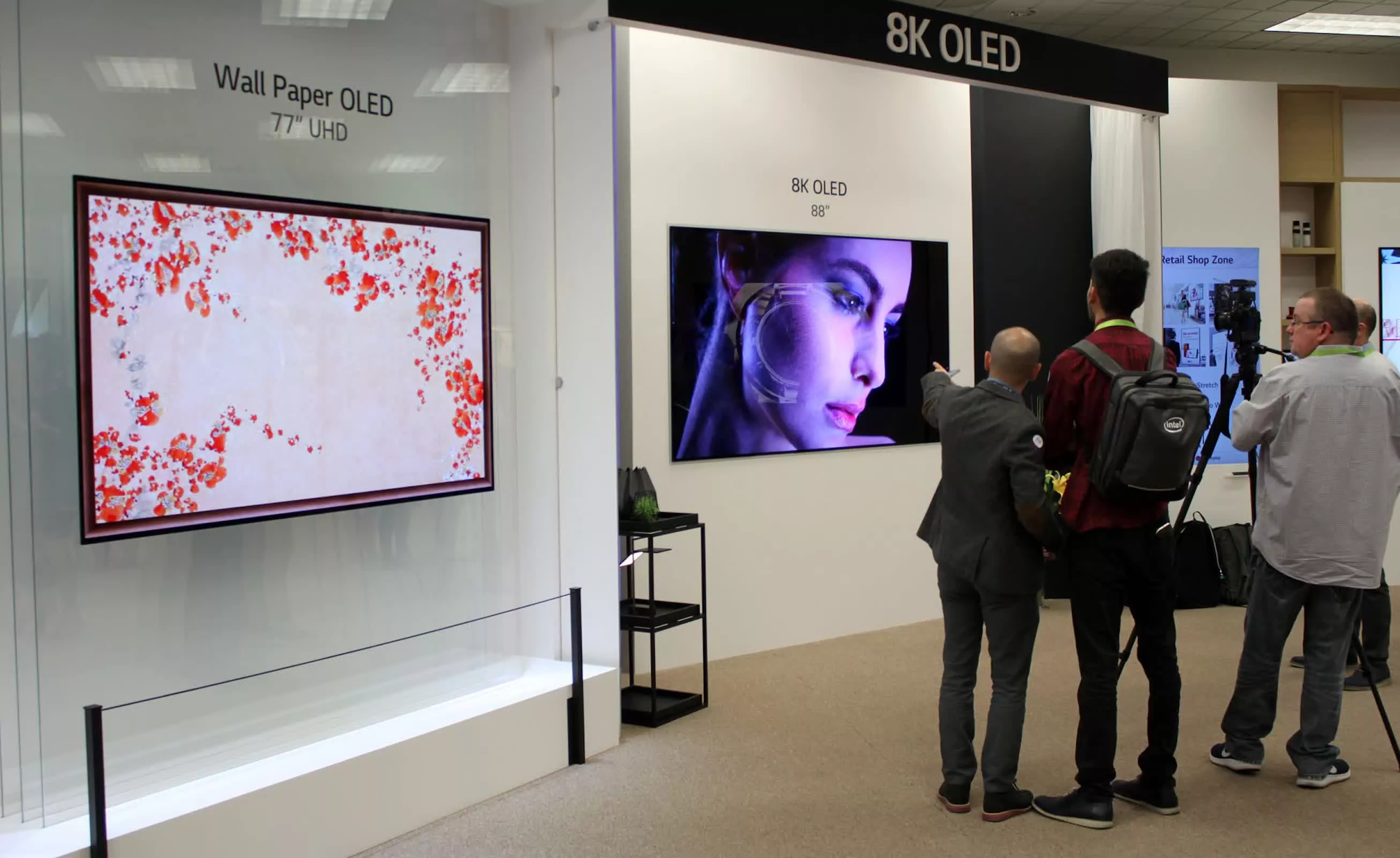
When LG introduced the 88-inch Z9, it became the face of 8K OLED innovation – a rare product that combined cutting-edge self-emissive technology with a linear resolution twice that of 4K.

Over the following years, LG rolled out successor models under the ZX, Z1, Z2, and Z3 names, offering smaller options such as a 77-inch variant and continued refinements to brightness, processing, and panel calibration. Yet by late 2025, production had been halted with no plans for a Z4 in 2026.

The technical ambition was never in doubt, but the ecosystem failed to materialize. There is almost no true 8K content available, and even major streaming platforms have shown little interest in supporting such bandwidth-heavy formats.

Meanwhile, compressed 8K video over HDMI 2.1 posed a major compatibility problem, leaving users with premium displays unable to reliably handle real 8K signals. The PlayStation 5 Pro's added 8K support in late 2024 only highlighted that problem: few TVs could even accept the resolution flawlessly.

Panel production has also stopped. LG Display confirmed to FlatpanelsHD that its 8K OLED development program has been suspended, though the company could revive it if market conditions shift.
On the LCD side, LG's SM99 and QNED99 series once offered a broader range of 8K options, but the lineup gradually narrowed after 2021 and disappeared entirely by early 2026. Retail listings for the QNED99T now show "out of stock" across most regions.

The reversal is especially striking given the earlier marketing disputes that accompanied the technology's rise. LG positioned its OLED panels as "Real 8K," contrasting them with Samsung's Neo QLED models. For all of that branding effort, the result was the same across the industry: 8K televisions became symbols of technical prowess, not viable consumer products.

LG's exit follows a pattern. TCL pulled out in 2023, Sony bowed out in 2025, and Hisense has largely abandoned its attempts as well. Panasonic never moved beyond internal prototypes, while Philips – despite showing experimental 8K sets at trade shows – continues to describe the market as "not ready." Only Samsung remains active, but even its 2026 plans are unclear, with few signs of new models on the immediate horizon.

Masthead credit: FlatpanelsHD

Permalink to story:

 
I don't think 8K will become popularuntil displays larger than 100 inches become mainstream and don't cost $20k. I think gaming could have push for 8k but RT and unreal engine 5 became a thing so it could be 10+ years before we start seeing 8k displays again.
 
8K TVs have been an absolute joke. Crazy low sales numbers, which declines YoY.
Without 8K blurays, it is simply pointless and physical media is dying anyway.

What we need is higher bitrate 4K/UHD or better compression. Tons of video is still just 1080p or even 720p with 4K compressed to shite.

Higher bitrate 4K >>>> 8K

Most 4K streams are far from uncompressed 4K in terms of quality, so why rush out 8K, with even heavier compression?
 
Last edited:
8K is stupid. You need ridiculous screen sizes for it to matter. I have an 85” TV and I still can’t see all of the 4K detail from my couch (12’ away). I don’t see 170+ inch TVs becoming a thing anytime soon. Additionally, we’re still waiting for 4K content to become dominant. Even in highly compressed streaming, it’s not the standard yet.
 
I can't speak for other streaming services, but I'm going to put youtube as an example. yes, youtube had a few codecs such as VP9, AVC1 and AV1. but even vp9 compresses the bitrate so much everything becomes blurry.

you can try recording your game screen and putting it in youtube. the more text scattered across the screen, the worse it is. I had to sharpen my videos before exporting so in youtube the texts are still crisp.

now imagine having a huge 8K TV and using it for streaming. there isn't much 8K content around the net. so you got a very compressed 4k clip instead. I'd guarantee the clip will look better in 4K native TV. so why would you get 8K TV then?

there'll be a day where integrated graphics can drive 8K displays and graphics easily. but it's not now.

also this reminds me of my LG G4 phone with 1440p display. most phone at the time tops at 1080p. I remembered the thumbnails in instagram were blurry in the app, but not in the mobile web version. everything's crisp in the web. many years later they finally fixed the preview.

when h.266 or av2 becomes common, then we'll probably start seeing 8K TVs again.
 
Besides streaming services, I only have 3 "4K" TV stations (for which I pay extra) alongside hundreds of SD and HD ones. There just isn't enough content for an 8K TV to make sense.
 
TV companies got greedy and thought “people are dumb and will pay more for higher resolution because we tell them to”.

Well, turns out the public isn’t QUITE as stupid as they thought (they’re still pretty dumb though)…

No one needs 8k right now - there’s nothing to watch in 8k and GPUs aren’t powerful enough to run any games in 8k…

In a few years, as bandwidth increases and GPUs get more powerful, 8k might resurface - but unless your TV is over 100” AND you’re sitting fairly close, you won’t notice a difference from 1080p - let alone 4k…
 
We still struggle to run 4K native without up-scaling or fake frames...

We going to need a lot more time, before 8K will be viable.
 
8K was dead on arrival. It should've been obvious to everyone with a brain. The human eye is incapable of seeing pixels beyond 4K, from reasonable distances. I.e. from where you can still actually see the whole screen without moving your head all the time.

This tech made didn't make sense, doesn't make sense, and will never make sense. Period.

Same reason why audio fidelity haven't received any widespread bumps ever since 24 bit / 192 kHz. It just doesn't make sense. Even those don't make sense for listening, only for a studio setting, to minimize degradation during processing / transformations.

Uncompressed 16 bit / 44 kHz bitrate is 1411 kbps. That shrinks by maybe 50% with well compressed, lossless FLAC, depending on the material.

Very high quality, compressed audio is usually down to 250-320 kbps.

Guess what, the human ear can't distinguish compressed audio from the original material starting at around 150 kbps. This is a proven fact, studied using double blind listening tests. But you can do the same with visuals, it really doesn't matter. Our ears and eyes have a finite resolution, and that's it.

So yeah, there's only so much bitrate you can waste for absolutely nothing. 8K is like your 24 bit / 192 kHz song. It just doesn't make any sense from a consumer PoV.

You can doesn't mean you should.
 
8K was dead on arrival. It should've been obvious to everyone with a brain. The human eye is incapable of seeing pixels beyond 4K, from reasonable distances. I.e. from where you can still actually see the whole screen without moving your head all the time.

This tech made didn't make sense, doesn't make sense, and will never make sense. Period.

Same reason why audio fidelity haven't received any widespread bumps ever since 24 bit / 192 kHz. It just doesn't make sense. Even those don't make sense for listening, only for a studio setting, to minimize degradation during processing / transformations.

Uncompressed 16 bit / 44 kHz bitrate is 1411 kbps. That shrinks by maybe 50% with well compressed, lossless FLAC, depending on the material.

Very high quality, compressed audio is usually down to 250-320 kbps.

Guess what, the human ear can't distinguish compressed audio from the original material starting at around 150 kbps. This is a proven fact, studied using double blind listening tests. But you can do the same with visuals, it really doesn't matter. Our ears and eyes have a finite resolution, and that's it.

So yeah, there's only so much bitrate you can waste for absolutely nothing. 8K is like your 24 bit / 192 kHz song. It just doesn't make any sense from a consumer PoV.

You can doesn't mean you should.
What a wonderful collection of misinformation. I bet you think the human eye cant see over 30 FPS too right?
 
8K would be excellent for a jumbotron. Not a lot of people own jumbotrons. 8K for home use is kind of like 3D TVs. They keep trying to push the tech and it keeps getting pushed back out.
 
8K was dead on arrival. It should've been obvious to everyone with a brain. The human eye is incapable of seeing pixels beyond 4K, from reasonable distances. I.e. from where you can still actually see the whole screen without moving your head all the time.

This tech made didn't make sense, doesn't make sense, and will never make sense. Period.

Same reason why audio fidelity haven't received any widespread bumps ever since 24 bit / 192 kHz. It just doesn't make sense. Even those don't make sense for listening, only for a studio setting, to minimize degradation during processing / transformations.

Uncompressed 16 bit / 44 kHz bitrate is 1411 kbps. That shrinks by maybe 50% with well compressed, lossless FLAC, depending on the material.

Very high quality, compressed audio is usually down to 250-320 kbps.

Guess what, the human ear can't distinguish compressed audio from the original material starting at around 150 kbps. This is a proven fact, studied using double blind listening tests. But you can do the same with visuals, it really doesn't matter. Our ears and eyes have a finite resolution, and that's it.

So yeah, there's only so much bitrate you can waste for absolutely nothing. 8K is like your 24 bit / 192 kHz song. It just doesn't make any sense from a consumer PoV.

You can doesn't mean you should.
Mmm...I understand what you are attempting to say, but it's not a hard set limit; equivalent to a computer resolution. We're organic; but even with 4k at the 1.5x viewing distance over the diagonal baseline which is largely considered "optimal viewing distance", about half the people on earth can still isolate pixels fairly easily. It is "optimal viewing distance", but no the only viewing distance one may or may not be conformable with. Color and contrast play a heavy role, as well, along with what is centered in your vision and the overall health of your eyes. Some see more detail, others see less. In other words, no, not because we can't see over 4k, but yes, mostly due to infrastructure required to support 8k and above streams. And, if you haven't see an 8k demo with real content, there is certainly appreciable difference between the two, even at normal viewing distances. It's just too expensive to rollout and the law of diminishing returns kicks in to make this a non-starter, chicken and egg scenario for the foreseeable future.

Audio is another highly subjective test, that almost all have the same flaw: the individual ear. Double blind works well, but if the receptive receiver (the human ear, in this case) has inherent flaws with no two ears being identical, you've nullified the outcome except for generic summarization, sans conclusive evidence. Test's like this (and even with the human eye) must be done over a very, very large sampling to compensate for those with better or lesser hearing or ability to process out (or in) certain elements of music types. Again, in other words, some people can hear beyond the "20hz to 20khz" mantra and can enjoy the expanded sound range given by uncompressed audio. It is not a cut and dry issue with compression, sampling and frequency.

Everyone's milage will vary slightly and to each their own.

Cheers!
 
What a wonderful collection of misinformation. I bet you think the human eye cant see over 30 FPS too right?

He said beyond 4k at reasonable distances (and depends on the size of the display), which can be true if one defines what reasonable is. if it was like a 300 inch 8k tv, then it should be fairly easy to distinguish.
 
The more important thing is or maybe was is the HDR because it improves pixel quality, contrast, and color depth, other than just increasing pixel count. 8K is useless unless you have 150 inch or higher TV. HDR makes pixels more vibrant and detailed in shadows/highlights. The best thing I've ever seen on my 75 inch 4K Samsung is an Angels and Demons movie HDR stream. I guess the 4K bluray would even be better. I don't have the best eyes but I can't tell the difference btw 1440p and 4K. However, if the devolopers and studios don't implement the HDR technology or any other technology correctly it doesnt work, so I don't know lol. We are at their mercy.
 
Last edited:
I don't think 8K will become popularuntil displays larger than 100 inches become mainstream and don't cost $20k. I think gaming could have push for 8k but RT and unreal engine 5 became a thing so it could be 10+ years before we start seeing 8k displays again.

-Basically never in that case.

At some point TVs get so big that people can't move em, can't fit them through the door, and then have nowhere to put them.

65" is basically the upper limit for what most people can install solo.
 
-Basically never in that case.

At some point TVs get so big that people can't move em, can't fit them through the door, and then have nowhere to put them.

65" is basically the upper limit for what most people can install solo.
Best Buy (and most other retailers) will install any TV you buy for free if it’s large… I had an 85” one installed a few years back…
 
8K 42-55 inch TV will look really sharp for gaming, especially within 1-2 meters. 4K is great and sharp enough but it's not perfect or even close to a laptop (or phone pixel d)

The cost and energy drains are the real problem. Here, they don't allow the sales of 8K Tvs. I guess.. you also need a beefy GPU that kind of doesnt exist atm. Oh wait, we can just get an RTX 3090, that was a 8K gaming GPU right Nvidia? :P
 
I do not think these are completely pointless. Very soon, we should be able to do real upscale from 4k to 8k. Imagine rewatching your favorite movies and shows in 8k.

Sadly, these seem to havbe stayed more expensive unlike 4k which resulted in prices much higher than people are willing to pay for new tech.

At the end, I am sure the interest will come when people can use technology to watch their content at 8k
 
There's basically no content available for it. Heck, the 4K content that's available is mostly at such a low bitrate that there is still much to be gained from simply increasing that.
Even then, how much does it even add? I CBA paying extra for Netflix 4k especially since they don't even give you that on PC.
 
There's basically no content available for it. Heck, the 4K content that's available is mostly at such a low bitrate that there is still much to be gained from simply increasing that.
Even then, how much does it even add? I CBA paying extra for Netflix 4k especially since they don't even give you that on PC.
I agree the compression is terrible on Netflix, I think 4K is something like 15 Mbps on the video stream and is poor quality.

You can get 4K Netflix on a PC if you meet the very narrow requirements it needs tho: W10/11, Edge Browser, GPU + Monitor need HDCP 2.2 and Dolby Access needs installing (and paying for if headphones are preferred) to get multichannel 5.1/7.1/Atmos.

Works in 4K for me using my 9070 XT over DisplayPort. Best quality streaming I've found is only on my TV tho using either Disney+ or Sony Bravia Core - the latter looks good and streams content at 90-100 Mbps, but only works on a Sony TV sadly.
 
I agree the compression is terrible on Netflix, I think 4K is something like 15 Mbps on the video stream and is poor quality.

You can get 4K Netflix on a PC if you meet the very narrow requirements it needs tho: W10/11, Edge Browser, GPU + Monitor need HDCP 2.2 and Dolby Access needs installing (and paying for if headphones are preferred) to get multichannel 5.1/7.1/Atmos.

Works in 4K for me using my 9070 XT over DisplayPort. Best quality streaming I've found is only on my TV tho using either Disney+ or Sony Bravia Core - the latter looks good and streams content at 90-100 Mbps, but only works on a Sony TV sadly.
So, you use the built in apps on your Sony TV? Do you ever use an external streaming device like Roku?
 
Back