Cherry XTRFY launches the world's first 8K ultra-wideband gaming keyboard

midian182

Posts: 11,751   +178
Staff member
What just happened? Cherry, the company behind the iconic MX mechanical switch, is adding another keyboard to its Cherry XTRFY gaming brand. The new K63W Pro is being called the world's first 8K ultra-wideband gaming keyboard, offering several advantages when gaming wirelessly, especially in homes with multiple devices.
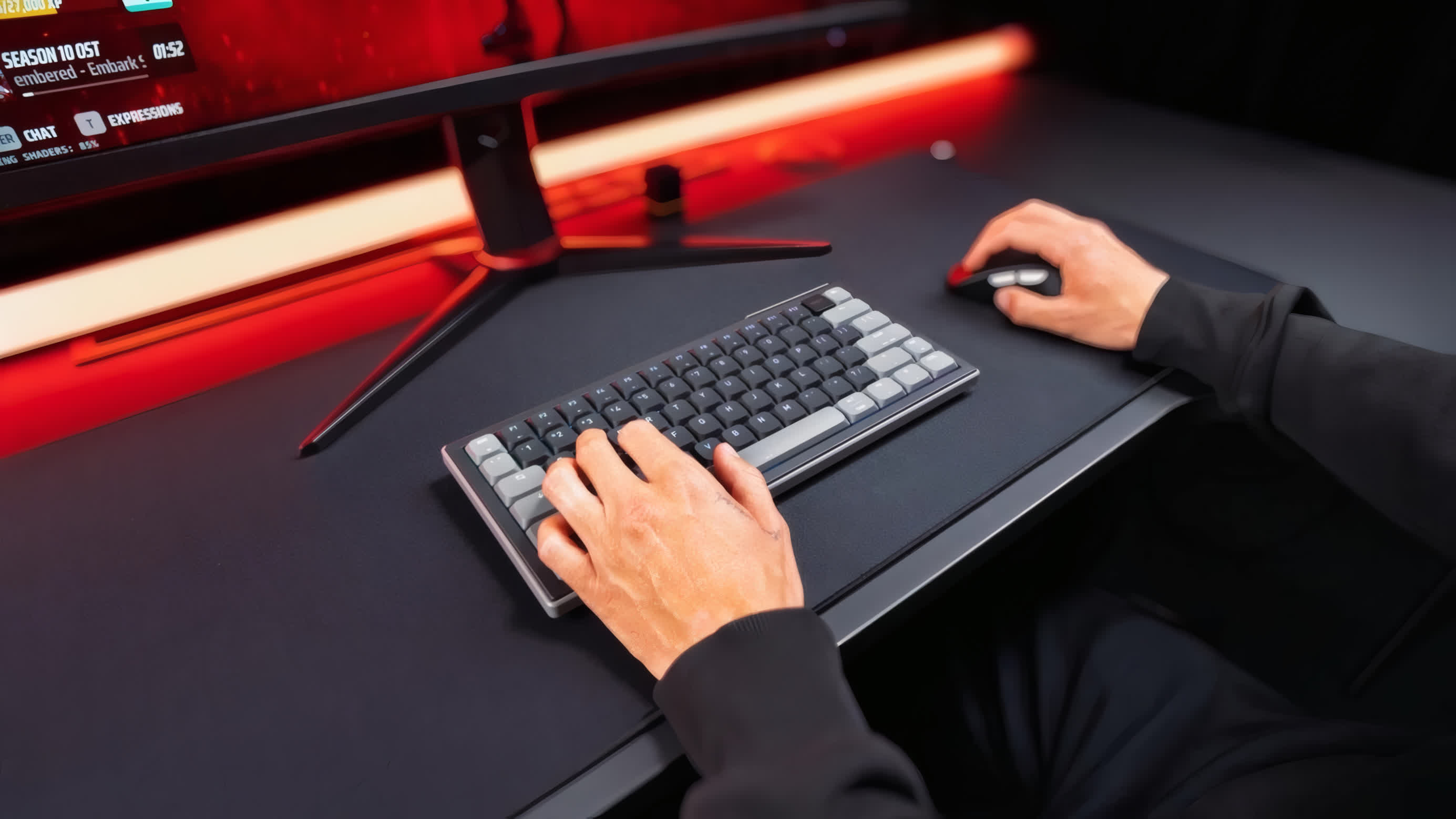
The K63W Pro is another keyboard offering an 8,000Hz polling rate in both wired and wireless modes, meaning it reports to the computer up to eight times every millisecond for lower input latency. It's something we saw in this year's Cherry Xtrfy MX 8.2 Pro TMR – my current favorite keyboard and daily driver.

The headline feature of the new board is that it's the first to use ultra-wideband technology. This transmits data in short bursts across a much wider frequency spectrum, so it's less likely to suffer from interference than traditional 2.4GHz wireless.

Cherry says ultra-wideband enables more precise signal timing, reduced interference, and stable wireless communication, even in crowded wireless environments.
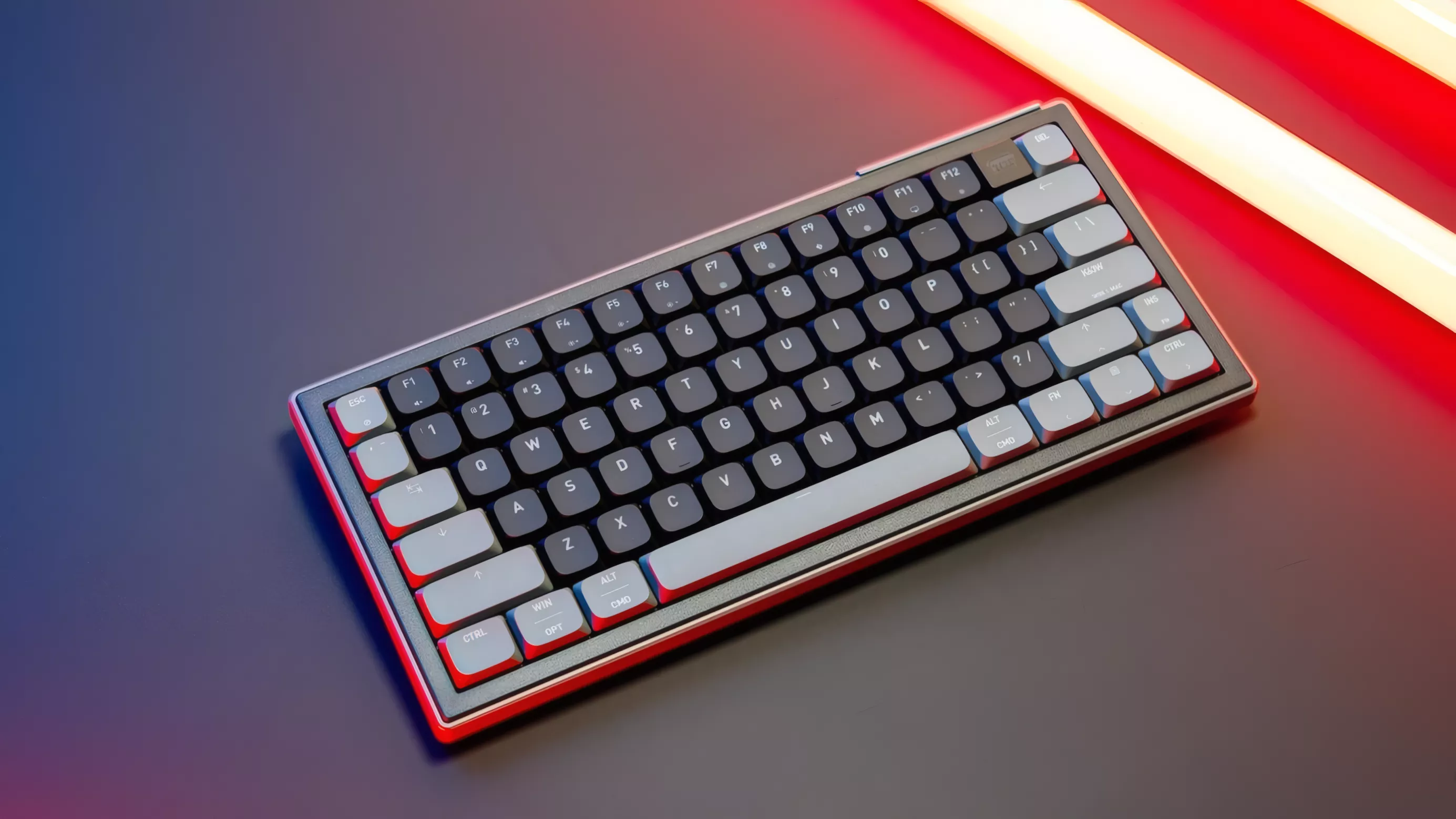
As for the design of the keyboard, it features a 70% layout, so while you get the complete function row and arrow keys, there's no row of keys on the right-hand side like you would find on a 75% keyboard, such as the ROG Azoth. Cherry says the reduced side bulk allows for more mouse space movement – the board is supposedly "esports optimized."

Other features include Cherry's MX Low Profile 2.0 switches in a gasket mount design for a typing experience described as controlled and cushioned, and a 6,000 mAh battery that delivers up to 1,100 hours of usage, which is presumably a real best-case scenario.

The K63W Pro appears to be aimed squarely at esports players, but Cherry is also putting plenty of emphasis on how it feels and sounds in everyday use. The company highlights softer keystrokes, deeper acoustics, and a more satisfying typing experience, all within a slim form factor.

The Cherry XTRFY K63W Pro arrives in the US this August for $169.99 and in the EU for €179.99 in July. It's not cheap, but then the Cherry XTRFY MX 8.2 Pro TMR launched with a $250 price tag.

Permalink to story:

 
2.4 Ghz wireless keyboard offers 1,000 keyboard reads per second, even typing at 256 - 300 WPM (less than .001% of the global population can exceed 200 wpm) you are only generating 21.33 - 25 keystrokes per second. Even pros are in no danger of coming close to maxing out 1,000 kps, ridiculous product!!
 
2.4 Ghz wireless keyboard offers 1,000 keyboard reads per second, even typing at 256 - 300 WPM (less than .001% of the global population can exceed 200 wpm) you are only generating 21.33 - 25 keystrokes per second. Even pros are in no danger of coming close to maxing out 1,000 kps, ridiculous product!!

It's not about it capturing MORE keystrokes, it's about it having a faster response time to the existing keystrokes. Not that I'm saying anyone needs it to be this fast or that it will make a meaningful difference, but just making the theoretical gains clear.
 
It's not about it capturing MORE keystrokes, it's about it having a faster response time to the existing keystrokes. Not that I'm saying anyone needs it to be this fast or that it will make a meaningful difference, but just making the theoretical gains clear.
Ridiculous! Like signing up for cable internet and expecting a 256k dialup modem to handle the bandwidth.
 
Ridiculous! Like signing up for cable internet and expecting a 256k dialup modem to handle the bandwidth.
That's a terrible comparison and only reaffirms your original mistake. You seem locked in on "capture MORE keystrokes", which as has already been written and I've already pointed out to you, isn't the goal. Which is, to capture the SAME keystrokes FASTER. You don't need "bandwidth" for that, you need reaction time. I.e. a faster polling rate. It's the difference between say, sending 1MB every second, vs sending 100KB every 100ms. You can send the same amount of data, but the data starts sending earlier, so can begin to be processed and acted on faster.

Note that my numbers in this case are arbitrary just to illustrate the point. I don't know what their actual data transfer rate is. And to be clear, I'm not trying to endorse that anyone actually needs this product. I'm just clearing up the (bad) point that you were trying to make.
 
Bandwidth definition: 1) In the fields of physics and engineering, bandwidth refers to the width of a specific frequency range. It is calculated as the difference between the highest and lowest frequencies a signal or circuit can handle, and is measured in Hertz

2) Bandwidth is the maximum amount of data that can be transmitted over a network or internet connection in a given amount of time. It is usually measured in bits per second (bps) and determines how fast you can download or upload data

You are describing the same thing I am! Bandwidth, me in hertz and you in KB\second or milliseconds. The keyboard is capturing the keystrokes faster, but that signal still has to be sent to the PC and you refuse to acknowledge the bottleneck of the keyboard sending 8,000 hz and the PC receiving 1,000 hz. Bandwidth, transmission speed, frequency!!

I'm done with this conversation.
 
Bandwidth definition: 1) In the fields of physics and engineering, bandwidth refers to the width of a specific frequency range. It is calculated as the difference between the highest and lowest frequencies a signal or circuit can handle, and is measured in Hertz

2) Bandwidth is the maximum amount of data that can be transmitted over a network or internet connection in a given amount of time. It is usually measured in bits per second (bps) and determines how fast you can download or upload data

You are describing the same thing I am! Bandwidth, me in hertz and you in KB\second or milliseconds. The keyboard is capturing the keystrokes faster, but that signal still has to be sent to the PC and you refuse to acknowledge the bottleneck of the keyboard sending 8,000 hz and the PC receiving 1,000 hz. Bandwidth, transmission speed, frequency!!

I'm done with this conversation.
The reason I put "bandwidth" in quotes is because everything you were talking about was in reference to "capturing more keystrokes". Which I was trying to explain was not the point of anything about this product. And now it seems your entire point is based on the belief on that your PC is hard-limited to 1000Hz. It isn't. Thus your point is still invalid.
 
Back