Logitech to ship mice with replaceable batteries in Europe only, following Nintendo

Daniel Sims

Posts: 2,556   +77
Staff
In brief: EU regulations will soon require more devices to feature replaceable batteries, prompting some manufacturers to comply in advance. However, tech companies are adopting new repairability standards only where required by law, with Logitech arguing that limiting repairability is in users' best interests.
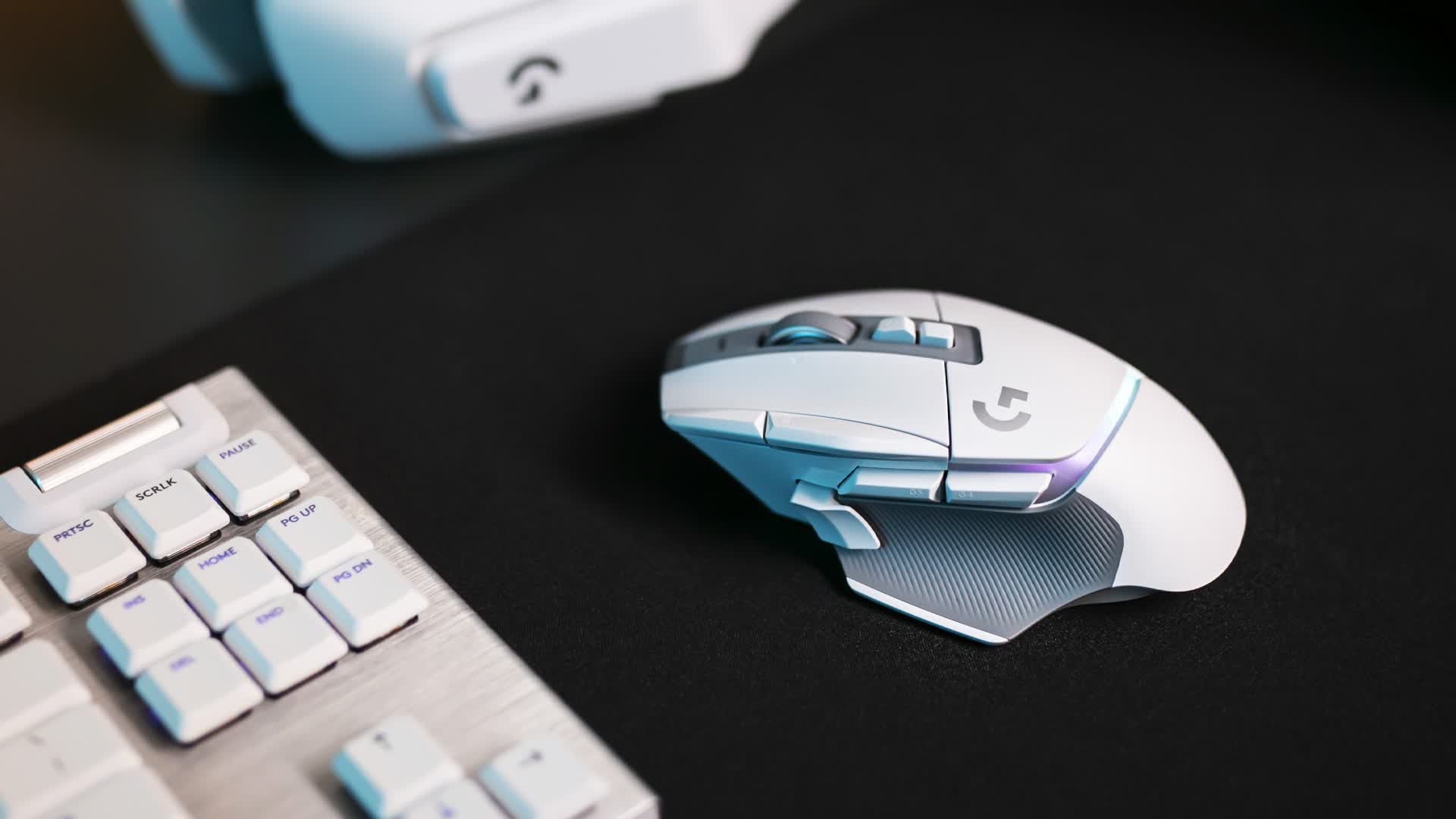
Logitech recently told The Verge that some of its mice will soon feature replaceable lithium-ion batteries, but the new models will only be available in Europe. Like Nintendo, the company appears to be doing the bare minimum to satisfy regulators in certain markets.

The company's new head of gaming, Robin Piispanen, confirmed the move to the outlet while discussing right-to-repair and Logitech's future gaming hardware plans. While the company is adding user-replaceable batteries to its mice to comply with an EU law that takes effect next year, Piispanen argues that non-replaceable batteries offer certain advantages.

He confirmed that the new European models will not only be more expensive to manufacture, but also heavier and sturdier to minimize the risk of accidental puncture. Lithium-ion batteries are a well-known fire hazard.

While Logitech's gaming boss agrees that replaceable batteries make sense for expensive devices such as laptops and smartphones, he expects users to replace $50-$100 mice more often than they replace their batteries. Despite saying he supports the right to repair, Piispanen argues that making longer-lasting mice should be a higher priority than allowing users to replace individual components.
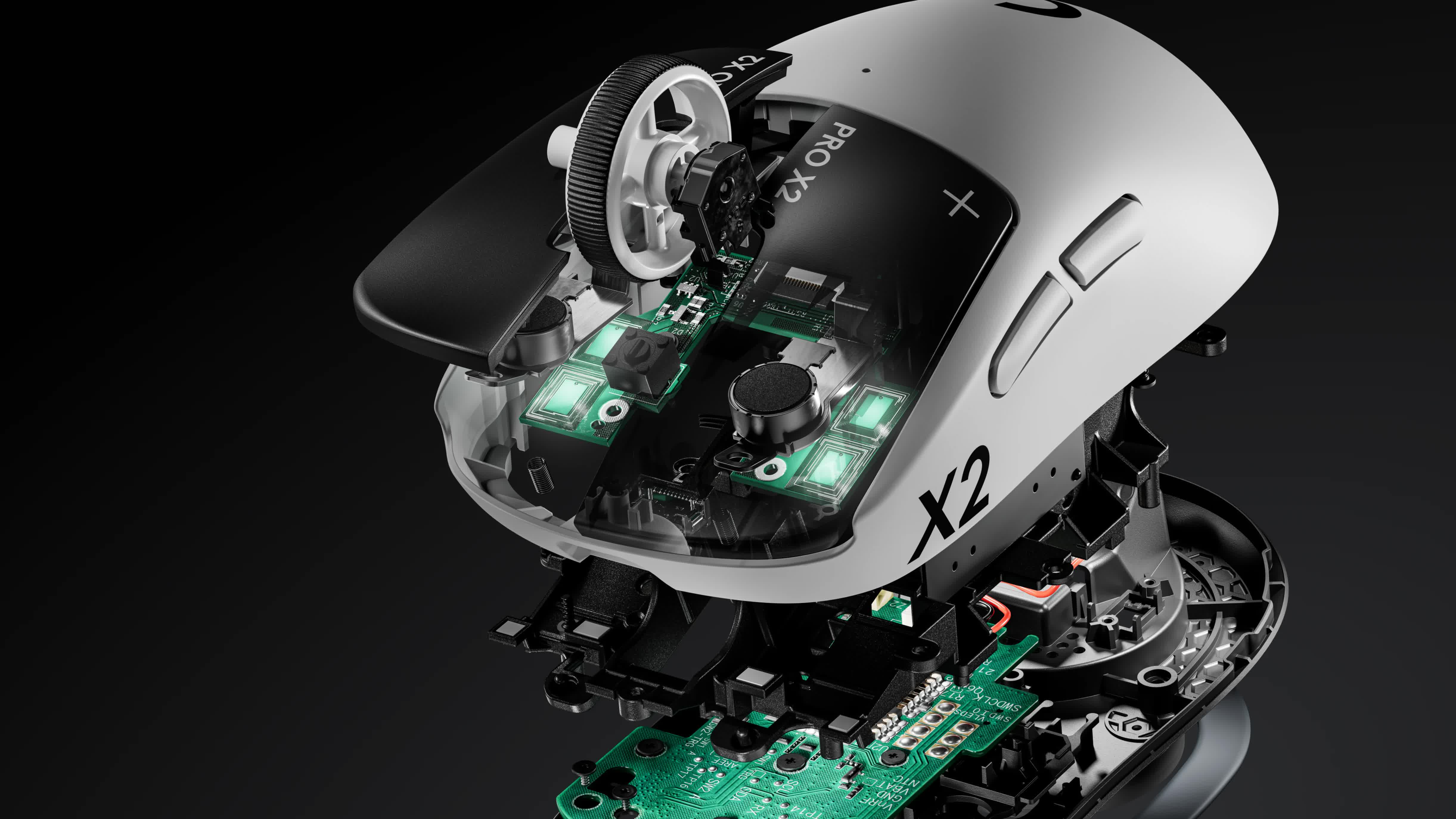
Also Read – The Best Mouse: Our Favorite Mice for Work and Play

From there, he unsurprisingly argued that users are more likely to damage mice irreversibly when attempting to repair switches or grips. However, Piispanen did not discuss the possibility of giving third-party repair shops better access to replacement parts.

Logitech's decision echoes Nintendo's plans to ship a new, Europe-only version of the Switch 2 with replaceable batteries for both the console and Joy-Cons. However, rather than produce a new EU-compliant version of the original Switch, the company will simply end production of the 2017 handheld in that market.

Piispanen also briefly discussed Logitech's short-lived handheld gaming venture with The Verge. The company released the streaming-focused G Cloud in 2022, but Piispanen admitted that only roughly 20% of buyers still use it, and Logitech likely won't develop a follow-up anytime soon. The gaming executive acknowledged that cloud gaming remains a difficult business, with Microsoft and Nvidia among the only major players still operating in the space.

The EU's upcoming battery legislation aims to reduce e-waste by allowing users and repair shops to replace dead batteries rather than sending devices to landfills. The law is set to take effect in February 2027.

Permalink to story:

 
I like the theory behind this, but... typical government. Address a minor problem while ignoring the real issues. What would be better:

1) Buttons that don't start double clicking until at least 50,000 clicks. That's what puts most of my mice in the landfill.

2) A requirement to open source the hardware enough that alternative mouse software can access it.

Modern mouse software just runs too many processes and phones home. Look in any manufacturer's forum and you will find many frustrated users.
 
I like the theory behind this, but... typical government. Address a minor problem while ignoring the real issues. What would be better:

1) Buttons that don't start double clicking until at least 50,000 clicks. That's what puts most of my mice in the landfill.

2) A requirement to open source the hardware enough that alternative mouse software can access it.

Modern mouse software just runs too many processes and phones home. Look in any manufacturer's forum and you will find many frustrated users.
The batteries are a much bigger problem for governments. A bad click isn't going to cause issues down the line (and you can replace I think on some mice the broken parts).

I would also want to see some regulations on specific device durability, but it's such a broad topic that I don't think it is feasible. It would be way too much paperwork and impossible to police.

Focusing on obvious things like safety, repairability, batteries and proprietary connectors is much easier to do. It's also much easier to implement by companies.
 
A replaceable battery means a small chance that the owner will keep using it after the battery dies.
Small thing but our world consists of small things. We need to lower waste creation. And these fused
devices are a perfect example of unneeded waste. I am a bit annoyed that it is EU making these small right
thing instead of us.
Instead of bankrupting companies with impossible green rules, like EU is doing with their Automotive industry, there should be conscious push, many small changes that result in less and less waste
 
If you can design a mouse that can work well, sell at a reasonable price and safely biodegrade in less time than half the age of the universe I’d be on board with it. You can’t however, hence the problem. We should be seeking ways to limit ewaste with current materials at all cost. Repairability and user replaceable rechargeable batteries is an obvious solution.
 
While Logitech's gaming boss agrees that replaceable batteries make sense for expensive devices such as laptops and smartphones, he expects users to replace $50-$100 mice more often than they replace their batteries.
Why wouldn't I expect that? My €32 Logitech MX620 still works fine well over a decade later.

So Logitech has gotten more expensive and worse quality over time? Sounds about right as the other two Logitech mice I've bought since then both started having scroll wheel issues. Switched brands since then, as the by the time I was looking for a mouse again I found a lot of news about click reliability problems with double registering it.

So I guess he's right, just not the way he thinks he is. I do expect to replace my Logitech mouse after a few years. Because it is a Logitech mouse! And apparently Logitech has been dropping the ball on quality.

Perfectly happy with my Roccat mouse that is god knows how old at this point. No double click issues and the scrollwheel still works (company no longer exists though - got bought out by Turtlebeach).

I like the theory behind this, but... typical government. Address a minor problem while ignoring the real issues. What would be better:

1) Buttons that don't start double clicking until at least 50,000 clicks. That's what puts most of my mice in the landfill.
Because they don't want to micro manage every single product category.

The EU consumer laws already entitle you to basically 2 years of warranty on almost everything though so that should have that covered. (Or you need to do more clicking :P)

By targeting batteries they're preventing many many product categories all at once from having a build in 'your device will stop functioning or at least lose a big part of its functionality in x amount of time'. I'd much rather have them going after targets affect multiple industries at once rather than what I assume is your issue with Logitech. (Mostly Logitech mice where this unintentional double click behavior occurs isn't it?).
 
A replaceable battery means a small chance that the owner will keep using it after the battery dies.
...We need to lower waste creation.
But adding a replaceable battery to a small device isn't a zero-cost change: it means more components overall. Instead of a soldered power wire, it now needs two connectors: one male, one female. Instead of a hard-glued battery, it needs a clip or harness robust enough to allow multiple replacements. The case itself needs to be modified, and will likely require screws or other components to allow easy access. It also prevents the use of cheap permanent glues to hold everything together, which means a slightly higher chance of failure if the device is dropped or shaken hard.

This is why the free market makes decisions better than government regulations. This law might mean some small percent of mice last enough to have their battery replaced, and a user who actually does so, vs. the 100% of all mice that now have small, but non-zero increases in both material waste and failure rates.
 
But adding a replaceable battery to a small device isn't a zero-cost change: it means more components overall. Instead of a soldered power wire, it now needs two connectors: one male, one female. Instead of a hard-glued battery, it needs a clip or harness robust enough to allow multiple replacements. The case itself needs to be modified, and will likely require screws or other components to allow easy access. It also prevents the use of cheap permanent glues to hold everything together, which means a slightly higher chance of failure if the device is dropped or shaken hard.
tbf most of this can all be done super cheaply.

If you order a PCB from something like JLCPCB adding a battery connector costs less than $0.03 and that's for small batch work. At Logitech's volume with whole factories catering just to them that's going to be even lower.
A way to hold a battery inside a device with as much spare space as a mouse is a tiny one time expense to design it, the per unit cost is going to be even less than that of the battery connector.
All you need is some plastic ledges to prevent sideways movement and a reusable plastic zip tie (and perhaps a tiny amount of foam), that's likely even cheaper than the battery connectors.

In my (admittedly limited experience) mice use screws already, although there might be some using clips. Moving the screws so they're not under the glide pads (which would be destructive in a lot of cases) shouldn't add to the costs*.

* Obviously they would add costs to existing devices as things have to be redesigned and the molds/pcb design have to be redone. But with a new product it makes no difference.

--

I'd say you'd have an argument for something like in-ear headphones where you have massive space constraints and due to that almost everything needs a ton of thought and you might not be using off the shelf batteries but your own design. Costs might actually be a substantial factor.

But with mice before and after this change it's a bunch of off the shelf components with the only custom parts being the shell and the PCB. I highly doubt it would add much more than a few cents to the final product aside from one time costs to change an existing product.
I could however see companies try to charge ridiculous amounts as a "see I told you so" rather than their costs actually going up all that much.

This is why the free market makes decisions better than government regulations.
I disagree. All you can count on for the free market is make the decisions in their own best interest which doesn't always align with the best interests of their customers or the public at large.
I'm a-okay with the EU not letting the free market run wild in this regard.

This law might mean some small percent of mice last enough to have their battery replaced, and a user who actually does so, vs. the 100% of all mice that now have small, but non-zero increases in both material waste and failure rates.
"A user who does so" is something that requires a cultural shift, get rid of this throw away mentality that we've cultured in more recent years. This law should bring exactly that change.

It might start off slow with say only 5% of people bothering to do so but even then that additional material waste/failure rate should already be offset. Once people get used to the idea of getting batteries replaced rather than throwing devices out I expect that percentage to be far higher.

With how wasteful and even dangerous it is to throw lithium batteries in the trash requiring them to be easily removable should be a bare minimum requirement imo. That the EU went one step further and required them to be easily replaceable is great.
Hopefully places that sell batteries will double as turn in points or perhaps even give a slight discount for turning the old battery in (get that lithium recycled).
 
We don't care about this man's opinion.
We NEED to have the best repairability for our tech, and stop replacing whole products as soon as one little component starts to fail.

This is a good initiative.

And also, he's totally wrong when comparing this to other devices such as smartphones or laptops.
I don't care how long another device will last. I want my gaming mouse to last at least a decade. I'm currently using cable-only ones both at home and work and they're really old.
When I'll switch, maybe, to a wireless one, I expect it to BOTH last *AND* allow replacing the battery in case it's a bit old and becomes unusable.
 
It's sad that the CEO of the company couldn't of used the interview to promote their efforts in stopping landfill rather than begrudgingly do these least possible to match EU laws. I guess I'll shop around for other suppliers going forward.
 
While Logitech's gaming boss agrees that replaceable batteries make sense for expensive devices such as laptops and smartphones, he expects users to replace $50-$100 mice more often than they replace their batteries. Despite saying he supports the right to repair, Piispanen argues that making longer-lasting mice should be a higher priority than allowing users to replace individual components.

Perhaps from HIS perspective, yes; companies are, after all, in the business of making money & maximizing profits. But I don't know too many people who'll happily drop a sizeable wedge on yet another new peripheral every few months.....when it's totally unnecessary.

Miq. :eek:
 
All of my mice are wireless Logi, I happen to love their quiet click M650 model -- and ALL 14 of them do have a replaceable AA battery compartment on the bottom.

I had no idea they made mice that don't have a replaceable battery, I've never seen any like that. I wouldn't buy one that doesn't have a replaceable battery.

I suppose they don't need to reinvent the wheel, they already make plenty of them that do have the replaceable battery.
 
ALL 14 of my [mice] do have a replaceable AA battery compartment ... I had no idea they made mice that don't have a replaceable battery, I've never seen any like that
The reference is to Li-Ion mice, not those with AA batteries:

"Most modern wireless mice use a built-in lithium-ion battery that is glued, taped, or soldered in place rather than being user-replaceable. Popular examples include the Apple Magic Mouse, Logitech MX Master series, and most lightweight gaming mice..."

Why Manufacturers Seal Batteries

  • Weight savings: Eliminating plastic battery doors and cradles keeps mice light and balanced.
  • Safety concerns: Soft-case lithium-ion cells can puncture or short-circuit if mishandled by untrained users.
  • Design limits: Sealed builds allow slimmer shapes and integrated wireless charging tech. "
 
I like the theory behind this, but... typical government. Address a minor problem while ignoring the real issues. What would be better:

1) Buttons that don't start double clicking until at least 50,000 clicks. That's what puts most of my mice in the landfill.

2) A requirement to open source the hardware enough that alternative mouse software can access it.

Modern mouse software just runs too many processes and phones home. Look in any manufacturer's forum and you will find many frustrated users.
Don't expect government to be a nanny, if the mice you buy don't last then try a different brand.

The EU isn't mandating a certain quality of mice or really products in general, their objective is to stop some of the general stupid trends in the industry like batteries one can't replace, electronics glued together so there is no chance of repair and so on. They make laws on consumer products for safety, environmental protection and to stop scam products.

Side note.
I'm currently using a Logitech G502 that I build by combining two defective G502's, making the Frankenstein mouse wasn't easy and I did so more of principle than financial. Logitech could have made it a lot easier with little thought and effort on their part.

 
Don't expect government to be a nanny, if the mice you buy don't last then try a different brand.

The EU isn't mandating a certain quality of mice or really products in general, their objective is to stop some of the general stupid trends in the industry like batteries one can't replace, electronics glued together so there is no chance of repair and so on. They make laws on consumer products for safety, environmental protection and to stop scam products.

Side note.
I'm currently using a Logitech G502 that I build by combining two defective G502's, making the Frankenstein mouse wasn't easy and I did so more of principle than financial. Logitech could have made it a lot easier with little thought and effort on their part.
Yeah, several of you called me out on my comments. I agree with you. I should have worded my post different. It was more a (only slightly off-topic) rant about issues I have had with a few different brands in recent years.

I would gladly pay extra for a replaceable battery or better switches or open software standards.
 
Back