Man develops rare 19th-century psychiatric disorder after following ChatGPT's diet advice

midian182

Posts: 11,722   +177
Staff member
WTF?! In another example of people putting too much blind faith into what ChatGPT tells them, a man gave himself a psychiatric disorder not commonly seen since the 19th century after taking dietary advice from the AI. All the man wanted to do was remove salt from his diet, but thanks to ChatGPT, he gave himself bromism.

The case involved a 60-year-old man who, after reading reports on the negative impact excessive amounts of sodium chloride (common table salt) can have on the body, decided to remove it from his diet.

There were plenty of articles on reducing salt intake, but he wanted it removed completely. So, he asked ChatGPT for advice, which he followed.

After being on his new diet for three months, the man admitted himself to hospital over claims that his neighbor was poisoning him.

His symptoms included new-onset facial acne and cherry angiomas, fatigue, insomnia, excessive thirst, poor coordination, and a rash. He also expressed increasing paranoia and auditory and visual hallucinations, which, after he attempted to escape, "resulted in an involuntary psychiatric hold for grave disability."

It was then discovered that when the man asked GhatGPT about substances that could replace salt, it mentioned sodium bromide. While this is an accurate statement, it relates to purposes such as cleaning – certainly not when it comes to human diets.
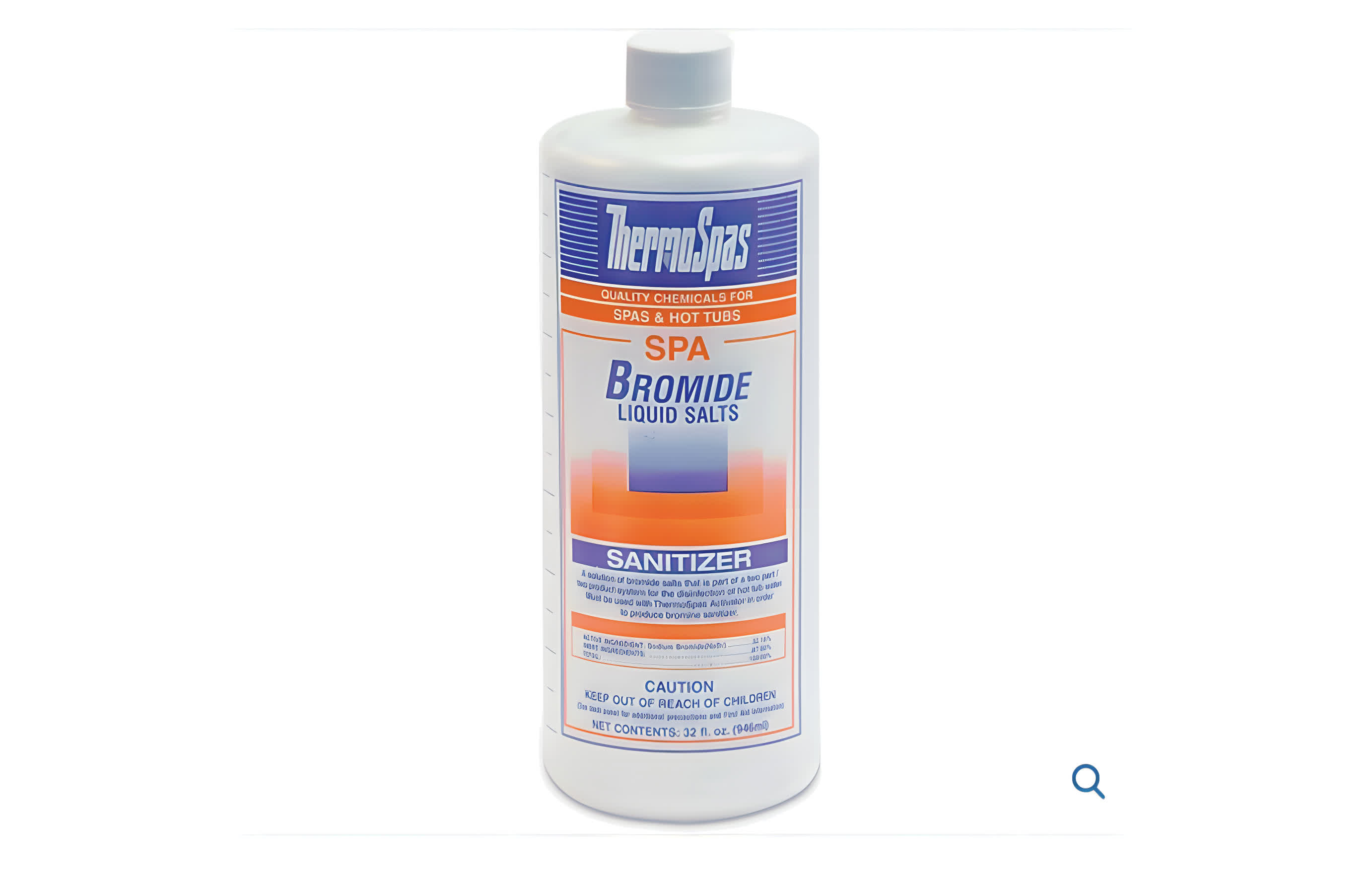
It's believed that the man used an older 3.5 or 4.0 ChatGPT model in his conversations. The paper's authors could not access his chat history, so they tried to recreate the responses with ChatGPT 3.5. They wrote that "Though the reply stated that context matters, it did not provide a specific health warning, nor did it inquire about why we wanted to know, as we presume a medical professional would do."

Bromism, a.k.a. chronic bromide poisoning, was most common in the late 19th and early 20th centuries, roughly from the 1880s to the 1930s. It happened because bromide was widely used in sedatives, sleep aids, and even over-the-counter headache powders. At the time, they were considered safer than many alternatives, but bromide is excreted very slowly, so repeated use could lead to toxic buildup. It tends to only be seen today from industrial exposure or misuse of certain bromide-containing compounds.

Bromism was sometimes misinterpreted as alcoholism or a nervous breakdown until doctors noticed patients weren't drinking but were taking bromide-based "nerve tonics" every day. Severe cases resulted in psychosis, tremors, or even comas. Thankfully, the US government restricted the use of bromides in over-the-counter medicines in 1975.

Permalink to story:

 
Regular table salt can be harmful because it increases blood pressure and that can produce side effects that may shave more than a decade off your life expectancy. Yet, it's still essential for the body, so you can't just eliminate it entirely. The better move is to swap it for a healthier alternative, such as pink Himalayan salt. This salt delivers a richer, more nuanced flavor that's less sharp and contains trace minerals that can support overall health without increasing blood pressure. While it contains the same amount of sodium per gram as regular salt(so be careful if you have a tendency for high blood pressure), it doesn't seem to increase blood pressure in the same way, at least based on my personal experience. Maybe it's something in the mix.
 
Regular table salt can be harmful because it increases blood pressure and that can produce side effects that may shave more than a decade off your life expectancy. Yet, it's still essential for the body, so you can't just eliminate it entirely. The better move is to swap it for a healthier alternative, such as pink Himalayan salt. This salt delivers a richer, more nuanced flavor that's less sharp and contains trace minerals that can support overall health without increasing blood pressure. While it contains the same amount of sodium per gram as regular salt(so be careful if you have a tendency for high blood pressure), it doesn't seem to increase blood pressure in the same way, at least based on my personal experience. Maybe it's something in the mix.
Not sure where you are getting your information. Regular table salt and Himalayan salt is the same thing essentially. Regular table salt has added iodine to support thyroid function and to prevents iodine deficiency. Worldwide, iodine deficiency affects about two billion people and is the leading preventable cause of intellectual and developmental disabilities.
Himalayan salt is often promoted with unsupported claims that it has health benefits. Which is a marketing scam it has no more health benefits than any other salt.
Likewise the link between hypertension and salt is not as strong as you think it is. More and more studies are linking sugar and not salt to high blood pressure along with increased body weight.
 
Not sure where you are getting your information. Regular table salt and Himalayan salt is the same thing essentially. Regular table salt has added iodine to support thyroid function and to prevents iodine deficiency. Worldwide, iodine deficiency affects about two billion people and is the leading preventable cause of intellectual and developmental disabilities.
Himalayan salt is often promoted with unsupported claims that it has health benefits. Which is a marketing scam it has no more health benefits than any other salt.
Likewise the link between hypertension and salt is not as strong as you think it is. More and more studies are linking sugar and not salt to high blood pressure along with increased body weight.
I looked into what iodine deficiency can cause and there’s a long, scary list of health problems. So you’re right about iodine’s importance but I can assure you pink salt it’s not a marketing scam.

I can’t stand regular salt—it makes me feel nervous, keeps me from sleeping well and I feel my body under pressure probably because of the higher blood pressure, almost like if was drinking the sea water from which they took it off, maybe they are remain tiny amounts of pollutants... But I find pink salt tasty and it has absolutely no side-effects (I don’t know about extra health benefits, but it doesn’t raise my blood pressure). I hope you believe me.

Iodine is found not only in regular salt (a rich and cheap source) but also in seafood, eggs and sometimes added to tap water in certain areas. I stopped using regular salt more than ten years ago and have always had trouble tolerating it—not because of the taste but because of the jitteriness from high blood pressure. In theory they look the same, but in practice they’re not.

Regular salt contains iodine, which is essential, but the regular salt it can raise blood pressure. Pink salt lacks iodine (a drawback), and because it contains the same amount of sodium, it should also raise blood pressure—but it doesn’t (at least for me).

From my personal experience, I vote for pink salt and use regular salt only once or twice a week in the water when boiling something, just to get the iodine if you don’t consume eggs or fish.
 
Last edited:
"but I can assure you pink salt it’s not a marketing scam" and yet you didn't provide any assurances. You gave no supporting evidence other than a personal anecdote with no measurement other than how you feel about a certain kind of salt. I would argue any salt with an added ingredient in it or that contains other minerals, would have less actual salt in it.

There is no accurate way to determine what made you think you were less jittery based on the lack of evidence you provided.

Iodized salt has been fortified with iodine and non-iodized salt has not. There is no standard for "regular salt".

I looked at the symptoms of high blood pressure and jitteriness was not one of them:
Headaches, Nosebleeds, Fatigue, Shortness of breath, Chest pain, Dizziness, Blurred vision, and Palpitations.
Jitteriness could be a sign of any number of other issues, like low blood pressure, low blood sugar, too much caffeine or a mixture of all of these and/or any number of other reasons.
This is not medical advice.
 
"but I can assure you pink salt it’s not a marketing scam" and yet you didn't provide any assurances. You gave no supporting evidence other than a personal anecdote with no measurement other than how you feel about a certain kind of salt. I would argue any salt with an added ingredient in it or that contains other minerals, would have less actual salt in it.

There is no accurate way to determine what made you think you were less jittery based on the lack of evidence you provided.

Iodized salt has been fortified with iodine and non-iodized salt has not. There is no standard for "regular salt".

I looked at the symptoms of high blood pressure and jitteriness was not one of them:
Headaches, Nosebleeds, Fatigue, Shortness of breath, Chest pain, Dizziness, Blurred vision, and Palpitations.
Jitteriness could be a sign of any number of other issues, like low blood pressure, low blood sugar, too much caffeine or a mixture of all of these and/or any number of other reasons.
This is not medical advice.
Unfortunately I can’t give you a precise, measurable figure or hard evidence, but if it weren’t for the iodine factor I’d advise you to stay away from regular sea salt and only use the pink Himalayan salt from the mountains. Sea salt just makes me uneasy; it’s hard to find and even harder to prove scientifically why it’s bad, so my opinion is based on personal experience. If you do want to use it for iodine, boil it first. I know that sounds like a myth about a ghost, but there’s no solid scientific evidence I can provide for it.

Drinking seawater causes problems from chloride and other chemical contaminants—not from the water itself (H₂O). Sea salt is essentially seawater without the water. These are assumptions, not proven facts. I haven’t performed any chemical analysis on sea salt, but I definitely don’t like it. :)
 
Unfortunately I can’t give you a precise, measurable figure or hard evidence, but if it weren’t for the iodine factor I’d advise you to stay away from regular sea salt and only use the pink Himalayan salt from the mountains. Sea salt just makes me uneasy; it’s hard to find and even harder to prove scientifically why it’s bad, so my opinion is based on personal experience. If you do want to use it for iodine, boil it first. I know that sounds like a myth about a ghost, but there’s no solid scientific evidence I can provide for it.

Drinking seawater causes problems from chloride and other chemical contaminants—not from the water itself (H₂O). Sea salt is essentially seawater without the water. These are assumptions, not proven facts. I haven’t performed any chemical analysis on sea salt, but I definitely don’t like it. :)
Most sodium chloride is mined as it is cheaper to produce than sea salt. You're entitled to your personal beliefs, but if you can't offer justification for your statements it's best not to publish them as misinformation on the internet.
 
Most sodium chloride is mined as it is cheaper to produce than sea salt. You're entitled to your personal beliefs, but if you can't offer justification for your statements it's best not to publish them as misinformation on the internet.
  1. Are you suggesting that I'm not a “reputable” source? :) If unverified testimony is treated as misinformation, then the court’s decisions have a serious flaw.
    Anyway, here’s a list from the AI—an unbiased source—showing the scores related to the source of the salt.

    Source: Sea-water solar evaporation
    Flavor & Purity score: 75/100 – retains trace minerals that give a “natural” taste; color can be slightly off-white.

    Source: Sea-water mechanical evaporation
    Flavor & Purity score: 80/100 – produces a cleaner product than open-pond sea salt.

    Source: Underground rock salt mining (room-and-pillar)
    Flavor & Purity score: 90/100 – raw rock salt is very pure; only minimal processing needed.

    Source: Solution mining (brine wells)
    Flavor & Purity score: 85/100 – good purity after filtration; additives can be added easily.

    Source: Brine wells (surface brine extraction)
    Flavor & Purity score: 80/100 – requires purification; yields a clean product.

    Source: Industrial brine (e.g., from oil/gas production)
    Flavor & Purity score: 70/100 – requires more purification steps.
 
I am no ChatGPT advocate, but I do care about accuracy in reporting. As a tech consultant who’s messed around with AI tools, I can say this: if you ask ChatGPT how to completely remove sodium from your diet, it will give you an answer. I just tested it, and yes, it provided tips. However, it also included a clear warning that doing so isn’t recommended. The issue isn’t the tool; it’s the person who ignored all warnings and charged ahead anyway.
 
This is a brutal reminder that ChatGPT is not your grandma, your doctor, or even that one friend who Googles things aggressively before answering. It’s more like an overeager trivia night teammate that occasionally blurts out something lethal.
 
It what world is this a "psychiatric disorder"?

This is clearly a physical problem due to incorrect diet.

It's a psychiatric disorder arising from a physical disorder. Brain tumors can do that, syphilis, epilepsy, heck - consider Alzheimers dementia, that's mental illness precipitated by a distinct disease.
 
This is a brutal reminder that ChatGPT is not your grandma, your doctor, or even that one friend who Googles things aggressively before answering. It’s more like an overeager trivia night teammate that occasionally blurts out something lethal.

And in my semi-humble opinion, ChatGPT isn't nearly the most reliable of the AI's out there. I keep five different AI's open in a separate browser, and routinely feed identical queries to all of them. The most consistently reliable, providing accurate, terse (as usually requested), and shockingly 'intuitive' results is Anthropic's Claude. I still keep the others open to see if they improve or to cross-check more complex queries that are sometimes open to ambiguous responses. But when I want the 'cold hard facts', Claude is the go-to.
 
Not sure where you are getting your information. Regular table salt and Himalayan salt is the same thing essentially. Regular table salt has added iodine to support thyroid function and to prevents iodine deficiency. Worldwide, iodine deficiency affects about two billion people and is the leading preventable cause of intellectual and developmental disabilities.
Himalayan salt is often promoted with unsupported claims that it has health benefits. Which is a marketing scam it has no more health benefits than any other salt.
Likewise the link between hypertension and salt is not as strong as you think it is. More and more studies are linking sugar and not salt to high blood pressure along with increased body weight.

Agree with all of that, and particularly the dangerous medical advice to 'cut out the salt'. It's been going on for decades. Chronic, exceedingly heavy intake of salt may increase blood pressure (typically transiently), but you really have to work at it - and most of the time, there are comorbities (as you note, sugar-induced) that are the greater risk.

I'm 59. I'm a 'salt-a-holic'. I also have 'white coat syndrome'. After the doc's relentless hectoring about my 'hypertension', I brought in my home BP monitor for them to 'calibrate' against their gold standard. My BP readings at home are very close to normal most of the time. In the calibration, the home monitor actually read consistently a few points _higher_ than their 'gold standard' - meaning my home values were actually reporting higher than the actual values. Still not convinced, they had me do a 'BP class', which amounted to a quiet room with meditative music and a monitor showing a tropical island beach. The nurse left the room for fifteen minutes, and the monitor automatically took the readings intermittently. 100% normal.

The medical profession is obsessed with numbers, so even the slightest deviation, they want to put you on meds, which often worsen the situation (statins can induce diabetes - good job!). I've been "pre-diabetic"....since 1998. I'll probably register as actually diabetic 30 years after I die, at this rate.
 
  1. Are you suggesting that I'm not a “reputable” source? :) If unverified testimony is treated as misinformation, then the court’s decisions have a serious flaw.
    Anyway, here’s a list from the AI—an unbiased source—showing the scores related to the source of the salt.

    Source: Sea-water solar evaporation
    Flavor & Purity score: 75/100 – retains trace minerals that give a “natural” taste; color can be slightly off-white.

    Source: Sea-water mechanical evaporation
    Flavor & Purity score: 80/100 – produces a cleaner product than open-pond sea salt.

    Source: Underground rock salt mining (room-and-pillar)
    Flavor & Purity score: 90/100 – raw rock salt is very pure; only minimal processing needed.

    Source: Solution mining (brine wells)
    Flavor & Purity score: 85/100 – good purity after filtration; additives can be added easily.

    Source: Brine wells (surface brine extraction)
    Flavor & Purity score: 80/100 – requires purification; yields a clean product.

    Source: Industrial brine (e.g., from oil/gas production)
    Flavor & Purity score: 70/100 – requires more purification steps.

Pink salt often contains contaminants, I.e. non-nutritive minerals eg. heavy metals, lead, mercury or arsenic.
Any potential health benefits provided by the higher nutrient content in pink salt would be counteracted by the large amount of sodium that would also be consumed.
 
I can’t stand regular salt—it makes me feel nervous, keeps me from sleeping well and I feel my body under pressure probably because of the higher blood pressure, almost like if was drinking the sea water from which they took it off, maybe they are remain tiny amounts of pollutants... But I find pink salt tasty and it has absolutely no side-effects (I don’t know about extra health benefits, but it doesn’t raise my blood pressure). I hope you believe me.

Table Salt is not made from sea water unless you are specifically buying sea salt.

Regular table salt comes from the same source as Himlayan salt - they are both mined from salt deposits inside the earth. These salt mines come from ancient evaporated salt seas and lakes that evaporated millions of years ago.

So your table salt and the Himlayan salt are from the same source.

You might simply be eating less salt with Himlayan salt because it is more expensive and usually comes in a form where you have to use a grinder.

I eat both regular table salt and himlayan salt and I eat less salt with the later (thus resulting in less sodium problems) because 99% of it comes in rocks that have to be ground down with a salt grinder and that makes it harder to put as much salt into your food as pre-ground salt granules in regular table salt.
 
  1. Are you suggesting that I'm not a “reputable” source? :) If unverified testimony is treated as misinformation, then the court’s decisions have a serious flaw.
    Anyway, here’s a list from the AI—an unbiased source—showing the scores related to the source of the salt.

    Source: Sea-water solar evaporation
    Flavor & Purity score: 75/100 – retains trace minerals that give a “natural” taste; color can be slightly off-white.

    Source: Sea-water mechanical evaporation
    Flavor & Purity score: 80/100 – produces a cleaner product than open-pond sea salt.

    Source: Underground rock salt mining (room-and-pillar)
    Flavor & Purity score: 90/100 – raw rock salt is very pure; only minimal processing needed.

    Source: Solution mining (brine wells)
    Flavor & Purity score: 85/100 – good purity after filtration; additives can be added easily.

    Source: Brine wells (surface brine extraction)
    Flavor & Purity score: 80/100 – requires purification; yields a clean product.

    Source: Industrial brine (e.g., from oil/gas production)
    Flavor & Purity score: 70/100 – requires more purification steps.

You posted AI? 😆 Did you get so wrapped up in your debate of table salt vs Himalayan salt that you forgot this discussion was taking place in the comments section of an article reporting on how dangerous it is to trust AI? 😂
 
Back