
WTF?! Many victims of online scams feel too embarrassed to report the crimes over fears about looking naïve or technically and socially inept. This is especially true when it comes to romance scams, which is why they're so popular. But the CEO of the largest dating company in the US has some reassuring words for people who lost everything to criminals that took advantage of their vulnerability: "Things happen in life."

Bernard Kim, the CEO of Match.com and Tinder owner Match Group, was questioned by CBS News about an investigation by the publication into online romance scams perpetrated by overseas-based criminals. Kim was asked what he would say to those who have become victims of this crime.
"Look, I mean, things happen in life," Kim said. "That's really difficult. I have a tremendous amount of empathy for things that happen, but I mean, our job is to keep people safe on our platforms; that is top foremost, most important thing to us."
A total of more than $1.3 billion was stolen from victims of romance scams in 2022, with the average median loss at $4,400, writes the FTC. While many scammers use dating apps to target people, sending a message to random social media users is also a popular method. Nearly 70,000 people reported romance scams that year, but the real number of victims is likely to be much higher.
The FTC filed a lawsuit against Match Group in 2019 over claims that up to 30% of Match.com members were using the app to scam others. A spokesperson told Business Insider that the figures are misleading and the court dismissed the claims related to the number of sign-ups that may be scammers. Match Group argued at the time that it was not legally responsible for the interactions between scammers and their victims because of laws that protect internet platforms from legal action.
Match Group says it has expanded its security posture and invests more than $125 million a year to protect customers.
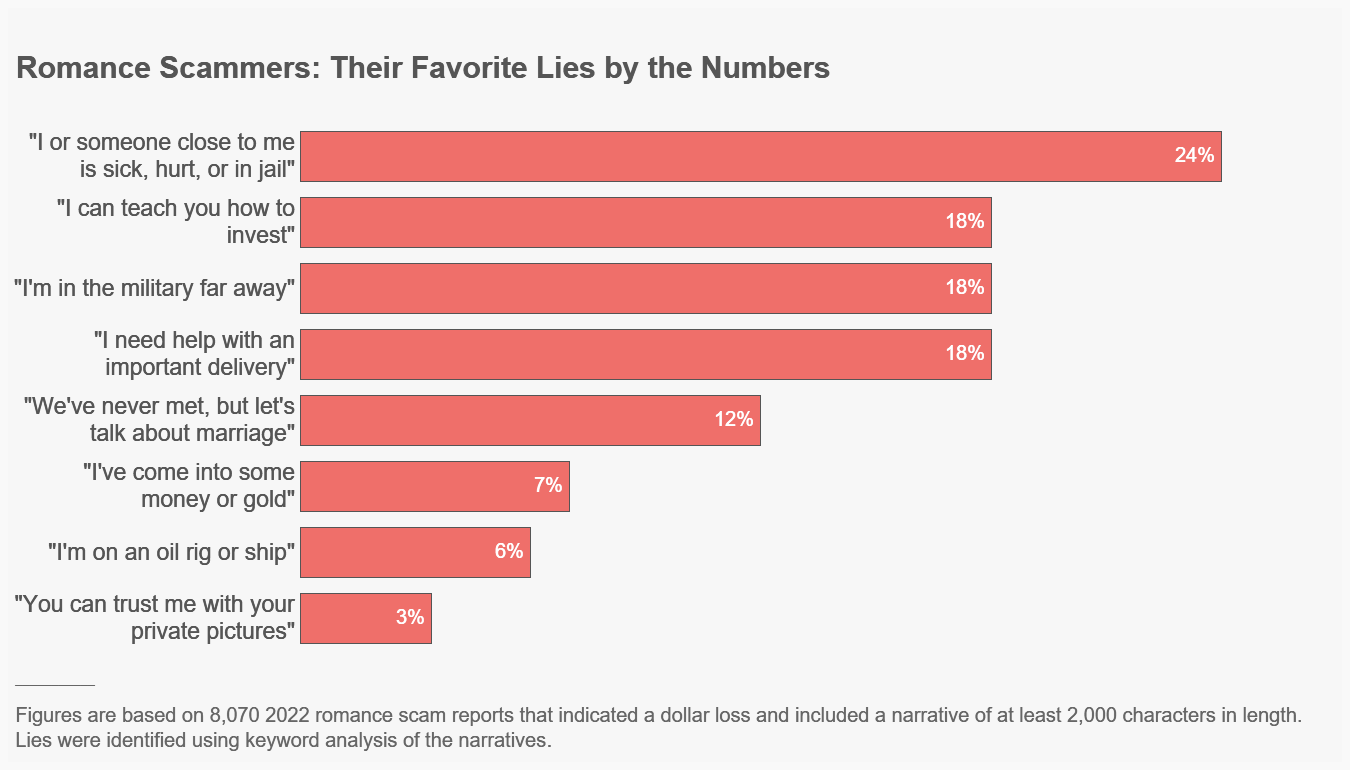
Most romance scams involve scammers spending time forming a relationship with victims online, using excuses such as being an offshore oil rig worker for why they can't meet up in person. Once they are close to the victim, the scammer uses a line to get them to send money. A quarter of the time, the excuse is, "I or someone close to me is sick, hurt, or in jail."
Financial losses aren't the only impacts of romance scams. Illinois resident Laura Kowal, 57, was discovered dead in the Mississippi River in August 2020 after being in a relationship for more than a year with a man she met on Match.com called "Frank." Kowal had wired the scammer $1.5 million.
"I've been living a double life this past year. It has left me broke and broken," Kowal wrote in a note to her daughter. "Yes, it involves Frank, the man I met through online dating. I tried to stop this, many times, but I knew I would end up dead." Federal agents traced the scammer's emails to Ghana.
Match CEO's message to romance scam victims: "Things happen in life"


