
A hot potato: Is the AI industry a bubble waiting to burst? It seems Meta hasn't lost confidence that the technology is the future: the social media giant just announced its capital expenditures this year will be $10 billion more than expected and could reach as much as $145 billion.
CEO Mark Zuckerberg said most of Meta's spending increase was due to higher component costs and additional data center costs to "support future-year capacity."
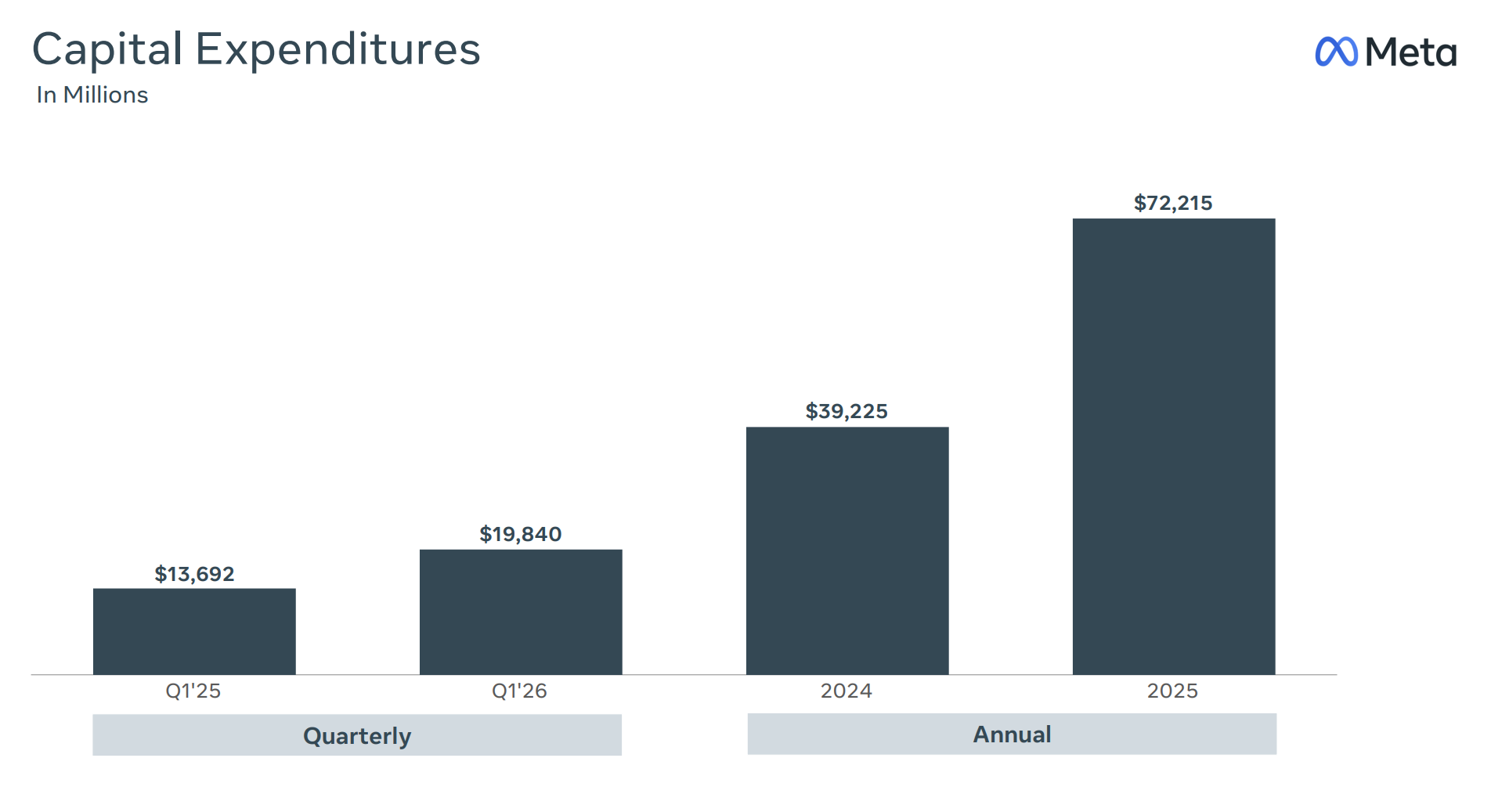
The figure marks another massive leap in the amount of money Meta is spending on AI. The company spent $72.2 billion on capex in 2025, up $30 billion compared to the previous year.
Should this year's spending spree reach the forecast maximum of $145 billion, it will have more than doubled compared to last year. It will also be more than the company spent in 2025 and 2024 combined.
The well-documented AI-driven memory crisis has pushed the price of components through the roof recently. It's a situation that is being exacerbated by the Iran conflict and resulting supply chain disruptions.
Meta is embracing AI more aggressively than most companies. It appears Zuckerberg's confidence hasn't been dented by the failure of his last tech obsession, the metaverse, a concept he once believed in so much it prompted him to change the company's corporate name.
Reality Labs, the segment responsible for the metaverse efforts, saw operating losses of more than $4 billion last quarter. The division has recorded around $92.1 billion in operating losses since 2019.
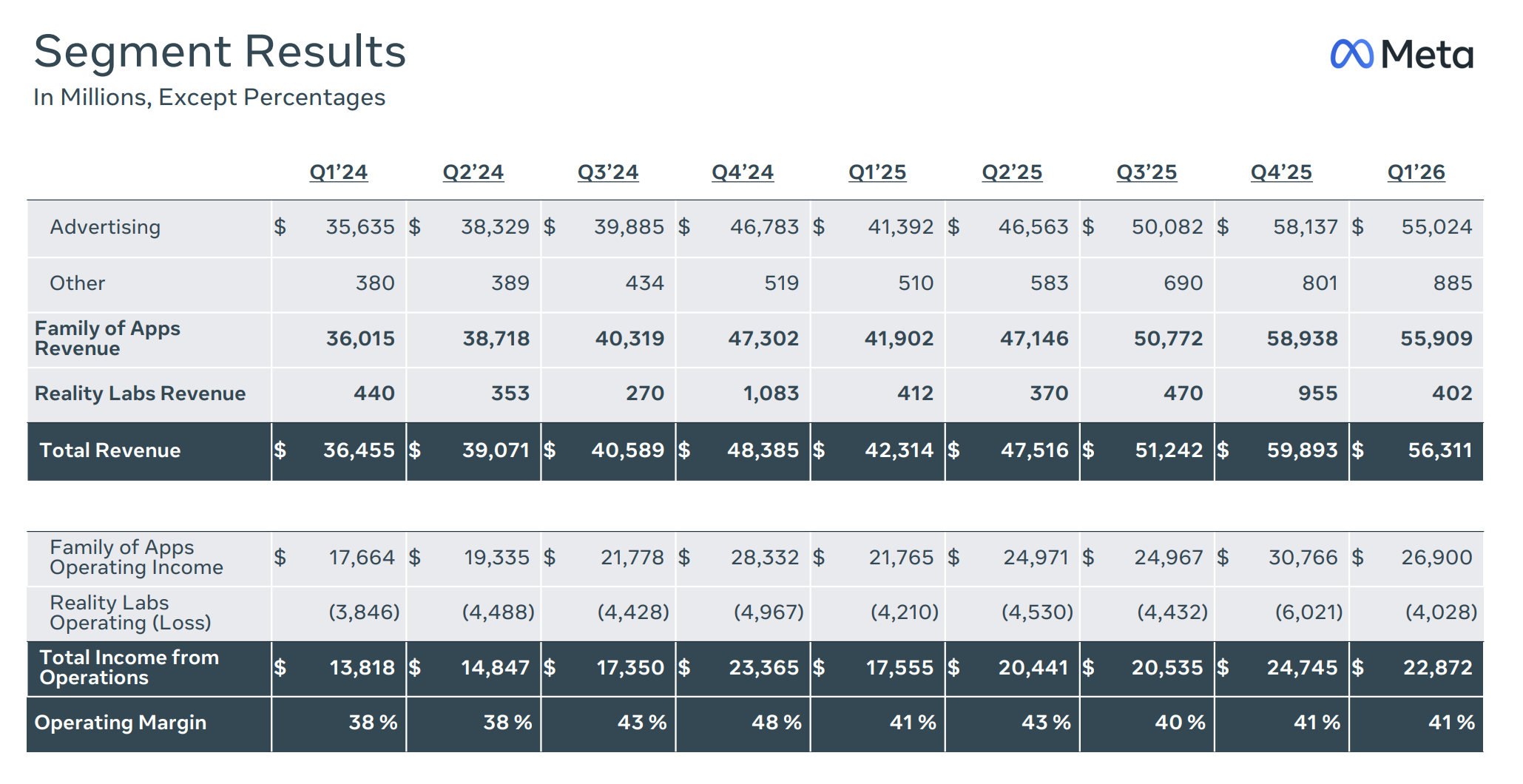
Meta also announced that its revenue for the most recent quarter was up 33% YoY to $56.31 billion, its fastest quarterly growth since 2021. Revenue per person came in at $15.66, beating the $15.26 average analyst estimate.
Elsewhere, Meta's daily active people, or DAP, increased 4% YoY to 3.56 billion, but it was down 5% compared to the previous quarter. Meta said the decline was due to a restriction on access to WhatsApp in Russia and the Iran war.
Investors appeared unimpressed by Meta's willingness to keep throwing money at its AI ambitions. The company's shares fell around 6% following the earnings report, with the increased spending forecast causing concerns despite the strong revenue figures. The reaction mirrors broader fears on Wall Street that Big Tech's AI arms race is becoming increasingly expensive, and that the payoff remains uncertain.
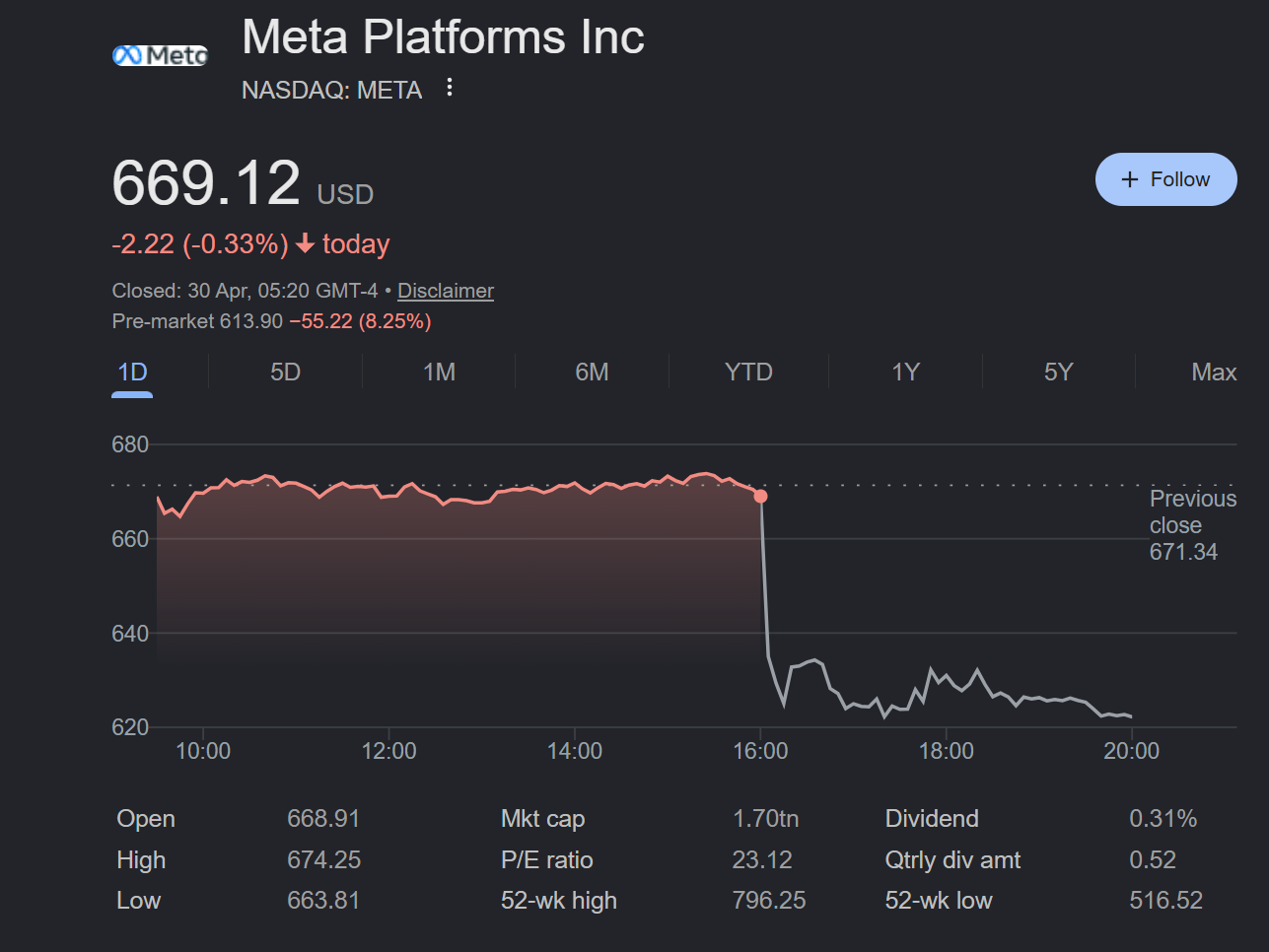
Meta has repeatedly insisted that its AI investments will improve engagement, ad targeting, and long-term growth, but the market's response suggests patience may be wearing thin.