Michael Dell's son and a SpaceX alum want to put battery storage in every backyard

Daniel Sims

Posts: 2,503   +76
Staff
In brief: As energy demands from AI, electric vehicles, and other technologies mount, the tech sector's interest in battery storage has grown sharply in recent years. In the latest example, the son of Dell's founder has teamed up with a SpaceX alumnus to break into the fast-growing home battery storage market.
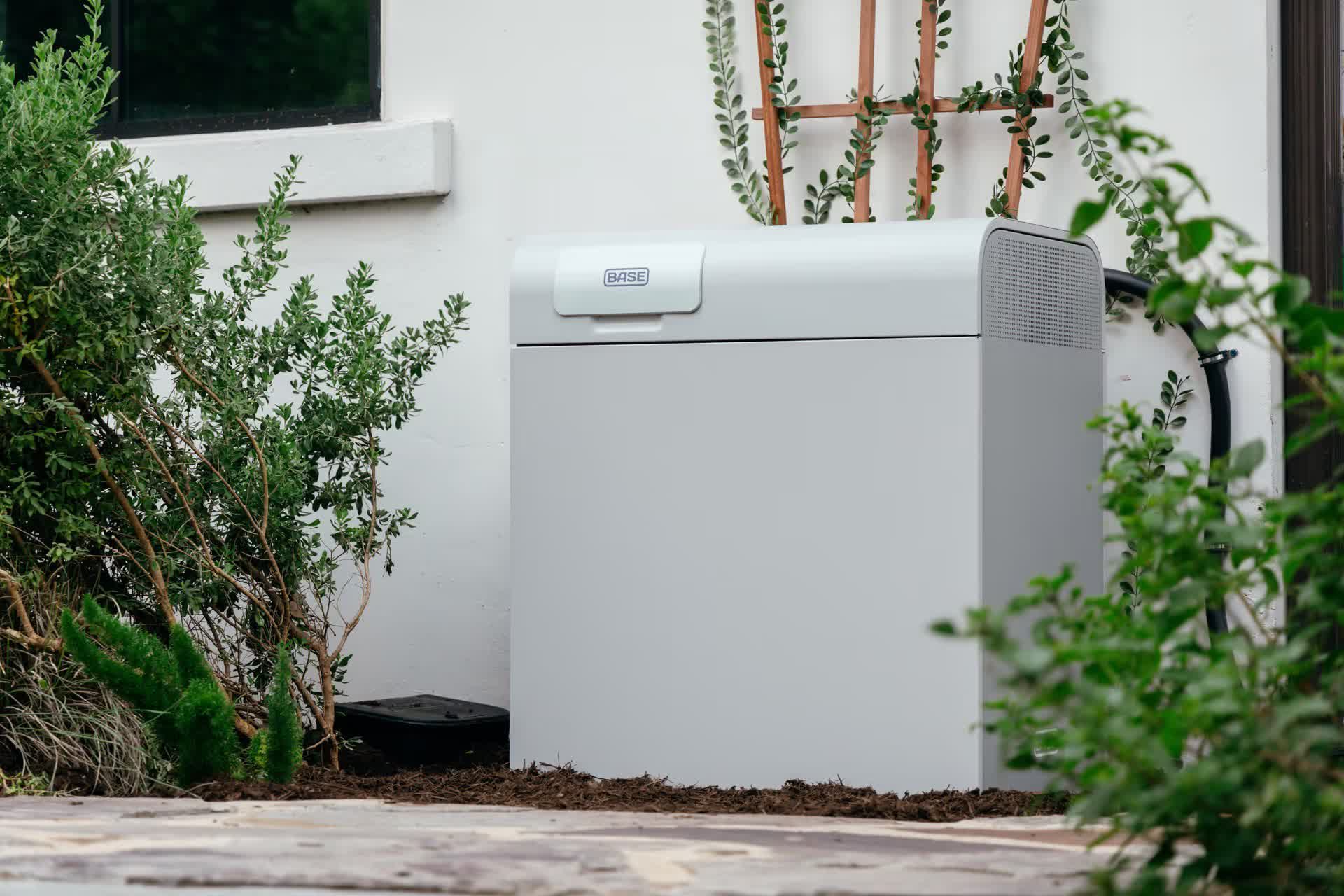
Home battery storage, which can lower electric bills by feeding power back to the grid, is gaining popularity across the US, particularly in warmer regions. A startup led by Zach Dell shows how the industry is expanding options for grid operators.

Although local battery storage has historically been tied to home solar power, the technology is increasingly showing up in homes with or without solar panels. Installing an air-conditioning-compressor-sized battery near a home's electric meter lets homeowners store energy when it's cheap, usually during the day, and helps stabilize the grid during peak hours.

Dell's company, Base Power, installs about 100 39-kWh home batteries a day and expects to double that pace by the end of 2026. So far, it has installed roughly 550 megawatt-hours, on par with a large utility-scale storage project.
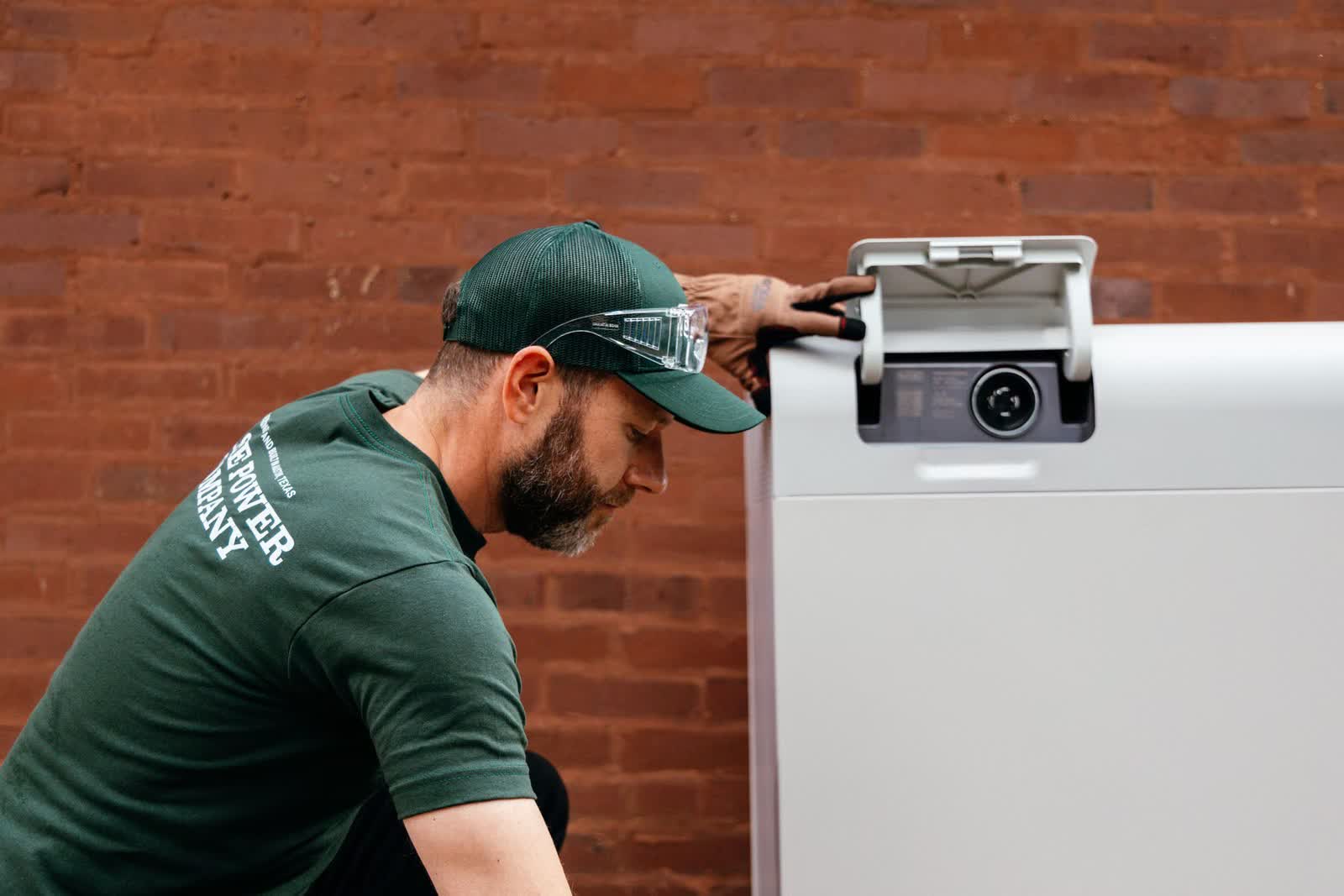
The company is helping drive a broader trend. Partly encouraged by state policy in Texas, California, Arizona, and Hawaii, US homeowners installed a record 673 megawatts of storage in the first quarter of this year, according to the Energy Information Administration.

The American Clean Power Association and Wood Mackenzie report that of the 3.3 gigawatts of power capacity and 8.4 gigawatt-hours of total energy storage the US installed during the quarter, home batteries accounted for 1.3 gigawatt-hours.

The end of federal tax incentives for residential solar and battery installations has made both technologies less economically attractive, but individual states are finding their own ways to compensate homeowners who install batteries. Hawaii, for instance, pays $400 per kilowatt of installed capacity, while California offers recurring payments for contributions to the grid.

Base offers batteries that can power homes for 36 to 72 hours during outages and lower energy bills when connected to the grid. In regions with battery network policies, Base can enter agreements with local authorities; where those policies don't exist, it can double as a home backup battery retailer and an electric grid operator.

Early financial backer Antonio Gracias and co-founder Justin Lopas, both with SpaceX ties, believe Base and similar operations can help the US energy grid power a return to domestic manufacturing. Many also see them as a way to help meet the massive energy demands of AI data centers.

Permalink to story:

 
It's true that nuclear does not emit carbon, but it is the most expensive power out there. Perhaps the small modular reactors can change that, I'm hopeful, but that is yet to be seen. Fusion is still way out there. Batteries are a wonderful technology. I have one and have been pushing them for over a decade, but the prices are still a tad high. It's not just the cost of the hardware, it's the engineering, permitting and labor to get the systems running. State energy tariffs often do not reflect the value added to the grid and public of these systems. For example, where I live in MA there are no Time Of Day (TOD) rates despite the electric utility having to pay much higher rates during peak periods. If homeowners could use TOD rates there would be arbitrage money which could help pay back the installation cost, and the public would benefit from overall lower energy costs of the utility. Thus, even those without battery systems would end up with reduced electric rates. Holding this back is also the utility engineering needed, as a battery system which would put energy back onto the grid requires the same Distributed Generation considerations as solar systems (unless the output of the battery is only used to power the associated home, reducing it's value to both homeowner and the public).
 
But...but...I do not have a backyard!

Oh wait I get it, this is for rich people only.
In the US at least (where this company operates), the majority of the population lives in a single family dwelling, and would have the space to have one of these batteries installed. Apparently, they don't sell these things directly to consumers, but partner with utility companies and make their money through a combination of install fees, monthly fees in some areas, and collecting a portion of the electrical fees. Exact terms vary by location.

For example, their partnership with the utility in El Paso will literally pay people $250 to have one of these installed, and then you just pay your normal electrical bill to the utility. Over in Houston you would pay a $695 install fee and $19 a month membership fee, but would have your electrical price locked in at 13.1 cents per kw-hr for the next three years. With ComEd in the Chicago area, you pay a $95 install fee, then have your electrical bill locked at under 8 cents per kw-hr for two years. Honestly, those prices seem pretty reasonable, I mean if I lived in El Paso or the Chicago area I would get one of these in a heartbeat.
 
In the US at least (where this company operates), the majority of the population lives in a single family dwelling, and would have the space to have one of these batteries installed. Apparently, they don't sell these things directly to consumers, but partner with utility companies and make their money through a combination of install fees, monthly fees in some areas, and collecting a portion of the electrical fees. Exact terms vary by location.

For example, their partnership with the utility in El Paso will literally pay people $250 to have one of these installed, and then you just pay your normal electrical bill to the utility. Over in Houston you would pay a $695 install fee and $19 a month membership fee, but would have your electrical price locked in at 13.1 cents per kw-hr for the next three years. With ComEd in the Chicago area, you pay a $95 install fee, then have your electrical bill locked at under 8 cents per kw-hr for two years. Honestly, those prices seem pretty reasonable, I mean if I lived in El Paso or the Chicago area I would get one of these in a heartbeat.
Thanks for clearing this up a bit. As a EU citizen I was not aware of these things.
 
I'd rather the power company do their job by providing a reliable source of electricity without the help of the customers beyond billing them a fair rate in exchange. I know that must sound crazy today.
 
Thanks for clearing this up a bit. As a EU citizen I was not aware of these things.
That makes me wonder if there would be a market for apartment scaled back up batteries like these over in the EU; would be something to see if apartment complex owners & utilities would interested in.
 
Back