Microsoft gets smart about HDD recycling with robots that extract valuable metals

zohaibahd

Posts: 976   +19
Staff
The big picture: After their lifespan has run its course, those spinning disk platters filled with our digital data must be properly dismantled and shredded to prevent information leaks. Microsoft's data centers also rely on HDDs. However, instead of simply feeding them into industrial shredders once they reach end of life, the company is adopting a smarter approach. It's introducing robots that meticulously deconstruct each drive, extracting the data platters for shredding while salvaging other reusable components.
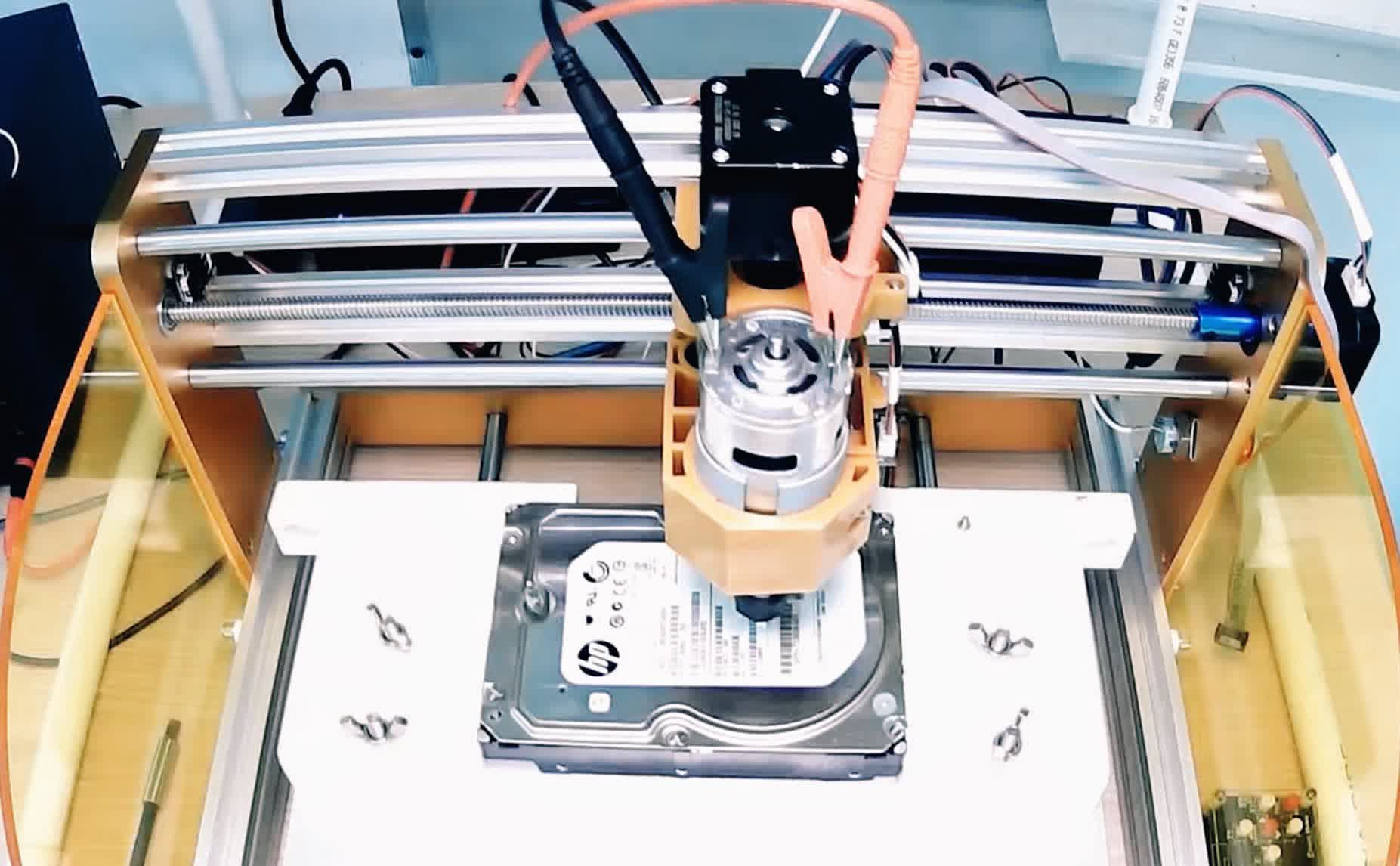
A staggering amount of e-waste is generated by hard drives every year, with up to 70 million of them mindlessly shredded in their entirety. This results in the loss of valuable metals like neodymium, aluminum, and stainless steel. Microsoft aims to change that with this new technique.

The idea first emerged from a 2022 Microsoft hackathon focused on sustainable disk disposal. It's the brainchild of Principal Data Scientist Ranganathan Srikanth, who envisioned specialized "Circular Centers" at Microsoft data center campuses. These facilities can reuse and recycle decommissioned server hardware on-site, with the goal of helping the company achieve zero waste by 2030 and carbon negativity by 2050.

"Utilizing machine learning, these centers will decommission servers onsite, sorting reusable parts for Microsoft, customers, or resale, and applying insights to improve future equipment sustainability," notes a blog post.

The process, as demonstrated by Microsoft in the video below, is fascinating to watch. Robots use computer vision to map out components and remove every screw with precision. The liberated components are then sorted, with the platters containing data sent to an industrial shredder, while everything else – including printed circuit boards and magnets – is prepared for recycling.

Ultimately, the process ensures that valuable materials are diverted from landfills and repurposed, a stark contrast to typical recyclers, who pulverize entire drive assemblies into tiny shards.

Microsoft isn't just implementing this more eco-friendly method within its own operations. The company is taking a leadership role by collaborating with drive manufacturers and governments worldwide. So, while old HDDs may be on their way out, their components are getting a new lease on life.

Of course, using advanced robotics for disk dismantling isn't a novel concept. Earlier this year, data elimination firm Garner unveiled its compact but powerful DiskMantler, which uses a vigorous shaking technique to disassemble drives in just 60 to 90 seconds. Like Microsoft's implementation, this process isolates rare-earth magnets as well.

Permalink to story:

 
Is anyone else a but surprised (in a negative way) that hard drives never became smaller as well?
I mean I know, the first drive was the size of a mobile generator. But it stopped at 3.5 long ago.
Why did nobody think of shrinking the drives, they look, they are the oldest tech in a computer.

A random idea, harvest data from these drives for AI
 
Is anyone else a but surprised (in a negative way) that hard drives never became smaller as well?
I mean I know, the first drive was the size of a mobile generator. But it stopped at 3.5 long ago.
Why did nobody think of shrinking the drives, they look, they are the oldest tech in a computer.

A random idea, harvest data from these drives for AI
Why deviate from a standard? Everything is set up to take 3.5" disks. Afaik there's some benefits as well as the further from the center you get the higher the speed it moves under the read/write heads for faster read speeds. (But go too big and stability becomes a problem)

There's smaller disks, there's 2.5 for laptops and even the super tiny ones back in the day in for example the iPod. It's not like it can't be done, it's just that there's no reason to do so.

I'm pretty sure the data that was on Microsoft's discs is it was useful for AI it was already fed to it. Or the same data is still available elsewhere, no need to dig through the trash for it.
 
I've been salvaging magnets from HDD's for over 15 years. I've got about a grapefruit size pile of magnets.
If I knew what to do with them I would, but I just hang onto them. Use to be nice with the 5" drives. The 3.5's don't have as "beefy" of magnets.
 
Is anyone else a but surprised (in a negative way) that hard drives never became smaller as well?
I mean I know, the first drive was the size of a mobile generator. But it stopped at 3.5 long ago.
Why did nobody think of shrinking the drives, they look, they are the oldest tech in a computer.

A random idea, harvest data from these drives for AI

You should research a bit. There were 5,25” and 3.5” for desktops and after all desktops rely mostly on 3.5” sizes (a good balance between size/weight and capabilities), they moved to improve things while not increasing the size of the package, so that they fit everywhere. But there are since decades ago 2.5” and 1.8” HDDs. But as the tech is very difficult to shrink (movable heads and spinning disks), the offer bigger sizes.

Your question could be: if the problem was mostly the speed, why didn’t they develop 2/4-heads per disk for the consumer space?
 
Is anyone else a but surprised (in a negative way) that hard drives never became smaller as well?
I mean I know, the first drive was the size of a mobile generator. But it stopped at 3.5 long ago.
Why did nobody think of shrinking the drives, they look, they are the oldest tech in a computer.

A random idea, harvest data from these drives for AI

A disc half it's size would only hold about 30% of the data, due to surface area. It is also not efficient, or as fast.

And to your point, Computers don't use Hard Drives anymore, because they are not efficient and use too much physical space.
 
I have dozens of hard drive platters, big and small, and the spacers, and I want to make a "work of art" with them, something like a hanger, that makes them sound in the wind, and put them in a door, very cool.
and a small box filled with the magnets from these hard drives. How much would it cost? although some are useful to me to hold parts and tools in the workshop, lol
I also recover the aluminum from the body and the circuits, along with everything else that I recover here and there, to exchange them at the recycling center for very old parts and pieces that I am looking for and sometimes appear. One thing that is quite difficult to recover is the electric motor. Manufacturers mill the heads of the screws that hold them in place, which makes it very difficult to remove them without damage. I have only been able to do it with a pair. I can then use them to make some "inventions."
they are from the HDDs that I have been recovering and testing, those that are really dead and unrecoverable, those that are not, are in the queue to be recovered because some are just firmware corrupted. They are all IDE, for my old PCs from the 90s, to feed my retro nostalgia
 
Is anyone else a but surprised (in a negative way) that hard drives never became smaller as well?
I mean I know, the first drive was the size of a mobile generator. But it stopped at 3.5 long ago.
Why did nobody think of shrinking the drives, they look, they are the oldest tech in a computer.

A random idea, harvest data from these drives for AI
There were some micro-hard drives the size of a CompactFlash card... look up IBM microdrive, 2.0" × 1.44" × 0.414. They were even sold in consumer products, like the Creative Zen mp3 player.

Anyway as flash storage kept getting faster and with more capacity, hard drives are less of a focus now. Eventually flash or some other storage media will probably kill mechanical drives for good, but we probably got at least another 10-15 years before that might happen.
 
Back