
In brief: It's a rare sight these days to see a tech giant admit it spent less money on capital expenditures than expected. But the $6.5 billion less that Microsoft spent than Wall Street forecast wasn't a sudden outbreak of unexpected restraint. It was delayed data centers that pushed some of its spending back.
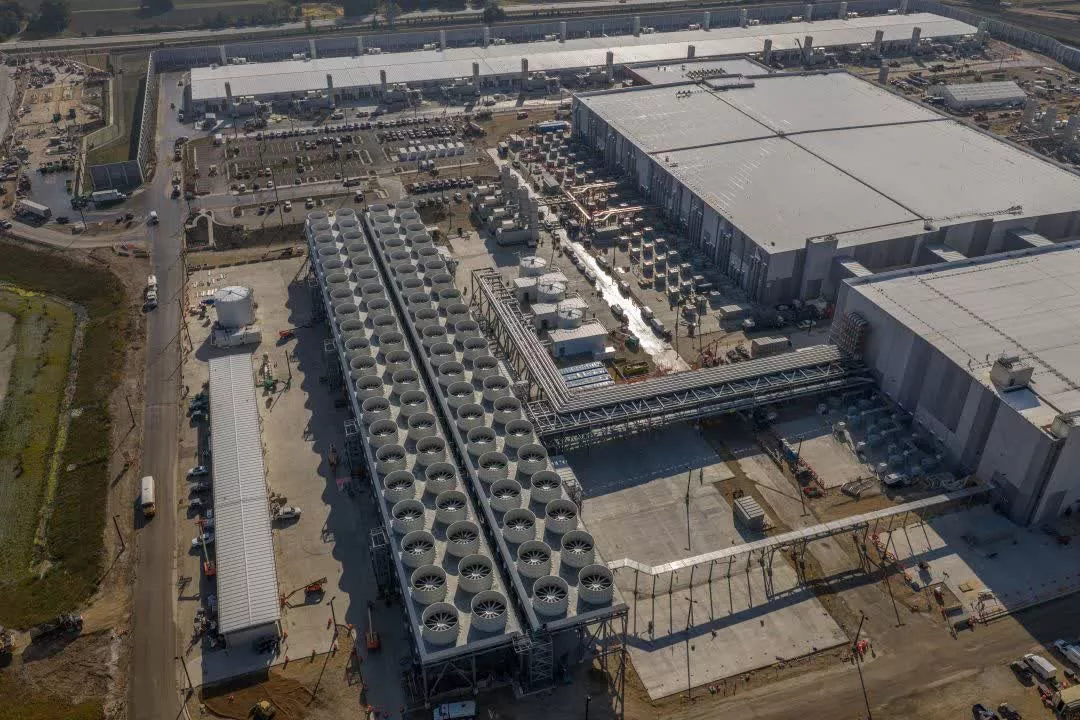
Microsoft spent $45.2 billion on capital expenditures, including finance leases, in the September quarter, compared with the $51.7 billion expected by analysts cited by the Financial Times. That's still around 30% more than a year earlier, illustrating just how expensive the AI infrastructure race has become.
Redmond has now cut its calendar 2026 spending forecast from $175 billion to $170 billion, which is still an astronomical figure, admittedly.
CFO Amy Hood blamed delayed capacity deliveries from third parties, with those facilities now expected online in the second half of Microsoft's fiscal year. Spending will accelerate during that period, primarily because of all-too-familiar rising memory hardware costs.
Microsoft added 24 data centers during the quarter, but it also relies on smaller cloud operators. It's signed more than $80 billion in contracts with CoreWeave, Nebius and Nscale since 2023, according to the FT.
Some projects are struggling. Microsoft recently abandoned an Nscale capacity deal because of power constraints, while a Nebius facility in New Jersey is progressing more slowly than expected.
This sort of problem isn't exclusive to Microsoft. Amazon is stockpiling billions of dollars' worth of Nvidia racks because some facilities lack the electricity to run them. Its roughly $220 billion capital spending budget for this year is $50 billion higher than Microsoft's revised forecast.
Alphabet, meanwhile, is maintaining its $195 billion to $205 billion annual budget. It spent $51.4 billion in the September quarter, also below expectations, and expects spending to increase significantly next year. Its quarterly free cash flow was negative $9.1 billion, continuing a trend from when Google reported its first negative quarterly free cash flow in July.
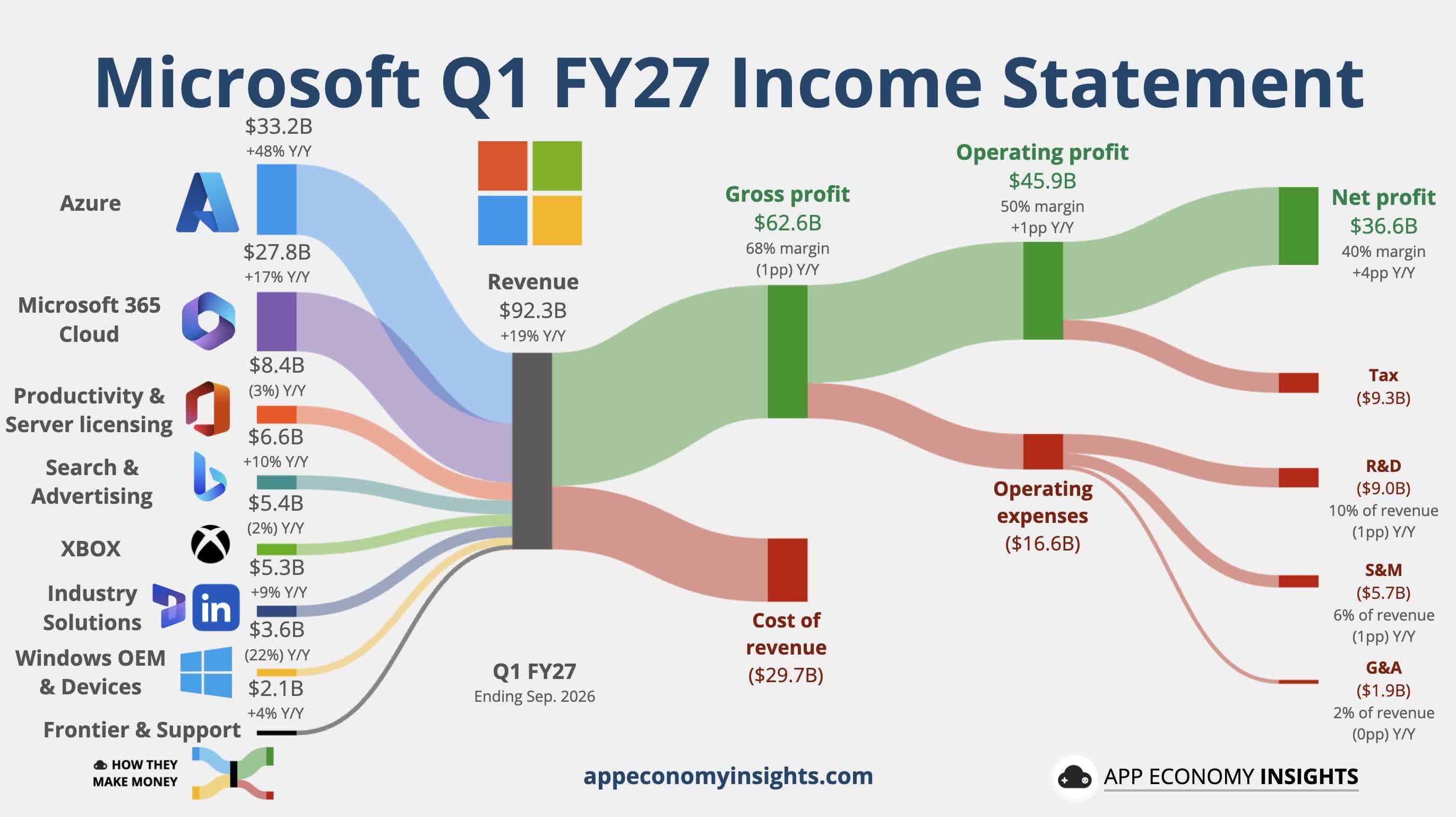
Azure provides some justification for Microsoft's enormous bills. Revenue rose 48% to $33.2 billion, while the company's free cash flow remained positive at $18.6 billion.
The spending push comes as Microsoft continues to reduce staff costs, including making buyout offers to as many as 60,000 employees.
Microsoft spent $6.5 billion less than expected on AI infrastructure, but it wasn't by choice


