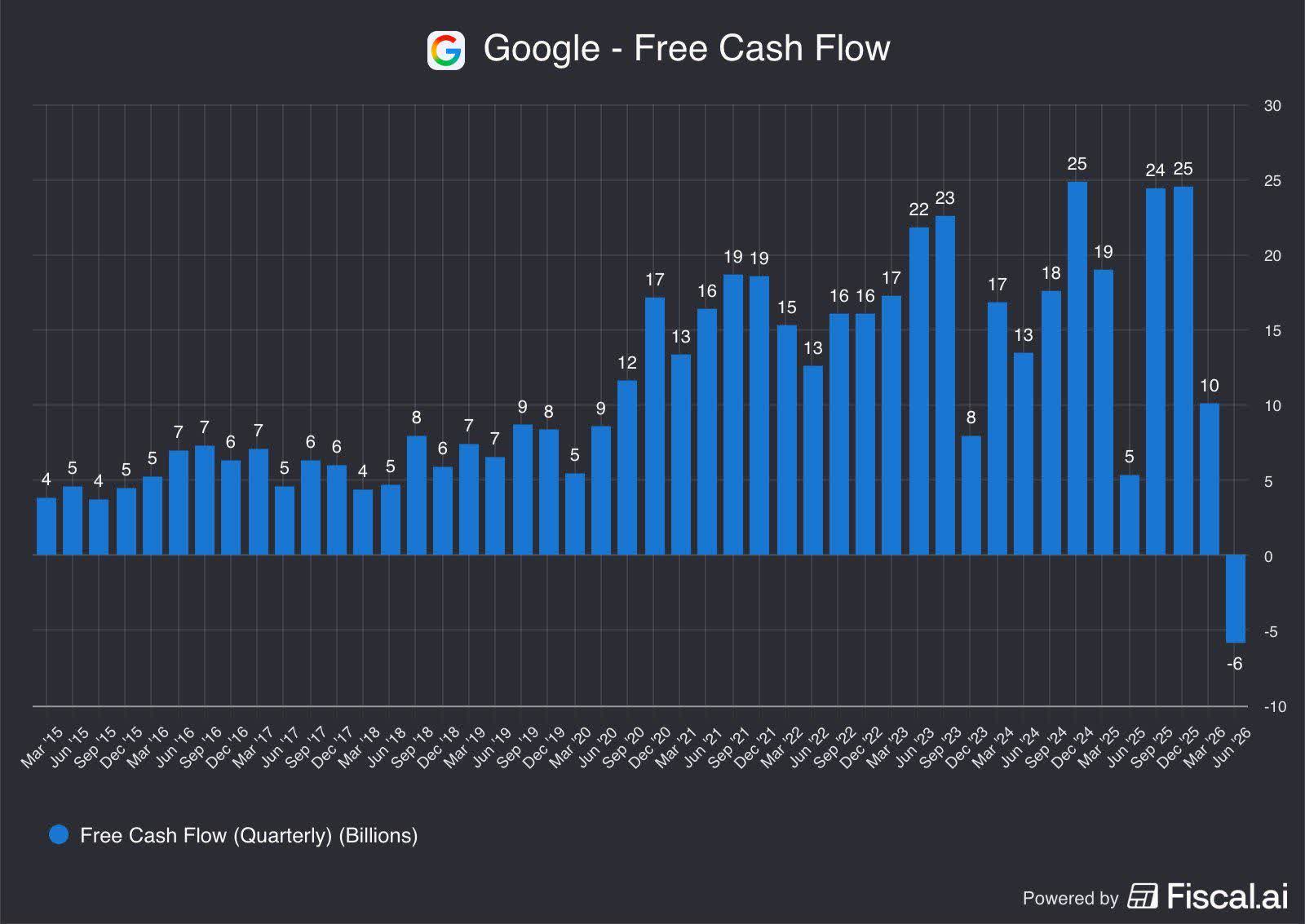
What just happened? In a perfect illustration of how much money companies are pouring into their AI investments, Google has just recorded its first negative free cash flow since it went public more than two decades ago. It comes as the tech giant said its capital expenditure is expected to reach $205 billion this year, up from previous guidance of $180 billion to $190 billion.
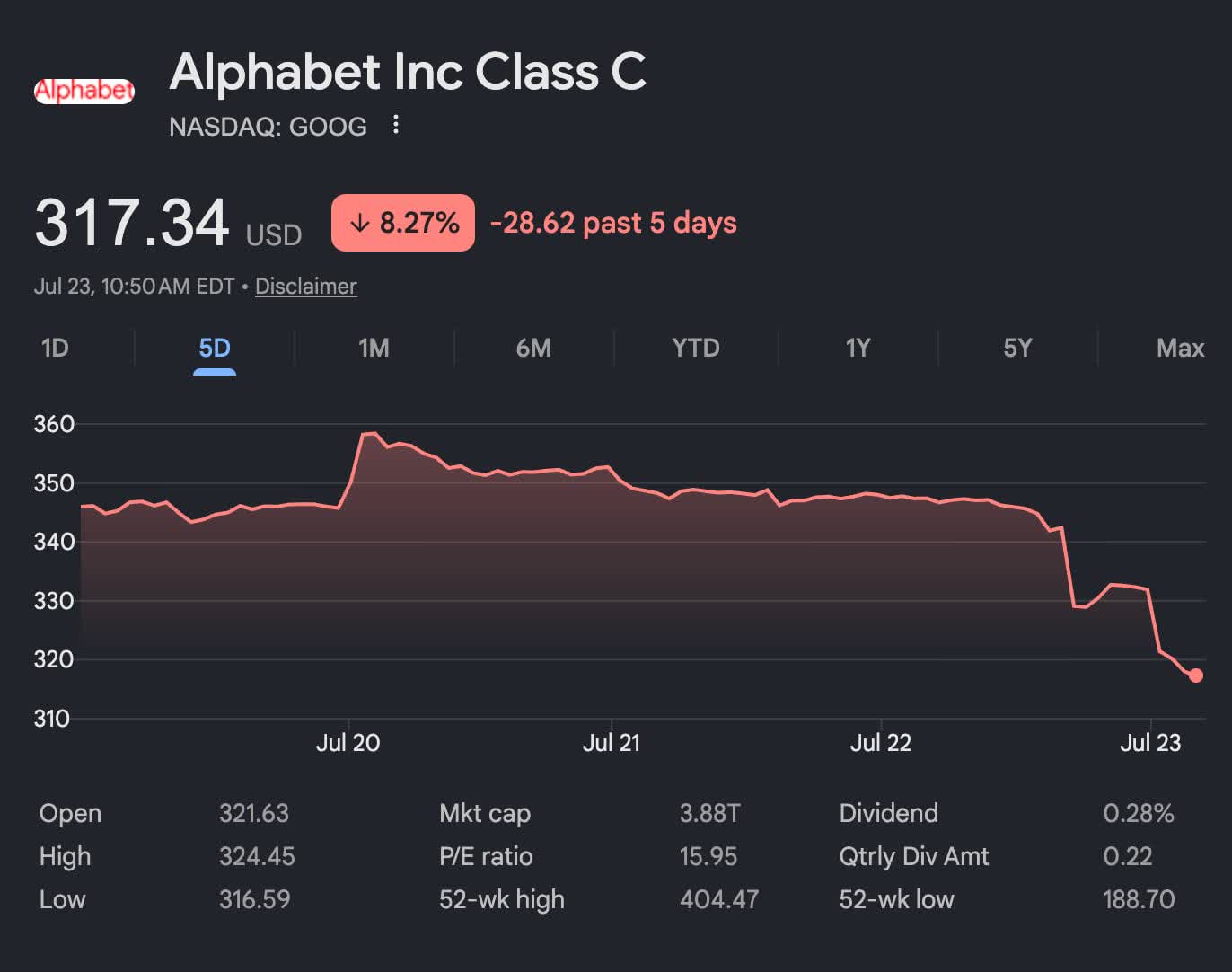
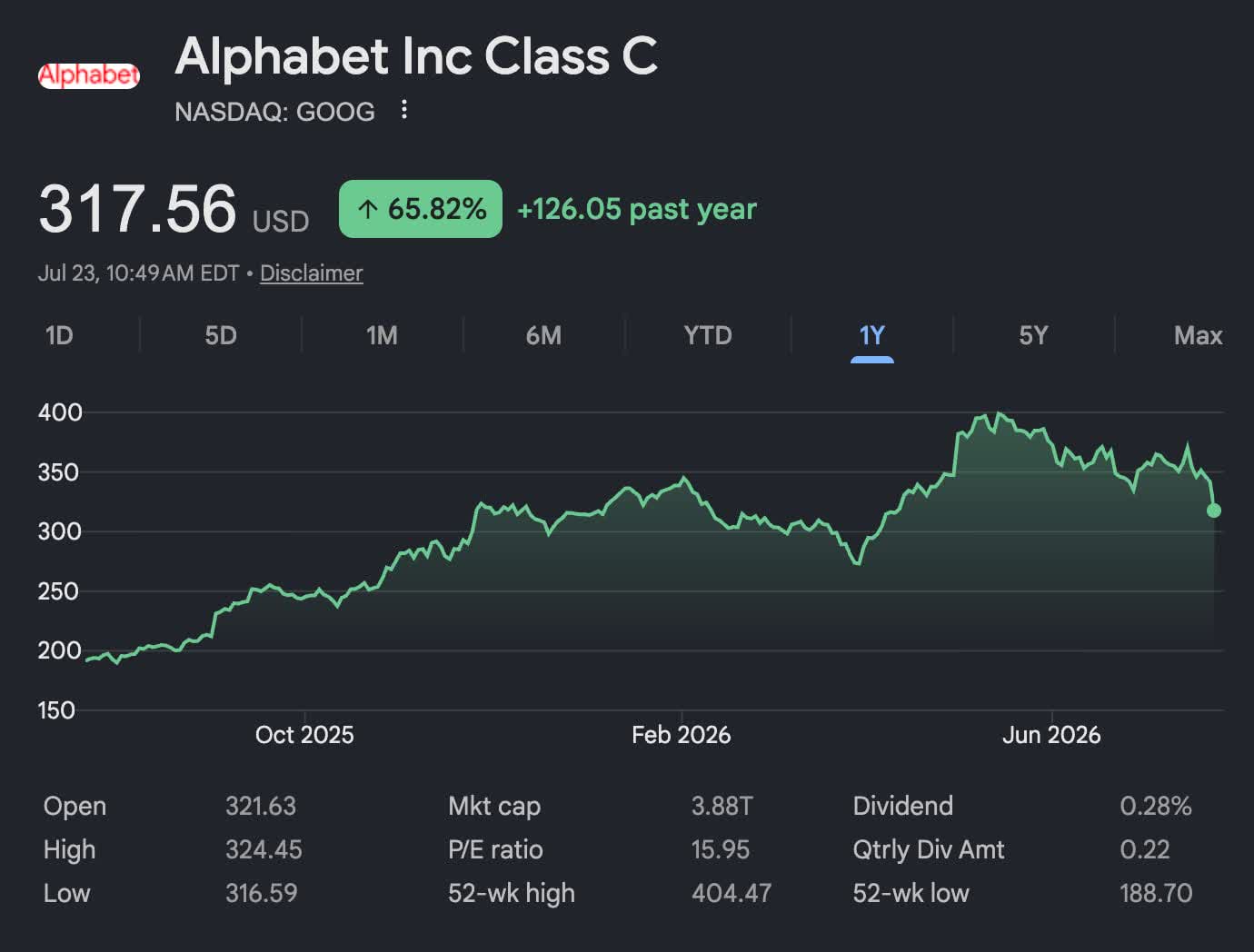
Google said its free cash flow – the cash it had remaining after paying for operations and investments – for the three months to the end of June was at negative $5.9 billion. The revelation, combined with the announcement that it would be spending even more money on AI hardware and infrastructure, sent the company's stock down 4% in after-hours trading.
It's not just this year that Google is planning on spending billions. Anat Ashkenazi, parent company Alphabet's chief financial officer, said capital expenditures will also increase significantly in 2027. Bloomberg expects the figure to reach $262 billion next year.
"We expect that free cash flow will remain under pressure driven by our investments in technical infrastructure, which enable us to capitalize on the AI opportunity and continue to drive attractive returns," Ashkenazi said.
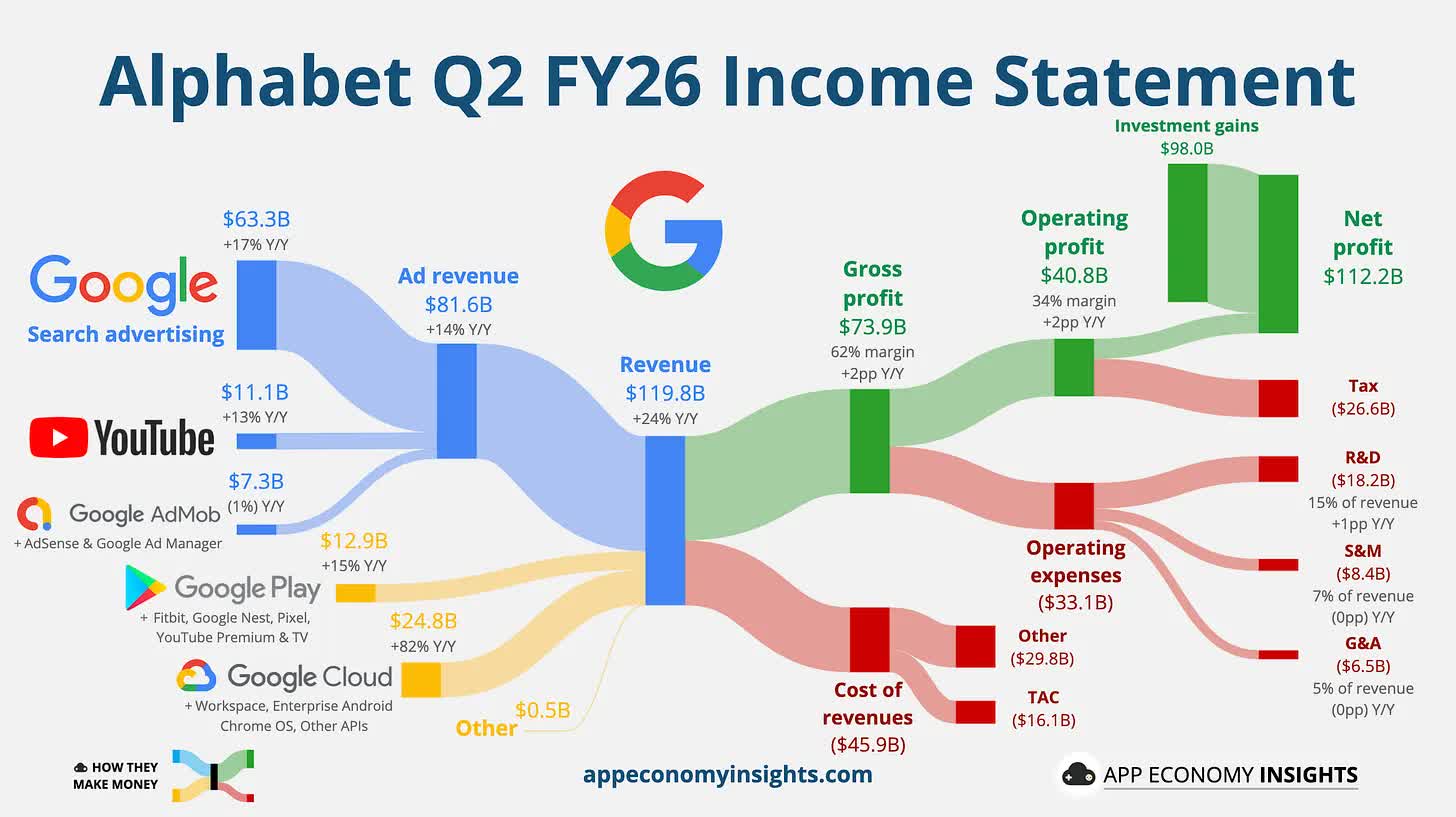
Credit: App Economy Insights

Ashkenazi added that the company spent $45 billion in the second quarter, with 60% of the cost going towards servers and 40% being used for data centres.
Google isn't the only company facing this position; Tesla has also reported negative cash flow of $1.1 billion. It's the first time this has happened in more than two years as Elon Musk's company continues spending billions on AI. Vaibhav Taneja, Tesla's chief financial officer, said its capital spending could more than double this year to as much as $25 billion. Tesla stock also dropped by 4%.
Meta, Microsoft, and Amazon are also expected to see their free cash flow turn negative next year.
Although the trillions being spent on AI are making the industry look increasingly like a bubble that's getting ever closer to bursting, Ashkenazi insists that AI demand still outpaces the investments being made.
"As long as we see these attractive opportunities to invest, we will continue to invest," she said.
Google CEO Sundar Pichai admitted that most users aren't yet experiencing many benefits from the obscene amount of money being spent on AI. "What I see with what you can do with frontier capabilities, there is still a lot of work left to do to translate that into experiences for our users. So that looks like extraordinary opportunities with extraordinary returns."
The rising cost of memory, which is ironically being driven by the AI craze, is contributing to these higher capital expenditures. But investors are becoming increasingly worried about all this money being spent for little return.
Big names within the industry are trying to calm fears. Nvidia's Jensen Huang believes agentic AI will cause hyperscalers' cash flow to grow, while Adata chairman Chen Li-bai thinks we shouldn't even be discussing the subject of an AI bubble until 2040 or even 2050.
It was reported yesterday that Amazon, Meta, Microsoft, and other US tech giants are carrying a collective "hidden" debt of over $1.65 trillion, driven largely by massive spending on AI infrastructure.