Missile-grade magnets at risk as China tightens grip on rare earths

Skye Jacobs

Posts: 2,039   +59
Staff
In a nutshell: Tomahawk missiles and other precision-guided weapons rely on magnets that can withstand extreme heat, a requirement that has left the US defense industry exposed as China tightens its control over the rare-earth metals needed to produce them. China supplies nearly all of the world's samarium, a material used primarily in military applications. Magnets made from samarium can tolerate temperatures high enough to melt lead without losing their magnetic properties, making them essential components in high-speed electric motors, missile nose-cone guidance systems, and advanced aircraft.
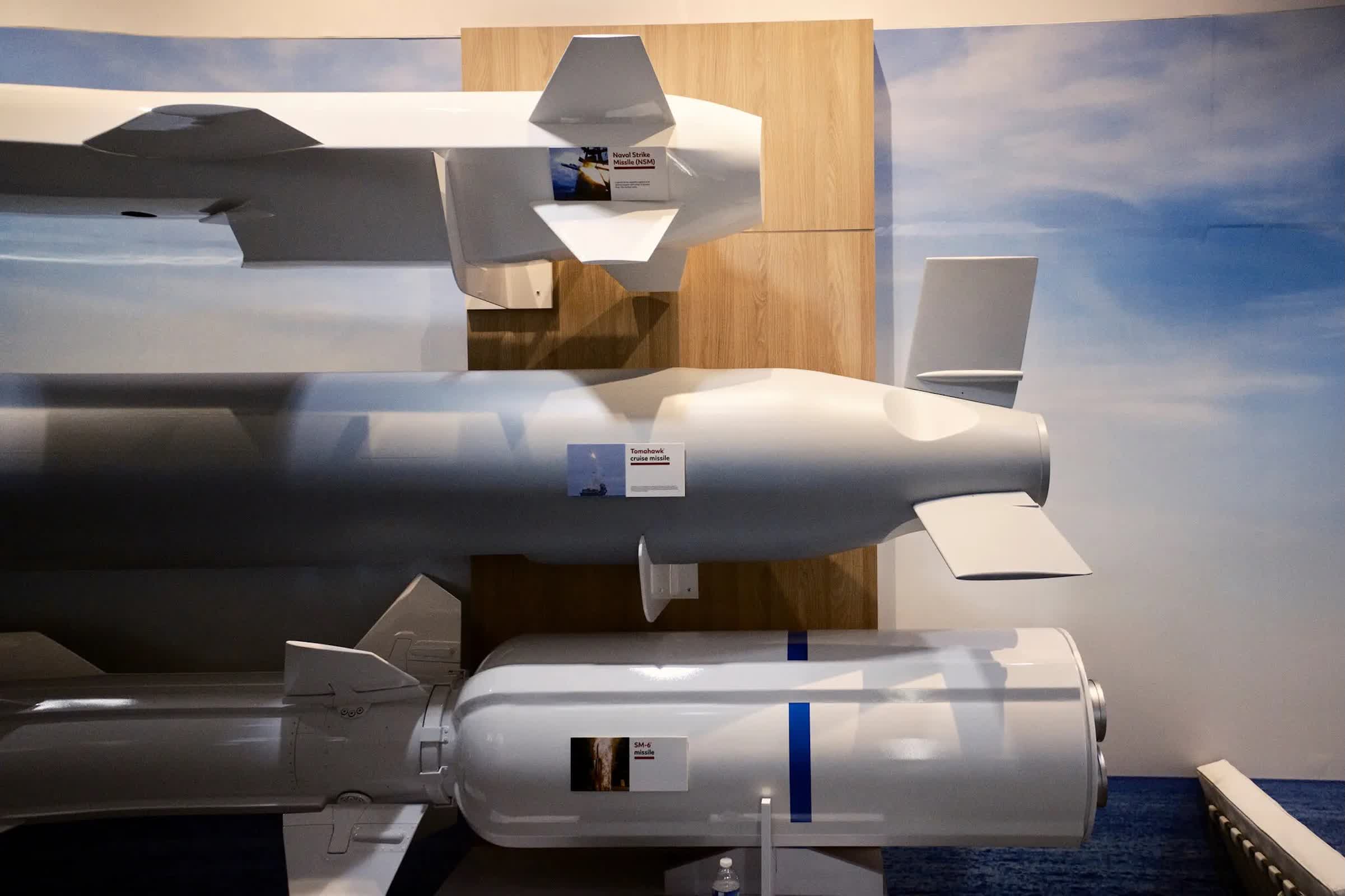
As Beijing's new licensing rules on samarium and related materials restrict exports of these heat-resistant magnets, America's ability to produce precision-guided munitions has come under pressure. That squeeze has prompted the Trump administration to rely on a short-term workaround built around a French samarium stockpile, while racing to secure new non-Chinese sources before the reserve is exhausted.

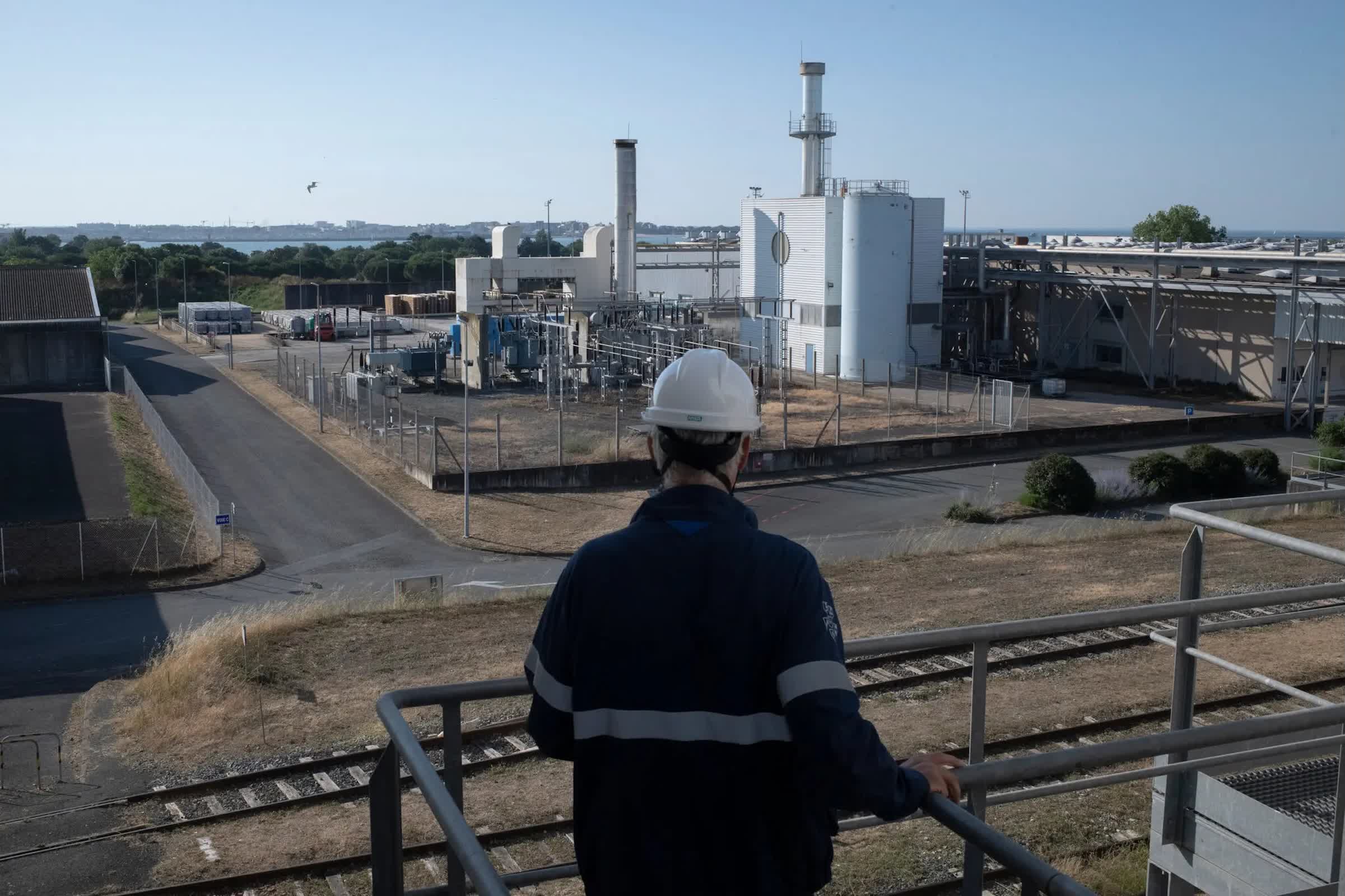
To keep production moving, a deal involving two European companies opened an alternative supply channel. The material came from samarium nitrate that had been sitting for decades at a factory in France owned by Solvay, a Belgian chemical company that was once among the world's largest producers of rare-earth oxides.

Although Solvay stopped separating rare earths in France roughly 20 years ago because the operation had become "uneconomical," a company spokeswoman told The New York Times that Solvay retained its stock of semi-finished material and still possessed the expertise and equipment needed to refine it into a usable form.

Solvay helped pioneer solvent-based processes for separating the 17 rare-earth elements, and those capabilities allowed the company to convert the old samarium nitrate into feedstock suitable for magnet production. Less Common Metals, a firm near Liverpool, England, operated an older furnace capable of processing the refined samarium into metal. Together, Solvay's separation facilities and Less Common Metals' furnace enabled the European partners to transform a decades-old cache into fresh samarium-cobalt alloy inputs for US suppliers.
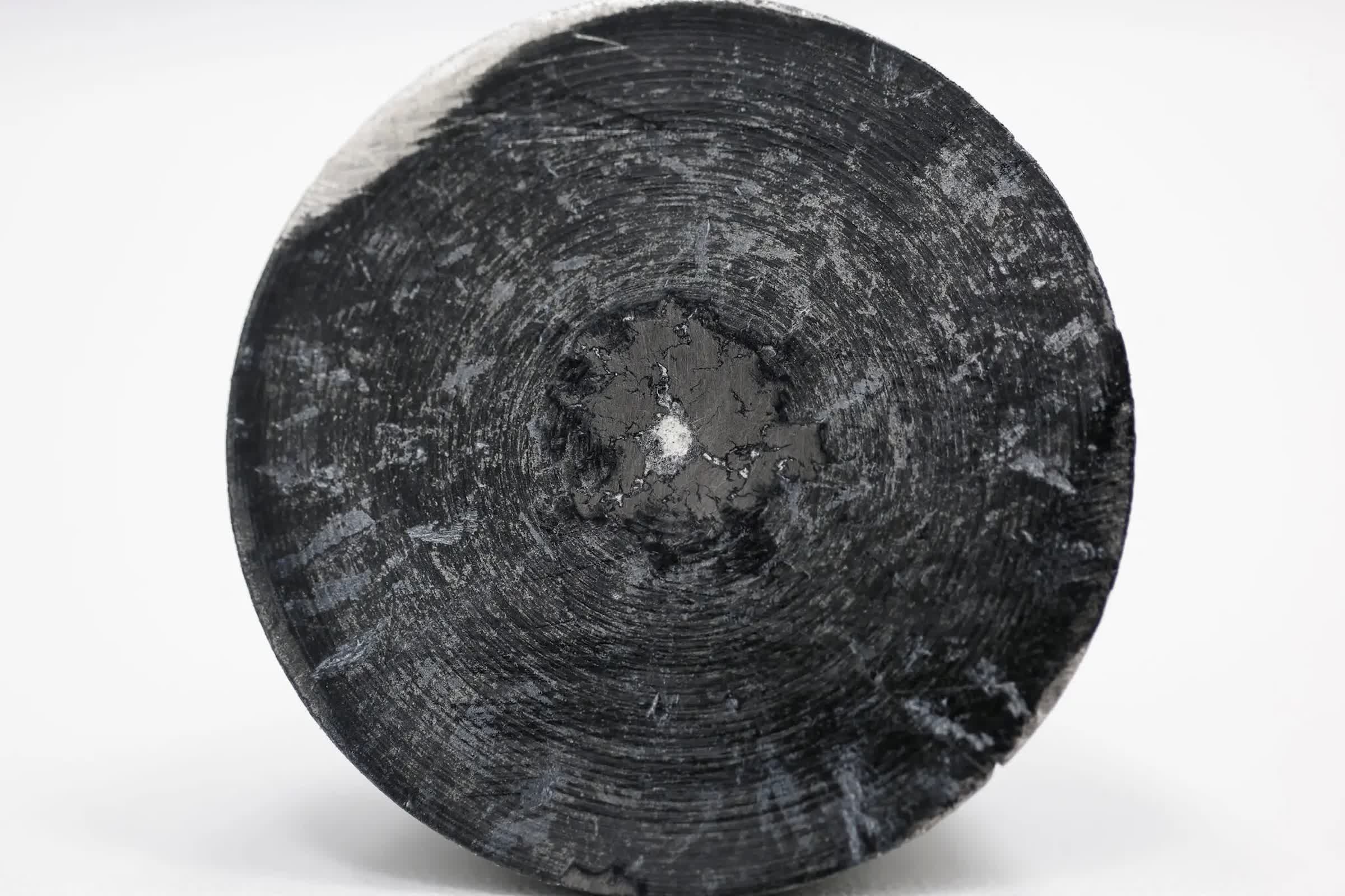
Arnold Magnetic Technologies, a Rochester, New York – based manufacturer of samarium-cobalt magnets, had built up more than a year's worth of samarium before China announced export controls on April 4. As that buffer began to shrink, Arnold turned to Grant Smith, chairman of Less Common Metals, who had already identified a Solvay stockpile in France as a potential non-Chinese source. Smith then assembled a group of buyers – including Arnold and Permag, the owner of longtime US defense supplier Electron Energy Corporation – forming a de facto buyers' club to justify processing the entire cache.

Smith arranged for Solvay's samarium to be shipped to Britain, where Less Common Metals is converting it into metal that will later be melted into alloys. Customers will press those alloys into blocks, which US factories will cut into magnets. The finished magnets are then integrated into motor systems inside fin actuators, which adjust a missile's trajectory by moving its fins during flight.

Smith estimated that Solvay's stockpile would supply his American defense-industry customers for more than a year, describing it as a temporary bridge while longer-term sources are developed.

US officials have worried about dependence on China for rare earths for more than a decade and have made repeated attempts to rebuild a domestic supply chain. The National Defense Authorization Acts of 2023 and 2024 gradually tightened restrictions on the use of Chinese rare-earth materials in US weapons systems, requiring such components to be free of Chinese content by January 1, 2027.

Enforcement, however, has been uneven, largely because viable alternatives were not yet available. In 2023 and 2024, when magnets were supposed to be made from non-Chinese sources, Lockheed Martin disclosed to the Pentagon that F-35 Joint Strike Fighter jets still contained Chinese-made magnets. The revelation led the military to halt production for months before ultimately issuing a waiver. Around the same time, Raytheon's parent company, RTX, warned in a Securities and Exchange Commission filing that "emerging laws and increasing regulatory requirements aimed at global supply chains may impact our ability to access certain materials."

China's suspension of samarium exports has given Beijing additional leverage over the United States and its allies at a moment when trade and security tensions are already elevated. During trade talks in London, China used its control over rare-earth magnet supplies to gain negotiating leverage with the Trump administration and the European Union.
The problem is acute. Aisha Haynes, a former Defense Department official responsible for supply chain issues, warned that unless new sources of samarium or viable substitute materials are developed, American manufacturers will be unable to produce fighter jets or precision-guided missiles at current levels.

The Trump administration has provided MP Materials, which owns a rare-earth mine in California, with a $150 million loan to expand its processing facilities to handle samarium as part of a broader multibillion-dollar initiative. The administration has also extended an $80 million loan to ReElement Technologies, an Indiana-based company using a novel technology to process samarium. In addition, Ucore Rare Metals, a Canadian firm, has received $22.4 million in grant funding from the US military to build a facility in Louisiana dedicated to producing samarium and gadolinium using a new processing method.

Government backing, however, does not guarantee results. In 2023, Lynas Rare Earths, an Australian mining company, received a Defense Department contract to build a rare-earth processing plant in Seadrift, Texas, but the project was never completed. Instead, Lynas is expanding an existing facility in Malaysia, where it aims to begin separating samarium and other metals by April.

Amid the scramble, there is at least one potentially hopeful development. USA Rare Earth, founded in 2019, has announced plans to build a processing facility in Stillwater, Oklahoma, and recently cleared the final regulatory hurdle to acquire Less Common Metals, Smith's company. If completed, the deal would place a rare Western samarium metallization capability under the control of a US-focused rare-earth developer at a time when the Solvay stockpile is finite.

Image credit: The New York Times

Permalink to story:

 
It’ll be interesting to see if and how this shortage of samarium could end up being a positive catalyst for the U.S. to reduce its dependency on China. It’s about time we improve our own rare-earth capabilities. Sure, it might be tight for defense industries in the short term, but we really need to invest in building up our own supply chains. Relying on foreign sources, especially ones controlled by China, isn’t sustainable.

Honestly, I see this as likely a net positive for us in the long run—pushing for alternatives that lead to a more self-reliant, secure U.S. military and tech sector. Adversity always breeds a stronger animal, and military adversity outside of an active crisis only strengthens military readiness.

Historically, that's been one of the best deterrents against large-scale global conflicts anyway (the Putin’s of the world only attack those they see as weak)—which I’m certain is something the vast majority of the world would love to continue to avoid for as long as possible.
 
It’ll be interesting to see if and how this shortage of samarium could end up being a positive catalyst for the U.S. to reduce its dependency on China. It’s about time we improve our own rare-earth capabilities. Sure, it might be tight for defense industries in the short term, but we really need to invest in building up our own supply chains. Relying on foreign sources, especially ones controlled by China, isn’t sustainable.

Honestly, I see this as likely a net positive for us in the long run—pushing for alternatives that lead to a more self-reliant, secure U.S. military and tech sector. Adversity always breeds a stronger animal, and military adversity outside of an active crisis only strengthens military readiness.

Historically, that's been one of the best deterrents against large-scale global conflicts anyway (the Putin’s of the world only attack those they see as weak)—which I’m certain is something the vast majority of the world would love to continue to avoid for as long as possible.
It was both immoral and extremely stupid to ship entire industries to China. It was just greed that like an addiction cannot see or accept the negative outcomes of it as a disease.
We, as in the West, need to share the weight of running these dirty and sometimes harmful industries.
You sell us this resource, you mine that. And yes, this is a good time to get closer to EU and be better friends with them.
But the main reason it is not happening is the reason that we struggled since 2016--many of us are choosing between 2 evils. And when it comes to things like being forced to accept someone else's ideology or ruining good relationship with UE, many including me say f**k EU.
 
has been the way of USA powers since ever, starting with its "backyard", and currently is pushing hard for it again
Sure there, chief. Arguing morals in military power and global politics misses every reasoned point entirely. The hard truth is, every country—especially military powers—push their own interests. To suggest that there’s anything morally pure about these dynamics is unbelievably naïve.

Anyone who has traveled extensively knows that most people and countries have a substantial respect for the U.S. and, in fact, are more often than not confused by how much self-loathing for their own country Americans have. They also understand that every nation plays the same game of securing power and influence.

It’s not about pacifist ideals or fairness; it’s about strategic advantage. Pretending otherwise is for those who can't see the world for what it really is. Global dynamics are driven by interests, not idealism.
 
It was both immoral and extremely stupid to ship entire industries to China. It was just greed that like an addiction cannot see or accept the negative outcomes of it as a disease.
We, as in the West, need to share the weight of running these dirty and sometimes harmful industries.
You sell us this resource, you mine that. And yes, this is a good time to get closer to EU and be better friends with them.
But the main reason it is not happening is the reason that we struggled since 2016--many of us are choosing between 2 evils. And when it comes to things like being forced to accept someone else's ideology or ruining good relationship with UE, many including me say f**k EU.
I hear you, but the world is more complicated than that, man.

It's too easy to reduce this to a story of "greed" and "immorality." The decision to offshore industries wasn't just some addiction to profit—it was a result of complex global shifts and strategic economic choices made over decades. I mean, really, the world just isn’t about evil corporations shipping jobs for the sake of greed—it’s just how global trade, competition, and the push for cheap labor work. Millions of people making individual decisions that reshape economies over time.

IMHO, people acting like this was all just some "greed-driven" singular decision are seriously missing the bigger picture—this was part of the broader economic structure that everyone, from governments to consumers, leaned into. And not just in the U.S., globally.

Now, I get the frustration with the EU, and yes, there’s a need for the West to step up and not offload dirty industries onto other countries. But framing this entire issue as a struggle between two evils or ideological extremes simply doesn't do justice to the complexity of global economics or geopolitics. The reality is that we’re caught in a web of competing interests and difficult choices. It’s not about rejecting one side or the other—it’s about balancing national security, economic interests, and our role in a global system.

This whole "us vs. them" mindset is such an oversimplification and just adds noise making it harder to find real communication with each other on the how-to’s. It offers no value and only prevents dialogue that might lead to realistic solutions. It’s as much a part of the problem as “greedy corporations” and power-brokers. In fact, both of those only grow stronger in that environment.

The world simply doesn’t operate in neat moral categories—it’s messy, with big winners and big losers. And society requires a nuanced approach to fix the problems it has, and continues, to create. The sooner we stop reducing things to simplistic moralistic posture-battles, the better chance we have at actually addressing issues in society effectively.
 
Europe should terminate the parasitic samarium arrangement immediately and conserve the material for its own future needs. China is absolutely right to choke off the parasitic rare-earth contracts, they were just empowering US's territorial ambitions.

Hopefully Europe finds a way to deepen the relationship with China now that the inevitable and long overdue US-EU decouplement is coming. Though obviously the Chinese got plenty of market tricks that we need be careful with.
 
Last edited:
I think this is more about the broader picture, if anything. Business goes on as usual, but when different factors arise, they don’t necessarily prevail. What could be a bigger factor than wealth? I reckon China wants to step up in shaping the world. Different minds in the USA have recognized that China understands the military is not only about business, but also a shape-forming entity that can change the world.
Is this a sign that China has developed military technology that could surpass what the West has? But who would they sell it to, and what would that help them achieve? The world is already harmonized to some extent, but economics alone would not change the dynamics.

Maybe the military is a tool to stabilize the economy over the long term. Or perhaps very powerful technology is emerging worldwide. Are they close to a quantum breakthrough? AI superiority? Fusion energy? I doubt they would risk the rare-earth business on such a large scale if they didn’t have something bigger to gain.
 
Last edited:
I am surprised that France allowed the deal to sell off the samarium considering how the Orange man has been insulting Europe recently.
 
As reality proves, all sanctions are short-sighted, naturally, as they all come from politicians and not from people who make sense.
 
I am surprised that France allowed the deal to sell off the samarium considering how the Orange man has been insulting Europe recently.
Honestly, while Trump’s rhetoric has definitely caused some friction with Europe (and beyond), governments typically think much more long-term—well beyond any single presidency. Our politics shift from president to president quite a bit. The majority of international decisions—especially in terms of business or resources—are made based on practical considerations, not political drama.

France likely made this deal because it serves their national interest, regardless of who’s in office in the U.S. Trump’s last term is a lame-duck and mostly performative. He certainly isn’t moving much of a practical needle outside of a media circus. Trump’s time in office simply won’t have the lasting influence some might expect when it comes to international trade and resource deals. Politics moves quickly, and governments tend to focus on future stability and partnerships that are based on the kinds of numbers and moves that aren’t worth reporting because it’s dry and undramatic (if it bleeds, it leads). They’re much longer-term perspectives, not just the next few years.
 
I guess this means if we do want China wants they will more easily send us Chinese junk. We do not need China. They need us to buy their junk and you know it's junk
 
He certainly isn’t moving much of a practical needle outside of a media circus.

He has done more positive for the US and the world then you can comprehend.
My current favorite is drying up the drug supply from narco terrorists. Get them before they get us
 
Last edited:
Anyone who has traveled extensively knows that most people and countries have a substantial respect for the U.S.

Spoken like someone who hasn't left his neighborhood since 2016.

These days, US tourists are denying they're Americans and many are in fact claiming they are Canadians when traveling....!!

If you'd read European and international newspapers (which I doubt) , the US is regarded as nothing but an unreliable, evil Third World Country with a big army...engaged in stealing resources from small countries. Our allies in Europe has learned not trust the US with anything vital, and regard it as a country that doesn't keep it's treaties or its word. So much for respect!

A recent study found the US passport to be one of the least desirable ones and on the same level as those banana republics your leader keeps making fun of!

"substantial respect"?? The exact opposite actually, except for those living in full denial and regurgitate the Faux Noise "alternate truth"!
 
Back