
Sounding off: We hear a lot about US views of AI and its effect on jobs, but does the rest of the world agree? Yes, according to a new global Pew Research Center poll, which found that more people in 34 out of 37 countries believe AI will lead to fewer rather than more jobs.

The US was the third most pessimistic nation when it comes to AI's effect on the workplace, with 71% of participants saying it will lead to fewer jobs in the country over the next 20 years. Only South Korea and Australia, both on 76%, were higher.
Across a 37-country median, 46% said there will be fewer jobs, 13% said there wouldn't be much difference, 9% said there will be more jobs, and 25% weren't sure.
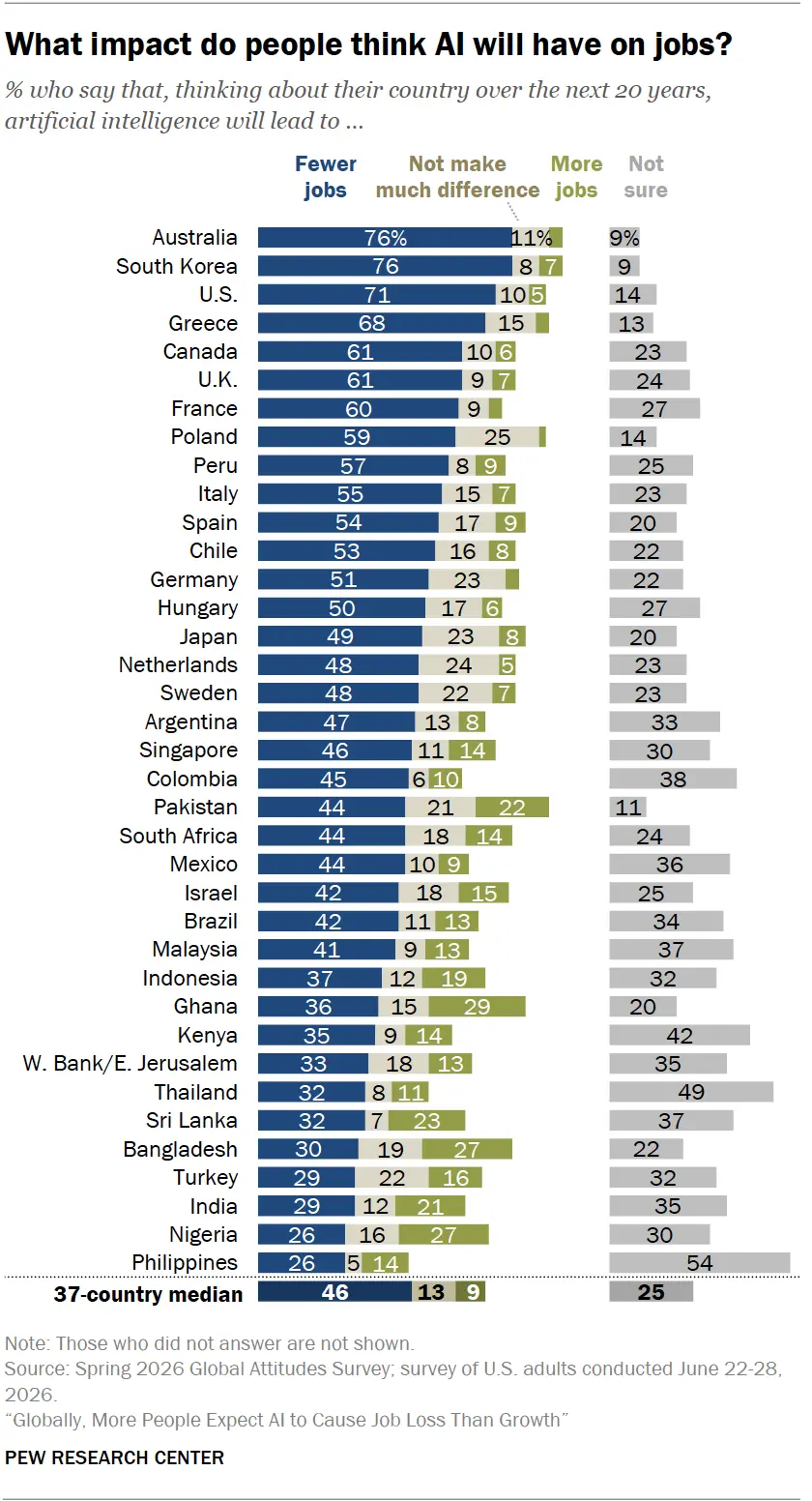
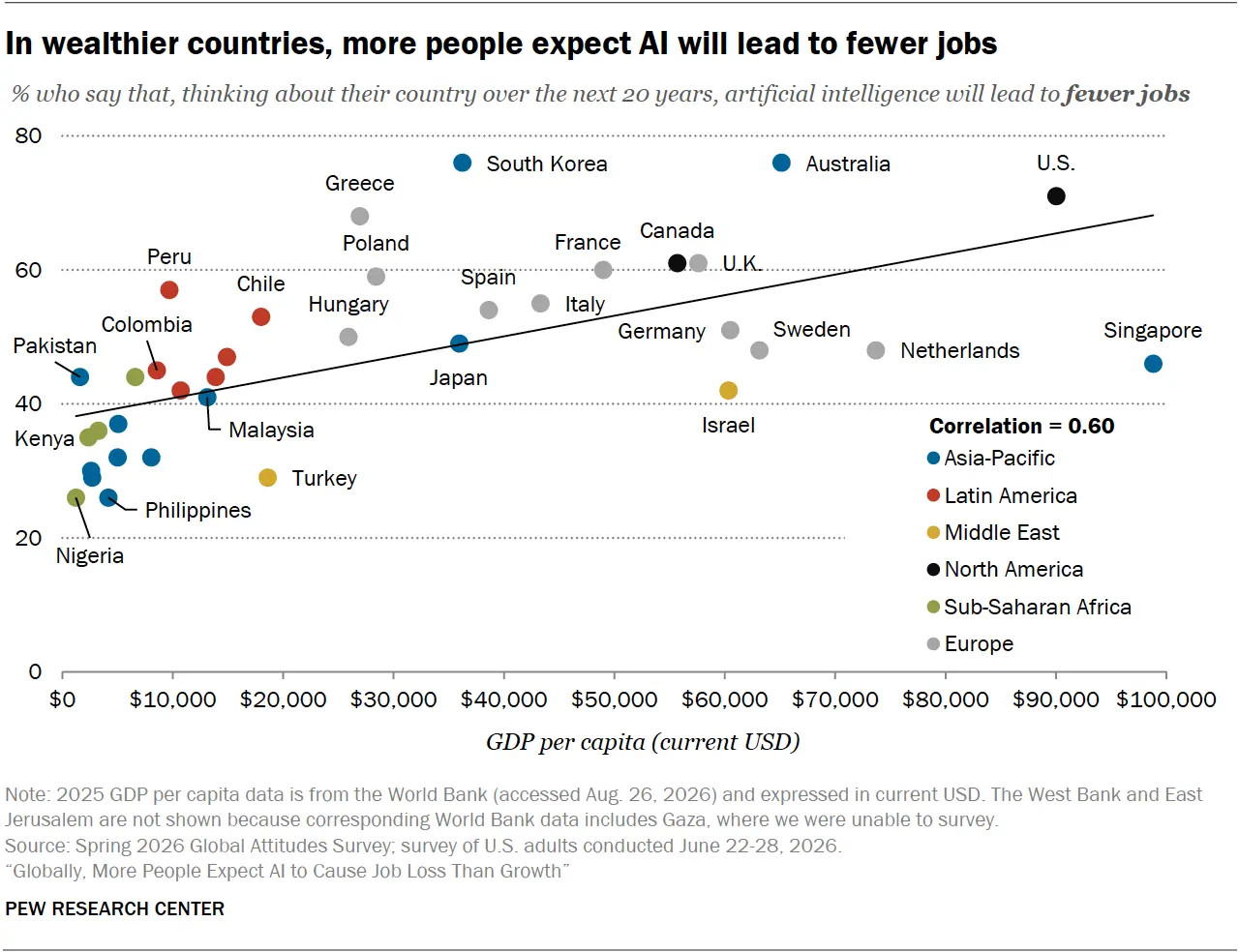
The table illustrates the disparity between nations with higher and lower GDPs. The "fewer jobs" result is much lower in poorer countries: Nigeria was the only one to believe AI will create more jobs (26% vs. 27%), while more people in Thailand and the Philippines picked the "not sure" option. It's likely that this is a reflection of fears in wealthier regions that AI will take mostly white-collar jobs – as Dario Amodei predicted.
Interestingly, the only country where Pew has asked this question before is the US. Over the past two years, the share of people who believe more jobs will be lost from AI has increased 7 percentage points, showing that fears are intensifying rather than easing in the States.
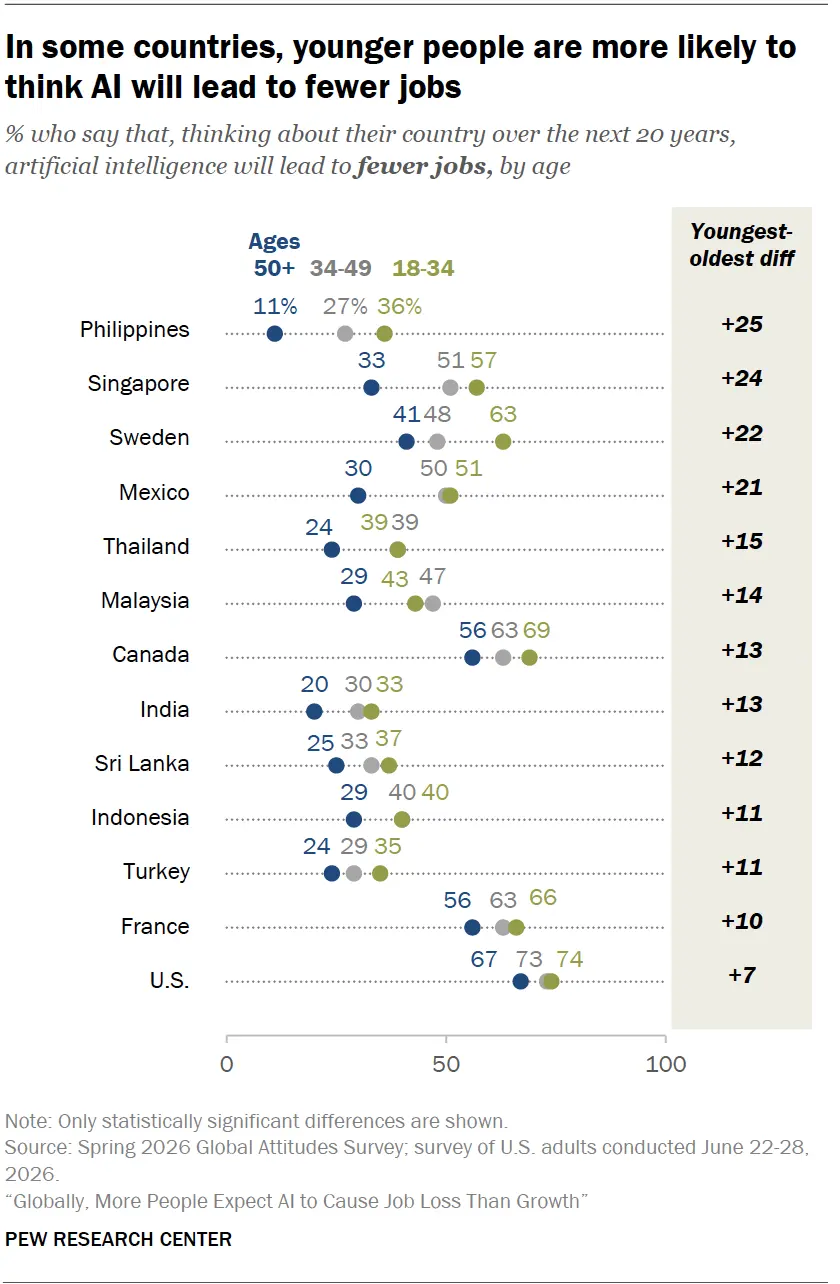
In a number of countries, younger people aged between 18 and 34 are the group most concerned about AI job losses. In the US, concern about job losses from AI has increased the most among this demographic.
In many of the middle-income countries surveyed, wealthier and more educated respondents are more likely to expect AI to reduce job numbers over the next two decades. Much of that gap reflects greater uncertainty among people with lower incomes and less education about how the technology will affect employment.
It's certainly telling that more people who have high awareness of AI are more concerned about its impact on jobs.
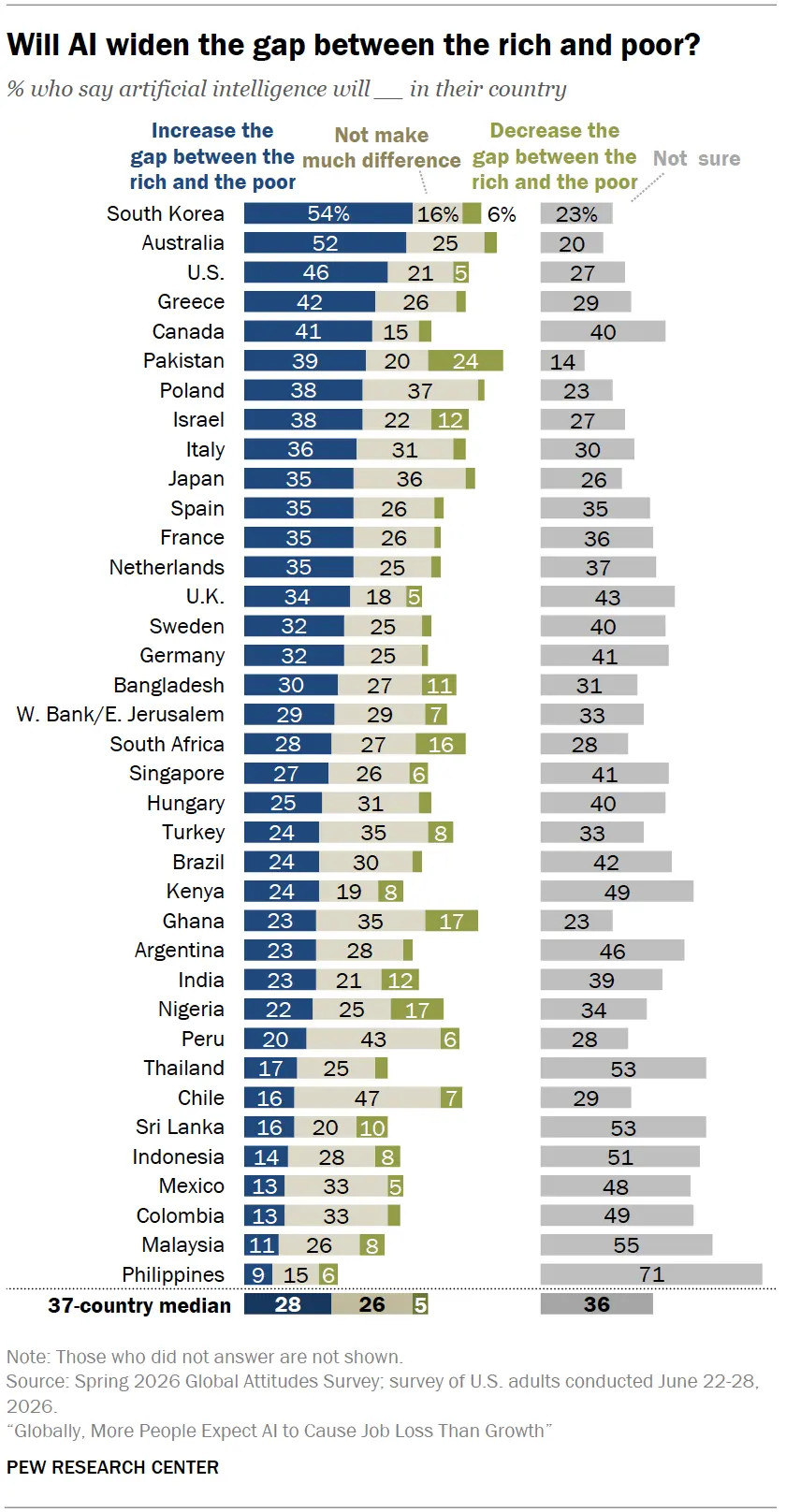
Some industry execs have claimed AI will close the gap between the rich and the poor. But more people believe the opposite is true. Again, this is more often the case in richer countries.
We've also heard of some AI luminaries who are genuinely angry that people don't share their excitement about AI. Results in this area are more mixed, with a 37% median across 37 countries more concerned than excited, while a 41% median are equally concerned and excited. Israel is the only nation in which more people are primarily excited than primarily concerned.
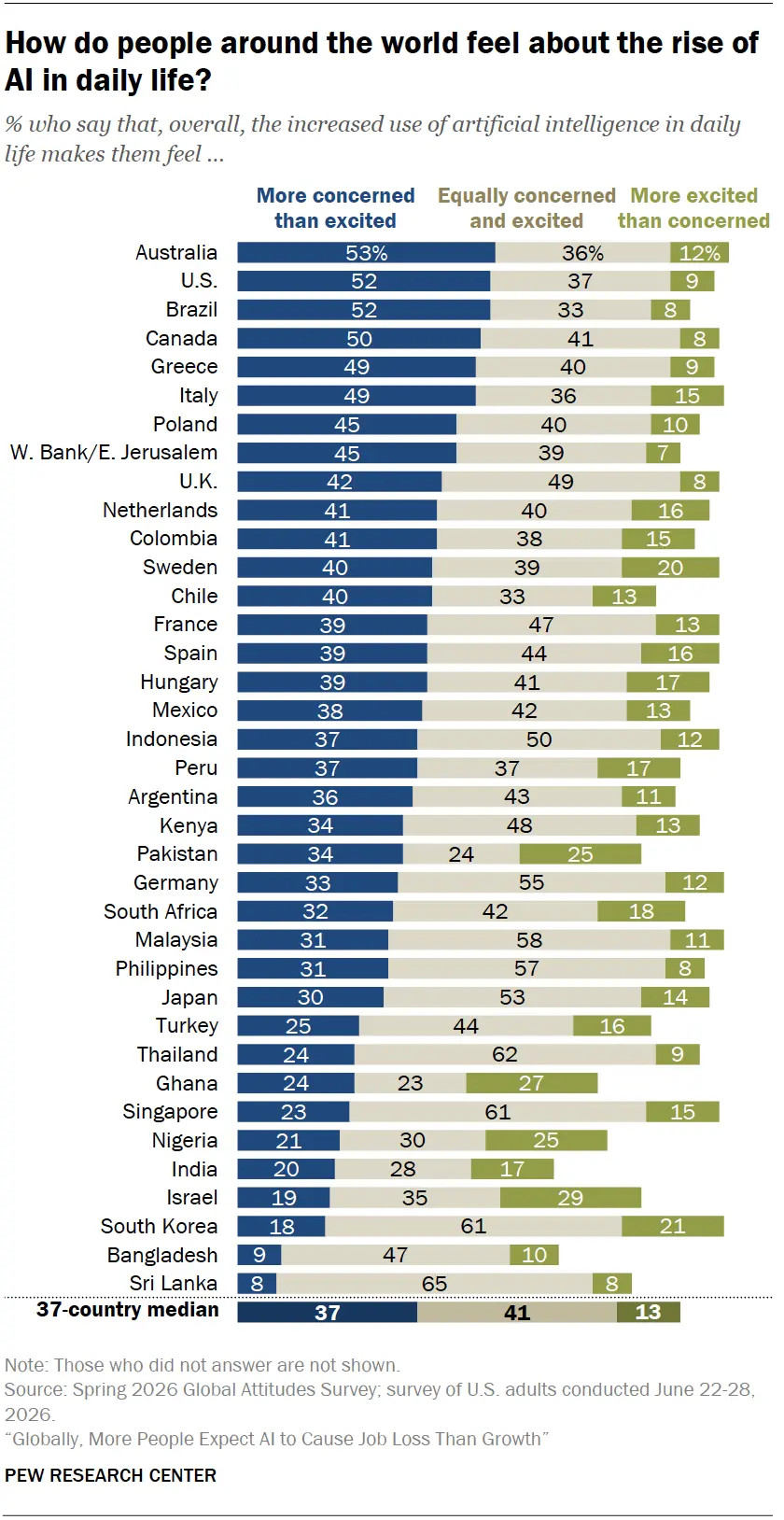
Those fears are understandable. A Mercer survey found that 99% of executives questioned expected AI to lead to job cuts within two years, while Meta cut 10% of its workforce before abandoning plans for a second wave amid disappointing AI results and employee resistance. There have also been signs that companies are putting too much faith in the technology: some employers are rehiring workers they replaced with AI after automation failed to deliver. That offers a bit of hope, though it's unlikely to reassure all workers.
Most of the world thinks AI is going to kill jobs, a new Pew survey finds


