Most plug-in hybrid drivers don't charge their cars, undermining the benefits

Skye Jacobs

Posts: 2,030   +59
Staff
Connecting the dots: The quiet reappraisal of plug-in hybrids is taking shape inside the auto industry. What was once positioned as a bridge technology between gas-powered cars and fully electric vehicles now looks, by many measures, like a detour. Real-world data shows that most plug-in hybrid drivers rarely charge their vehicles, undermining the technology's environmental value – and prompting automakers like General Motors to rethink how much faith to put in it.
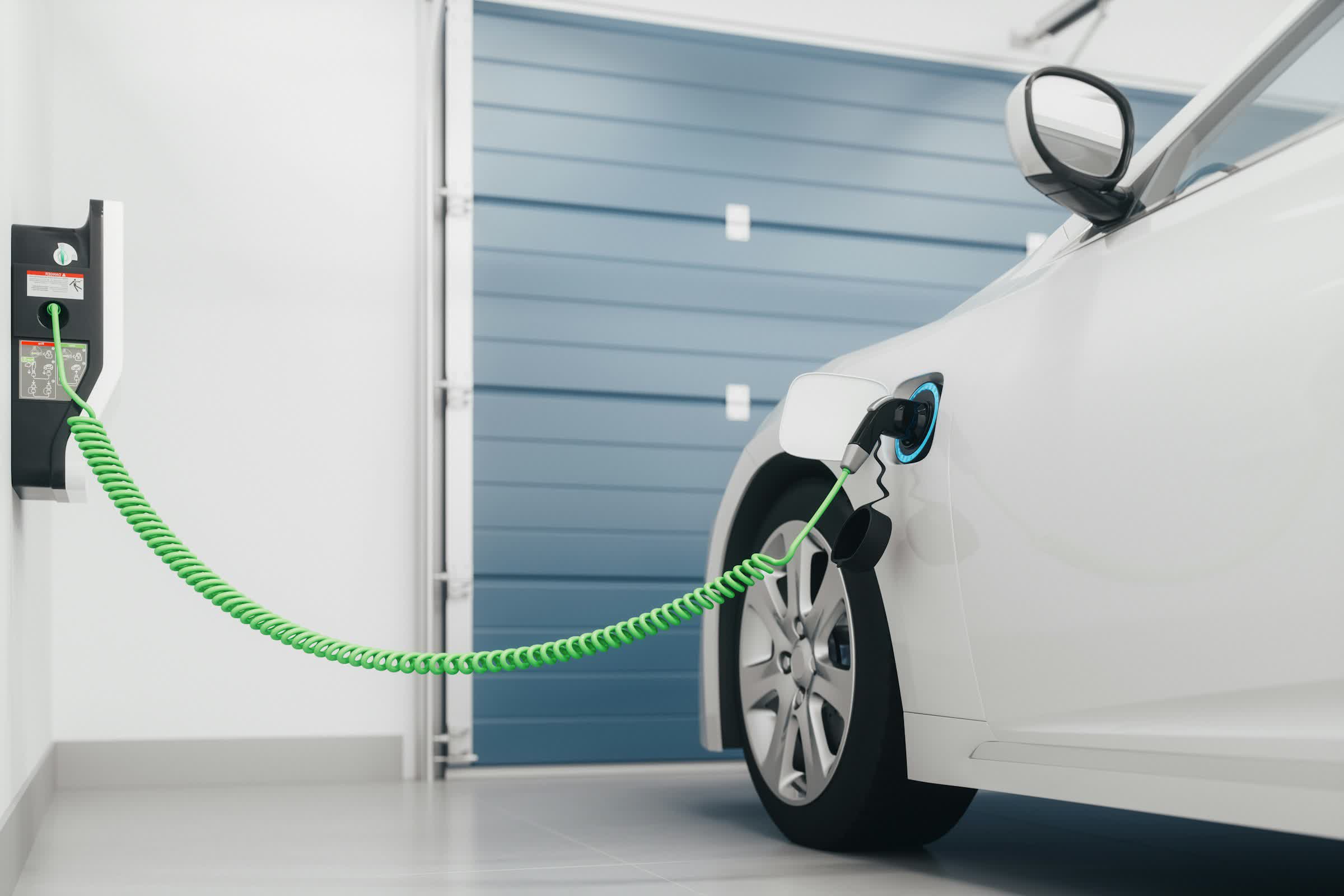
Speaking at the Automotive Press Association conference in Detroit, GM CEO Mary Barra acknowledged a problem that regulators and researchers have been documenting for years. "Most people don't plug them in," she said, referring to plug-in hybrid electric vehicles (PHEVs). It's a simple statement that captures why the company, while investing heavily in all-electric platforms, is taking a more cautious approach to hybrids. GM plans to introduce plug-in hybrid models to North America in 2027, but Barra characterized the strategy as "thoughtful" rather than enthusiastic.

Underlying that caution is a troubling emissions record. Although plug-in hybrids were marketed as a step toward cleaner driving, their real-world carbon output often rivals or even exceeds that of gasoline vehicles.

According to Transport and Environment, a European nonprofit that studies vehicle emissions, the average plug-in hybrid emits nearly five times its official rating. The group's 2025 analysis found that most drivers rely on their gas engines for the majority of their trips, despite having the ability to charge. The European Commission's own data pointed to a similar gap, finding real-world output about 3.5 times higher than lab results.

In the United States, the pattern holds. A study by the International Council of Clean Transportation estimated that plug-in hybrids consume 42% to 67% more fuel in real conditions than reflected in their Environmental Protection Agency labels.

Researchers attribute the discrepancy to driver behavior: regulatory models assume that roughly 84% of trips use electric power, but real-world data shows that only about 27% do.

The physics of the vehicles don't help either. Because plug-in hybrids carry both an electric drivetrain and a gasoline engine, they weigh more than conventional cars. Once the limited all-electric range – often only 20 to 30 miles – is exhausted, drivers are left with a heavier vehicle propelled by an internal combustion engine, reducing efficiency.

Consumer Reports highlighted that disadvantage with BMW's 330e xDrive plug-in hybrid, which returns 25 mpg after its electric range is depleted – worse than its gas-only counterpart, the 330i xDrive.

For automakers, the strategic appeal of hybrids is clear. Federal tax credits that once boosted EV adoption ended in 2025 under the Trump administration, and new tariffs have further strained the market. Electric vehicle sales growth slowed for the first time in five years, dimming the optimism that had helped keep US transportation emissions flat.

Hybrids give companies like GM a way to offer improved efficiency without depending on subsidies or on customers to adapt to all-electric infrastructure.
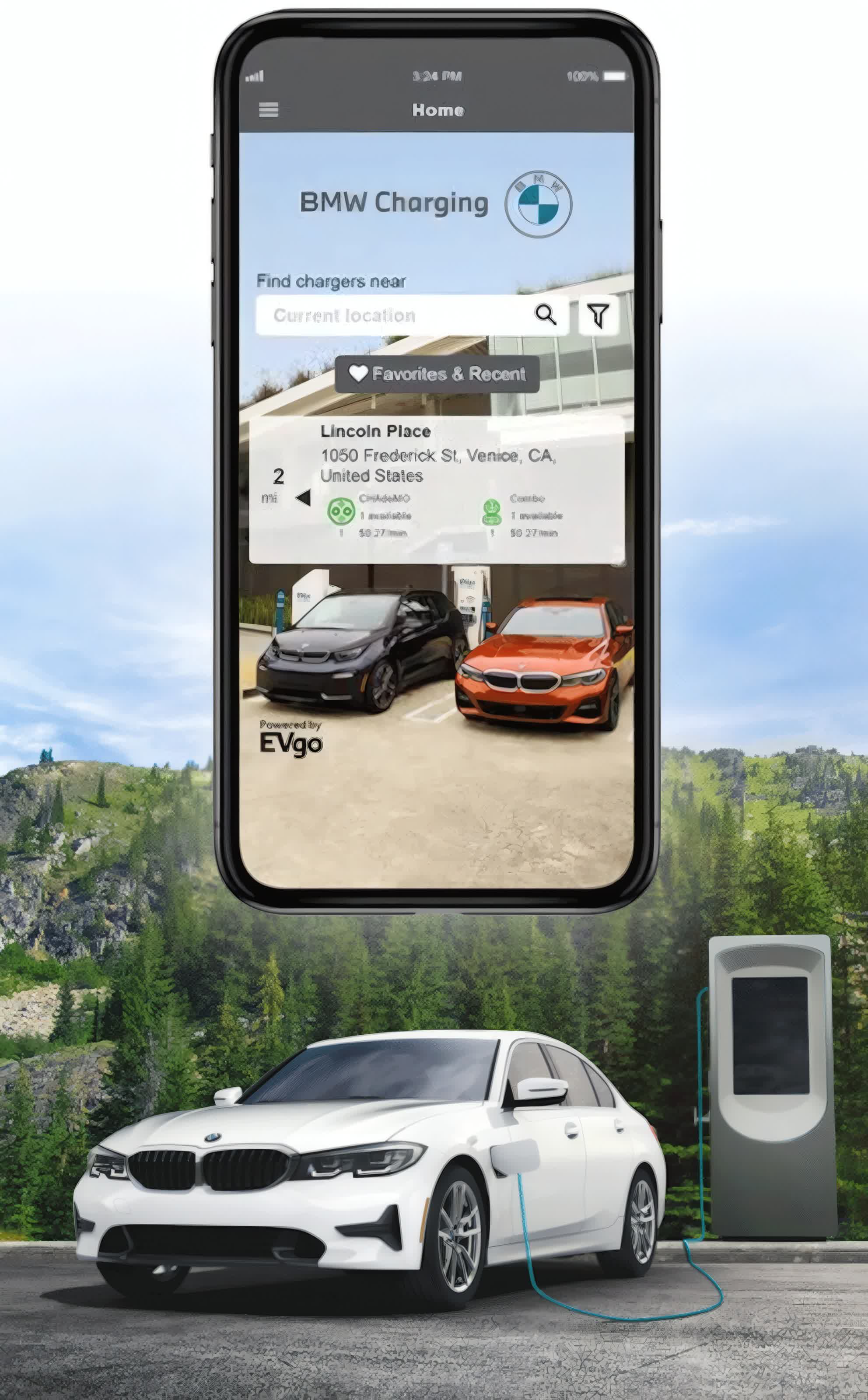
Still, environmental analysts argue that hybrids are a stopgap at best – and a distraction at worst. The European advocacy group Transport and Environment called PHEVs "a diversion on the road to zero emissions," while US research from ICCT suggests similar limits on their environmental gains. If consumers continue to treat plug-in hybrids as conventional cars, the expected emissions savings simply vanish.

That logic echoes across boardrooms as the industry recalibrates its transition strategy. Barra's comment that EVs are "the endgame" hints at an eventual convergence around full electrification, but the path there remains uneven.

As the EV market matures, automakers are discovering that technology is only half the challenge; the other half is behavior. And until drivers start plugging in, plug-in hybrids will remain an elegant engineering solution that fails in the real world.

Permalink to story:

 
People bought plug in hybrids because they qualified for the EV tax credit but were still technically an ICE powered vehicle. When the base model is $50k, people start looking for every discount they can get. Frankly, I see this as the manufactures fault trying to pad their pockets with government money instead of making an EV or Hybrid that benefits the consumer.

Hybrids are nice, though. I'd love a plug in hybrids truck because that's where the fuel savings would show the most.
 
Last edited:
Maybe dumb azz governments should build the infrastructure needed for EVs to be recharged first, and then expect its citizens to use the tech.

Maybe governments needed to build gas stations first, before we started buying gas-powered cars.

Maybe we need people with working brains to take care of this.
 
This reads less like an indictment of PHEVs and more like an indictment of bad UX design built on terrible assumptions about human behavior. For a multi-billion-dollar industry, that’s honestly kind of embarrassing.

If the entire emissions math hinges on people plugging in, maybe the car should actually push them to do that. We already know this works. Phones shame you for screen time. Fitness apps guilt you into walking. Smart thermostats brag about energy savings. So remind the driver when they park, FFS. Show a weekly “you drove this like a gas car” report. Highlight how much fuel and money they burned by not charging. Default to EV-only instead of quietly falling back to gas. These are trivial software nudges.

Calling this a failure of the *technology* feels completely off. The hardware can deliver the emissions reductions. What failed is the behavioral model regulators and automakers used to justify the policy, and their total lack of effort to design around predictable human behavior.

And that’s the part that should make people uneasy about EV policy more broadly. If the industry and regulators were this wrong about PHEV usage assumptions (84% electric trips vs ~27% in reality), and couldn’t be bothered to build in basic mechanisms to encourage correct use, why should we be confident the EV transition math is any better?

Charging access, grid capacity, cold-weather range, apartment dwellers, towing, long-distance travel—all of that depends on similarly optimistic assumptions about how people live and behave.

If you can’t accurately model whether people will plug in a car they already own, betting the entire transportation decarbonization strategy on perfect adoption, perfect infrastructure rollout, and ideal user behavior seems… optimistic at best.

Either the industry is wildly incompetent at distinguishing “technically possible” from “how people actually behave,” or there’s another incentive structure at play (big oil?) that’s not being talked about here. Doesn’t exactly inspire confidence no matter how it’s sliced.
 
Last edited:
Maybe dumb azz governments should build the infrastructure needed for EVs to be recharged first, and then expect its citizens to use the tech.

Maybe governments needed to build gas stations first, before we started buying gas-powered cars.

Maybe we need people with working brains to take care of this.

Governments don't build sh*t. If the government wants something built, they overpay a private firm to buid it in the wrong place at an incredible inefficiency. It's a tale as old as time!
 
Forgive my ignorance but is this accurate?

"Once the limited all-electric range – often only 20 to 30 miles – is exhausted, drivers are left with a heavier vehicle propelled by an internal combustion engine, reducing efficiency."

If accurate, that's way low miles, what's the point of a hybrid at all? I wouldn't plug one in either if I had to do it that often.
 
Forgive my ignorance but is this accurate?

"Once the limited all-electric range – often only 20 to 30 miles – is exhausted, drivers are left with a heavier vehicle propelled by an internal combustion engine, reducing efficiency."

If accurate, that's way low miles, what's the point of a hybrid at all? I wouldn't plug one in either if I had to do it that often.

There wasn't a point. It was basically greenwashing. Maybe a few people felt good about themselves for driving them instead of those filthy, polluting ICE vehicles... while basically driving a filthy, polluting ICE vehicle.

I think most people with any sense realised that lugging around both drive systems at once was uneconomical. I'm glad we're seeing research to back it up, and I hope that more people take the plunge into full EV instead of trying to keep a foot in both camps.
 
Forgive my ignorance but is this accurate?

"Once the limited all-electric range – often only 20 to 30 miles – is exhausted, drivers are left with a heavier vehicle propelled by an internal combustion engine, reducing efficiency."

If accurate, that's way low miles, what's the point of a hybrid at all? I wouldn't plug one in either if I had to do it that often.

-The idea is people will use these as "grocery getters" making a short round trip within the 20-30 mile range without engaging the ICE at all.

Since those short trips tend to be entirely surface streets as well, they tend to be the worst from a fuel efficiency standpoint for ICE engines as well.

If the person had to drive a longer range, then there is the ICE engine to get you there.

But the whole logic of it goes out the window when people don't plug their car in, and as the article states you're then left with a less efficient ICE vehicle.
 
I wonder how many don't charge because they can't. I considered buying a PHEV in the past when I lived in an apartment, with the idea that I would be able to charge once I bought a house. It gives you some of the advantage of a BEV while giving you more flexibility when you don't have access to easy charging.
 
My assumption was a phev was a hybrid I could pre charge at home and get maybe 30-50 Miles before it just drops into normal hybrid mode. From these descriptions, it's a normal ICE that has a battery for the first 30-50 miles. My rav4 hybrid gets over 40 mpg. I'd expect the rav4 phev, after 30-50 miles, to then get 40 mpg in hybrid mode.
 
People bought plug in hybrids because they qualified for the EV tax credit but were still technically an ICE powered vehicle. When the base model is $50k, people start looking for every discount they can get. Frankly, I see this as the manufactures fault trying to pad their pockets with government money instead of making an EV or Hybrid that benefits the consumer.

Hybrids are nice, though. I'd love a plug in hybrids truck because that's where the fuel savings would show the most.

If people are looking for every discount they can get... wouldn't plugging in be one of those discounts?
 
I wonder how many don't charge because they can't. I considered buying a PHEV in the past when I lived in an apartment, with the idea that I would be able to charge once I bought a house. It gives you some of the advantage of a BEV while giving you more flexibility when you don't have access to easy charging.
I'm one of many.

In the US something like 56% of people have no access to a garage. Of those who do, how many dont have electricity int he garage? How many only have 110V that is useless for a PHEV? How many only have 100 amp service and cant do fast charging?
If people are looking for every discount they can get... wouldn't plugging in be one of those discounts?
Yes, which is why these surveys make absolutely no sense to me. People are paying $10k more for a PHEV to save $5k on taxes then not using the money saving feature? Eh?
 
What load of horse sh!te. Self-serving BS from GM that has withdrawn it's own crap PHEV's. Couldn't be further from the truth. If you bought a PHEV and never charge it you didn't do any research on what you a buying full-stop. Maybe Americans are really dumber, but this is not the case at all in Australia.
 
Oh, and the ELECTRICITY to recharge those comes MOSTLY from gas, oil, nuclear power.
Not to mention in the U.S. the grid can barely handle the load now, not to mention all of
the AI data centers, so unless they build out the capacity & the grid, more EV's are not the
answer. And, with the price of gasoline coming down (unless you live in California), no one
is going to overpay for an EV.
Our gas prices are under $2.00/gallon
 
How many only have 110V that is useless for a PHEV? How many only have 100 amp service and cant do fast charging?
110V x 100A = 11 kW per hour
How big battery does Plug-In have? 20kWh? 25kWh?
It means 4~5 hours leaving half of electricity for home.

People are paying $10k more for a PHEV to save $5k on taxes then not using the money saving feature? Eh?
Breaking news: People are lazy, dumb, or both.
 
110V x 100A = 11 kW per hour
How big battery does Plug-In have? 20kWh? 25kWh?
It means 4~5 hours leaving half of electricity for home.


Breaking news: People are lazy, dumb, or both.
The irony in this statement is so thick you could cut it with a knife.

100A is the service for the whole house. Not an individual circuit. Even on new construction 110v circuits top out at 20 amp, unless they are for heavy power tools, then you sometimes see 25 amp. Regardless, EVs will not pull over 15 amp and tend to average around ~12 amp when charging on 110v power at most. Worse, if you have a 100amp box, you'll likely have cloth wiring involved, which means 15 amp circuits and even lower charging limits.

PHEV owners have written complaints about how slow 110v charging is, leaving it plugged in overnight and only seeing ~50% charge in the morning, for example. Your actual effective charge rate is about 1kW/h at best, assuming it isn't very hot or very cold, in which case that rate can be even lower. Dont forget, once you hit 80% even 110V charging slows way down.

So you are looking at 24+ hrs for a full charge on a 25kWh battery on 110v.
 
So you are looking at 24+ hrs for a full charge on a 25kWh battery on 110v.
110V x 20A = 2.2 kW
25 kWh / 2.2 kW = 11.36 = 11:22

110V x 15 A = 1.65 kW
25 kWh / 1.65 kW = 15.15 = 15:09

Looks like less than half of 24+ hours

With working time 9-to-5 car leaves at 8am and comes back at 6pm.
14 hours to charge.

100A is the service for the whole house. Not an individual circuit. Even on new construction 110v circuits top out at 20 amp, unless they are for heavy power tools, then you sometimes see 25 amp.
Who wants to pet monkey
has to have some bananas.

Why would some overpay $10000 to get Plug-In hybrid?
To spare $5000 on taxes?
With $2.00/gallon $10 000 means 5000 gallons. With 35~40 mpg that means 175,000~200.000 miles

TL;DR - People are brainwashed to go after discounts.
Lazy to do math or, in some cases, not able to do it right.
 
I had no tax credit when I bought my 24' Prius Prime. IMO,if you're buying a vehicle only because of a tax credit, that is the wrong reason to buy one. However, I could afford the car; not everyone can afford such a car without a tax credit.

I recently filled my tank because I had to drive farther than then EV range (55-miles summer, right now, about 46-miles; manufacturer's estimate 39-miles). I had gone just over 1,700 miles on just over 3-gallons of gas. I charge about once a week during the summer, and maybe three times a week in the winter. Of course, I was using electricity, but the equivalent MPG was about 588.

For the trip, I switched the car to hybrid mode, and averaged about 39-mpg. I won't fill up again until my next beyond EV range trip in April.

This is supposedly a production version of a solid state battery for this motor cycle. https://www.motortrend.com/news/solid-state-battery-electric-verge-ts-pro-motorcycle
If it proves out, this could be a game changer for the EV market - especially if it can be scaled up for bigger vehicles.

EDIT: I've been calculating monthly electricity cost to charge the car. Its been, in general, less than $20/mo which is less than what used to pay for gas for my 06' Prius.
 
Last edited:
Oh, and the ELECTRICITY to recharge those comes MOSTLY from gas, oil, nuclear power.
Not to mention in the U.S. the grid can barely handle the load now, not to mention all of
the AI data centers, so unless they build out the capacity & the grid, more EV's are not the
answer. And, with the price of gasoline coming down (unless you live in California), no one
is going to overpay for an EV.
Our gas prices are under $2.00/gallon
We had promises of infrastructure improvements with 45 that never materialized and are you thinking that 47 will do any better given his "I'm always right" attitude?

And as others have noted, the US isn't the only market for EVs. In fact, 47's "I'm always right" attitude is ceding EV market leadership to China and China has plenty of reasons to embrace EVs. The Chinese are literally laughing at 45/47 since that administration is investing in the past while the Chinese are investing in the future.

Do you have a point in saying the Electricity comes mostly from gas, oil, nuclear power? While it may be true for the US, it is not true for other nations. BTW - the "it pollutes more than ICE" argument has been debunked long ago.
I'm one of many.

In the US something like 56% of people have no access to a garage.
If they don't have a charging solution, obviously, PHEV is not a solution for these people. If they are buying them and bitching, that's their fault.
Of those who do, how many dont have electricity int he garage? How many only have 110V that is useless for a PHEV?
110V is not useless for me. My Prius Prime will charge overnight on 110V without any problems.
How many only have 100 amp service and cant do fast charging?
If you are talking about DC fast charging, its currently impossible to get that installed in a residential setting in the US due to NEC code. Besides, the only PHEV I know of that allows DC fast charging is the Toyota RAV 4 PHEV.

And residential can have 200A to the house even with a 100A breaker box. In that case, the answer might be a sub-panel specifically for the charging circuit. Its possible to buy 60A chargers, but, as you said, no PHEV will use over about 15A. My Prius Prime's maximum charging current is 13A. I'm still planning on having a Level 2 circuit installed that is capable of 60A charging because I plan on going BEV at some point and the Prime will use Level 2 charging with a maximum 4-hour charge time, then when I get the BEV, I'll have a Level 2 charging solution for it.
Yes, which is why these surveys make absolutely no sense to me. People are paying $10k more for a PHEV to save $5k on taxes then not using the money saving feature? Eh?
Who knows what their reasons are, but apparently, PHEVs are being bought even if people never plug them in.
 
Last edited:
It's really easy to understand why: charging infrastructure in the U.S. lags behind the need for apartment dwellers to have a charger AT HOME. Fix that, and I can see having a hybrid and charging it periodically, assuming there are enough chargers for the number of renters (which could be yet another issue.)
 
Back