Editor's take: ChatGPT and other large language models rely on artificial neural networks to mimic the behavior of natural neurons. Most are designed primarily to capture users' attention, generate generic content, or push products. A newly developed neural network, however, aims to redirect the technology toward scientific discovery and research.
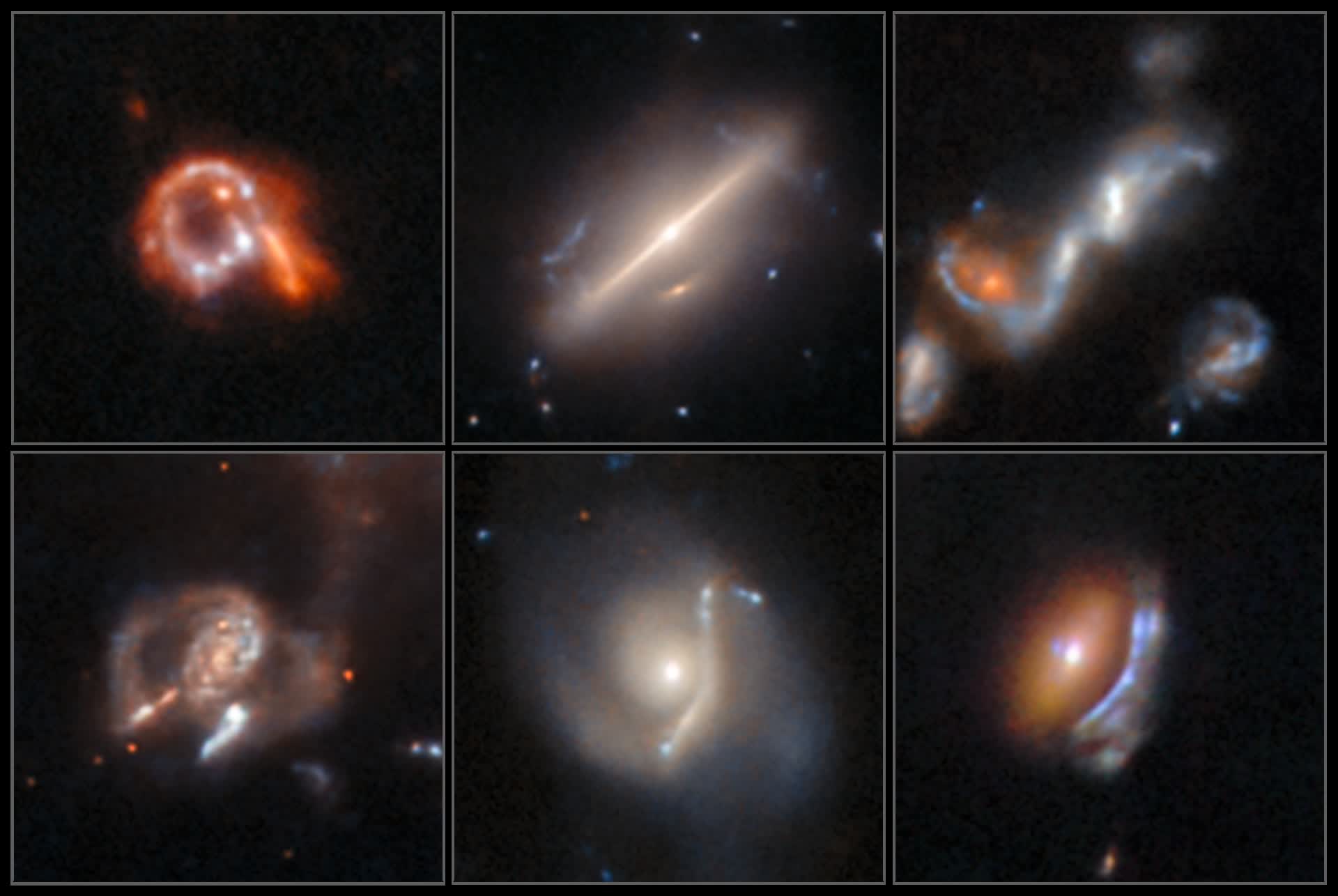
A study demonstrates that AI can be harnessed for scientific discovery. The neural network in question, named AnomalyMatch, was used to detect hundreds of previously unknown anomalies in our local universe. Researchers first tested it on the historical Hubble dataset, but the AI is expected to reveal even more cosmic oddities in other astronomical archives.
AnomalyMatch was developed by David O'Ryan and Pablo Gómez, researchers affiliated with the European Space Agency. The neural network was trained to identify rare cosmic phenomena – referred to as anomalies – including jellyfish galaxies, gravitational arcs, and other unusual structures.
Once trained, O'Ryan and Gómez evaluated AnomalyMatch using the Hubble Legacy Archive. This collaborative effort between ESA and NASA has captured space images for more than 35 years, amassing tens of thousands of datasets covering a wide range of astronomical targets.
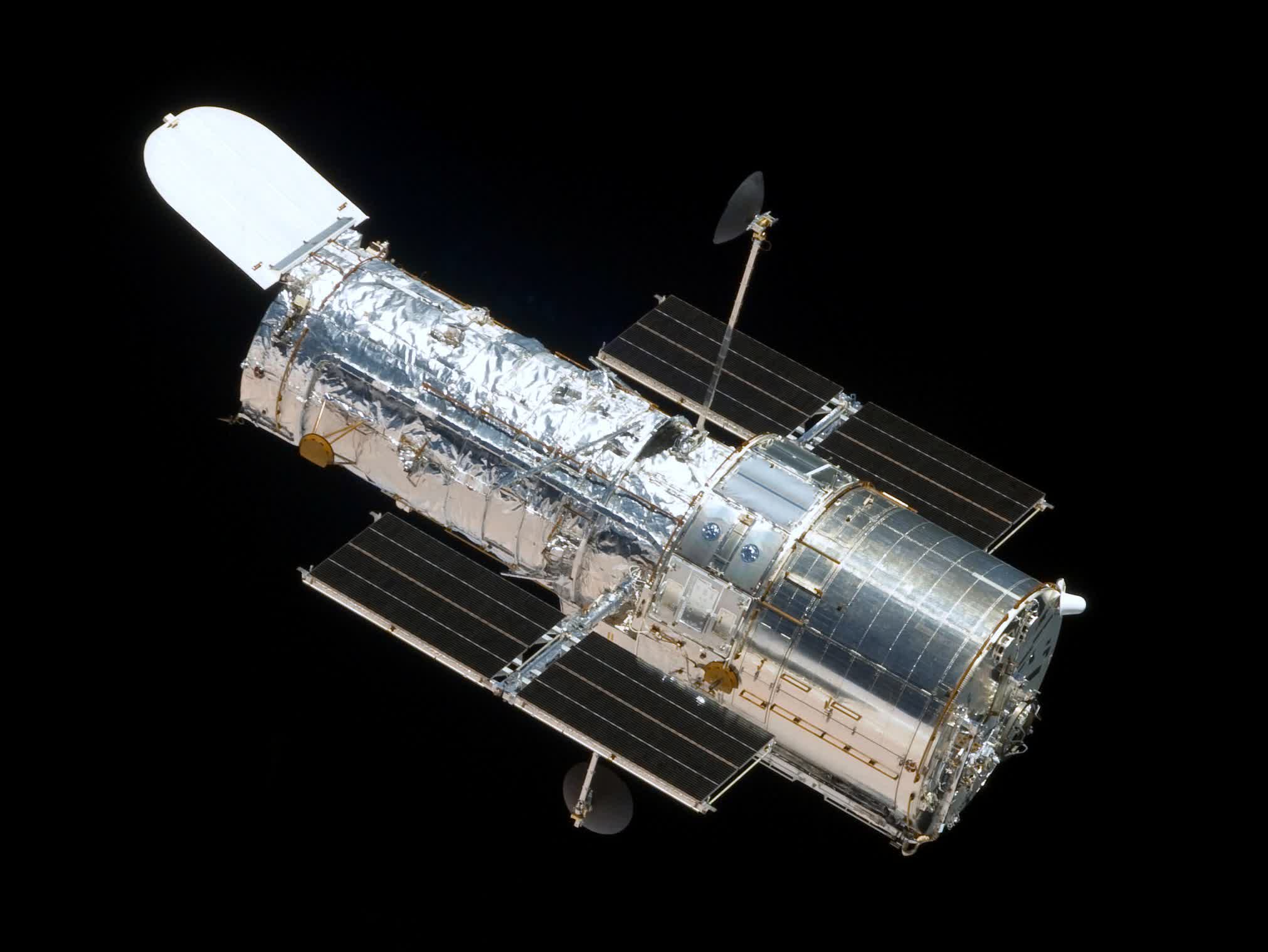
AnomalyMatch scoured nearly 100 million image cutouts from the Hubble Legacy Archive, completing the task in just two and a half days – a fraction of the time it would take a human astronomer. The AI flagged hundreds of potential cosmic anomalies for further analysis.
After careful verification, the researchers confirmed around 1,400 genuine anomalies, including 800 previously undocumented objects. These discoveries encompass rare cosmic phenomena such as unusually shaped merging galaxies, gravitational lenses, jellyfish galaxies, and other interacting systems. The study identified 86 new candidate gravitational lenses, 18 jellyfish galaxies, and 417 merging or interacting galaxies.
While human astronomers are highly skilled at spotting anomalies, the sheer volume of data collected by Hubble and other space observatories makes comprehensive analysis nearly impossible. Using AnomalyMatch, researchers can efficiently sift through the astronomical "haystack" to find cosmic "needles." They now plan to apply the AI to other large-scale datasets.
Gómez said this is a fantastic use of AI to maximize the scientific output of the Hubble archive. "Finding so many anomalous objects in Hubble data, where you might expect many to have already been found, is a great result. It also shows how useful this tool will be for other large datasets," the researcher added.
The need for such tools is only growing. The Euclid telescope, which began surveying billions of galaxies in 2023, and the NSF – DOE Vera C. Rubin Observatory, expected to generate over 50 petabytes of images over the next decade, will produce data volumes far beyond what human researchers can handle. Neural networks like AnomalyMatch could become indispensable for uncovering new, unprecedented discoveries across these massive astronomical archives.
Neural network detects 800+ rare cosmic phenomena in historical Hubble archives


