"New" Ryzen 100 CPUs are mostly Zen 2 and Zen 3+ rebrands, 7500X3D coming for gamers on a budget

DragonSlayer101

Posts: 990   +14
Staff
TL;DR: AMD has quietly introduced at least nine laptop processors based on the older Zen 2 and Zen 3+ architectures. Their specifications closely match existing SKUs, indicating these are likely rebadged parts rather than genuinely new designs.
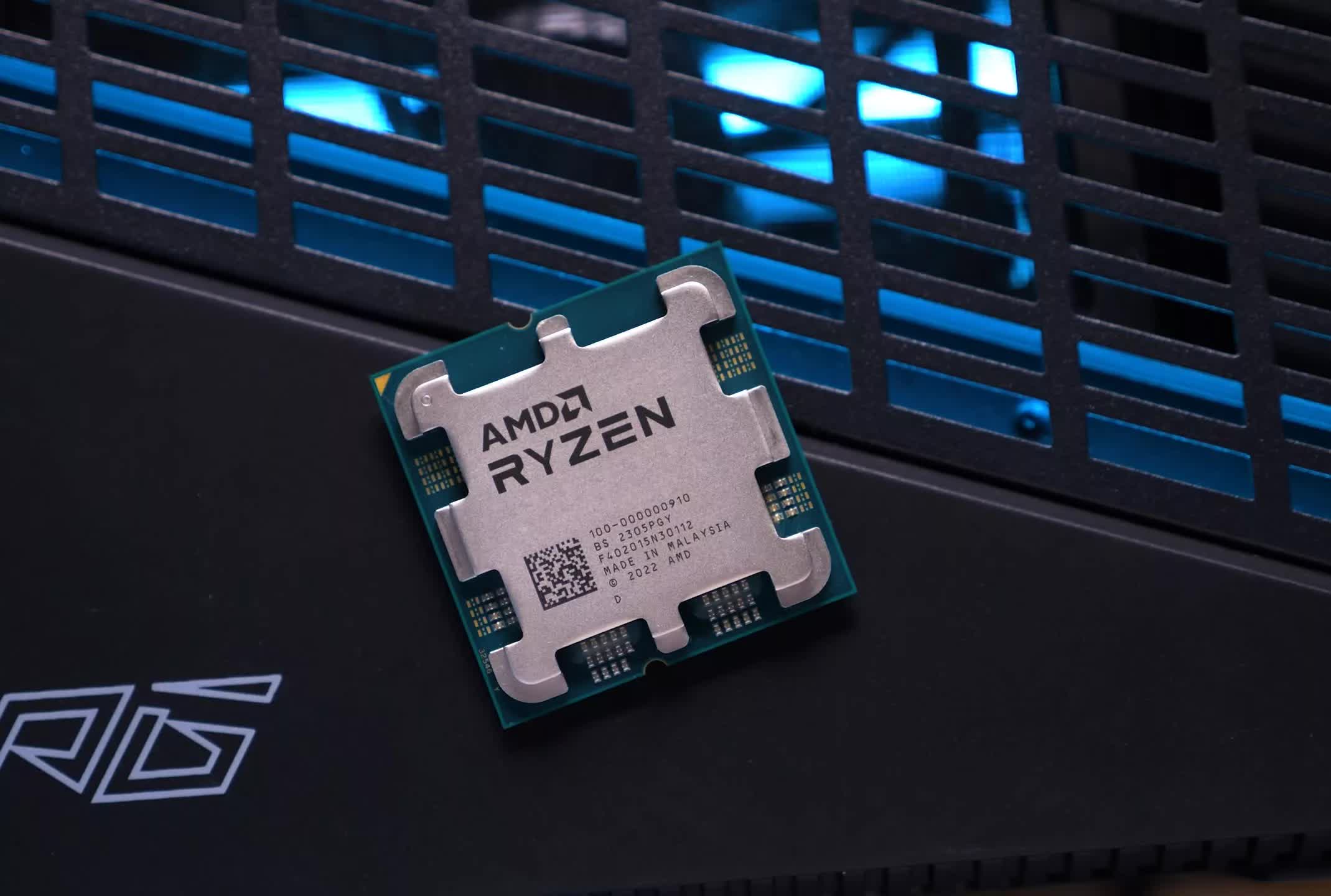
According to tipster Gray (@Olrak29_), the Zen 2 lineup includes four SKUs: Ryzen 5 40, Ryzen 3 30, Athlon Gold 20, and Athlon Silver 10. The Zen 3+ parts include Ryzen 7 170, Ryzen 7 160, Ryzen 5 150, Ryzen 5 130, and Ryzen 3 110. All SKUs feature RDNA 2 integrated graphics.

The official specifications indicate that the Ryzen 5 40 is a rebrand of the Ryzen 5 7520U, while the Ryzen 3 30 corresponds to the Ryzen 3 7320U. The Athlon Gold 20 and Athlon Silver 10 are similarly rebadged versions of the Athlon Gold 7220U and Athlon Silver 7120U.

The Zen 3+ lineup also consists of rebranded chips. The Ryzen 7 170 corresponds to the Ryzen 7 7735HS, while the Ryzen 7 160 is identical to the Ryzen 7 7735U. Among the mid- and lower-tier parts, the Ryzen 5 150, Ryzen 5 130, and Ryzen 3 110 are rebrands of the Ryzen 5 7535HS, Ryzen 5 7535U, and Ryzen 3 7335U, respectively.

AMD has not officially announced the new chips, but product pages are now live on the company website, signaling that the company doesn't want to draw too much attention to the rebadging. Notebook and 2-in-1 makers will replace the older parts with the rebadged SKUs over the next few months.

It is worth noting that AMD isn't the only company marketing leftover silicon with new names. Earlier this year, Intel introduced the Core 5 120 and 120F desktop CPUs, which are essentially rebranded versions of the Core i5 12400 and 1200F. Unlike the latest AMD parts, which retain identical specifications to their predecessors, the rebadged Intel chips feature a 100 MHz higher boost clock and a slightly lower maximum turbo power rating.

Alongside the Zen 2 and Zen 3+ mobile processors, AMD is reportedly preparing a new Zen 4 desktop CPU. The unannounced Ryzen 5 7000X3D surfaced following a premature listing by British electronics retailer West Cost UK, suggesting AMD aims to expand its popular 3D V-Cache lineup to more mainstream consumers. While the listing revealed no specifications, online reports speculate the 7500X3D could resemble the existing 7600X3D, with six cores, 12 threads, and 96 MB of L3 cache, though likely with lower clock speeds than the current SKU.

Permalink to story:

 
Terrific. So now when non-IT types are told their laptop is no longer supported because it and Windows 10 are "too old", they will feel coerced into buying a "new" laptop consisting of a largely re-badged operating system running on a re-badged CPU that in the end is mostly the same thing.

I've worked in tech my whole life and mostly been very proud to have done so. But I'm glad I have nothing to do with this escapade, it's disgusting.
 
By itself this naming system is not that bad; this new naming system makes it very easy to see what generation a chip is from, and within a generation, well bigger number = better is fine. The only issue is if AMD will keep using this system for at least a few years. If AMD labels the mobile Zen 6 chips 4xx and the Zen 7 ones 5xx and so on, then it would be just fine.

If AMD changes things yet again with Zen 6 that would be an issue. And AMD might very well do another annoying name change. The major issue is that AMD's real customer for laptop chips is NOT the end consumer, but the large laptop OEMs. And their marketing departments really like changing names on stuff for no good reason. So if they want a name change, AMD will probably oblige.

As for the practice of continuing the sell older chips, well that is a consequence of wafer prices rising so much. In the past it used to be cheaper to have a new smaller chip with the same performance of the prior gen's larger chip, so older chips got discontinued more quickly. Now with rapidly rising wafer costs, that cost equation has flipped; a small chip on a new process is more expensive than a larger one on the old process, so it makes more financial sense to just keep making older chips to cover lower ends of the market.
 
Terrific. So now when non-IT types are told their laptop is no longer supported because it and Windows 10 are "too old", they will feel coerced into buying a "new" laptop consisting of a largely re-badged operating system running on a re-badged CPU that in the end is mostly the same thing.

I've worked in tech my whole life and mostly been very proud to have done so. But I'm glad I have nothing to do with this escapade, it's disgusting.
Nothing in the zen lineup is unsupported by 11, so I have no idea where you're getting the "same rebadged CPU" thing from.
 
Nothing in the zen lineup is unsupported by 11, so I have no idea where you're getting the "same rebadged CPU" thing from.

Thanks for that -- if true (and I believe you) then it's not the worst case I was thinking of.

That's M$'s fault, put your blame on M$.

Absolutely I put them at the head of the line. Although I think the whole scheme of obsoleting Windows 10 with no upgrade to path to Windows 11 on otherwise viable devices is an industry collaboration aimed at least as much at selling new hardware as it is in collecting more windows license fees from OEMs.
 
I have an old 1800x, a 1400x, two 2400g, and two 5600x processors. Sitting in a box. They are excellent processors.
 
Back