Next-gen EV batteries could last decades, researchers show the potential of single-crystal electrode tech

Skye Jacobs

Posts: 2,012   +58
Staff
Forward-looking: Researchers have achieved a breakthrough in extending the lifespan of EV batteries by adopting a single-crystal electrode design. This innovation not only holds the potential to significantly increase the longevity and range of electric vehicles but also paves the way for more seamless integration of renewable energy sources into power grids.

The study, funded by Tesla Canada and the Natural Sciences and Engineering Research Council of Canada, was led by Professor Jeff Dahn from Dalhousie University in Halifax, and a team of researchers. Their innovative battery demonstrated exceptional durability, lasting over 20,000 charge-discharge cycles before reaching the industry-standard 80 percent capacity threshold.

To put that into perspective, it equates to powering an EV for an extraordinary 8 million kilometers.

The research focused on understanding how internal damage and fatigue accumulate in batteries over time and devising methods to prevent these issues, explained Dr. Toby Bond, a senior scientist at the Canadian Light Source. Using the advanced synchrotron light technology at the University of Saskatchewan, the team conducted detailed analyses of the battery's internal structures.

The new single-crystal electrode battery was compared to a conventional lithium-ion battery, which typically lasts around 2,400 cycles before hitting the 80 percent capacity mark. With the CLS's ultrabright synchrotron light, researchers were able to study the internal structures of both battery types without disassembling them, ensuring the integrity of the long-cycled cells was maintained.

The results were striking. While conventional batteries exhibited extensive microscopic cracking in their electrode material after repeated charging and discharging, the single-crystal electrode battery showed almost no signs of degradation. "In our images, it looked very much like a brand-new cell," said Dr. Toby Bond. "We could almost not tell the difference."

The key to this durability lies in the structure of the electrode particles. Traditional batteries use electrodes composed of tiny particles made up of smaller crystal clusters. In contrast, the single-crystal electrode is a single, continuous crystal, making it far more resistant to mechanical stress and strain. Bond likened the difference to that between a snowball and an ice cube – the latter being much harder to crush.

This breakthrough has far-reaching implications for the EV industry and beyond. Current US regulations require EV batteries to maintain at least 80 percent of their original charge capacity after eight years of operation. However, industry experts are pushing for batteries that last decades, enabling "second-life applications" such as grid-scale energy storage for renewable sources like wind and solar.
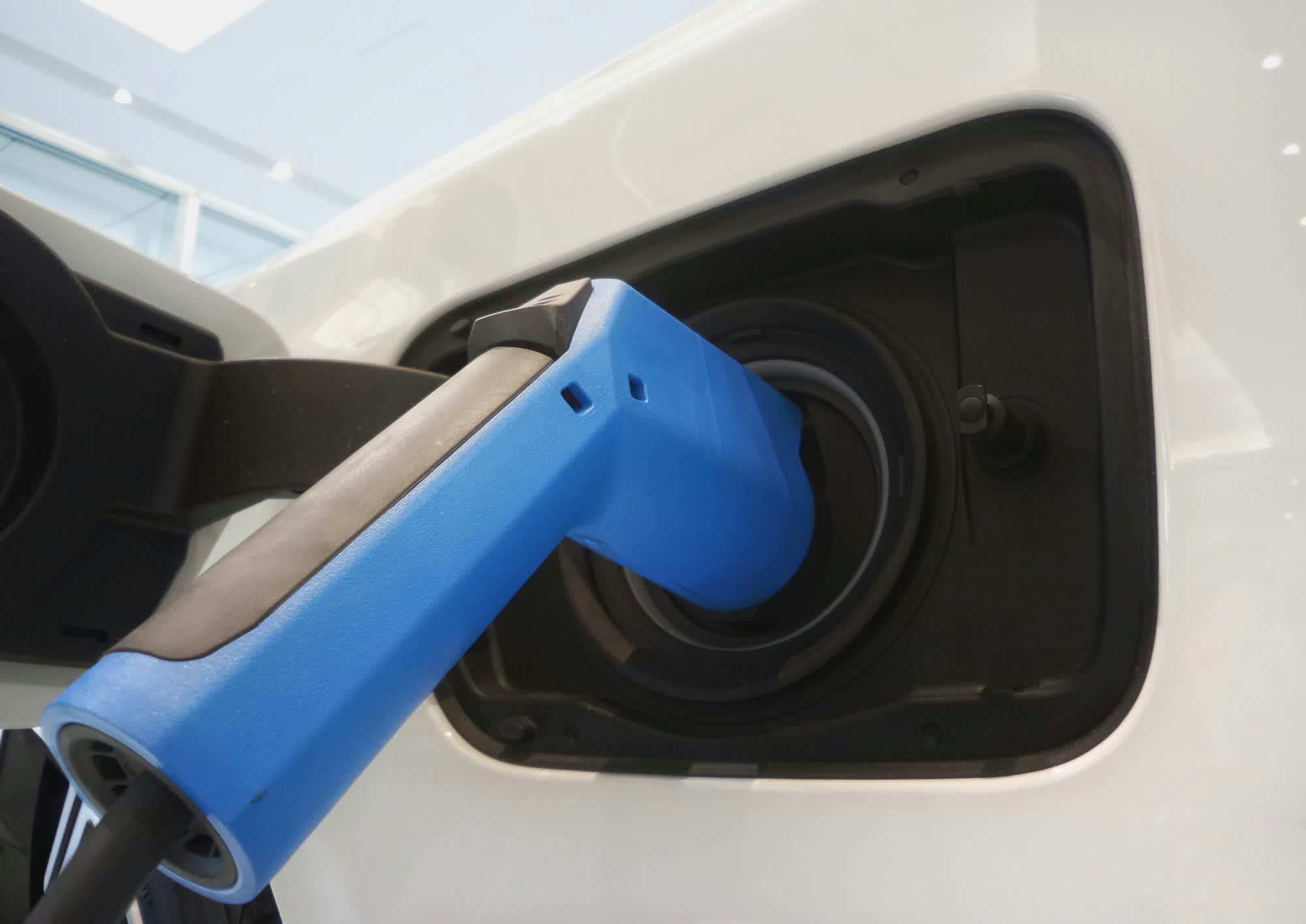
The extended lifespan of these new batteries could outlast other components of electric vehicles, representing a significant milestone in EV technology. "We really need these vehicles to last as long as possible because the longer you drive them, the better its improvement on the carbon footprint is," Bond explained.

The research team reports that these advanced batteries are already in commercial production, with their adoption expected to grow significantly in the coming years. "I think work like this just helps underscore how reliable they are, and it should help companies that are manufacturing and using these batteries to plan for the long term," Bond said.

Permalink to story:

 
Ok, cool, now let's see a production version that works outside a lab.

We CONSTANTLY hear about this stuff but it almost never actually happens.
From the article:
The research team reports that these advanced batteries are already in commercial production, with their adoption expected to grow significantly in the coming years.

Granted they don't mention in what industries or products so I'd take the claim with a large bucket of salt, but that's in theory much farther along than 99% of battery breakthroughs that promise us the future, but are still in testing/lab conditions only stages.
 
From the article:


Granted they don't mention in what industries or products so I'd take the claim with a large bucket of salt, but that's in theory much farther along than 99% of battery breakthroughs that promise us the future, but are still in testing/lab conditions only stages.
Yeah I'd like to hear the actual products these batteries are supposedly in. The way things are these days, you can never trust any group that makes a claim without actual proof.
 
Just like my cast iron protected with animal fat for generations.

I will hand on my EV batteries to my grandkids

They are the new touch stone storing energy and shared memories in their AI neural brains
 
I'll consider an EV the day that recharging a battery takes the same amount of time as filling the tank with gas does.

Maybe for some already there, ie the come home, plug it in and just do city runs.
Your needs may vary if open road travel. But really would a fast charge of 20 minutes after 4 hours of driving be the worst. Restroom , coffee, stretch legs etc vs nice rest area in scenic reserve just down the road , let dogs out as well for ablutions

Customer satisfaction in my country seems very high for some models, but maybe extra points for smugness when gas prices go up :)

Given USA, NZ, Australia and Canada probably have a lot of 2 car/suv families , replacing one with an EV organically may not be a bad idea - taxi for kids, shopping run etc
 
You wash your dogs while fueling up? :)
Is one of those words I like. Had it quite a few times in my travels.
Not as funny seeing WC in countries like China, Germany - a very prudish Victorian England Water closet where supposedly table legs were covered ( that maybe an urban myth )

But Ablution Block was a catch all for showers and toilets in campsites

Then you have the religious connotations . Cleansing and "purifying" yourself between entering a temple, making prayers etc
Just comes of the tongue nicely :) and a polite way to make toilet, which maybe means something again in french; - eau de toilette .
Up there with Hotel de Ville and gift in german
 
"We really need these vehicles to last as long as possible because the longer you drive them, the better its improvement on the carbon footprint is," Bond explained."

The problem with this idea is that car companies would be out of business after selling one car to each possible customer. This will never happen. Wonderful thought and great for the environment but it just isn't practical. There is a reason why products have built-in obsolence. The comany needs to "stay in business" on a replacement cycle business model for big-ticket items. It is the same with major appliances. Appliances used to last for decades but the stock market does not like like or reward when you have large revenue drops year over year. Therefore appliance lifespans have gotten much shorter
 
Maybe for some already there, ie the come home, plug it in and just do city runs.
Your needs may vary if open road travel. But really would a fast charge of 20 minutes after 4 hours of driving be the worst. Restroom , coffee, stretch legs etc vs nice rest area in scenic reserve just down the road , let dogs out as well for ablutions
...
Yup.
Now you need 20 minutes after 1.5 hours of drive at 130km/h, 24 degrees centigrades A/C at 5°C outside.
Yes, I can go 3.5 hours in the same conditions on my previous diesels.
So, the only advantage of EV is juice price.
 
The problem with this idea is that car companies would be out of business after selling one car to each possible customer. This will never happen...There is a reason why products have built-in obsolence. The comany needs to "stay in business" on a replacement cycle business model for big-ticket items. It is the same with major appliances....
The problem with these tinfoil-hat theories is that they fail under even the most cursory examination. The average age of vehicles in the US has been increasing for many decades (12.6 years now, more than double what it was in the 1970s) and more than 95% of all new car buyers purchase long before their existing vehicle dies.

As for "major appliances", cooking ranges last nearly forever, whereas motor- and compressor- based ones like washers and refrigerators are, except for the most minor of repairs, cheaper to replace than to repair. That isn't due to 'planned obsolescence', but rather the efficiency of modern factory manufacturing, as compared to sending out Joe Plumber with his crescent wrench.
 
"We really need these vehicles to last as long as possible because the longer you drive them, the better its improvement on the carbon footprint is," Bond explained."

The problem with this idea is that car companies would be out of business after selling one car to each possible customer. This will never happen. Wonderful thought and great for the environment but it just isn't practical. There is a reason why products have built-in obsolence. The comany needs to "stay in business" on a replacement cycle business model for big-ticket items. It is the same with major appliances. Appliances used to last for decades but the stock market does not like like or reward when you have large revenue drops year over year. Therefore appliance lifespans have gotten much shorter
It just needs ONE fairly large company to offer 25year warranty on their batteries and the rest will fall into line.
Market forces.
 
Here we go again. I've read about revolutionary battery technology for so long and I've had so many articles in front of my eyes about technology that was supposed to improve our lives. Then, it never lived up to the hype and real world performance was nowhere near as impressive. Neither was cost-effectiveness or recycling its materials.

I'll get excited once an important global manufacturer implements this successfully across its range of products (unlike Toyota with its Mirai). Obviously, not a manufacturer like Chrysler that treats its customers like paying beta testers.
 
Last edited:
My 2011 Subaru WRX has only 70k miles. My wife's 2010 Subaru Legacy has 55k. They both drive like brand new.

EVs are just glorified cellphones. They are a consumable like shoes or pencils.
 
I'm not against EVs as a concept. However.... the problem is that EVs are designed to exclude the working class. They have yet to come out with a small, lightweight EV that comes close to replicating the overall performance, economics, and ease of use of a typical economy IC car. Something that gets over 400 miles of range, refuels in 10 minutes, lasts for 25 years, has massive parts availability, and can be worked on by backyard mechanics. Your small EVs are performance DOGS that can barely get out of their own way. Take the Mini Cooper EV. It's heavier and slower than the IC Mini, and weighs a lot more. The range is just over 100 miles. And that's in warm weather. Sure you can get high performance EVs, but they are bloody expensive. Just like performance ICs.

Even a guy as notorious as Hitler understood the need for reliable, cheap transportation. He commissioned Dr Porche's team to design the Folks Wagon (people's car). It was a giant success because it provided what the average person really needs and wants. In contrast, our Western elites envision a future without cars. So they give us showboat cars that are intended to make ownership into a burden. The relentless drag of worrying about range on every trip. Paying 25% more for insurance. Not being able to work on your own car. And expensive, proprietary parts. It's a scam.

Musk could theoretically come out with a 'people's car'. But that may not be possible given the present level of battery technology.
 
We hear this kind of thing all the time. But improvements in battery performance stay tantalizingly just around the corner. I guess we will just have to keep on waiting for these breakthroughs to reach the market. I wont believe in any of this hype without real life results.
 
Just seen, " these advanced batteries are already in commercial production". Where can I buy one? I would be happy with just one cell to test. Hang on at 10 hour charge/ discharge rate that would take 44years to test. Have I made a mistake with my calculations? Testing at 1 hour rate would take 4.4 years. I am begining to doubt these claims.
 
Back