Tofu brine could power safer batteries that last decades, researchers say

Skye Jacobs

Posts: 2,030   +59
Staff
Bottom line: A mixture most people associate with tofu production could soon help make safer, longer-lasting batteries. Researchers from the City University of Hong Kong and Southern University of Science and Technology have built a water-based power cell that runs on tofu brine – the mineral-rich solution left behind after pressing soy curds.
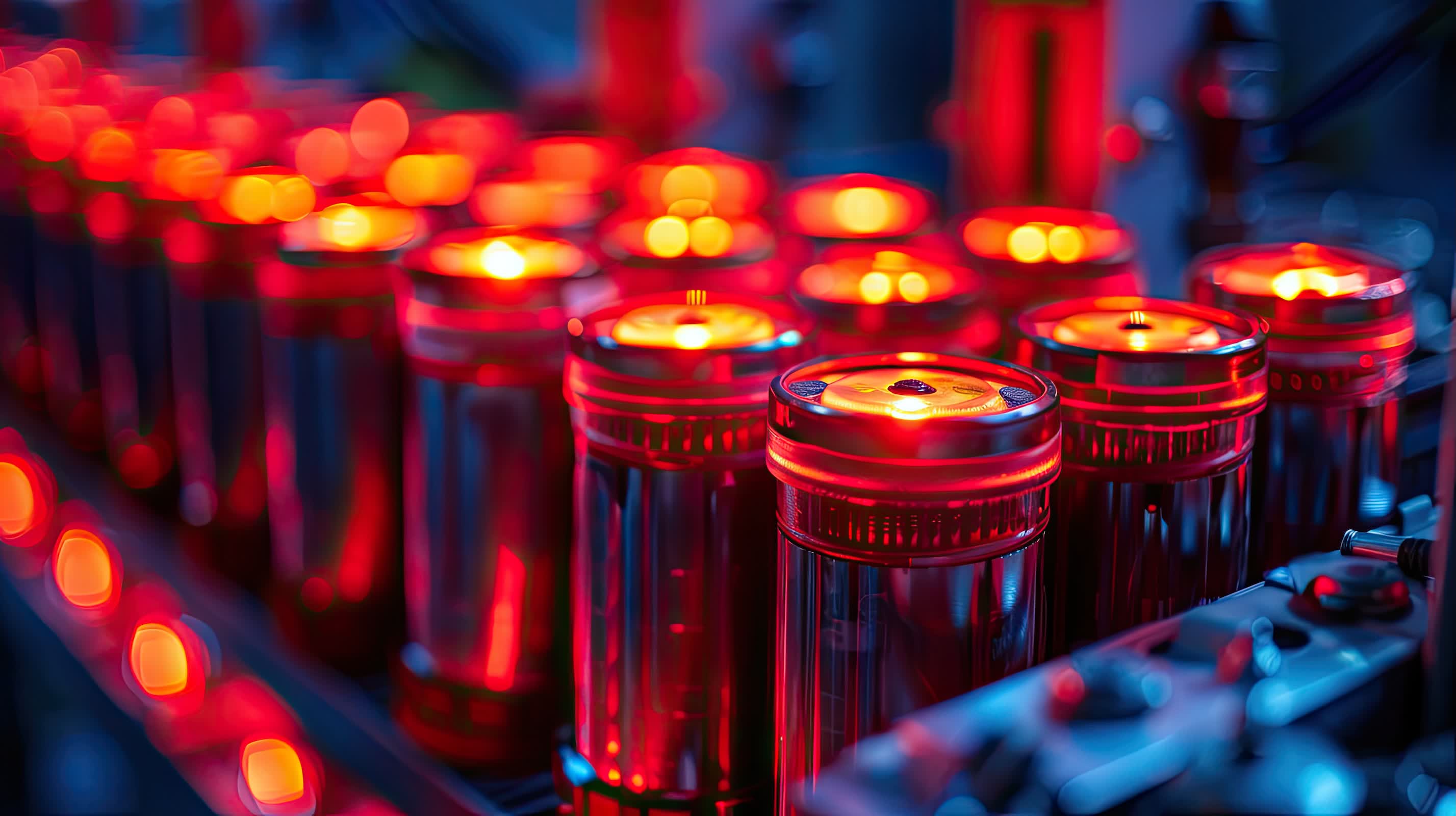
The design replaces the complex, flammable chemistry of lithium-ion batteries with an electrolyte that's as safe as saltwater. In lab tests, the prototype endured more than 120,000 charge cycles, an endurance record that far exceeds today's commercial standards. Typical electric-vehicle batteries degrade after just a few thousand cycles – even long-duration grid systems seldom survive beyond ten thousand.

At the core of the project lies a concept the team calls "organic electrodes," which interact with a neutral, non-toxic liquid medium. By maintaining a stable pH, this electrolyte avoids the electrochemical breakdown that limits most aqueous batteries.

In conventional designs, water decomposes at higher voltages, creating instability that shortens battery life. The tofu-brine solution suppresses that reaction, allowing energy to flow repeatedly without corroding the battery's internal materials.

The result is a cell that is neither flammable nor caustic – a stark contrast to lithium-ion counterparts known for fire hazards when damaged or overheated. Those safety risks have led to well-documented electric-vehicle fires and complex recycling challenges. Because the tofu-brine system uses benign ingredients, it could simplify end-of-life handling and lessen environmental damage from discarded batteries.

The potential applications extend beyond consumer electronics. High-durability, non-flammable cells are particularly attractive for renewable-energy storage, where batteries must operate reliably for years while balancing the output of solar and wind farms. They could also serve as backup systems for data centers or critical installations that require long service lives.

Scaling remains the big test. Many battery breakthroughs demonstrate remarkable stability in laboratory conditions but struggle to achieve the energy density, manufacturability, or cost efficiency needed for commercialization. Whether tofu brine can compete with lithium-ion's mature infrastructure will depend on how researchers refine the chemistry for industrial production.

If those challenges are met, the team's work – published in Nature Communications – may mark the start of a new chapter in aqueous energy storage by transforming a humble food byproduct into a technological asset.

Permalink to story:

 
The new battery chemistries have made EV fires a thing of the past - while ICE vehicles continue to dominate the fire headlines. And this is only the beginning.

In 50 years our batteries are going to be great!!!

In 100 years, I can't even imagine how awesome the tech will be.

I own a 2026 Cadillac Vistiq and my girl has a Cadillac Lyriq. While we do park them about 6 feet from the house in the garage, I've never worried about them burning down..
 
The new battery chemistries have made EV fires a thing of the past - while ICE vehicles continue to dominate the fire headlines. And this is only the beginning.

In 50 years our batteries are going to be great!!!

In 100 years, I can't even imagine how awesome the tech will be.

I own a 2026 Cadillac Vistiq and my girl has a Cadillac Lyriq. While we do park them about 6 feet from the house in the garage, I've never worried about them burning down..
That’s a nice delusion, but here in reality EV fires are very much still a problem. Especially because unlike gas cars, EVs tend to go up when charging or after charging is completed, and once they start it’s near impossible to put them out.
 
That’s a nice delusion, but here in reality EV fires are very much still a problem. Especially because unlike gas cars, EVs tend to go up when charging or after charging is completed, and once they start it’s near impossible to put them out.

So...would you be surprised to find out that EVs have about *half* the rate of catching on fire as their gas powered cousins?

EVs catch fire about 25 per 100k vehicles; gas powered cars are about 1500 per 100k.

Which makes sense, given all the protections around the battery pack. Yes, Lithium batteries *burn* if and when they ignite, but those events are actually quite rare.
 
The new battery chemistries have made EV fires a thing of the past
These aqueous batteries have about a third the energy density of a Li-Ion cell. That's not an issue for renewable-energy storage farms, but you're not going to see these in EVs anytime soon, if ever.

EVs catch fire about 25 per 100k vehicles; gas powered cars are about 1500 per 100k.
That's not really an applicable statistic. For one, EV fires burn up to 1000 degrees hotter, last much longer, and require specialized equipment to extinguish. Also, nearly all ICE fires occur in poorly-maintained vehicles 10 to 30 years old -- a category that doesn't exist yet for EVs, as most are less than 10 years old. Check back in another decade or so, and the stats will be more relevant.
 
Oh goodie! Story #2,394 about new battery technology...that still isn't available in mass production.
 
That is a really cheap base material at least. Even if the density is fairly low this could be useful for green energy storage.
Now if this can be done at a home level that'd be great. Have a basement of Tofu brine to store the energy from the rooftop solar cells. Offload the grid so that can catch a break, win-win.
Still waiting for some kind of battery tech that doubles as home-insulation, most European style houses outer walls tend to have two walls with an airgap, if that airgap could be used to store electricity new construction could put the 'void' to great use.
 
Still waiting for some kind of battery tech that doubles as home-insulation, most European style houses outer walls tend to have two walls with an airgap, if that airgap could be used to store electricity new construction could put the 'void' to great use.
That airgap provides a very high insulation value due to the fact that "dead air," as in the airgap, does not transfer heat very well. Filling that with anything that reduces the "R" value of that airgap would defeat the purpose of having the airgap in the walls.
 
Last edited:
Back