Nvidia's new G-Sync Pulsar takes gaming motion clarity to a new level. After hands-on testing, we break down how its advanced strobing, VRR support, and rolling scan work together to deliver elite results.
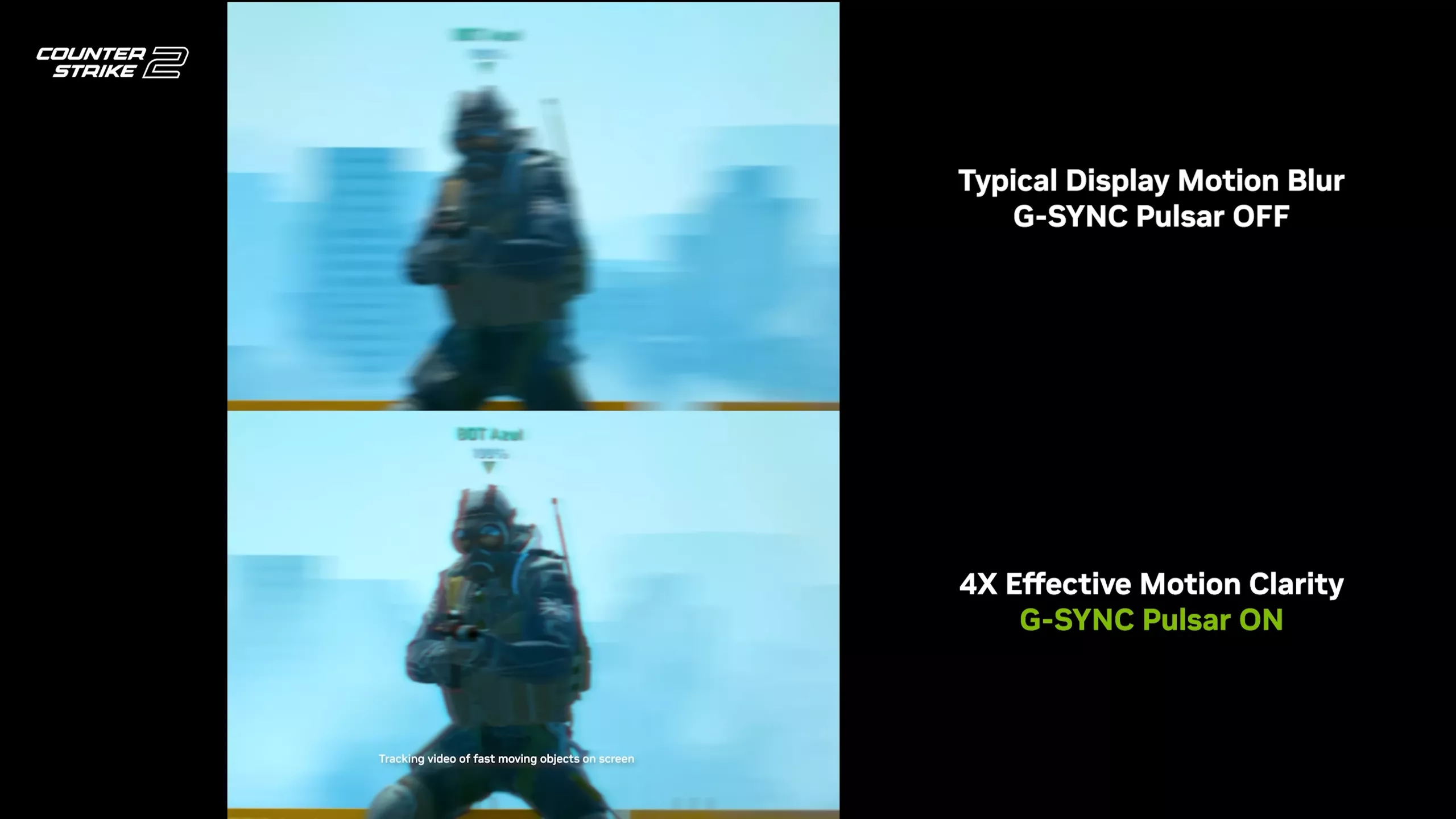
Nvidia's new G-Sync Pulsar takes gaming motion clarity to a new level. After hands-on testing, we break down how its advanced strobing, VRR support, and rolling scan work together to deliver elite results.


Is this another graphics setting we are going to have to fiddle with manually in the future? What with all the DLSS/FrameGen/RayTracing/PathTracing/AdaptiveSync/ etc etc etc settings now it's getting to a point where my brain can't cope anymore! I expect AMD will have a version of this in 6 months with a different name so we can all get a bit more confused too.


Read the entire article and you'll get your answer.Is this another graphics setting we are going to have to fiddle with manually in the future? What with all the DLSS/FrameGen/RayTracing/PathTracing/AdaptiveSync/ etc etc etc settings now it's getting to a point where my brain can't cope anymore! I expect AMD will have a version of this in 6 months with a different name so we can all get a bit more confused too.

I disagree. I realize these are tad different. but similiar240 Hz/fps on OLED looks so much better than 480 Hz/fps on LCD. Tried both side by side, in multiple games, over several weeks.
OLED motion clarity is next level compared to LCD, which has noticable smearing in comparison. OLED don't really need features like this, while delivering vastly better looking visuals at the same time.
Nothing new here really. LCD always needed BFI to deliver decent motion clarity in fast moving scenes. OLED don't.
"Pro gamers" most often use 480+ Hz TN, with BFI. Looks like shite but motion clarity is very good. OLED comes close at just 240-360 Hz no BFI.
Issue with BFI is that brightness seems about 50% lower and you most often can't use VRR at the same time (most pro gamers don't use VRR anyway)

Yeah, let's ignore more sensible comparisons where Nvidia tech has failed because of demented licensing fees, proprietary chips and focus on the only thing they excel at now that they only care about AI.And then 2 years and 3 iterations later AMD's version will work almost as well.
Yeah, let's ignore more sensible comparisons where Nvidia tech has failed because of demented licensing fees, proprietary chips and focus on the only thing they excel at now that they only care about AI.
Average low IQ comment from people that treat corporations like religion.
Tell me, how many G-Sync monitors (not G-Sync compatible, mind you, that only exists thanks to AMD) does Nvidia sell these days?
Absolutely, we've just got out of over priced G-sync monitors and they're pushing us back into it. Ngreedya just tries to fence the market like they've always done. If they could they'd reinvent and patent electricity to make it proprietary.This feature is hardware dependent and requires a compatible monitor to work, just like G-sync. The author forgot to clearly mention this important piece of information.
I dont think its crazy for them to spend money on technology and then profit from those investments. Would it be nice if they opensourced it? yes... but I understand why they didnt.Absolutely, we've just got out of over priced G-sync monitors and they're pushing us back into it. Ngreedya just tries to fence the market like they've always done. If they could they'd reinvent and patent electricity to make it proprietary.

nvidia doesn't sell monitors.Yeah, let's ignore more sensible comparisons where Nvidia tech has failed because of demented licensing fees, proprietary chips and focus on the only thing they excel at now that they only care about AI.
Average low IQ comment from people that treat corporations like religion.
Tell me, how many G-Sync monitors (not G-Sync compatible, mind you, that only exists thanks to AMD) does Nvidia sell these days?