Nvidia may have ended its Open Price Program that incentivized MSRP, "massive" GPU price increases expected

midian182

Posts: 11,624   +176
Staff member
Facepalm: In what sounds like a depressing if unsurprising move, Nvidia has reportedly canceled the OPP, a program designed to incentivize AIB partners to sell its graphics cards at MSRP. If true, this means that the already high prices of GPUs are going to increase even further.
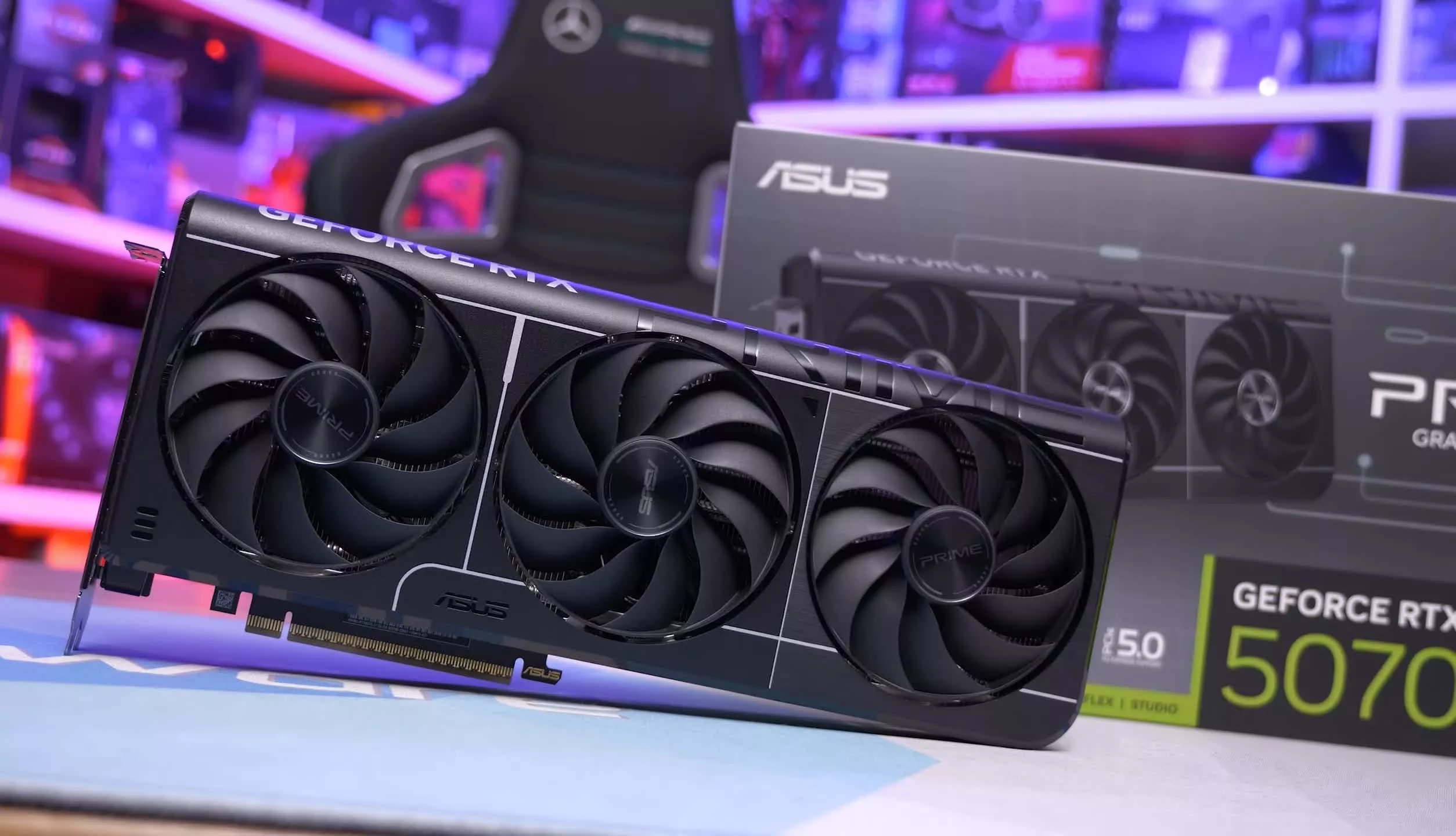
Claims that Nvidia has ended OPP come from Roman 'Der8auer' Hartung and HardwareLuxx. In a video on his YouTube channel, Der8auer describes the initiative as "basically like a cashback thing where Nvidia tried to actively influence the AIBs and the pricing to make sure that some cards happen on the market and that they are actually being sold by the AIBs for the MSRP."

Der8auer warns that the end of OPP means that the MSRPs Nvidia has previously announced no longer exist – though one could argue that's been the case for a while. He said to "expect massive price increases across all of these cards."

Nvidia has not publicly revealed what OPP stands for, though HardwareLuxx believes it to be Open Price Program.

While Nvidia has not officially confirmed the program's cancellation, multiple outlets report that partners were informed privately that OPP support had ended.

According to HardwareLuxx, the program was never intended to cover the full production run of a given graphics card, but instead applied to a limited number of units per model. Even so, it allegedly played a role in keeping at least some cards anchored near MSRP, giving Nvidia plausible deniability when market prices inevitably drifted higher.

The memory crisis has already pushed up the price of several PC components (and other electronics). The last thing gamers want is something else making them even pricier.

Der8auer also commented on the RTX 5070 Ti. It was reported last week that the RTX 5070 Ti is effectively dead after Asus told Hardware Unboxed that the model is currently facing a supply shortage and, as a result, has been placed into end of life status. Asus tried to walk back some of what it said, but it didn't change the fact that the RTX 5070 Ti is heavily supply constrained to the point of being effectively killed.

Also read: Nvidia is reportedly cutting RTX 50-series production to focus on AI demand

Der8auer said that while the 5070 Ti had not reached EOL, Nvidia was instead prioritizing production of the RTX 5080 – both cards use the GB203 die and feature 16 GB of GDDR7 VRAM, but the 5080 is much pricier and more lucrative for Nvidia. Der8auer thinks the 5080 will become even more of an earner for Team Green due to what his sources say will be a 40 to 50% price increase that's coming soon.

The end of OPP and the growing supply and pricing pressures across Nvidia's lineup paint a bleak picture for gamers hoping for relief anytime soon. With incentives to keep cards near MSRP seemingly gone, production reportedly skewing toward higher-margin models, and broader component costs continuing to rise, Nvidia appears increasingly comfortable letting market forces and partner pricing do the heavy lifting.

Whether this is a short-term response to supply constraints or a longer-term shift in strategy, the result is likely the same for consumers: fewer realistically priced GPUs, more eye-watering launch MSRPs that quickly become meaningless, and a widening gap between what Nvidia advertises and what buyers actually pay at retail.

Permalink to story:

 
I'm not sure why this is "facepalm," besides the entire AI bubble potentially having that label. Companies will chase returns when there is a massive disparity.
 
MSRP is just a smoke screen for the competition. Bate and switch. Nvidia is playing the long game. Notice they said they aren't discontinuing the 5070ti so that the competition is still focused on some level of gaming while they go all in on ai and mitigate gaming footprint.
 
Apple successfully killed scalping by forcing pre-orders and then forcing verification on pick-up day as early as iPhone 7's release. This was in 2016.

Nvidia is not serious at all about "getting cards to customers". They enjoy the scalping because it pushes prices up and ensures 100% of inventory is sold.

I am glad they ended SLI/crossfire because it got rid of all these children with credit cards wasting money to have show off rigs for social media with multiple GPU...and I'm also glad that they made these cards less desirable for crypto miners (another huge waste of money). But until they address launch day ordering, you all will continue to have this problem getting the card you want.

I got my 5090FE on launch day for MSRP. My friend got his from a scalper trunk of a car for $3000 cash.

I reasoned that if I waited till Black Friday I'd be able to buy a prebuilt with 5090 for reduced price. I was right. But little did I know that "AI" would suddenly push prices through the roof, threaten future supplies and threaten the Super/Ti releases.
 
I hate this timeline where profits are the only thing that matter. When did companies stop caring about customers and only the bottom line? I know that making money is critical to a companies success. I guess when you make the only real product that people want that you can screw people over as much as you want and you still make $$$. Discouraging times for sure.
 
I hate this timeline where profits are the only thing that matter. When did companies stop caring about customers and only the bottom line? I know that making money is critical to a companies success. I guess when you make the only real product that people want that you can screw people over as much as you want and you still make $$$. Discouraging times for sure.
Personally, I don't think it was ever the case that companies cared about customers. Without profits, companies do not survive.

IMO, profits are what product improvement is all about. CUDA made the immense compute power of GPUs available to a much wider audience, and a wider audience means more GPUs sold and more profit.

While it could be argued that increased performance from generation to generation was primarily aimed at gamers, it also made the cards more attractive to compute customers.

IMO, once CUDA was a thing, it is arguable that the compute market is larger and more lucrative than the gamer market. GPUs for the compute market typically sell for prices well above those for the gamer market. I don't think Nvidia cares much about smaller markets because smaller markets generate far less profit.

With the inclusion of AI focused hardware in GPU silicon and the insane competition in the AI market, Nvidia has created yet another even more lucrative market than the compute market. Thus former markets become less relevant because they generate less, perhaps much less, profit.
 
Personally, I don't think it was ever the case that companies cared about customers. Without profits, companies do not survive.
I understand the value of profits. They help companies grow, fund research, and build better products. However, there’s a point where some companies reach a level of dominance, get a lock on the market, and then start squeezing consumers for everything they can. At that stage, it stops being about serving customers and becomes about maximizing revenue at any cost.

Nvidia is making so much money that they don’t have to squeeze the average everyday consumer. They could choose to treat gamers (the people who helped build them into what they are) as still important, including the “little guy” who can only afford entry-level models. But that’s clearly not the priority. What matters is profit, and if gamers can’t afford it, then that’s their problem. There are plenty of other buyers willing to pay. Nvidia did this during the crypto boom and now during the AI boom.

I understand supply and demand. Business isn’t fair. I get it. Still, it would be nice, just once, to see the corporate world show that it cares about all customers not only the ones with the deepest pockets.

Now excuse me, I have some clouds to go yell at.
 
Yet somehow companies int he 50s and 60s still prioritized their customer's interests over all out greed.

Hmmmmm.....almost like "shareholder primacy" isnt the be all end all and out of control greed is to blame.

Many/most corps certainly don't hew to this decision and act with reasonable intentions towards their valuable customers, but someone asked the question to which that court decision is the most direct answer.
 
Nvidia doesn't have to chase gaming market sales right now, they have enough interest in other markets to cover their existing and upcoming inventory.

Any Nvidia GPUs released will get bought up by those who are willing to spend the money: be it those who require Nvidia for creative purposes, or those that simply desire Nvidia products.
 
Yet somehow companies int he 50s and 60s still prioritized their customer's interests over all out greed.

Hmmmmm.....almost like "shareholder primacy" isnt the be all end all and out of control greed is to blame.

Specially American and German companies (including banks) care much more about money and profit than anything else. Even big US companies get HUGE tax breaks in Europe (totally not acceptable but hey, so are the European politicians, tax nationals but discount foreigners). And people accept.

Even now most European countries bought again F35s despite the Americans sh.t.ng and menacing Europe. Europe's response: buy more American dependency. Chips: Taiwan, south Korea, US. What does Europe? Buy dependency and do old generation or very lacking chips.
 
Well I'm not surprised. While the gravy train's a-runnin' full speed ahead, if YOU were the boss of any of these hardware manufacturers, wouldn't YOU want to make as much money as you possibly could while the opportunity's there?

It's human nature.....never mind "sound business practice". Things will never change while humans have holes in their backsides.....
 
As NV now makes most of it's profit in the business sector, A.I. It's almost as if making ye olde consumer GPU is a trivial inconvienience for them.

I'd go so far as to say, possibly, they wouldn't mind getting out of selling GPUs for gamers entirely. But fear it would reflect badly on them.

Short term planning with focus on shareholders, and CEOs focus on massive bonuses don't help matters.

I'm not so sure about AMD, but expect no favors from them either.
 
Come on the competition - Someone should be able to make a profit and still sell something equivalent to the middle range for a much cheaper price
 
Back