We benchmark the Radeon RX 9070 XT and GeForce RTX 5070 Ti across 52 games, testing rasterization and ray tracing performance at 1440p and 4K.
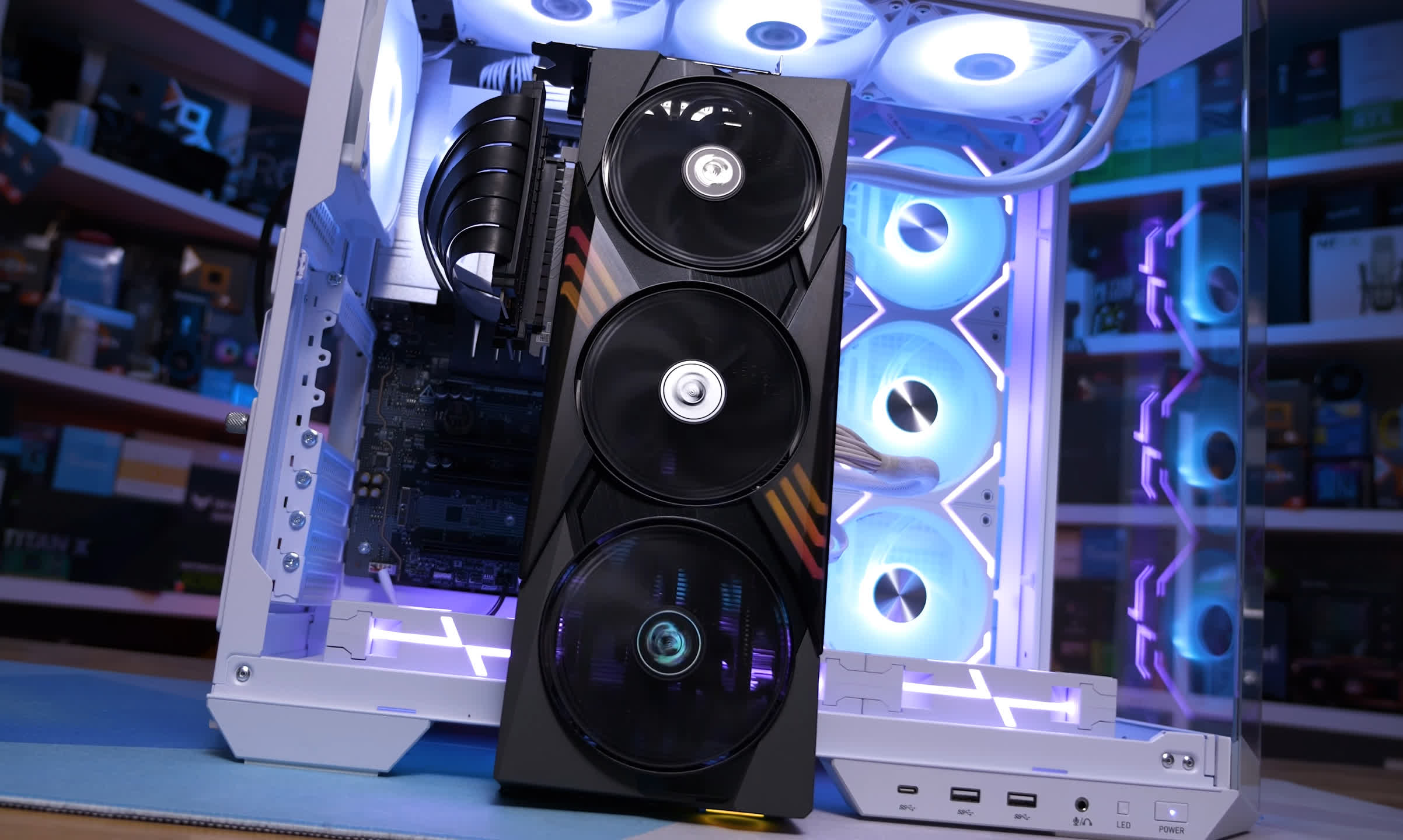
Nvidia RTX 5070 Ti vs AMD Radeon 9070 XT: Massive 52 Game Benchmark
We benchmark the Radeon RX 9070 XT and GeForce RTX 5070 Ti across 52 games, testing rasterization and ray tracing performance at 1440p and 4K.
Nvidia RTX 5070 Ti vs AMD Radeon 9070 XT: Massive 52 Game Benchmark


There is a large portion of the market that somehow thinks nVidia is a more premium product and that's just not true. Consumers are been squeezed right now and they can nolonger spend extra money based in marketing material they've seen so perhaps this will come to an end soon. Heck, nVidia didn't even list gaming revenue in their latest quarterly results so maybe they are offering up the gaming segment to AMD. They originally said they had been waiting over a decade to release Ray Tracing technology and then just last year they said they had been waiting almost 20 years to release AI data center cards so who even knows what they're doing. Jensen sounds like a meth addict, or on some type of stimulants, in some if his latest interviews
Thanks for this amazing comparison. As for myself, I'm really happy with my RX 9070 XT, quite the upgrade for my 1080ti.
You literally have freeze frames and zoom in on pixels now to see the difference. In real world gameplay, the upscaling features are indistinguishable.Yes it's true, as you can see 5070 Ti wins here, and has option for better features with alot more support in the actual games.
DLSS/DLAA continues to beat FSR/FSR Native in both quality and game support.
Frame Gen, Nvidia wins very easily.
ShadowPlay beats ReLive, better quality, lower perf hit.
DLDSR beats VSR, as the perf hit is lower on the Nvidia side due to AI cores doing magic. DLSS/DLAA can even be used on top. FSR can't do that. This makes sense to to for many. Take a silly 1080p monitor. Enable DLDSR to get downscaled 4K/UHD, apply DLSS and your perf hit will be low while making native 1080p look plain bad.
What people pay for on the Nvidia side, is features and actual game support of these.
I would pick 5070 Ti over 9070 XT any day of the week if price is the same or close.
Only if 9070 XT is 25% cheaper or preferably more, it will make sense for me. That is current pricing pretty much.
9070 XT is not a bad card, but it is not high-end by any means. Neither is 5070 Ti.
My 4 year old 4090 beats both with ease.
AMD cancelled the bigger RDNA 4 SKU sadly. 9070 XT is a 5070 Ti counter, and still loses overall. For the price, 9070 XT still makes sense for many but NO-ONE would pick 9070 XT if they were offered to pick a FREE CARD between these two.
FSR 3.1 was pure garbage and still is. FSR 4 is decent but DLSS 4.x is still the superior upscaler and DLAA also beats FSR Native.
You literally have freeze frames and zoom in on pixels now to see the difference. In real world gameplay, the upscaling features are indistinguishable.
And I don't want to hear about framegen on anyone's hardware. Unless you're already getting 250+, the latency from framegen ruins gameplay.
Yes it's true, as you can see 5070 Ti wins here, and has option for better features with alot more support in the actual games.
DLSS, DLAA, FG, and of course support from the gaming space are all features.Nvidia Wins Features, AMD Wins Value
WHAT FEATURES?!!
IT'S PRICE TAG???!!!
Cmon Steve... it is basically the same offering with a different price tag...
It is under" performance summary".....did you forget to read the article in full?By the way... where are my summary performance charts? 52 game benchmarks and unable to make a 2 summary charts? Really?
Talking about other people being brainwashed while repeating the "nvidia is abandoning us" dogma and talking about Open Source dominating, after 20 years of open source not dominating, is top KEK.I stopped there because I knew you were brainwashed.
Nvidia and AMD basically have the same product on the shelves and one is about 30% more expensive than the other. You need to be delusional to even imply there is a clear win between the two because there isn't. At least, you don't need to worry about that 12VHPWR connector or Nvidia releasing drivers wrote by AI entirely.
Sony is not using Nvidia features beside a couple of PC offerings, that they are abandoning altogether to focus on their games on the console. PSSR 2 and FSR 4 are basically going to take over because they are Open Source and Nvidia is abandoning gaming, and it kind of already did because game developers are focusing on console. There is basically no games that are done exclusively for PC anymore, they are all just ported.
What bias are you suggesting is present in this review? Why would a slower processor fix that?How about doing this with an Intel processor, to make it unbiased across the board?
Then they should. 99% of games. Including brand new ones are a mix of raster and RT. Very few games are purely RT or PT.9070 XT might be better value, especially when looking at rasterization only, yet many people don't care about just raster these days.
Doh. I would pick a RTX 6000 Pro too if it was the same price as a 5070 Ti. Everyone would.I would pick 5070 Ti over 9070 XT any day of the week if price is the same or close.
I dont know anywhere it's "only" that much cheaper. In most places it's near 50% cheaper. Some places even more.Only if 9070 XT is 25% cheaper, preferably more, it will make sense to me. That is current pricing pretty much.
Assuming they were offered an Nvidia card of equal performance, then dont be so sure.NO-ONE would pick 9070 XT if they were offered to pick a FREE CARD between these two.
I doubt that. Nvidia has the market share they have because of mindshare on OEM sales. Radeon's presence in OEM desktop and laptop models is almost nonexistent. DIY market is much smaller compared to that and even smaller is the portion of people on the DIY market that know about Nvidia's features and how they differ from AMD's.Looking at the whole picture, features included, is the reason many buy Nvidia still.
People hate bad tech. A biblical revelation people!Just like AMD GPU owners hated upscaling, till they got a RDNA 4 and FSR 4 capable card, then upscaling was great.... Haha, Humanity 101
Nvidia literally moved gaming under "Edge computing". That's what it is for them now. A minor footnote somewhere near the edge of periphery.Talking about other people being brainwashed while repeating the "nvidia is abandoning us" dogma and talking about Open Source dominating, after 20 years of open source not dominating, is top KEK.
Raster will continue to be used for decades because it's cheap and refined.
RT and PT should only be used contextually where it makes sense and where they save development time like reflections, GI etc. Things that "can" be done in raster, but take too much time to be worth the effort.
Lol, "mainstream". There are only low double digit games (there are hundreds of games total released each year) with the option to enable PT because surprise surprise, most of Nvidia's own cards cant run it properly due to it's computationally intensive nature. The higher end cards may produce some sort of playable experience with both upscaling and FG enabled as mandatory, but most Nvidia cards cant even rely on those to get a playable experience.Nope. PT is becoming mainstream with big titles now and you can forget that with an AMD card.
Then enjoy not playing most games as most games dont gave RTGI.I literally switched from AMD to NVIDIA because of path tracing and I don't play games anymore that don't at the very least have RTGI.
Everything can be done in raster. It's a matter of resources and time. Competent real time reflections and GI were done long ago, but it's not worth it with raster. Takes too much manual work.And no, certain things cannot be done in raster, no matter what you do.
No one cares about tech demos. Produce a $300 card capable of running it realtime with popular resolution and base framerate. Then we'll talk.And NVIDIA literally last year showcased their Zorah demo which was rendered entirely with primary rays even in path tracing.
Like I said. Raster will be around for decades to come. Unless we discover unobtanium and APU's suddenly start doing PT at 120fps+ native. Raster's benefits are too useful to ignore.So raster will die within the next few years, I would expect. Not vanish completely, but for AAA it will no longer be relevant. We see that already now as many games come with mandatory ray tracing because it saves so much time and cost. Raster is legacy, it's old, it looks **** and it can die for all I care.


Which one do you believe is suitable for gaming comparisons. In Steve's past CPU comparisons AMD X3D typically outperforms Intels best, on gaming. Check his YouTube channel Hardware Unboxed and see for yourself.How about doing this with an Intel processor, to make it unbiased across the board?

Whenever a gamers nexus video starts with some Jenssen footage it's hilarious.Jensen sounds like a meth addict, or on some type of stimulants, in some if his latest interviews
Probably because their in-house engine BlackSpace prioritized Nvidia when it was originally built. AMD joining the fray for a specific game doesn't mean they'll rewrite it, although they probably did do some small optimizations.Great benchmarks. I really don't understand why Crimson Desert is AMD sponsored but Nvidia performs better in it, while Resident Evil Requiem is Nvidia sponsored but AMD performs better in it.
The two games should have swapped sponsors.
It was a GPU comparison not a processor. Needed to know if there was an advantage with AMD CPU to not be biased.Which one do you believe is suitable for gaming comparisons. In Steve's past CPU comparisons AMD X3D typically outperforms Intels best, on gaming. Check his YouTube channel Hardware Unboxed and see for yourself.
A wild guess, they optimize drivers for each game to the best of their ability. Which means AMD, for example, does not get the advantage over Nvidia like it does in CoD.Great benchmarks. I really don't understand why Crimson Desert is AMD sponsored but Nvidia performs better in it, while Resident Evil Requiem is Nvidia sponsored but AMD performs better in it.
The two games should have swapped sponsors.