Forward-looking: By pushing ahead with anode-free battery technology, Panasonic aims to raise performance benchmarks at a time when EV makers are demanding greater range, lower costs, and lighter components from suppliers. If successful, the company could set a new standard for energy density.
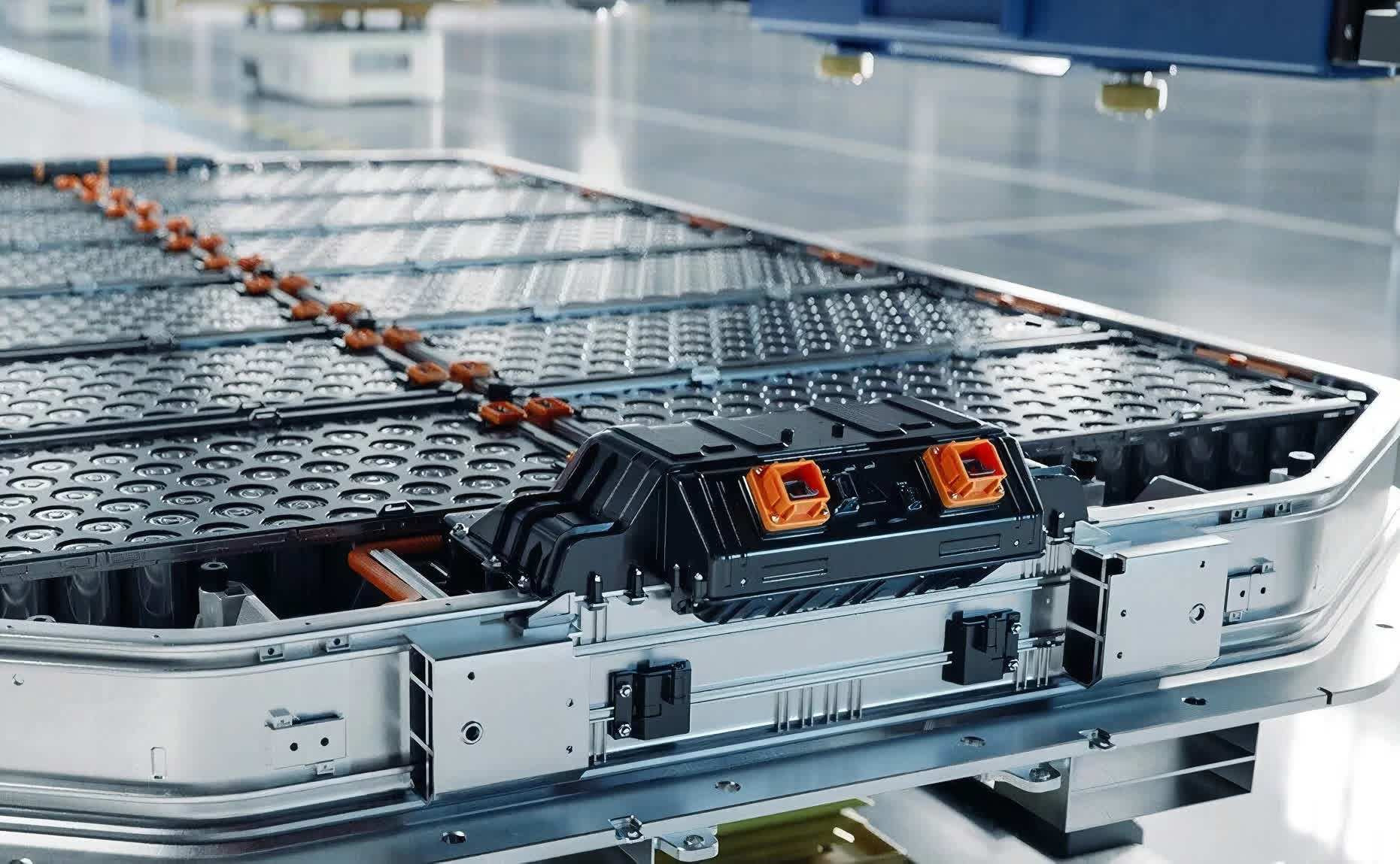
Panasonic has announced new battery development efforts aimed at boosting driving range and energy density for automakers, including Tesla, which relies on the Japanese manufacturer for cell supply. The company is exploring commercial applications of anode-free batteries but has not yet committed to a specific launch timeline.
Unlike conventional lithium-ion cells, which use a graphite or silicon anode to store and release energy, anode-free designs omit the anode during production. Instead, a lithium metal anode forms naturally after the first charge. By removing the traditional anode, engineers free up space inside the cell, which can be used to increase overall energy density.
Panasonic has indicated that its long-term goal is to deliver higher-density batteries than those available today, though it has not provided a specific target figure.
For electric vehicles, higher-density cells would allow automakers to either extend range within a given pack size or reduce total pack volume and weight while maintaining similar range. That flexibility could lead to lighter, more efficient vehicles.
Panasonic has not yet disclosed whether the technology might help lower costs, though company executives have emphasized reducing reliance on expensive or scarce materials such as cobalt as part of the firm's broader strategy.
The development comes as competition in the global EV battery market intensifies. Panasonic remains a longtime Tesla partner while also competing against CATL and LG Energy Solution in mass-producing lithium-ion batteries. Startups such as QuantumScape are working on next-generation lithium-metal and solid-state technologies. Other firms, including US-based Our Next Energy, have demonstrated prototype anode-free cells with high energy density, though no manufacturer has yet commercialized the technology at scale.
Shoichiro Watanabe, CTO at Panasonic Energy, noted that multiple companies worldwide are pursuing anode-free designs as they search for the next breakthrough in performance.
The announcement follows news of Tesla's declining US market share, as buyers turn to a growing array of alternatives, with legacy battery designs struggling to keep pace. Meanwhile, Panasonic has expanded its partnerships and continues to invest in technologies aimed at improving both sustainability and performance, including battery recycling and advanced material science programs.
Panasonic accelerates work on anode-free batteries for longer-range EVs


