Passports may soon become obsolete as facial recognition and smartphones take over

Skye Jacobs

Posts: 2,012   +59
Staff
Bottom line: Travel documents are on the brink of a technological revolution as facial recognition systems become mainstream. But some countries are finding it tricky to strike a balance between convenience and privacy, as well as security and efficiency.
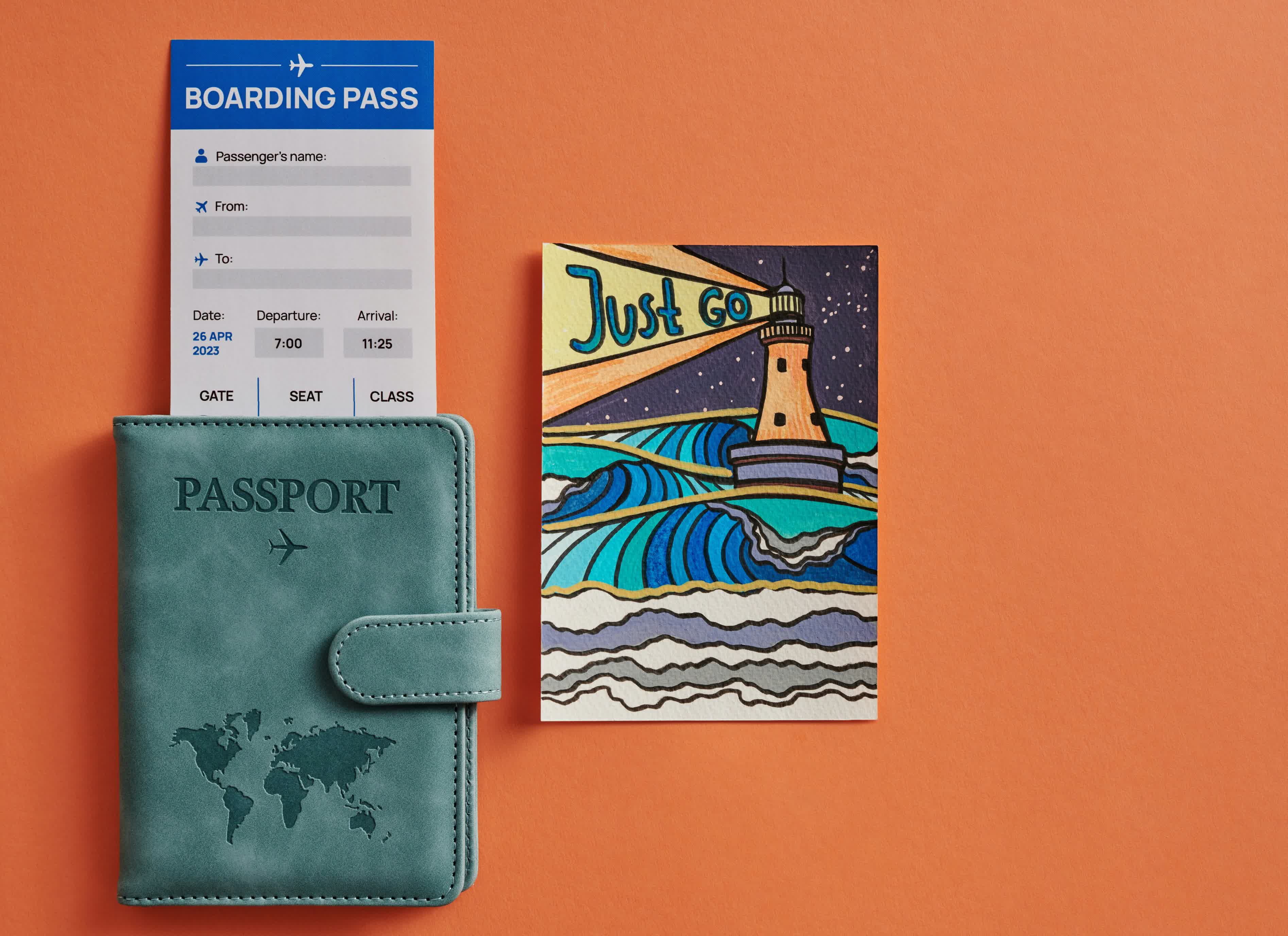
In the coming years, the traditional paper passport, a document that has been a cornerstone of international travel for over a century, may soon become obsolete. In its place, facial recognition technology and smartphones are poised to become the new standard for identity verification at airports worldwide.

This shift towards biometric identification is not a distant possibility but a rapidly approaching reality. Airports in numerous countries, including Finland, Canada, the Netherlands, the United Arab Emirates, the United Kingdom, Italy, the United States, and India, are already conducting trials of passport-free travel systems. Singapore, for example, allows its residents to enter and exit the country without physical passports, and is extending this convenience to departing foreign visitors.

The drive to streamline the travel experience is driving this trend. Athina Ioannou, a lecturer in business analytics at the University of Surrey, notes that the Covid-19 pandemic has accelerated the adoption of contactless travel technologies. "It's probably going to become the mainstream way of traveling, as I understand, in the near future," Ioannou told Wired.
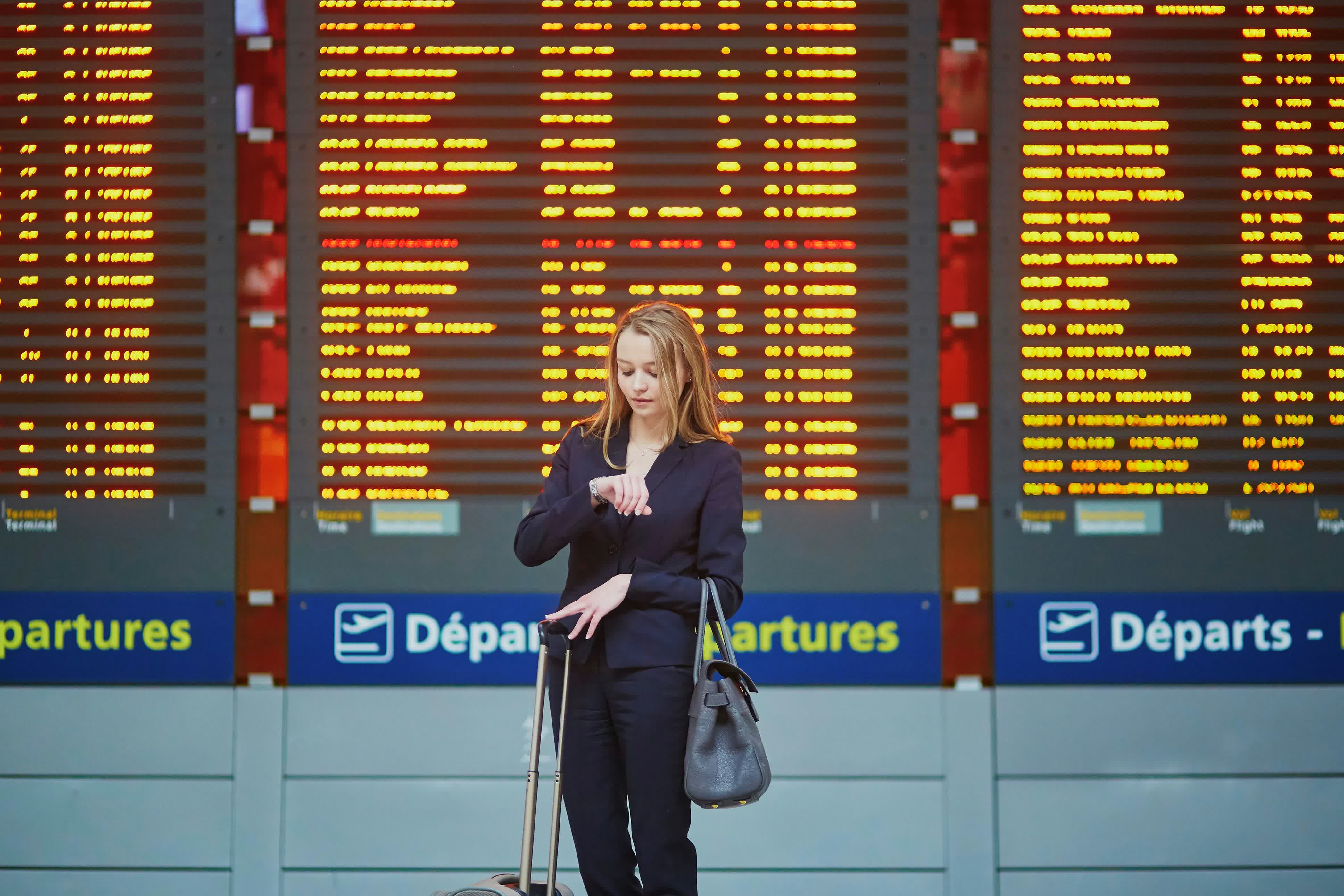
At the heart of this technological shift is the concept of a Digital Travel Credential (DTC). Developed by the United Nations' International Civil Aviation Organization (ICAO), the DTC system comprises two key components: a virtual element representing the information traditionally stored in passport chips, and a physical part stored on the traveler's smartphone. These components are cryptographically linked to ensure authenticity and prevent forgery.

The implementation of DTC systems varies, with some approaches still requiring travelers to carry – but not necessarily present – their physical passports, while more advanced versions aim to eliminate the need for a physical passport entirely.

Early trials have shown promising results. In Finland, a small-scale DTC pilot conducted by border officials demonstrated that identity checks could be completed in just eight seconds, with technical processing taking only two seconds.

While the prospect of reduced airport queues is undoubtedly appealing, the transition to digital travel documents raises significant concerns. Privacy experts caution about the lack of transparency surrounding these technologies and the potential for data breaches and increased surveillance. The ICAO itself acknowledges risks such as "look-alike fraud," criminal data collection, system outages, and the possibility of false rejections in facial recognition systems.

The development of verification systems by various companies worldwide adds another layer of complexity. "We don't really know how secure these systems are," said Udbhav Tiwari, director of global product policy at Mozilla. "The fact is that all of these companies develop these systems often do so in deeply proprietary manners."
Adam Tsao, who leads digital identity efforts at the security company Entrust, told Wired that another concern is who will handle the data, including who can access it, for what reasons, and how much control they have over its use. Tsao advocates for a precise and controlled approach to data sharing in our increasingly digital world. He suggests that the ideal scenario would involve providing only the necessary information, for a limited time, to the appropriate parties and for specific purposes. However, Tsao acknowledges that achieving this level of precision in data management presents significant challenges.

Perhaps not surprisingly, the implementation of these systems has not been without controversy. In India, the Digi Yatra face-recognition boarding system has faced criticism over its introduction and enrollment processes. "The way that it's happening in India is no longer voluntary, and it's no longer something we can hold the government or anybody else accountable for," said Disha Verma, from the Internet Freedom Foundation.

The Digi Yatra system has been operating in 24 airports around the country and may be opening up to foreign citizens in 2025. Meanwhile, the privacy and compliance issues the system has raised will only heighten as there are plans in India to roll out the identity technology to hotels and historical monuments.

Permalink to story:

 
Facial recognition, phone number, email sent OTP and fingerprint recognition are pretty strong security features. On my recent vacation this summer to Bali and Singapore, I was facial and fingerprint scanned several times and for the most part it was painless, effortless and reassuring.
They plan on getting rid of the passport eventually - which I consider a good thing. Passports can be lost, stolen or coerced out of your hands by foreign entities. If I can access my finances using Biometrics, my smartphone and smartwatch, I should be able to travel just as easily with them alone.
 
Cool, so I'd go from giving biometrics to my country to giving biometrics to the world. This seems a lot less secure, but a lot more profitable. It has been proven many times in the real world that anywhere the government interfaces with turnkey vendor solutions is a serious potential point of compromise because software vendors only care about money. The best way to keep my data safe is for them to never have it. Surely that is a concept so simple it can survive a corporate meeting.
 
Last edited:
I cannot wait until you can have a digital DL and such on your phone here in my state. Seems pointless to make you have to carry around a wallet just for your DL, when I could just bring my phone and not worry about it.
 
I cannot wait until you can have a digital DL and such on your phone here in my state. Seems pointless to make you have to carry around a wallet just for your DL, when I could just bring my phone and not worry about it.
So you're going to unlock your phone and hand it to the police to save the convenience of carrying something the size of a credit card.

Genius idea. Totally wont be abused, nu uh, no siree bob.
 
Honestly I just really like having a passport with Visas and Entry stamps and the like. It's a sort of fun collectors thing.

I figure no matter what, the paper passport will always be there. I'll never simply trust the digital system to get it right, never hurts to have something analogue on hand when far from home.
 
Did y'all forget about the crowdstrike incident? I'm all for convenience but some things are better left as it is.

but I have to say that maybe, just maybe... you'll have less illegal immigrants around if such system is properly enforced. I mean we also have to look at it from a different way.
 
It seems no one is concerned with how the article ends.. needing ID to do things that a free people would never even consider needing ID for. You want to travel and see historical monuments? The government will create a profile on you based on where you go and what you do. 15 minute cities are a possibility with this tech, limiting your travel and what you purchase. Identifying where you are at all times. In stead of being worried about some hackers getting your data you need to worry about governments having this complete surveillance power. Just look at what Stalin, Mao, Hitler and all the others were able to do just with paper and ink. And for the sake of convenience and a few seconds in line we want to give governments a level of power and control that would have any dictator cream his pants. I’ll stick with the inconvenience of paper and no biometrics if you please.
 
It seems no one is concerned with how the article ends.. needing ID to do things that a free people would never even consider needing ID for. You want to travel and see historical monuments? The government will create a profile on you based on where you go and what you do. 15 minute cities are a possibility with this tech, limiting your travel and what you purchase. Identifying where you are at all times. In stead of being worried about some hackers getting your data you need to worry about governments having this complete surveillance power. Just look at what Stalin, Mao, Hitler
Here is a quote for you: capital punishment as in death penalty is held in some tyrannical, islamist and few none of the above mentioned states. There is North Korea, Arab states and the United states of America.
Long live democracy!
 
It's inevitable.
Who envisioned using paper documents in the future? As humans, almost everything new is hit with scrutiny... until things go back to normal.
 
It seems no one is concerned with how the article ends.. needing ID to do things that a free people would never even consider needing ID for. You want to travel and see historical monuments? The government will create a profile on you based on where you go and what you do. 15 minute cities are a possibility with this tech, limiting your travel and what you purchase. Identifying where you are at all times. In stead of being worried about some hackers getting your data you need to worry about governments having this complete surveillance power. Just look at what Stalin, Mao, Hitler and all the others were able to do just with paper and ink. And for the sake of convenience and a few seconds in line we want to give governments a level of power and control that would have any dictator cream his pants. I’ll stick with the inconvenience of paper and no biometrics if you please.
Amen. And we know they're doing just that!
 
I cannot wait until you can have a digital DL and such on your phone here in my state. Seems pointless to make you have to carry around a wallet just for your DL, when I could just bring my phone and not worry about it.
I will pass on that I am more likely to damage or lose my phone than I am my physical documents.
 
Honestly I just really like having a passport with Visas and Entry stamps and the like. It's a sort of fun collectors thing.

I figure no matter what, the paper passport will always be there. I'll never simply trust the digital system to get it right, never hurts to have something analogue on hand when far from home.
How about merging with the latest ID cards?
 
So you're going to unlock your phone and hand it to the police to save the convenience of carrying something the size of a credit card.

Genius idea. Totally wont be abused, nu uh, no siree bob.
I won't be surprised if in two decades we'll be using fingerprints, retinal scans ad blood type only, paired possibly with other characteristics such as height and face ID. No more of any physical IDs.
 
Reminds me of China : "Smile at the camera to get access to the building...Smile again.... Show your teeth....Access denied"
 
Back