A hot potato: With Apple unlikely to reverse course on Liquid Glass, many long-time iPhone owners seem poised to repeat a familiar cycle: initial pushback, gradual adaptation, and eventual acceptance of a design that once felt disruptive. Whether Liquid Glass becomes as entrenched as the flat aesthetic of iOS 7 will depend on how quickly Apple resolves performance concerns, and on how readily users adapt to the new visual language.
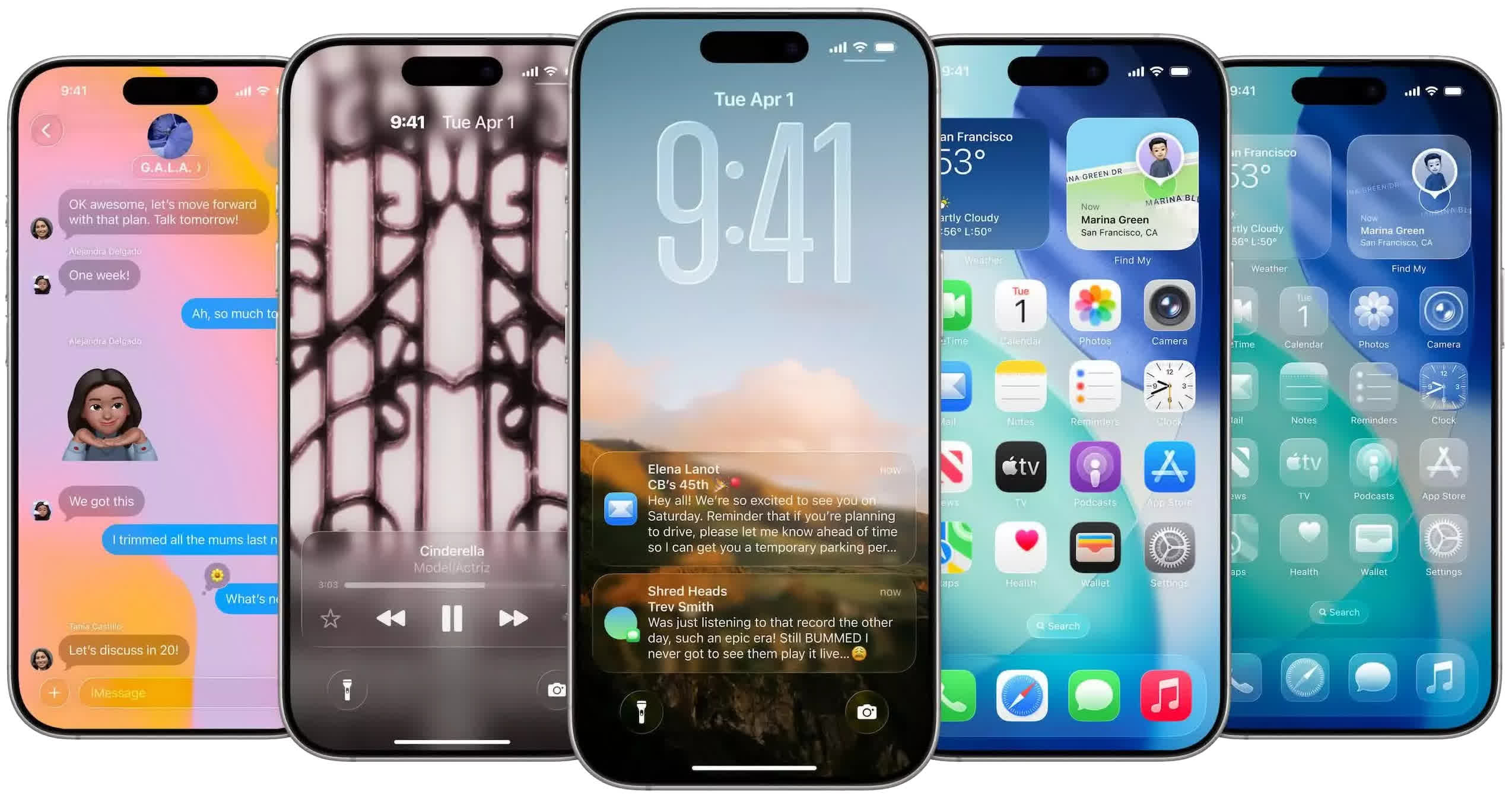
Apple's latest software overhaul has sparked unusually strong reactions just days after launch. iOS 26, released this week, introduces a Liquid Glass interface that fundamentally reshapes how the iPhone looks and feels. While major visual updates are often met with resistance, early feedback suggests this new aesthetic is proving even more polarizing than Apple expected.
Across outlets including MacRumors, Reddit, and Apple's own Support Communities, users have voiced steady frustration with the changes. Much of the criticism focuses on usability and performance. Some report sluggish animations, especially on older iPhone models, while others argue that the shifting colors and subtle transparency effects feel more distracting than immersive.
Several commenters have likened the bubble-style icons to children's toys, calling the design a cartoony departure from Apple's trademark minimalism.
Apple has completely lost the plot. The user interface elements at the bottom are completely undiscoverable. Liquid glass is a cool effect but it makes the user experience actively worse. This is hostile design. How could they possibly think this was a good idea? I've been using... pic.twitter.com/BKlpgJ4pvu
– Daniel Shteremberg (@d_shteremberg) September 14, 2025
Common complaints also target inconsistent visual execution, with some interface elements leaning heavily on glass-like translucency while others remain flat. Some users report readability issues in notifications and system menus, citing weak contrast between text and background. Others say app icons appear blurry under certain effects, while others still describe the overall design as incoherent, lacking consistency in shading and highlights.
Beyond aesthetics, critics argue the interface demands more taps for basic tasks and increases battery consumption due to its layered animation effects.
Liquid Glass is terrible for battery life.
– Sanju Choudhary (@saaaanjjjuuu) September 17, 2025
I am getting at least 20-30% less battery life on my iPhone.
If you are thinking of upgrading to the new version, remember that Apple really needs to fix this first. pic.twitter.com/n76h4yAHSI
Not everyone is opposed to the update. Supporters, many of whom tested the system during Apple's public beta, have defended the redesign as part of a natural adjustment period, noting that new visual paradigms often feel jarring at first. A recurring sentiment is that skeptics will "get used to it" over time, especially as Apple delivers refinements.
Reactions to iOS 26 invite easy comparisons to the debut of iOS 7 in 2013, when Apple abandoned skeuomorphic design in favor of a flat, colorful interface. That shift – Apple's most dramatic visual overhaul at the time – was met with similar backlash. Critics complained about confusing navigation and unattractive iconography. Despite the outcry, Apple stuck with the new direction, iterating on the flat design across subsequent releases until it became the platform's defining aesthetic.
Okay...I'll just say it.
– Ram Patra (@rampatra_) September 16, 2025
Apple is no longer the pinnacle of design.
iOS 26 looks so half baked. A few things are in glossy new liquid glass but a lot many things are still in that old blurry matt translucent theme and they both just don't go well together.
And, there are a lot... pic.twitter.com/ITMcIB9QVi
Industry observers suggest that Liquid Glass may follow a similar trajectory. Even if Apple issues updates in the coming months to address visual inconsistencies and performance concerns, the redesign could serve as the company's long-term design foundation for the next decade.
For users struggling with the new appearance, Apple provides a limited set of accessibility options but no official rollback. Enabling Reduce Transparency in iOS settings strips away much of the glass effect, while increasing display contrast helps text stand out more clearly against backgrounds. Used together, these settings remove most of the translucency, though at the expense of Apple's intended aesthetic.
Performance and design complaints mount after iOS 26's Liquid Glass launch


