Repair shops are booming during heatwaves as people keep putting phones in fridges

midian182

Posts: 11,870   +181
Staff member
Facepalm: The UK and Europe are going through an unprecedented heatwave right now. It's causing a lot of problems, including devices that keep overheating as temperatures soar. To try to cool them down, some Brits have been placing them in their fridges and freezers, but the only thing this results in is more work for repair shops.
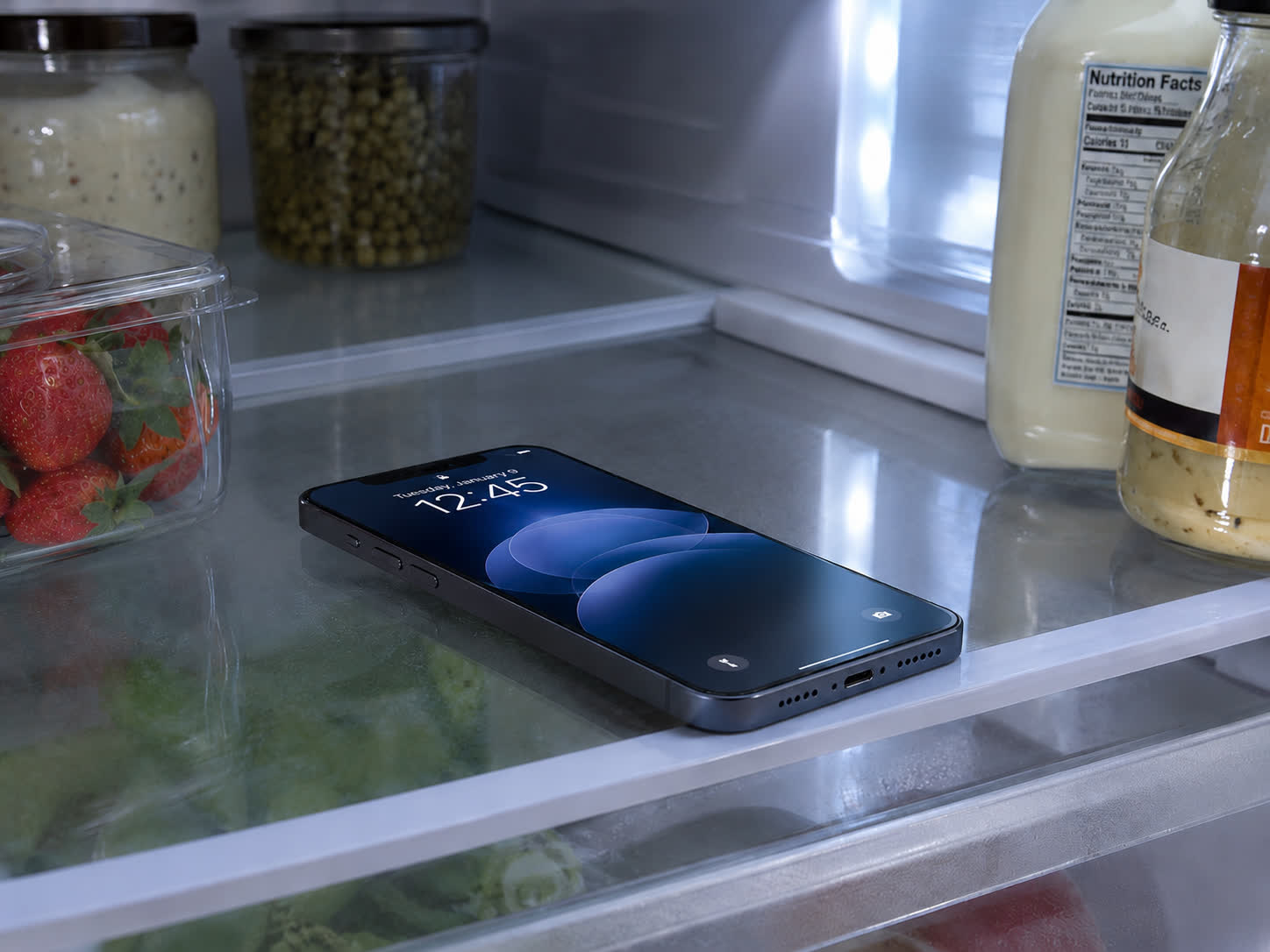
Jamie Farnell, a repair shop owner in the UK town of Wem told the BBC that he has been flooded with devices suffering from internal moisture damage recently.

Farnell believes the damage was caused by phones and tablets being put in fridges and freezers as the mercury soared.

During last month's extreme heatwave, an iPad exploded in the shop after a customer brought it in with a swollen lithium battery.

For a lot of people, placing a device in a fridge or freezer when it shows an overheating warning, or obvious signs it is getting too hot, seems like a good idea. The practice has become more popular since social media videos started pushing it as a smart and easy solution.

@itsprincemarko Putting your phone in the Fridge helps actually 📲 #android #androidtips #princetechtips ♬ original sound - Prince Marko

In reality, of course, it's very risky. One of the biggest problems is condensation. When a warm device enters a fridge or freezer, warm, humid air trapped around or inside the phone cools rapidly. As that air drops below its dew point, water vapor can condense on the phone's surfaces, ports, speaker openings, or potentially inside the casing.

When the chilled phone is removed, the risk can become greater because warm room air hits the cold device and condenses on it – similar to moisture forming on a cold drink.

Moisture inside a device can lead to lots of issues, from corrosion to short circuits.

There are also risks from thermal shock, in which a sudden temperature change can stress the screen, glass, seals, adhesives, and internal components; and battery damage from the extreme cold.

So, while these measures will technically cool a device, there are plenty of other methods that won't likely break them.

Farnell says this practice is reminiscent of another popular myth: drying out a wet phone with rice. This was especially popular at a time when phones had removable batteries and weren't water-resistant. But it's ineffective as rice cannot draw liquid out of sealed internal spaces very well. This method can also cause problems, such as the rice dust and starch entering ports and speakers.

Both Apple and Samsung recommend letting an overheating phone cool naturally in a cooler, shaded environment – not putting it in a fridge or freezer.

Permalink to story:

 
The prophecy movie Idiocracy keeps edging ever closer to fulfillment.... The "average person" I run into in my day to day life (outside of other engineers at work) could care less about expanding their knowledge and intellect. Its demoralizing and sad :(
Exactly, no one says you have to be an expert in the subject, but having some common sense as to why certain things might be bad, knowing the basics of what we use everyday and having some intellectual curiosity is mighty useful, so many people these days shrug their shoulders, say "oh I had no idea" and then someone else has to deal with their results, sad indeed :(
 
My iPhone 12 Pro Max survived dips in Maldive's beach water and dunks in pools in South Korea.

My iPhone 14 Pro Max survived dips in the water of Bali and Singapore. In direct sunlight, trying to record 4K video was a fast way to have these phones overheat and I'd literally dunk them in cold water to reduce their internal temperature. The only problem was thee charging port refused to work till no waater was detected so you'd have to use Magsafe charging instead - way slower.

My iPhone 17 Pro Max 2TB should easily be able to survive the fridge. I'm in Cambodia right now. No direct sunglight right now but in Vietnam I did get some faster drain due to the heat.
 
The prophecy movie Idiocracy keeps edging ever closer to fulfillment.... The "average person" I run into in my day to day life (outside of other engineers at work) could care less about expanding their knowledge and intellect. Its demoralizing and sad :(
I believe George Carlin said "Think of how stupid the average person is, and realize half of them are stupider than that"
 
The prophecy movie Idiocracy keeps edging ever closer to fulfillment.... The "average person" I run into in my day to day life (outside of other engineers at work) could care less about expanding their knowledge and intellect. Its demoralizing and sad :(

I note that at the end of idiocracy the people were smart enough to put the smartest guy in the room in charge. Therefore, I argue they are smarter then people IRL.
 
My iPhone 12 Pro Max survived dips in Maldive's beach water and dunks in pools in South Korea.

My iPhone 14 Pro Max survived dips in the water of Bali and Singapore. In direct sunlight, trying to record 4K video was a fast way to have these phones overheat and I'd literally dunk them in cold water to reduce their internal temperature. The only problem was thee charging port refused to work till no waater was detected so you'd have to use Magsafe charging instead - way slower.

My iPhone 17 Pro Max 2TB should easily be able to survive the fridge. I'm in Cambodia right now. No direct sunglight right now but in Vietnam I did get some faster drain due to the heat.

Water proof does not mean condensation can't form inside a phone. Water vapor can permeate seals meant to block liquid water. Normally it is not that big of an issue because the vapor permeation is slow, and humidity is determined by climate, and phones tends to be hotter than their surrounding environment. But if you just stick it in the fridge, on a hot, humid summer day condensation should be able to form inside the phone despite it being water proof.
 
Water proof does not mean condensation can't form inside a phone. Water vapor can permeate seals meant to block liquid water. Normally it is not that big of an issue because the vapor permeation is slow, and humidity is determined by climate, and phones tends to be hotter than their surrounding environment. But if you just stick it in the fridge, on a hot, humid summer day condensation should be able to form inside the phone despite it being water proof.
Water vapor molecules are the same size as liquid water. They're literally liquid water suspended in a gas. It's important to note that these devices are assembled in climate controlled clean rooms.
 
Water vapor molecules are the same size as liquid water.
Oops! Molecules in liquid water are part of a web of hydrogen bonds and other Van Der Waals forces: those responsible for surface tension. This is why water vapor can more quickly penetrate tiny spaces than can liquid water.

But this is the smaller factor here. The larger is that a phone can survive a few minutes in water .... but it is surrounded by atmospheric water vapor for days, months, years. Do you believe there's a vacuum inside your phone? Water vapor can and does continually move through it.
 
Last edited:
I am in Arizona where it routinely gets 110f or hotter. The only times I have ever seen overheating issues is if I leave phone on the dash or out in the sun next to the pool. It lives in my pocket until I'm using it. Then again, I don't have an iPhone. Is this an iPhone problem?
 
Sometimes my phone gets hot due to both the air's temperature and me using it.

Quick fix : just powerfully blow some air to it. Do it for a minute. It's not as efficient as an internal fan but it actually works.
 
I am in Arizona where it routinely gets 110f or hotter. The only times I have ever seen overheating issues is if I leave phone on the dash or out in the sun next to the pool. It lives in my pocket until I'm using it. Then again, I don't have an iPhone. Is this an iPhone problem?
Mm. You're in a very arid environment, there in Arizona. Gets hot as hell, but there's next to no free moisture suspended in the air (I.e., water vapour / humidity). I believe this is due to much of it simply being "sucked" out of the air and absorbed by the extremely dry terrain, though I'm willing to admit I could be wrong with that assumption.

My guess would be that no, this is NOT limited to iPhones.
 
Back