Researchers are turning old Pixel phones into a data center – and they outperform some server hardware

Skye Jacobs

Posts: 2,010   +58
Staff
Forward-looking: Researchers at the University of California San Diego are testing whether retired smartphones can still do useful work instead of ending up as electronic waste. Working with Google, the team is trying to turn retired Pixel smartphones into a low-cost data center. The goal is to keep working hardware in use instead of throwing it out after a few upgrade cycles.
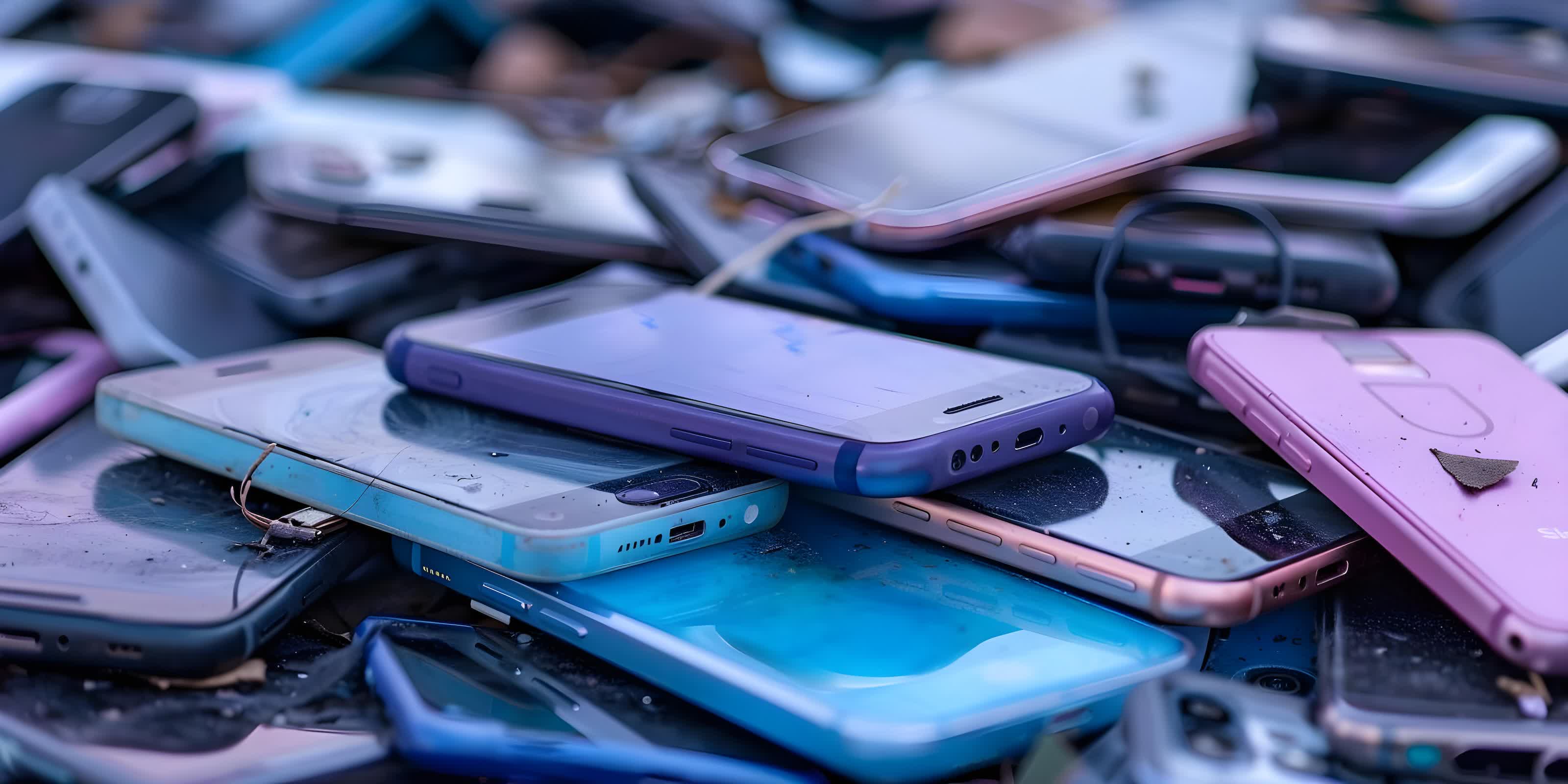
Google Research frames the project around "embodied carbon," the emissions tied to manufacturing devices in the first place. Smartphones, which most people replace every few years, account for a growing share of global e-waste. Extending their useful life, even in a different role, directly reduces that footprint.

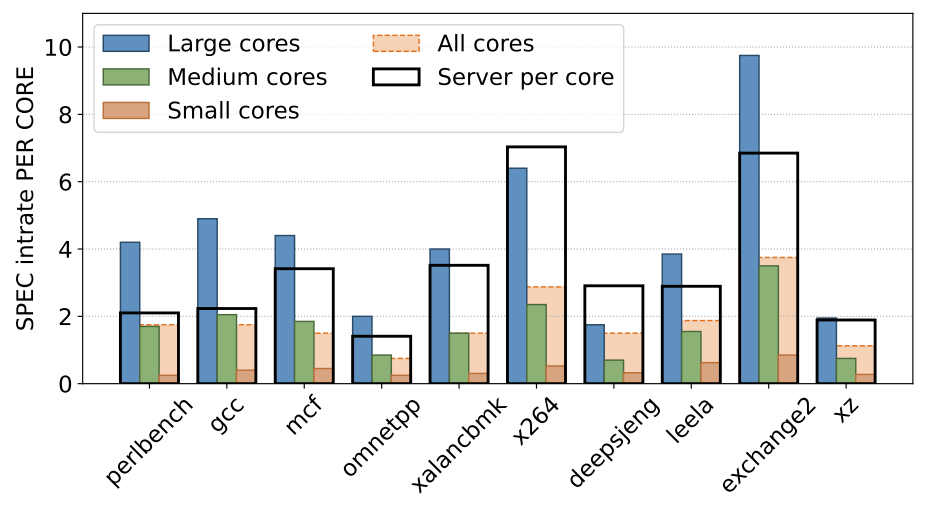
What makes the approach viable is not just environmental logic but performance. According to the study, smartphones released roughly three years ago can still outperform certain server configurations on a single-core basis in SPEC benchmarks. Google cited data of a data center system like the Asus RS720A-E11, which supports dual AMD EPYC processors. Those machines are vastly more capable overall, but the per-core comparison suggests that older mobile chips are far from obsolete.

The UCSD team addresses the gap by treating each phone as a small, independent compute node. To get there, the devices are stripped to essentials – screens, batteries, cameras, speakers, and casings are removed, leaving just the motherboard with its SoC.
The software stack is rebuilt as well, replacing Android with a general-purpose Linux distribution better suited to data center workloads, and enabling orchestration frameworks like Kubernetes to treat the phones as conventional infrastructure.

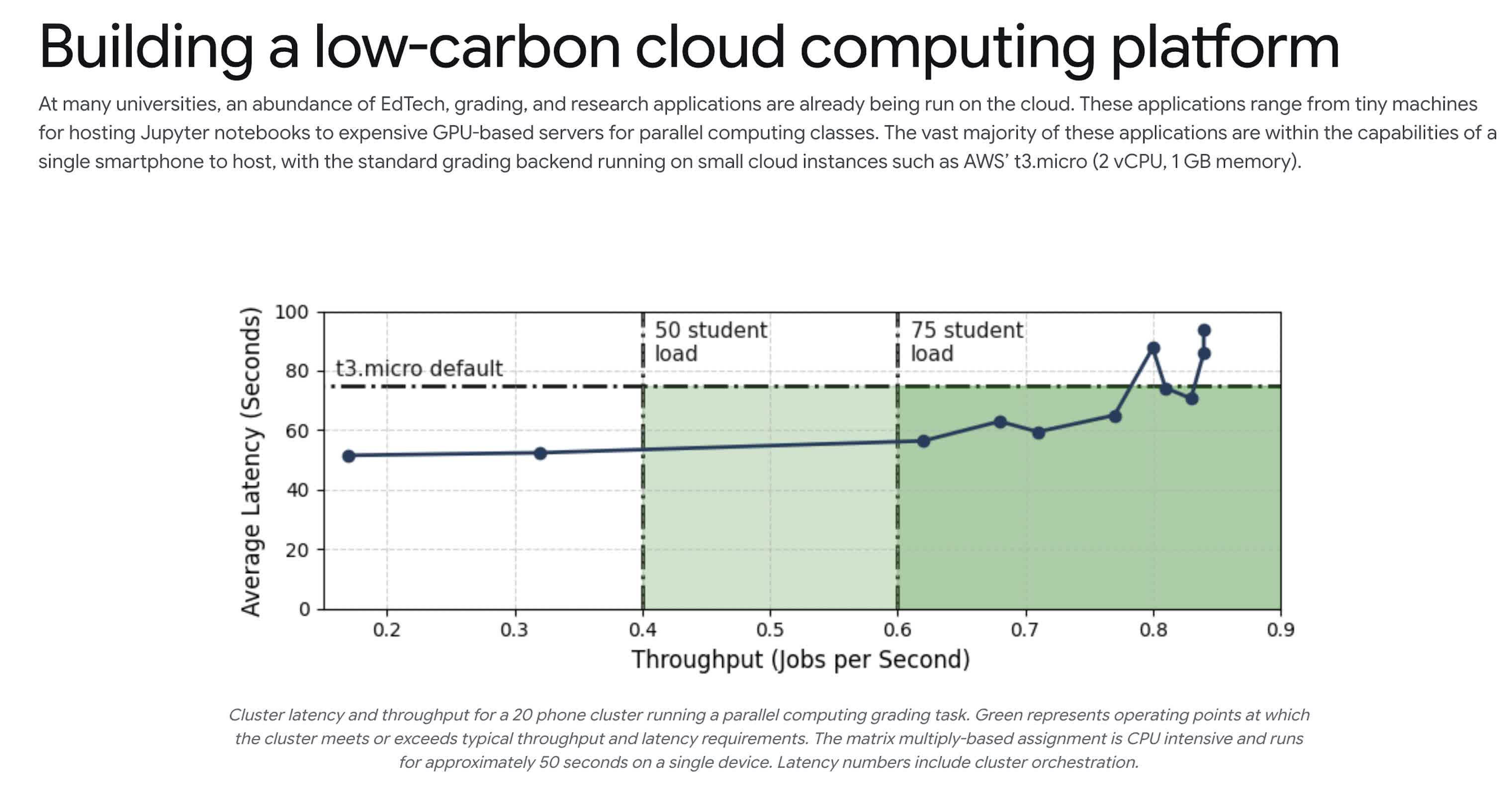
In aggregate, the numbers start to add up. Researchers found that roughly 25 to 50 phones can match the compute output of a single dual-socket server-class CPU. That model is already being tested in practice: a cluster of 20 phones is enough to support an application serving a class of more than 75 students.

That kind of deployment shifts the economics. Instead of relying on cloud infrastructure – which adds both cost and dependency – institutions could run certain workloads locally on repurposed hardware. The researchers describe the system as coming at a "fraction of the usual cost," a point that carries more weight as memory and storage prices continue to climb.

The next step is scale. The team plans to build a cluster of around 2,000 phones capable of supporting "a hundred such classes at once." That rollout, expected later this year, will also test a more practical question: how well consumer hardware holds up under sustained, data center-style use.

There are clear limits. Large hyperscale operators are unlikely to trade standardized, high-reliability servers for clusters of repurposed phones. Managing thousands of small, heterogeneous devices introduces complexity that runs counter to how modern data centers are designed.
Still, the model has a clear lane. Universities, smaller research groups, and organizations with tighter budgets could benefit from a system that trades peak performance for cost efficiency and sustainability. For workloads that can be distributed and don't require cutting-edge hardware, older smartphones may be more than sufficient.

The idea is not entirely new. Researchers have previously explored turning phones into small-scale computing clusters, including deployments for underwater monitoring. And mobile chips have already proven their durability in unexpected settings – NASA, for instance, repurposed a Qualcomm Snapdragon 801 SoC originally used in the Ingenuity helicopter to help the Perseverance rover navigate autonomously on Mars.

What stands out in the UCSD project is not just the reuse of hardware, but the reframing of what counts as infrastructure. Devices built for short consumer lifecycles may still have a role to play, particularly as the industry works to balance performance demands with cost and environmental impact.

Permalink to story:

 
I doubt it will ever amount to anything, but always good to see proof of concept studies focusing on the "reuse" part of the recycle/reuse/reduce triangle.
 
Yeah and Raspberry Pi's have been used in server farms for as long as they've been out. I wouldn't be surprised if Google actually did start using recycled phones in data centers. They're perfectly suited for things like Cloud Run Functions. Functions are intended for developers who only care about a small amount of network-enabled code they write to run on-demand cheaply: https://cloud.google.com/functions
 
According to the study, smartphones released roughly three years ago can still outperform certain server configurations on a single-core basis in SPEC benchmarks
...
To get there, the devices are stripped to essentials – screens, batteries, cameras, speakers, and casings are removed, leaving just the motherboard with its SoC.
Sounds like an utterly wasteful process.
Google Pixels come with long software support. These phones should still be perfectly usable as you know... phones.

How about Google (and others) stop locking down smartphones and let us run alternative software. I'm still using a 8 year old smartphone perfectly fine, Snapdragon 845 - 6GB of RAM (third party ROM). Enough for browsing the web (and other smartphone things I do). Even when I eventually replace it (probably in another ~2 years) I'd happily use it for smart home stuff or as a webserver IF I could install Linux on it.
A huge part of why smartphones end up as ewaste is due to their locked down nature which for some reason we just accept.
 
Last edited:
Sounds like an utterly wasteful process.
Google Pixels come with long software support. These phones should still be perfectly usable as you know... phones.

How about Google (and others) stop locking down smartphones and let us run alternative software. I'm still using a 8 year old smartphone perfectly fine, Snapdragon 845 - 6GB of RAM (third party ROM). Enough for browsing the web (and other smartphone things I do). Even when I eventually replace it (probably in another ~2 years) I'd happily use it for smart home stuff or as a webserver IF I could install Linux on it.
A huge part of why smartphones end up as ewaste is due to their locked down nature which for some reason we just accept.
Amusingly, if used phones start getting used as datacenter hardware their would then be a big push by the data center companies to get more easily unlocked phones, since they obviously will want to run their own software. But yes, fully agree that hardware should not artificially block the actual owner of the devices from running whatever software they want on it.
 
No mention of how efficient they are (per watt) when comparing to a server CPU? Which is one of the big selling points for a server..?

I can overclock an old/weak CPU and also have cores perform better than server ones, but that doesn't mean much. I could also probably find older server hardware that is/was liquidated for upgrades and just use that for the price of all the used phones I'd be buying (and it'd be less hassle/space/resources).
It's neat that they're finding more ways to recycle old phones, but I don't get what the article is trying to do with half-baked comparisons...
 
Sounds like an utterly wasteful process.
Google Pixels come with long software support. These phones should still be perfectly usable as you know... phones.

How about Google (and others) stop locking down smartphones and let us run alternative software. I'm still using a 8 year old smartphone perfectly fine, Snapdragon 845 - 6GB of RAM (third party ROM). Enough for browsing the web (and other smartphone things I do). Even when I eventually replace it (probably in another ~2 years) I'd happily use it for smart home stuff or as a webserver IF I could install Linux on it.
A huge part of why smartphones end up as ewaste is due to their locked down nature which for some reason we just accept.
You probably forgot this, but these pixels are still supported software wise. Doesn’t mean anyone wants them.

People upgrade constantly, usually not because the device is EOL.
 
By the time you see the article, prices will likely become much less attractive so temper your expectations.
 
That's interesting. Considering that many datacenters are pretty much underutilised by low-to-mid level businesses...
 
I doubt this will be really sustainable in a large scale, but hey, this is the kind of initiatives with need. Use, reuse, and reuse again. We've got limited resources.
 
Back