In context: Researchers often describe artificial photosynthesis as a potential holy grail of renewable energy because it stores solar power in chemical form, independent of weather or daylight. Unlike batteries, which are heavy and limited, liquid solar fuels can move through existing infrastructure and reach sectors that are hard to decarbonize.
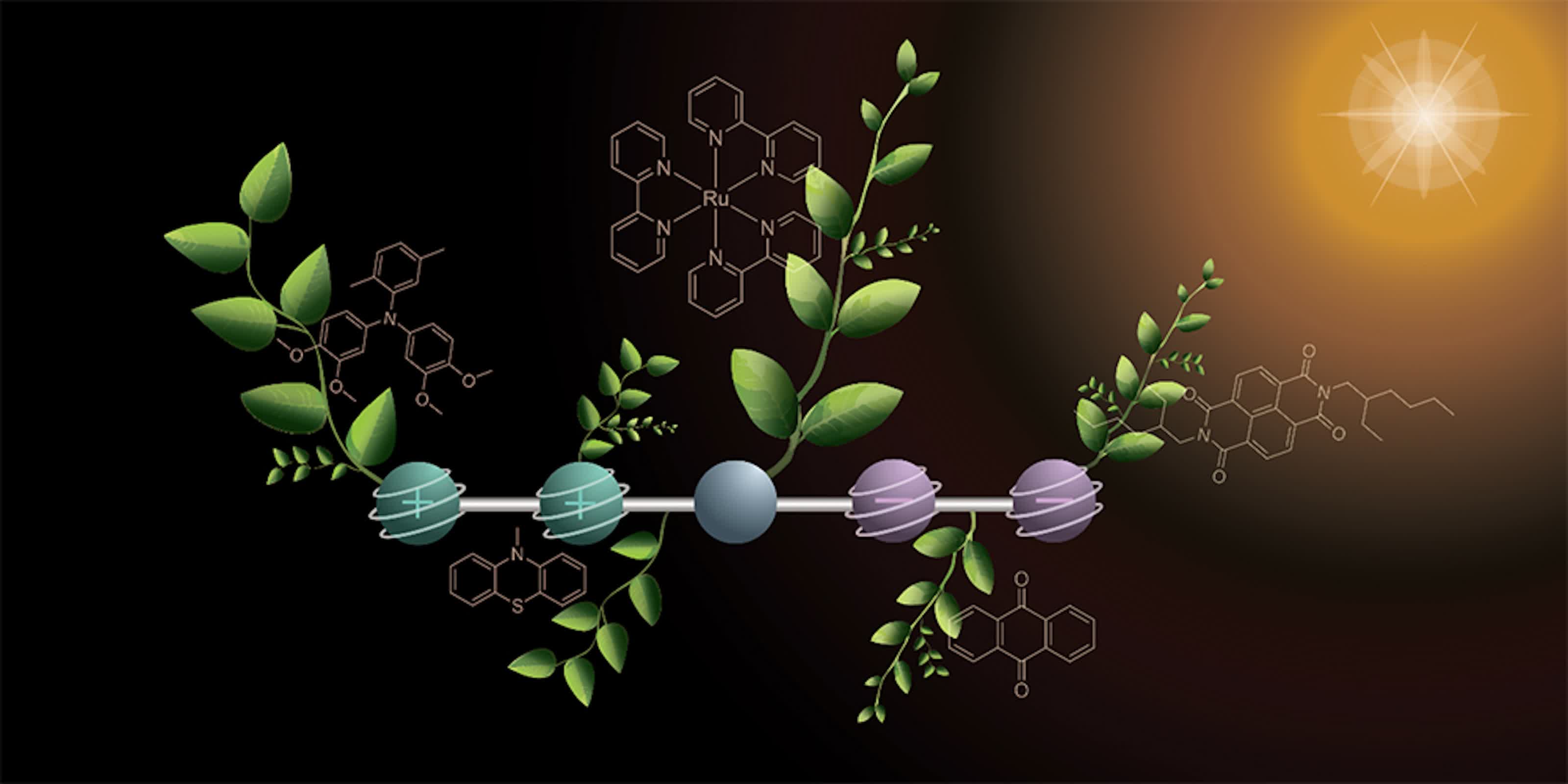
Researchers at the University of Basel have reported a significant step toward replicating photosynthesis in the lab, a process that could one day yield carbon-neutral fuels. The study, published in Nature Chemistry, discusses a custom molecule that stores four electrical charges – two positive and two negative – under conditions similar to natural sunlight.
Natural photosynthesis allows plants to turn carbon dioxide into energy-rich sugars using sunlight, a reaction that underpins most life on Earth. Scientists are using it as a model to develop solar fuels such as hydrogen, methanol, or liquid hydrocarbons, which release only as much carbon dioxide as they consume. These fuels could replace fossil energy in hard-to-electrify sectors like aviation, shipping, and heavy industry.

The main challenge in mimicking photosynthesis is accumulating and stabilizing multiple light-generated charges in a synthetic system. Those charges must be available at the same time to power complex reactions, such as splitting water into hydrogen and oxygen.
The Independent notes that the molecule developed by Professor Oliver Wenger's team consists of five linked units, each with a specific role. On one side, two units release electrons when exposed to light, gaining a positive charge. On the other, two units absorb those electrons and become negatively charged. A central component absorbs light and triggers the electron transfer. Most importantly, the molecule achieves this without the intense laser light used in earlier studies, functioning under light levels similar to natural sunlight.
Doctoral student Mathis Brändlin, lead author of the study, said reducing the light requirement is a key advancement. The molecule's ability to stabilize charges long enough for downstream reactions brings artificial photosynthesis closer to practical use.
The team has not yet demonstrated a complete artificial photosynthesis system. However, the findings tackle a central challenge: capturing and storing energy from ordinary light in a stable, multi-charge state. Professor Wenger stressed that the molecule is an intermediate step, not a finished solution, yet it illuminates how electron transfers can be organized and controlled.
Efforts to achieve artificial photosynthesis have grown internationally over the past decade. Projects in the EU, Japan, and the US aim to produce hydrogen or liquid fuels directly from sunlight. Several pilot programs have shown feasibility, but challenges remain, including efficiency losses and costly catalytic materials. The Basel team has not yet generated usable fuels, but by eliminating the need for intense light, they have moved the field closer to that goal.
Researchers create molecule that stores solar energy in multiple charges


