TL;DR: Thomas Edison's 1879 light bulb is typically remembered as a milestone in electrification, not as a precursor to modern quantum materials. Yet by reconstructing that lamp with contemporary tools, researchers at Rice University say they have demonstrated that Edison's design can briefly produce turbostratic graphene, a form of carbon now central to advanced electronics and energy research.
Graphene is a two-dimensional lattice of carbon atoms arranged in a hexagonal pattern, renowned for its exceptional electrical conductivity, thermal transport, and mechanical strength. Turbostratic graphene is a stacked variant in which the layers are rotated and misaligned, weakening interlayer coupling and making the material easier to process at scale.
This looser stacking allows the layers to disperse more readily into composites, which is why turbostratic graphene is attractive for bulk applications in concrete, polymers, and conductive inks, rather than just pristine single-layer devices.
In modern labs, one of the more efficient routes to turbostratic graphene is flash Joule heating. In this process, a high-voltage pulse passes through a carbon-rich precursor, driving its temperature above roughly 2,000 degrees Celsius in less than a second.
The extreme, localized heat reorganizes disordered carbon into graphene before it can fully anneal into graphite, while the surrounding hardware remains relatively cool because the current and heat are concentrated in the sample.
The group has demonstrated flash Joule conversion of diverse feedstocks – including waste materials – into gram-scale quantities of turbostratic graphene, and has extended the method to doped graphene by introducing additional elements during the flash.
Seeking simpler, more compact hardware for flash-like processing, graduate student Lucas Eddy began examining devices that already function as resistive heaters. Industrial arc welders were efficient but bulky, and natural "experiments" such as lightning-struck trees proved unhelpful. That search ultimately led him back to 19th-century electric lighting – specifically, to the era of carbon-filament bulbs.
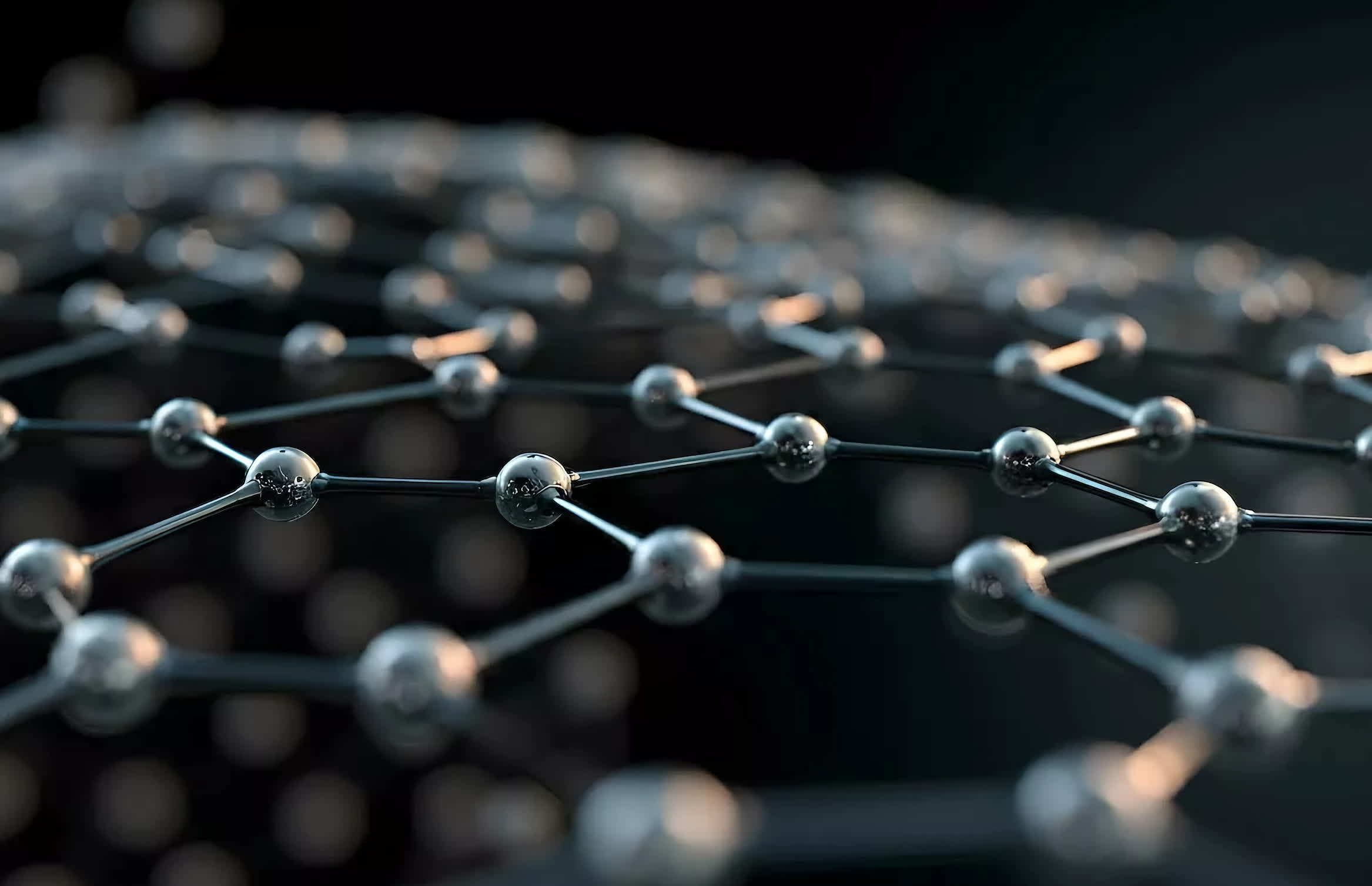
Graphene is notable for its exceptional electrical conductivity, thermal transport, and mechanical strength.
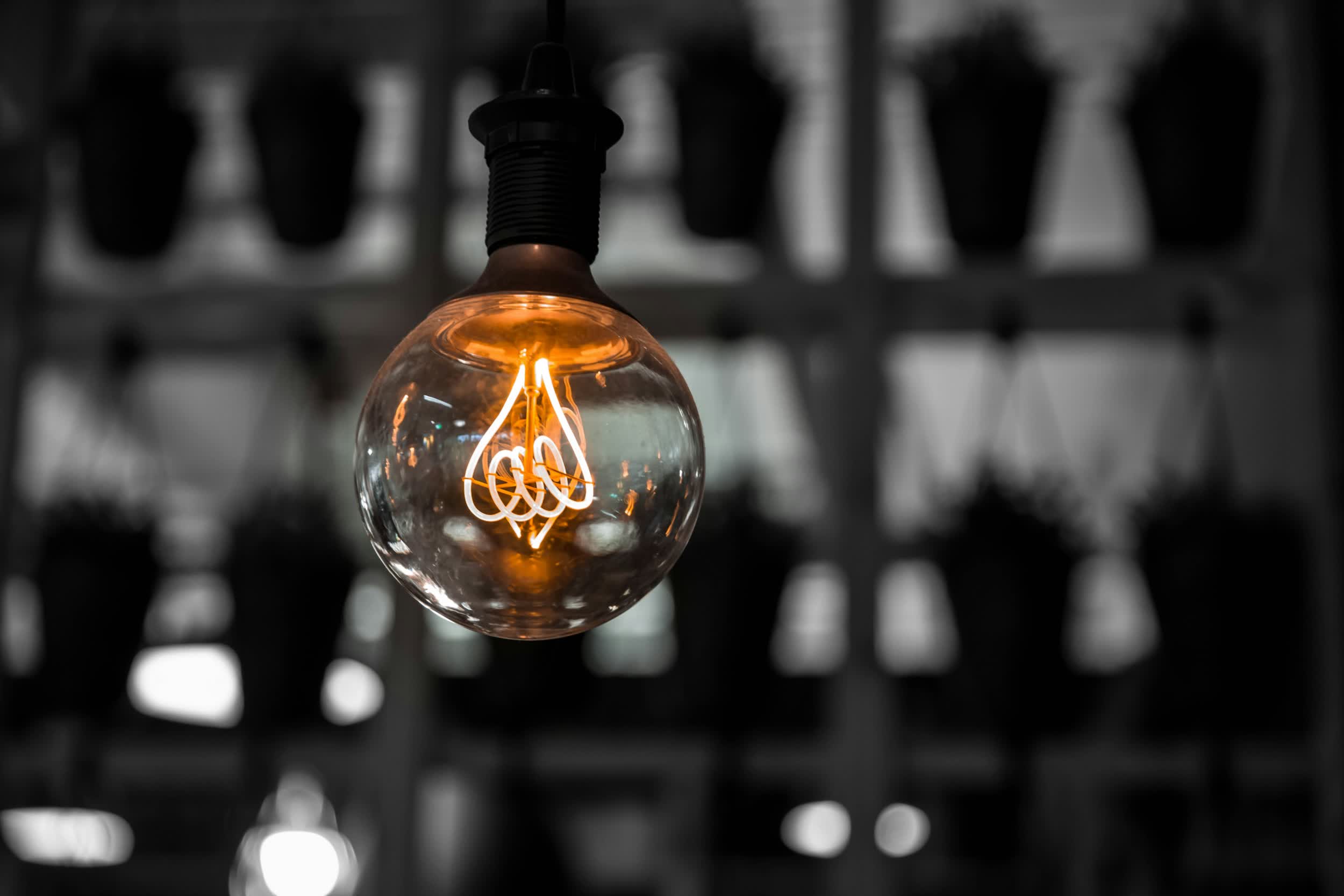
Edison's 1879 patent for an incandescent lamp described a carbon filament – often made from carefully treated bamboo – sealed in an evacuated glass bulb and powered by a 110-volt direct current supply. Unlike many competing designs of the time, his configuration could push the filament to around 2,000 degrees Celsius, essentially the same thermal regime used in modern flash Joule heating.
For Eddy, the patent drawings and specifications were not just historical documents. They served as a complete engineering blueprint for a compact, sealed, high-temperature carbon resistor. Still, recreating that system proved more difficult than expected.
Commercial "Edison-style" bulbs marketed with carbon filaments often contained tungsten when examined closely. After several false starts, the Rice team located an art shop in New York City selling replica bulbs whose bamboo filaments closely matched the dimensions in the original patent. Those filaments provided the right geometry and material to repeat Edison's experiment under laboratory conditions.
With a replica bulb wired to a 110-volt DC source, the researchers pulsed current through the filament for about 20 seconds. The duration was deliberate: flash Joule heating studies suggest that short, intense pulses favor graphene formation, while prolonged heating drives the carbon toward fully ordered graphite.
After the pulse, they examined the cooled filament under an optical microscope and observed sections that had shifted from uniform gray to a bright, metallic silver, indicating a change in the carbon microstructure.
To identify the new phase, the team used Raman spectroscopy, a standard tool in carbon materials science. The spectra from the modified regions showed features consistent with turbostratic graphene rather than amorphous carbon or bulk graphite.
Importantly, the study does not claim that Edison himself discovered or exploited graphene. His famous long-duration bulb tests reportedly ran for many hours, which would have allowed any transient graphene formed early in the heating cycle to fully anneal into graphite.
Instead, the Rice experiments highlight that the combination of filament material, geometry, and drive voltage in Edison's design naturally occupies the thermal window modern researchers use to create graphene deliberately.
For technologists, the significance lies in process and hardware, not historical speculation. The Edison-style bulb effectively acts as a minimal graphene reactor: a low-cost, sealed, fully integrated device capable of pushing carbon into the right thermal window using only basic power electronics.
Researchers turn Edison's 1879 light bulb into a mini graphene reactor


